
Safety
General information, not medical advice
Your prescriber and the leaflet in your pack know your situation. This page does not.
- Follow your prescriber and the leaflet
- Don't start, stop, or change a dose on your own
- Doses and warnings differ by country and product
Geodon Capsule: Uses, Dosage, Side Effects, Precautions and Alternates
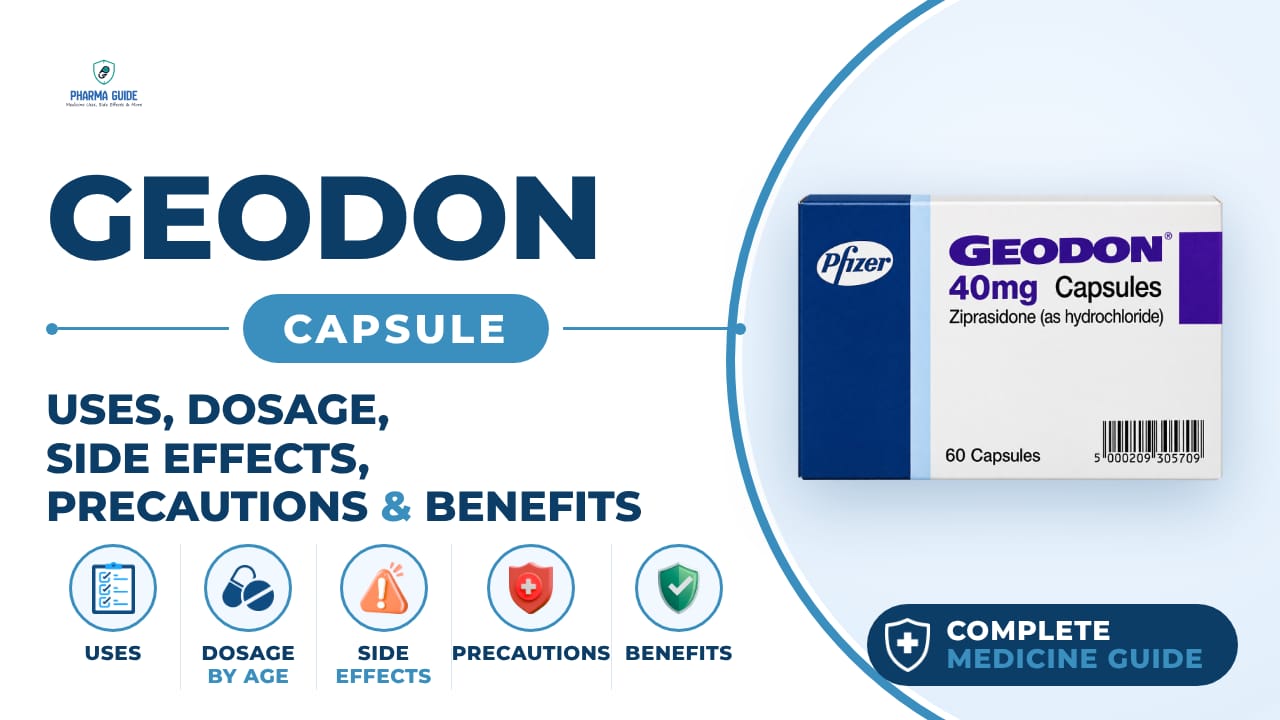
| Generic name | ziprasidone |
|---|---|
| Drug class | atypical antipsychotic (second-generation antipsychotic) |
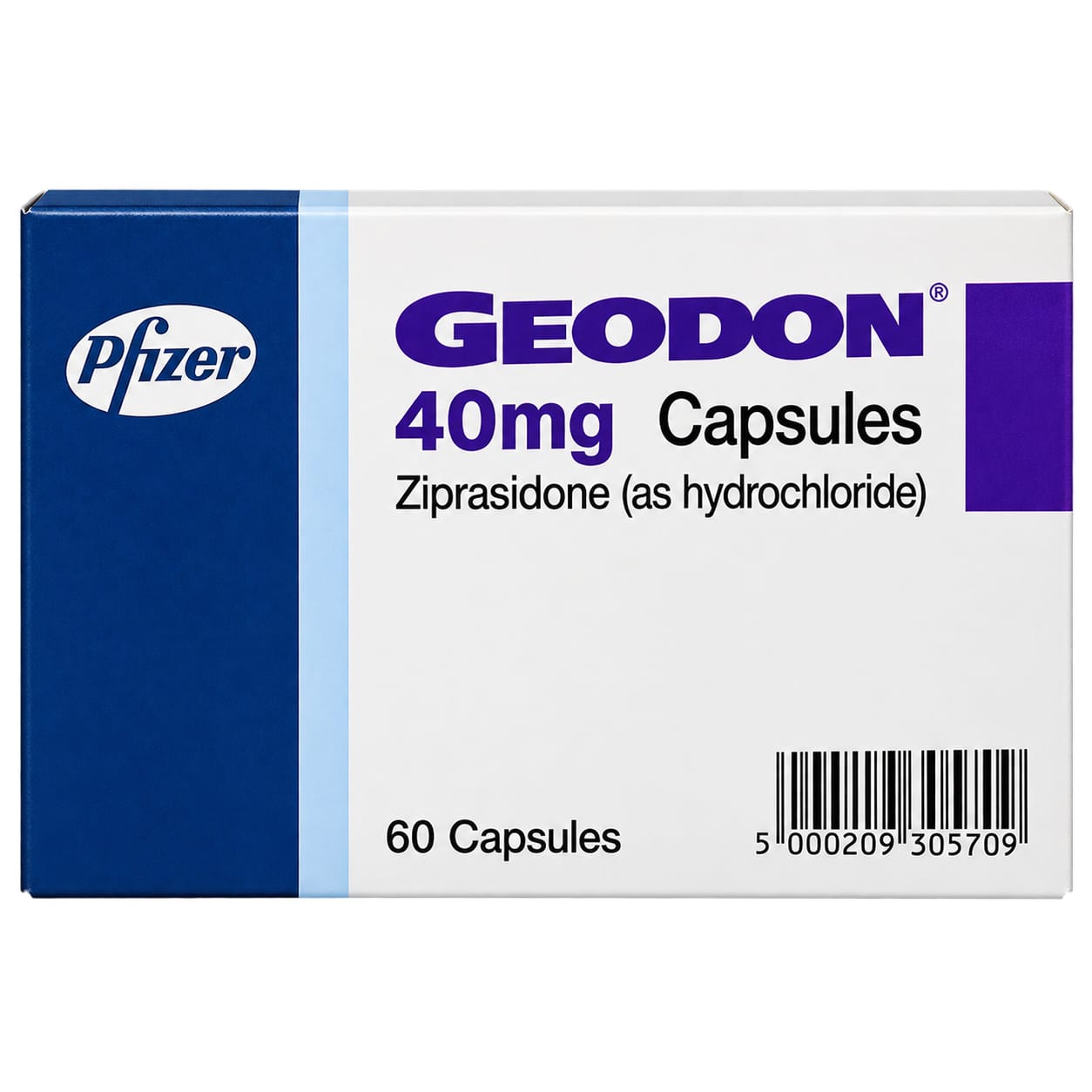
| Forms | Oral capsules (20 mg, 40 mg, 60 mg, 80 mg), Injectable form given by a health care provider |
Quick overview
Geodon (ziprasidone) is a prescription atypical antipsychotic used to treat schizophrenia and bipolar disorder. It works by balancing dopamine and serotonin in the brain to help regulate mood, behavior, and thoughts. It is available as oral capsules and an injectable form given by a health care provider, and it carries several important warnings, including risks of serious skin reactions, heart rhythm changes, and serotonin syndrome.
What is Geodon Capsule
Geodon (ziprasidone) is a prescription medicine used to treat mental health conditions like schizophrenia and bipolar disorder. It belongs to a group of medicines called antipsychotics.
Geodon Capsule uses
- Schizophrenia
- Bipolar disorder
Benefits of Geodon Capsule
- Helps balance brain chemicals that affect mood, behavior, and thoughts, which can improve symptoms of schizophrenia and bipolar disorder.
How Geodon Capsule works
Ziprasidone works by balancing the levels of dopamine and serotonin in the brain, substances that help regulate mood, behaviors, and thoughts.
Geodon Capsule dosage
Take this medication by mouth with water, with food. Take it as directed on the prescription label at the same time every day. Swallow the capsules whole. Do not cut, crush, or chew the capsules. Keep taking it unless your care team tells you to stop.
If you miss a dose, take it as soon as you can; if it is almost time for your next dose, just take that dose. Do not take double or extra doses. Talk to your care team about use in children, since special care may be needed. This medicine is only for you; do not share it with others.
Use exactly as prescribed by your doctor or pharmacist.
Available forms and strengths
- Oral capsules (20 mg, 40 mg, 60 mg, 80 mg)
- Injectable form given by a health care provider
Side effects of Geodon Capsule
Common
- Drowsiness
- Dizziness
- Headache
- Nausea, vomiting, or upset stomach
- Constipation or diarrhea
- Weight gain
- Infection in the nose or throat, sore throat, or common cold symptoms
- Movement problems
- Restlessness (akathisia)
- Feeling unusually weak or tired
- Abnormal vision
- Rash
Serious
- Allergic reactions—skin rash, itching, hives, swelling of the face, lips, tongue, or throat
- Heart rhythm changes—fast or irregular heartbeat, dizziness, feeling faint or lightheaded, chest pain, trouble breathing
- High blood sugar (hyperglycemia)—increased thirst or amount of urine, unusual weakness or fatigue, blurry vision
- Neuroleptic malignant syndrome—high fever, stiff muscles, increased sweating, fast or irregular heartbeat, and confusion
- High prolactin level—unexpected breast tissue growth, discharge from the nipple, change in sex drive or performance, irregular menstrual cycle
- Infection—fever, chills, cough, or sore throat
- Low blood pressure—dizziness, feeling faint or lightheaded, blurry vision
- Pain or trouble swallowing
- Prolonged or painful erection
- Rash, fever, and swollen lymph nodes
- Redness, blistering, peeling, or loosening of the skin, including inside the mouth
- Thoughts of suicide or self-harm, worsening mood, feelings of depression
- Uncontrolled and repetitive body movements, muscle stiffness or spasms, tremors or shaking, loss of balance or coordination, restlessness, shuffling walk (extrapyramidal symptoms)
- Serotonin syndrome—irritability, confusion, fast or irregular heartbeat, muscle stiffness, twitching muscles, sweating, high fever, seizure, chills, vomiting, and diarrhea
- Severe skin reactions such as Stevens-Johnson syndrome
- Blood disorders—fever, shortness of breath, frequent infection, unusual weakness or tiredness
- Seizures
Warnings and precautions
- This medicine may cause serious skin reactions, which can happen weeks to months after starting treatment. Seek care right away for fever or flu-like symptoms with a rash, especially if the rash turns into blisters or peeling skin.
- This medicine can cause serotonin syndrome, a condition caused by too much serotonin in the body, especially when combined with other medicines that raise serotonin.
- This medicine may cause a rare but dangerous heart rhythm problem called QT prolongation, especially in people who are older or have certain risk factors.
- This medicine may raise blood sugar levels, and the risk may be greater in people who already have diabetes.
- Older adults with dementia-related memory or thinking problems who take this type of medicine have a higher risk of stroke or death. This medicine is not approved to treat dementia-related psychosis.
- This medicine can make it harder for the body to regulate its temperature, so take care to avoid becoming too hot or too cold.
- Taking this medicine later in pregnancy may increase the risk of certain problems in the newborn. Tell your health care provider if you are pregnant or planning to become pregnant.
- Breastfeeding is not recommended while taking this medicine because it can pass into breast milk. Talk to your doctor or pharmacist.
- Tell your care team if you have kidney disease before taking this medicine.
- Tell your care team if you have liver disease before taking this medicine.
- It is best to avoid alcohol while taking this medicine, since it can increase the risk of sleepiness, dizziness, or fainting when standing up.
- This medicine can affect your coordination, reaction time, or judgment. Do not drive or operate machinery until you know how it affects you.
Storage
- Store at room temperature between 15 and 30 degrees C (59 and 86 degrees F).
- Get rid of any unused medication after the expiration date.
- Take the medication to a medication take-back program if possible.
- If you cannot return the medication, check the label or package insert to see if it should be thrown out in the garbage or flushed down the toilet. If unsure, ask your care team.
- If safe to trash, take the medication out of its container, mix it with cat litter, dirt, coffee grounds, or another unwanted substance, seal it in a bag or container, and put it in the trash.
- Store at room temperature away from light and moisture. Do not store in the bathroom.
- Keep all medications away from children and pets.
- Do not flush medications down the toilet or pour them into a drain unless instructed to do so.
When to see a doctor
- Get help right away if you notice signs of a serious allergic reaction, such as trouble breathing, swelling of the face, lips, or throat, or a fast heartbeat.
- Stop the medicine and call your health care provider right away if you get a rash, especially one with painful, blistering, or peeling skin.
- Tell your health care provider right away if you faint or notice changes in your heartbeat or rhythm.
- Stop the medicine and contact your health care provider right away if you have signs of neuroleptic malignant syndrome, such as high fever, stiff muscles, confusion, or changes in breathing or heart rate.
- Get emergency help if you have symptoms of serotonin syndrome, such as sweating, fever, confusion, agitation, fast heartbeat, or muscle twitching.
- Get emergency help if you have signs of choking or food stuck in your throat, since this medicine can cause trouble swallowing.
- If you think you have taken too much of this medicine, get medical help right away, such as from an emergency room or your local poison control center.
- Stop the medicine and get help right away if you notice signs of a blood disorder, such as fever, shortness of breath, frequent infections, or unusual weakness.
Alternatives
- Olanzapine
- Quetiapine
- Risperidone
- Aripiprazole
Watch the video
FAQs
What is Geodon Capsule used for?
Geodon (ziprasidone) is used to treat schizophrenia and bipolar disorder.
How does Geodon Capsule work?
Ziprasidone works by balancing the levels of dopamine and serotonin in the brain, substances that help regulate mood, behaviors, and thoughts.
How should I take Geodon Capsule?
Take it by mouth with water and food, at the same time every day, swallowing the capsules whole without cutting, crushing, or chewing them. If a dose is missed, take it as soon as possible, but skip it if it is almost time for the next dose, and do not double up.
What are the serious side effects of Geodon Capsule?
Serious side effects include heart rhythm changes, high blood sugar, neuroleptic malignant syndrome, serotonin syndrome, severe skin reactions like Stevens-Johnson syndrome, blood disorders, seizures, and thoughts of suicide or self-harm.
What forms and strengths does Geodon Capsule come in?
It is available as oral capsules in 20 mg, 40 mg, 60 mg, and 80 mg strengths, as well as an injectable form given by a health care provider.
General information, not medical advice
Your prescriber and the leaflet in your pack know your situation. This page does not.
- Follow your prescriber and the leaflet
- Don't start, stop, or change a dose on your own
- Doses and warnings differ by country and product
Sources
Video
Related medicines
Iloperidone Tablet: Uses, Dosage, Side Effects, Precautions and Alternates
Atypical antipsychotic (Second-Generation Antipsychotic)
Iloperidone Tablet treats schizophrenia in adults by reducing hallucinations and delusions. Learn dosage, side effects, warnings, and precautions.
Secuado Patch: Uses, Dosage, Side Effects, Precautions and Alternates
atypical antipsychotic (second-generation antipsychotic)
Secuado Patch (asenapine) is a once-daily skin patch for schizophrenia in adults. Learn how it works, dosing, side effects, and warnings.