
Safety
General information, not medical advice
Your prescriber and the leaflet in your pack know your situation. This page does not.
- Follow your prescriber and the leaflet
- Don't start, stop, or change a dose on your own
- Doses and warnings differ by country and product
Iloperidone Tablet: Uses, Dosage, Side Effects, Precautions and Alternates
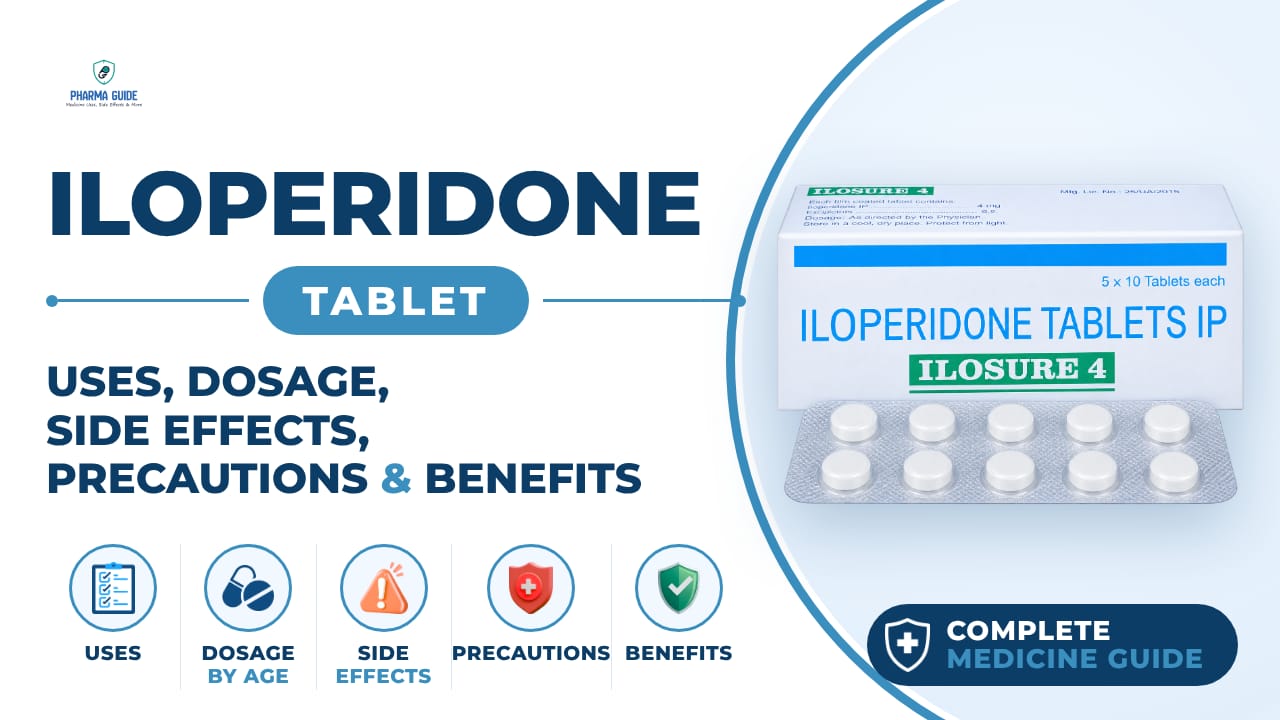
| Generic name | Iloperidone |
|---|---|
| Drug class | Atypical antipsychotic (Second-Generation Antipsychotic) |
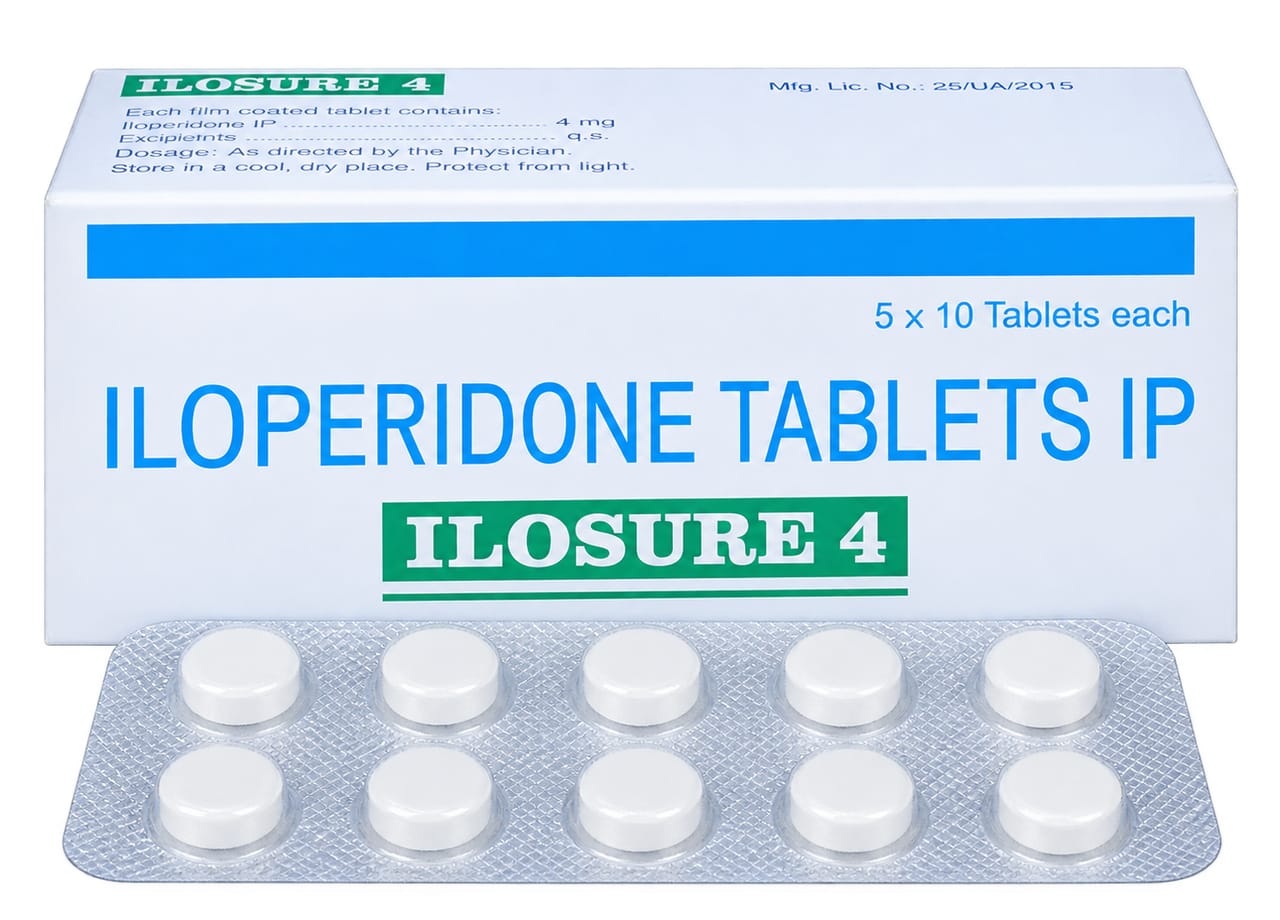
| Forms | Tablet (1 mg, 2 mg, 4 mg, 6 mg, 8 mg, 10 mg, 12 mg) |
Quick overview
Iloperidone Tablet is a prescription atypical antipsychotic used to treat schizophrenia in adults. It helps reduce hallucinations, delusions, and disorganized thinking that interfere with daily life. The dose is increased gradually, and it is taken twice daily as directed by a doctor. It carries several important warnings, including risks to heart rhythm, blood pressure, and movement control.
What is Iloperidone Tablet
Iloperidone is a prescription medicine used to treat schizophrenia in adults. Schizophrenia is a brain condition that causes delusions, hallucinations, and reduced speech. Iloperidone belongs to the atypical antipsychotic (second-generation antipsychotic) drug class.
Iloperidone Tablet uses
- Treats schizophrenia in adults.
- Helps reduce hallucinations.
- Helps reduce delusions.
- Helps manage disorganized thinking.
- Helps control symptoms that interfere with daily activities.
Benefits of Iloperidone Tablet
- Helps reduce symptoms of schizophrenia, including hallucinations and delusions (positive symptoms)
- May help improve negative symptoms such as reduced speech and loss of interest in activities
- Shown in studies to be as effective as haloperidol in preventing relapse during long-term treatment
How Iloperidone Tablet works
Doctors are not completely sure exactly how iloperidone works, but it is thought to work by blocking certain brain chemical signals called serotonin and dopamine, which are both involved in schizophrenia symptoms.
Iloperidone Tablet dosage
Iloperidone can be taken with or without food. The dose is slowly increased over about a week to help avoid a sudden drop in blood pressure when standing up. Take this medicine exactly as your doctor prescribes; do not take more or less than directed. Do not stop taking this medicine suddenly without talking to your doctor first. If you have missed more than 3 days in a row, talk to your doctor before restarting, since you may need to restart at a lower dose and re-titrate. This medicine is not recommended for use in children or adolescents, and it should be used with caution in elderly patients, who may be more sensitive to side effects.
| Age group | Dose |
|---|---|
| Under 18 years | Not recommended |
| 18–64 years | 6–12 mg, twice/day |
| 65+ years | 6–12 mg, twice/day |
Available forms and strengths
Iloperidone is available as a tablet in the following strengths: 1 mg, 2 mg, 4 mg, 6 mg, 8 mg, 10 mg, and 12 mg.
Side effects of Iloperidone Tablet
Common
- Dizziness
- Drowsiness or tiredness
- Dry mouth
- Stuffy or runny nose
- Weight gain
- Fast heart rate
- Low blood pressure or feeling like you might faint
- Nausea
- Indigestion
- Breast swelling or discharge
- Changes in menstrual periods
Serious
- Irregular, fast, or pounding heartbeats, or fluttering in the chest
- Feeling unusually hot, seizures, or feeling like you might pass out
- Uncontrolled muscle movements in the face (chewing, lip smacking, tongue movement, blinking)
- Trouble swallowing, tremors, slow muscle movement, muscle pain or stiffness
- Loss of bladder control
- Signs of high blood sugar: increased thirst, increased urination, dry mouth, fruity breath odor
- Signs of low blood cell counts: fever, chills, tiredness, mouth sores, skin sores, easy bruising, unusual bleeding, pale skin, cold hands and feet, shortness of breath
- Severe nervous system reaction: very stiff muscles, high fever, sweating, confusion, fast or uneven heartbeats, tremors, feeling faint
- Signs of a stroke: sudden numbness or weakness (especially on one side of the body), severe headache, slurred speech, vision or balance problems
- A penis erection that is painful or lasts 4 hours or longer
- Signs of an allergic reaction: hives, difficulty breathing, swelling of face, lips, tongue, or throat
Warnings and precautions
- Elderly patients with dementia-related psychosis who take antipsychotic drugs like this one have a higher risk of death. This medicine is not approved for treating dementia-related psychosis.
- This medicine can affect the heart's electrical rhythm (prolong the QT interval), which in rare cases can lead to a dangerous irregular heartbeat and sudden death.
- A rare but potentially fatal condition called neuroleptic malignant syndrome can occur, with symptoms like high fever, stiff muscles, confusion, and irregular heartbeat or blood pressure.
- Long-term use may cause a serious movement disorder (tardive dyskinesia) involving uncontrollable movements, which may not go away even after stopping the medicine.
- This medicine can cause a sudden drop in blood pressure upon standing, leading to dizziness, fast heartbeat, or fainting, especially when starting treatment or increasing the dose.
- This medicine can lower white blood cell counts, which can increase the risk of serious infections.
- This medicine can raise blood sugar levels and may lead to diabetes, in some cases severe enough to cause serious complications.
- Painful or prolonged erections (priapism) have been reported and may require surgery if not treated promptly.
- This medicine may increase the risk of suicidal thoughts in some patients, so close monitoring is important, especially in high-risk individuals.
- Avoid becoming too hot or dehydrated while taking this medicine, since it can affect the body's ability to regulate its temperature.
- This medicine is not recommended during pregnancy unless clearly needed. Taking it during the last three months of pregnancy may cause problems in the newborn baby, so tell your doctor right away if you become pregnant.
- Women taking this medicine are advised not to breastfeed, because it is not known if the drug passes into human breast milk and it could cause serious side effects in a nursing infant.
- No dose adjustment is generally needed for kidney problems, since this medicine is mostly broken down by the liver and very little is removed from the body unchanged.
- This medicine is not recommended for people with severe liver problems. Caution is needed in people with moderate liver impairment, and doctors may need to monitor liver function closely.
- Avoid drinking alcohol while taking this medicine, since it can increase the risk of side effects like dizziness, trouble concentrating, and impaired judgment.
- This medicine can affect judgment, thinking, or motor skills, so avoid driving or operating hazardous machinery until you know how it affects you.
Storage
- Store at controlled room temperature, 25°C (77°F); brief exposure to 15° to 30°C (59° to 86°F) is permitted
- Protect tablets from exposure to light and moisture
- Store away from moisture, heat, and light
- Keep out of the reach of children
When to see a doctor
- Get emergency help right away if you have signs of a severe allergic reaction, such as hives, trouble breathing, or swelling of the face, lips, tongue, or throat.
- Call your doctor right away if you notice irregular, fast, or pounding heartbeats, or fluttering in the chest.
- Seek help immediately for signs of a stroke, such as sudden numbness or weakness on one side of the body, severe headache, slurred speech, or problems with vision or balance.
- Get medical attention if you have a penis erection that is painful or lasts 4 hours or longer.
- Seek help if you have symptoms of a severe nervous system reaction, including very stiff muscles, high fever, sweating, confusion, fast or uneven heartbeats, or tremors.
- Call your doctor if you notice signs of high blood sugar, such as increased thirst, increased urination, dry mouth, or fruity-smelling breath.
- Call your doctor if you have signs of low blood cell counts, such as fever, chills, tiredness, mouth or skin sores, easy bruising, unusual bleeding, pale skin, or shortness of breath.
- In case of a suspected overdose, get emergency medical help or contact your local poison control center right away.
Alternatives
- Quetiapine
- Paliperidone
- Risperidone
Watch the video
FAQs
What is Iloperidone Tablet used for?
It is a prescription atypical antipsychotic used to treat schizophrenia in adults, helping reduce hallucinations, delusions, and disorganized thinking.
How is Iloperidone Tablet taken?
It is taken twice daily with or without food, with the dose slowly increased over about a week to help avoid a sudden drop in blood pressure when standing up. It should be taken exactly as prescribed and not stopped suddenly without consulting a doctor.
What are the common side effects of Iloperidone Tablet?
Common side effects include dizziness, drowsiness, dry mouth, stuffy or runny nose, weight gain, fast heart rate, low blood pressure, nausea, indigestion, and breast swelling or discharge.
What warnings should I know before taking Iloperidone Tablet?
It can affect heart rhythm, cause a sudden drop in blood pressure, lower white blood cell counts, raise blood sugar, and increase the risk of a serious movement disorder called tardive dyskinesia. It is not approved for dementia-related psychosis and carries a higher risk of death in elderly patients with that condition.
Is Iloperidone Tablet safe during pregnancy or breastfeeding?
It is not recommended during pregnancy unless clearly needed, as use in the last three months may cause problems in the newborn. Breastfeeding is not advised while taking this medicine.
General information, not medical advice
Your prescriber and the leaflet in your pack know your situation. This page does not.
- Follow your prescriber and the leaflet
- Don't start, stop, or change a dose on your own
- Doses and warnings differ by country and product
Sources
Video
Related medicines
Geodon Capsule: Uses, Dosage, Side Effects, Precautions and Alternates
atypical antipsychotic (second-generation antipsychotic)
Geodon (ziprasidone) is a prescription antipsychotic for schizophrenia and bipolar disorder. Learn how it works, dosage, side effects, and warnings.
Secuado Patch: Uses, Dosage, Side Effects, Precautions and Alternates
atypical antipsychotic (second-generation antipsychotic)
Secuado Patch (asenapine) is a once-daily skin patch for schizophrenia in adults. Learn how it works, dosing, side effects, and warnings.