
Safety
General information, not medical advice
Your prescriber and the leaflet in your pack know your situation. This page does not.
- Follow your prescriber and the leaflet
- Don't start, stop, or change a dose on your own
- Doses and warnings differ by country and product
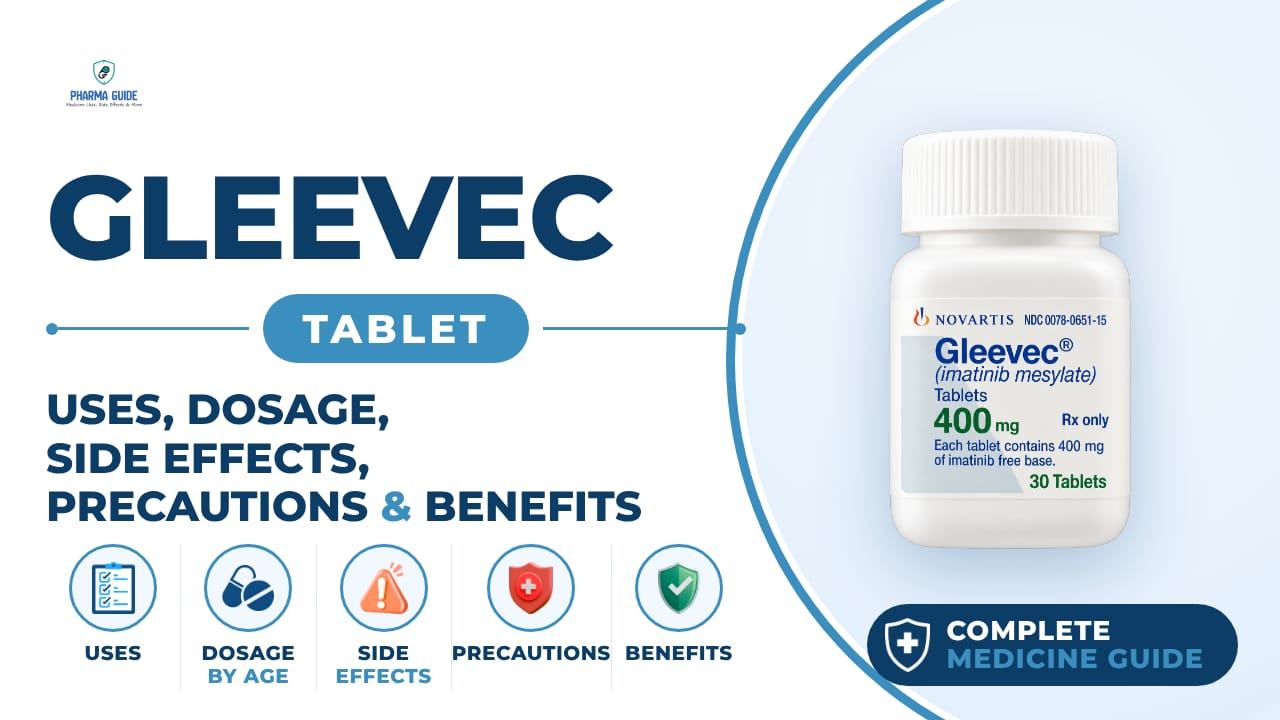
Gleevec Tablet: Uses, Dosage, Side Effects, Precautions and Alternates
| Generic name | imatinib mesylate |
|---|---|
| Drug class | kinase inhibitor |
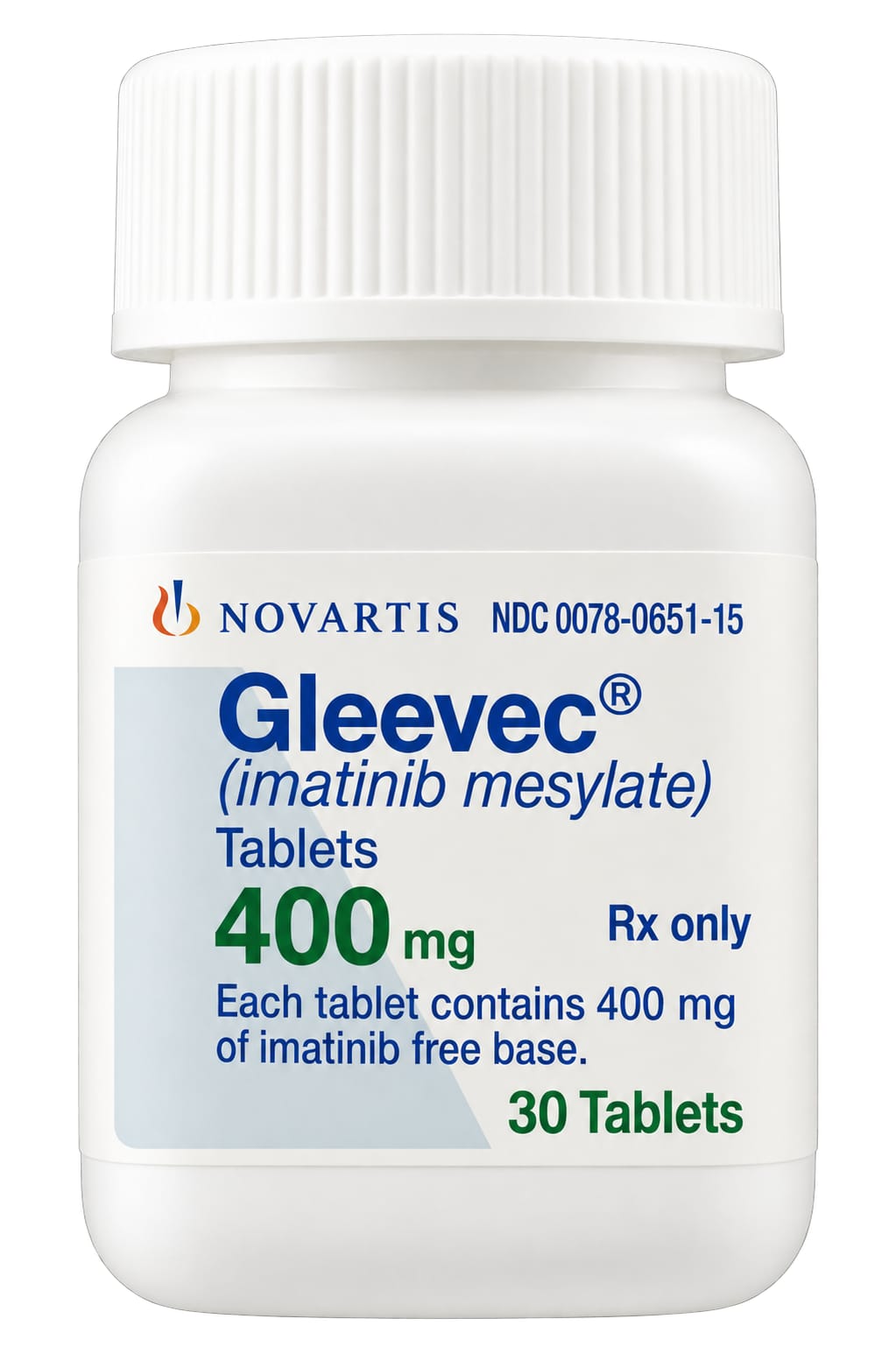
| Forms | Film-coated tablets (100 mg and 400 mg) |
Quick overview
Gleevec Tablet contains imatinib mesylate, a kinase inhibitor used to treat certain blood cancers and tumors, including chronic myeloid leukemia (CML), certain acute lymphoblastic leukemia (ALL), gastrointestinal stromal tumors (GIST), and other conditions linked to specific abnormal proteins. It works by blocking an abnormal tyrosine kinase enzyme that helps cancer cells grow. Gleevec is available as film-coated tablets and must be taken exactly as prescribed, with regular monitoring for side effects such as fluid retention, low blood cell counts, and liver or heart problems.
What is Gleevec Tablet
Gleevec is a prescription tablet that contains imatinib mesylate, a type of medicine called a kinase inhibitor. It is used to treat certain blood cancers and other tumors by blocking abnormal proteins that help cancer cells grow.
Gleevec Tablet uses
- Newly diagnosed chronic myeloid leukemia (CML) that is Philadelphia chromosome positive, in adults and children
- CML in blast crisis, accelerated phase, or chronic phase after interferon-alpha treatment has failed
- Adults with relapsed or refractory Philadelphia chromosome positive acute lymphoblastic leukemia (ALL)
- Children with newly diagnosed Philadelphia chromosome positive ALL, given together with chemotherapy
- Adults with certain myelodysplastic/myeloproliferative diseases linked to PDGFR gene changes
- Adults with aggressive systemic mastocytosis
- Adults with hypereosinophilic syndrome or chronic eosinophilic leukemia
- Adults with dermatofibrosarcoma protuberans, a type of skin cancer, that cannot be removed by surgery or has spread
- Gastrointestinal stromal tumors (GIST) that are Kit (CD117) positive and cannot be removed by surgery or have spread
- Adjuvant (follow-up) treatment of adults after surgical removal of Kit (CD117) positive GIST
Benefits of Gleevec Tablet
- CML Treatment: Used for Philadelphia chromosome-positive chronic myeloid leukemia
- GIST Treatment: Used for certain KIT-positive gastrointestinal stromal tumors
- ALL Support: Used for certain Philadelphia chromosome-positive acute lymphoblastic leukemia
- Targeted Therapy: Blocks specific abnormal tyrosine-kinase signaling involved in cancer-cell growth
- Other Blood Disorders: Used for selected PDGFR- or KIT-associated disorders
How Gleevec Tablet works
Gleevec blocks a specific abnormal protein (an enzyme called a tyrosine kinase) that tells cancer cells to grow and divide. By blocking this protein, Gleevec can slow or stop the growth of cancer cells and cause some of them to die.
Gleevec Tablet dosage
Take Gleevec exactly as prescribed by your doctor; do not change your dose or stop taking it unless your doctor tells you to. Take each dose with a meal and a large glass of water. If a dose is too high to take once daily, it may be split into two doses taken in the morning and evening. If you have trouble swallowing tablets, they can be dispersed in a glass of water or apple juice and the mixture taken right after the tablet has fully broken apart. Do not crush the tablets yourself, and avoid letting crushed tablet material touch your skin or mucous membranes.
If you miss a dose, take it as soon as you remember unless it is almost time for your next dose; do not take two doses at the same time to make up for a missed one. Avoid grapefruit juice and other foods that affect how the body processes this medicine. Children can take their daily dose either all at once or split into a morning and evening portion.
| Age group | Dose |
|---|---|
| 12–17 Years | Dose is based on body surface area and cancer type, under oncology supervision |
| Adults (18–64 Years) | 400–800 mg/day depending on the specific cancer |
| Older Adults (65+ Years) | Adult regimen; individualized according to cancer type and medical condition |
Available forms and strengths
- Film-coated tablets (100 mg and 400 mg)
Side effects of Gleevec Tablet
Common
- Fluid retention/swelling (edema), including puffy eyes, hands, or feet
- Nausea and vomiting
- Muscle cramps and muscle or joint pain
- Diarrhea
- Abdominal pain
- Rash
- Fatigue
- Headache
- Weight gain
- Hair loss
Serious
- Severe fluid buildup around the heart, lungs, or abdomen
- Low blood cell counts (anemia, neutropenia, thrombocytopenia) that can cause infections, bleeding, or bruising
- Congestive heart failure and left ventricular dysfunction
- Severe liver damage, including liver failure
- Serious bleeding (hemorrhage), often in the stomach or intestines
- Gastrointestinal perforation (a tear in the stomach or intestine wall)
- Cardiogenic shock or heart dysfunction in patients with high eosinophil levels
- Severe skin reactions, including Stevens-Johnson syndrome and erythema multiforme
- Hypothyroidism in patients who have had their thyroid removed
- Kidney function decline
- Tumor lysis syndrome
- Growth delay in children and pre-teens
- Severe allergic reaction
Warnings and precautions
- Gleevec can cause edema and sometimes serious fluid buildup. Your weight should be checked regularly, and any sudden weight gain should be reported to your doctor.
- This medicine can lower blood cell counts, so regular blood tests are needed, especially early in treatment.
- Serious heart problems, including heart failure, have occurred with this medicine, especially in people with existing heart disease or risk factors.
- Severe liver damage, sometimes fatal, has happened with this medicine. Liver function tests are needed before and during treatment.
- Serious bleeding has been reported, including bleeding in the stomach or intestines, sometimes related to tumors.
- Rare but serious tears (perforations) in the stomach or intestine wall have occurred, sometimes fatal.
- In patients with very high eosinophil levels, starting this medicine has triggered serious heart problems including cardiogenic shock.
- Serious skin reactions, including blistering conditions like Stevens-Johnson syndrome, have occurred with this medicine.
- People who have had thyroid surgery and take thyroid hormone replacement may develop low thyroid hormone levels while on this medicine and need close monitoring.
- Children and pre-teens taking this medicine have shown slower-than-normal growth, and the long-term effects on growth are not known.
- A condition called tumor lysis syndrome, caused by rapid breakdown of cancer cells, can occur and has been fatal in some cases.
- This medicine can reduce kidney function over time, so kidney function should be checked before starting and during treatment.
- Gleevec can harm an unborn baby. Women should avoid becoming pregnant while taking this medicine and should use effective birth control during treatment and for 14 days after stopping it. Tell your doctor right away if you are or might be pregnant.
- Do not breastfeed while taking Gleevec and for one month after your last dose, since the medicine passes into breast milk and could harm a nursing baby.
- Gleevec can affect kidney function, and people with kidney problems may need a lower dose. Your doctor should check your kidney function before and during treatment.
- Gleevec can cause liver damage, which has sometimes been severe or fatal. People with liver problems may need a lower dose, and your doctor will check your liver function with blood tests before and during treatment.
- Alcohol is not known to directly interact with Gleevec, but drinking it may increase side effects like nausea, diarrhea, and fatigue, and may add to the risk of liver damage. Ask your doctor how much alcohol, if any, is safe for you.
- Gleevec can cause dizziness, blurred vision, or sleepiness. Be careful when driving a car or operating machinery until you know how this medicine affects you.
Storage
- Store at 20°C to 25°C (68°F to 77°F); brief changes between 15°C and 30°C (59°F and 86°F) are permitted
- Protect from moisture
- Dispense and keep in a tightly closed container
- Do not crush the tablets; avoid direct contact of crushed tablets with skin or mucous membranes
When to see a doctor
- Get medical help right away if you notice signs of liver problems, such as yellowing of the skin or eyes, loss of appetite, dark urine, or unusual bleeding or bruising.
- Contact your doctor if you suddenly gain weight unexpectedly, as this can be a sign of serious fluid retention.
- Tell your doctor if you have fever, shortness of breath, blood in your stools, yellowing of the skin (jaundice), sudden weight gain, or symptoms of heart failure, or if you have a history of heart disease or risk factors for heart failure.
- Seek emergency care right away if you have symptoms of a severe allergic reaction, such as swelling of the mouth, tongue, or throat, or trouble breathing.
Alternatives
- Dasatinib
- Nilotinib
- Bosutinib
Watch the video
FAQs
What is Gleevec Tablet used for?
Gleevec is used to treat Philadelphia chromosome-positive chronic myeloid leukemia (CML), certain acute lymphoblastic leukemia (ALL), KIT-positive gastrointestinal stromal tumors (GIST), dermatofibrosarcoma protuberans, systemic mastocytosis, hypereosinophilic syndrome, and certain PDGFR-associated disorders.
How should Gleevec Tablet be taken?
Take Gleevec exactly as prescribed, with a meal and a large glass of water. Doses may be split into morning and evening portions if high. Tablets can be dispersed in water or apple juice if swallowing is difficult, but should not be crushed, and crushed material should not touch skin or mucous membranes.
What are the common side effects of Gleevec Tablet?
Common side effects include fluid retention/swelling, nausea and vomiting, muscle cramps, joint pain, diarrhea, abdominal pain, rash, fatigue, headache, weight gain, and hair loss.
What serious risks are linked to Gleevec Tablet?
Serious risks include severe fluid buildup, low blood cell counts, congestive heart failure, severe liver damage, serious bleeding, gastrointestinal perforation, severe skin reactions like Stevens-Johnson syndrome, kidney function decline, tumor lysis syndrome, and growth delay in children.
Is Gleevec safe during pregnancy or breastfeeding?
Gleevec can harm an unborn baby, so women should avoid pregnancy and use effective birth control during treatment and for 14 days after stopping. Breastfeeding should be avoided during treatment and for one month after the last dose.
General information, not medical advice
Your prescriber and the leaflet in your pack know your situation. This page does not.
- Follow your prescriber and the leaflet
- Don't start, stop, or change a dose on your own
- Doses and warnings differ by country and product
Sources
Video
Related medicines
Imbruvica Capsule: Uses, Dosage, Side Effects, Precautions and Alternates
kinase inhibitor
Imbruvica Capsule (ibrutinib) treats certain blood cancers and chronic GVHD by blocking BTK. Learn about uses, dosage, side effects, and precautions.
Xalkori Capsule: Uses, Dosage, Side Effects, Precautions and Alternates
kinase inhibitor
Xalkori Capsule (crizotinib) treats ALK/ROS1-positive lung cancer, ALCL, and IMT. Learn about dosage, side effects, warnings, and precautions before use.