
Safety
General information, not medical advice
Your prescriber and the leaflet in your pack know your situation. This page does not.
- Follow your prescriber and the leaflet
- Don't start, stop, or change a dose on your own
- Doses and warnings differ by country and product
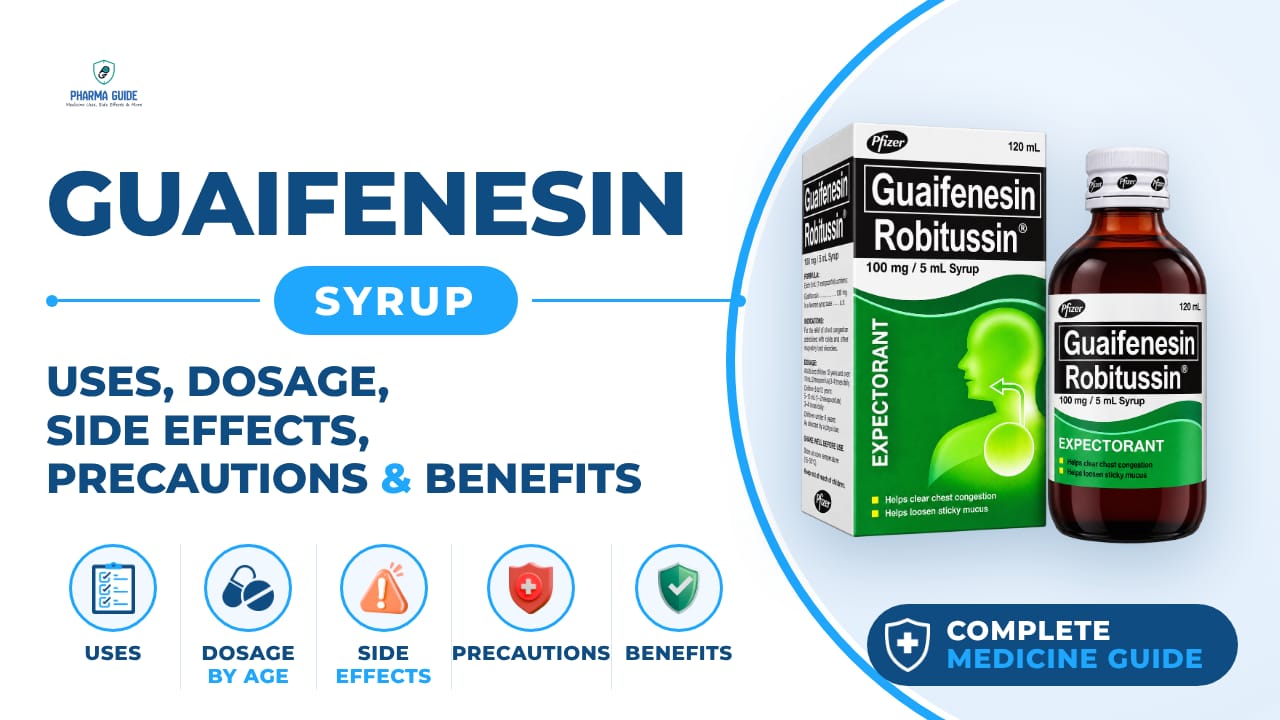
Guaifenesin Syrup: Uses, Dosage, Side Effects, Precautions and Alternates
| Generic name | guaifenesin |
|---|---|
| Drug class | Expectorant |
| Forms | Tablet, Extended-release tablet, Syrup/liquid, Granules/packet (Mini Melts) |
Quick overview
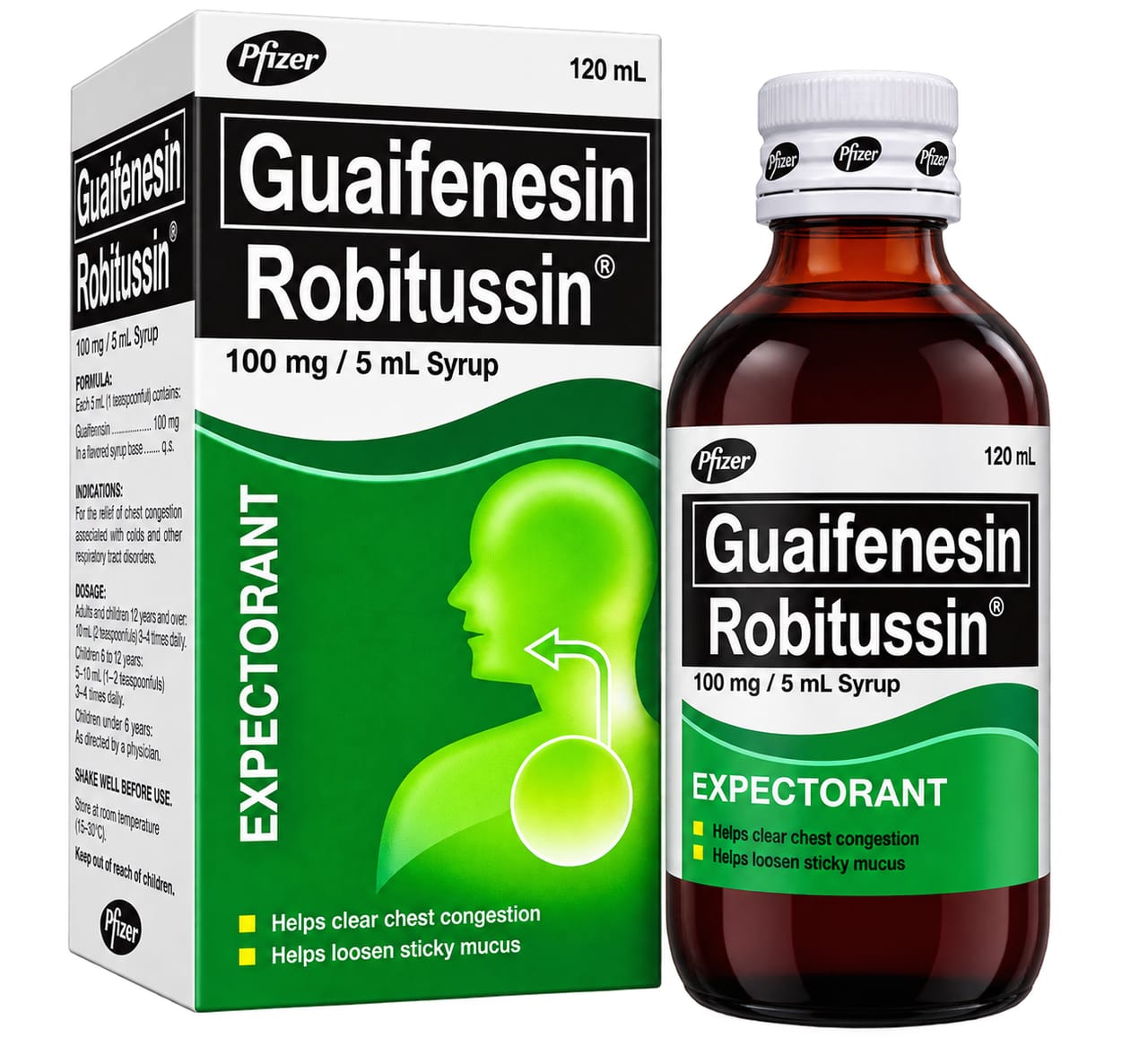
Guaifenesin Syrup contains guaifenesin, an expectorant used to help clear mucus or phlegm from the chest during a cold or flu. It works by thinning mucus so it is easier to cough up, and it is available both over-the-counter and on prescription. Common side effects may include dizziness, headache, and drowsiness, and it should be used exactly as directed on the label or by a doctor.
What is Guaifenesin Syrup
Guaifenesin is an ingredient in cough and cold medicines used to help clear mucus or phlegm from your chest when you have a cold or flu. It is available both over-the-counter and on prescription.
Guaifenesin Syrup uses
- Helps clear chest congestion caused by cold or flu
- Temporarily treats cough and chest congestion from the common cold, flu, or other breathing illnesses such as sinusitis or bronchitis
- Thins mucus so it can be removed from the body by coughing
Benefits of Guaifenesin Syrup
- Helps loosen and thin mucus in the airways
- Makes phlegm easier to cough up
- Relieves chest congestion caused by colds or respiratory infections
- Helps make a productive cough more effective
- May make breathing feel easier by helping clear mucus from the chest
How Guaifenesin Syrup works
Guaifenesin increases fluid in the airways, which makes thick mucus thinner and easier to cough up.
Guaifenesin Syrup dosage
Use exactly as directed on the label or as prescribed by your doctor; do not use in larger or smaller amounts or for longer than recommended. Cough medicine is usually taken only for a short time until symptoms clear up. Take with food if it upsets your stomach. Take by mouth with or without food, with a full glass of water. Measure liquid medicine with the dosing syringe provided, a special dose-measuring spoon, or a medicine cup; do not use a household spoon. If the liquid form is a suspension, shake the bottle well before each dose. Do not crush, chew, break, or open a controlled-release, delayed-release, or extended-release tablet or capsule; swallow it whole. Drink extra fluids to help loosen congestion and lubricate the throat while taking this medication. Always ask a doctor before giving a cough or cold medicine to a child. Stop using and ask a doctor if cough lasts more than 7 days, comes back, or occurs with fever, rash, or persistent headache.
| Age group | Dose |
|---|---|
| Under 2 years | Use only under medical advice |
| 2–5 years | 50–100 mg every 4 hours; max 600 mg/day |
| 6–11 years | 100–200 mg every 4 hours; max 1,200 mg/day |
| 12–64 years | 200–400 mg every 4 hours; max 2,400 mg/day |
| 65+ years | Usually adult dosing; consider other medicines and medical conditions |
Available forms and strengths
- Tablet
- Extended-release tablet
- Syrup/liquid
- Granules/packet (Mini Melts)
Side effects of Guaifenesin Syrup
Common
- Dizziness
- Headache
- Drowsiness
- Rash
- Nausea
- Vomiting
- Stomach upset
Serious
- Hives
- Difficult breathing
- Swelling of face, lips, tongue, or throat
Warnings and precautions
- Do not use this medicine if you are allergic to guaifenesin.
- Guaifenesin is commonly found in over-the-counter combination cold and cough medicines. Read labels or ask a doctor or pharmacist before using another cold or cough medicine while taking guaifenesin, since taking certain products together can cause you to get too much of a certain drug.
- Always ask a doctor before giving a cough or cold medicine to a child. Death can occur from misuse of cough and cold medicines in very young children.
- Do not give this medicine to a child without medical advice.
- Tell your doctor if you are taking this medicine before you have any medical tests, since guaifenesin may affect the results of certain lab tests.
- It is not known whether guaifenesin will harm an unborn baby. Ask a doctor before using this medicine if you are pregnant.
- It is not known whether guaifenesin passes into breast milk or if it could harm a nursing baby. Ask a doctor before using this medicine if you are breast-feeding.
- Ask a doctor or pharmacist if it is safe to use this medicine if you have kidney disease.
- Ask a doctor or pharmacist if it is safe to use this medicine if you have liver disease.
- This medication may impair your thinking or reactions. Be careful if you drive or do anything that requires you to be alert.
Storage
- Store at room temperature away from moisture, heat, and light
- Do not store in the bathroom
- Keep all medications away from children and pets
- Do not flush medications down the toilet or pour them into a drain unless instructed to do so
- Properly discard this product when it is expired or no longer needed; consult your pharmacist or local waste disposal company
When to see a doctor
- Get emergency medical help if you have signs of an allergic reaction: hives; difficult breathing; swelling of your face, lips, tongue, or throat.
- Stop using this medicine and ask a doctor if your cough lasts more than 7 days, comes back, or occurs with a fever, rash, or persistent headache, as these could be signs of a serious illness.
- If you think there has been an overdose, contact your poison control center or get medical care right away, and be ready to describe what was taken, how much, and when it happened.
Alternatives
- Erdosteine
- Carbocisteine
- Acetylcysteine (NAC)
- Ambroxol
- Bromhexine
Watch the video
FAQs
What is Guaifenesin Syrup used for?
It is used to help clear mucus or phlegm from the chest during a cold or flu, and to temporarily treat cough and chest congestion from colds, flu, or other breathing illnesses like sinusitis or bronchitis.
How does Guaifenesin Syrup work?
Guaifenesin increases fluid in the airways, which makes thick mucus thinner and easier to cough up.
What are the common side effects of Guaifenesin Syrup?
Common side effects may include dizziness, headache, drowsiness, rash, nausea, vomiting, and stomach upset.
When should I stop using Guaifenesin Syrup and see a doctor?
Stop using it and ask a doctor if your cough lasts more than 7 days, comes back, or occurs with fever, rash, or persistent headache, as these could signal a more serious illness.
Is Guaifenesin Syrup safe to give to children?
Always ask a doctor before giving a cough or cold medicine to a child, since death can occur from misuse of these medicines in very young children, and children under 2 years should only use it under medical advice.
General information, not medical advice
Your prescriber and the leaflet in your pack know your situation. This page does not.
- Follow your prescriber and the leaflet
- Don't start, stop, or change a dose on your own
- Doses and warnings differ by country and product
Sources
Video
Related medicines
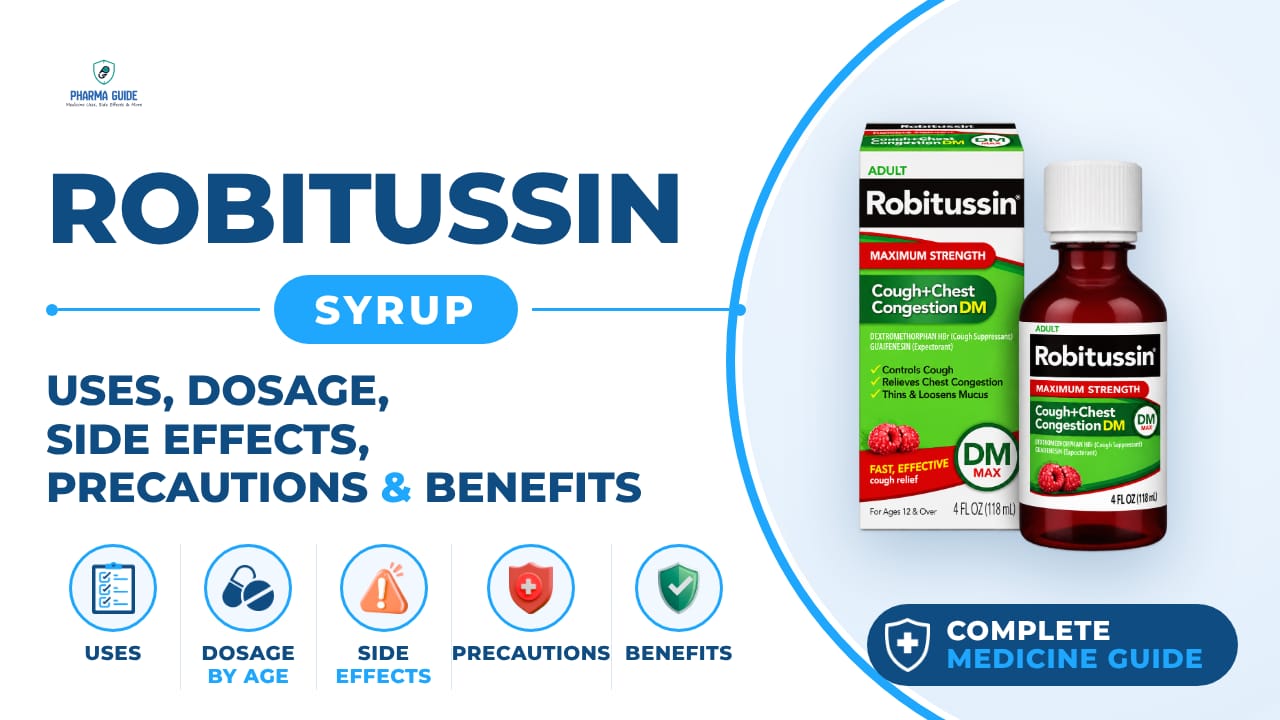
Robitussin Syrup: Uses, Dosage, Side Effects, Precautions and Alternates
Expectorant
Robitussin Syrup contains guaifenesin, an expectorant that loosens chest mucus to relieve congestion and make coughs more productive and effective.

Injectafer Injection: Uses, Dosage, Side Effects, Precautions and Alternates
Iron products
Injectafer (ferric carboxymaltose) treats iron deficiency anemia and heart failure-related iron deficiency via IV. Learn uses, dosage, side effects, and