
Safety
General information, not medical advice
Your prescriber and the leaflet in your pack know your situation. This page does not.
- Follow your prescriber and the leaflet
- Don't start, stop, or change a dose on your own
- Doses and warnings differ by country and product
Humatrope Injection: Uses, Dosage, Side Effects, Precautions and Alternates
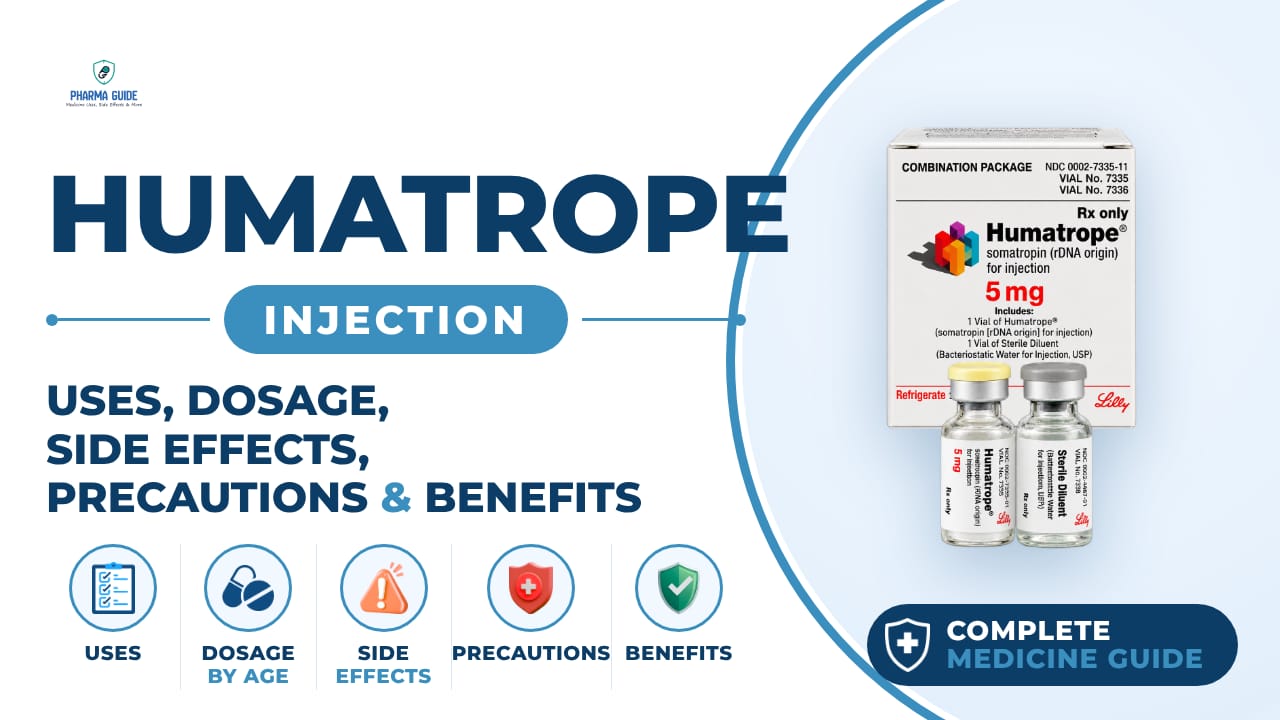
| Generic name | somatropin |
|---|---|
| Drug class | Growth hormones |
| Forms | Injection: lyophilized powder in single-patient-use cartridges (6 mg, 12 mg, or 24 mg) for use with the HumatroPen injection device |
Quick overview
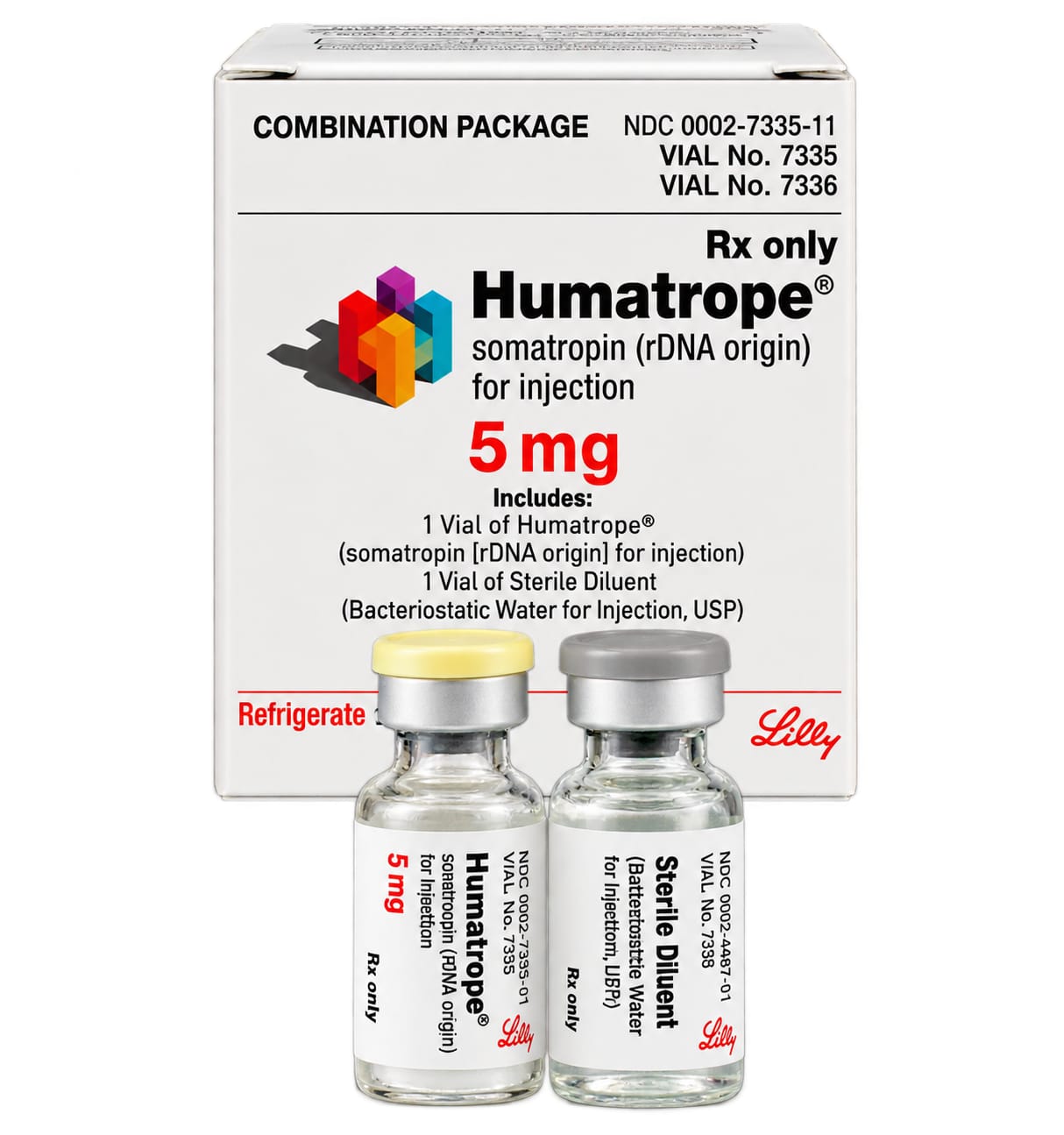
Humatrope Injection (somatropin) is a man-made form of human growth hormone, identical to the hormone made naturally by the pituitary gland, belonging to the growth hormone drug class. It is used to treat growth failure and short stature in children due to several causes, as well as to replace growth hormone in adults with growth hormone deficiency. It is given as a subcutaneous injection using the HumatroPen device. Use it exactly as prescribed by your doctor or pharmacist.
What is Humatrope Injection
Humatrope is a man-made form of human growth hormone. It is identical to the growth hormone made naturally by the pituitary gland. It helps bones and muscles grow.
Humatrope Injection uses
- Growth failure in children due to inadequate secretion of the body's own growth hormone
- Short stature associated with Turner syndrome in children
- Idiopathic Short Stature (ISS) in children with significant short stature who are unlikely to reach a normal adult height
- Short stature or growth failure caused by SHOX gene deficiency in children
- Short stature in children born small for gestational age who have not caught up in growth by age 2 to 4 years
- Replacement of growth hormone in adults with growth hormone deficiency
Benefits of Humatrope Injection
- Increases height growth rate in children with growth hormone deficiency and other growth conditions
- Increases lean body mass and decreases body fat in adults with growth hormone deficiency
- May improve cholesterol (HDL) levels in adults with growth hormone deficiency over time
How Humatrope Injection works
Humatrope works like your body's own growth hormone. It attaches to growth hormone receptors on cells, which turns on growth-related proteins (including IGF-1) that help bones, muscles, and tissues grow, and affects how the body processes protein, sugar, and fat.
Humatrope Injection dosage
Humatrope is given as a subcutaneous (under-the-skin) injection into the back of the upper arm, abdomen, buttock, or thigh. Injection sites should be rotated regularly to avoid skin/tissue thinning (lipoatrophy). Let the medicine sit at room temperature for about 10 minutes before injecting to reduce discomfort. For children, the weekly dose is usually split into equal doses given either 6 or 7 days a week. For adults, the dose is usually given as a single injection each day. Do not change your dose or switch pen devices unless your healthcare professional tells you to. Use a new needle for every injection and never share your pen or needles with another person. Do not shake the cartridge during mixing; the mixed solution should look clear, not cloudy or have particles in it.
| Age group | Dose |
|---|---|
| Children 2–5 years with GH deficiency | 0.18–0.30 mg/kg/week, divided daily |
| Children 6–17 years with GH deficiency | 0.18–0.30 mg/kg/week, divided daily |
| 18–30 years with adult GH deficiency | Often starts around 0.2 mg/day; individualized according to IGF-1 and response |
| 31–60 years with adult GH deficiency | Usually starts around 0.2 mg/day; gradual adjustment according to response |
Available forms and strengths
- Injection: lyophilized powder in single-patient-use cartridges (6 mg, 12 mg, or 24 mg) for use with the HumatroPen injection device
Side effects of Humatrope Injection
Common
- Pain, itching, or skin changes where the medicine was injected
- Swelling, rapid weight gain
- Muscle or joint pain
- Numbness or tingling
- Stomach pain, gas
- Headache, back pain
- Cold or flu symptoms, stuffy nose, sneezing, sore throat, ear pain
- Upper respiratory infection, fever, sore throat
- Ear infection (otitis media)
- Carpal tunnel syndrome
Serious
- Signs of allergic reaction: hives, difficulty breathing, swelling of face, lips, tongue, or throat
- Serious breathing problems in patients with Prader-Willi syndrome, including new or increased snoring
- Pain in knees or hips, or walking with a limp
- Ear pain, swelling, warmth, or drainage
- Numbness or tingling in wrist, hand, or fingers
- Severe swelling or puffiness in hands and feet
- Changes in behavior
- Vision problems, unusual headaches
- Changes in the shape or size of a mole
- Pain or swelling in joints
- Pancreatitis signs: severe upper stomach pain spreading to the back, nausea and vomiting
- High blood sugar signs: increased thirst, increased urination, dry mouth, fruity breath odor
- Increased pressure inside the skull: severe headaches, ringing in ears, dizziness, nausea, vision problems, pain behind the eyes
- Signs of an adrenal gland problem: extreme weakness, severe dizziness, weight loss, changes in skin color, feeling very weak or tired
Warnings and precautions
- Do not use this medicine if you have a serious illness following heart surgery, stomach surgery, major trauma, or breathing failure, because growth hormone has been linked to a higher risk of death in these situations.
- In children with Prader-Willi syndrome who are severely obese, have a history of airway blockage or sleep apnea, or have serious breathing problems, this medicine should not be used because of a risk of sudden death.
- This medicine may raise the risk of a second tumor in childhood cancer survivors who had brain or head radiation. Your doctor should watch for signs of tumor return or new tumors.
- This medicine can raise blood sugar and may unmask or worsen diabetes. Blood sugar should be checked regularly, especially in those at higher risk.
- Increased pressure in the brain with vision changes, headache, nausea, or vomiting can occur, usually within the first 8 weeks of treatment. Eye exams are recommended before and during treatment.
- Serious allergic reactions, including severe whole-body reactions and swelling, can occur with this medicine.
- Fluid retention is common in adults taking this medicine and may depend on the dose used.
- Children receiving this medicine may be more likely to develop a hip problem called slipped capital femoral epiphysis, especially during periods of fast growth.
- Children with existing curvature of the spine (scoliosis) should be watched closely, since rapid growth from this medicine can make scoliosis worse.
- Pancreatitis (inflammation of the pancreas) has been reported in both children and adults using this medicine.
- Never share your injection pen or needles with anyone else, even if you change the needle, because this could spread infection.
- There isn't enough information to know if this medicine causes harm during pregnancy. Tell your doctor if you are pregnant.
- It isn't known for certain if this medicine affects a breastfeeding baby, but available information suggests it does not raise growth hormone levels in breast milk and no problems have been reported. Talk to your doctor about the benefits and risks.
- This medicine has not been specifically studied in people with kidney problems.
- This medicine has not been specifically studied in people with liver problems.
- No major direct interaction with alcohol is expected, but excessive alcohol may interfere with metabolic health.
- Humatrope generally does not directly impair driving.
Storage
- Refrigerate cartridges of HUMATROPE and Diluent for HUMATROPE at 36° to 46°F (2° to 8°C)
- Avoid freezing Diluent for HUMATROPE
- Store in the original carton to protect HUMATROPE from light
- Reconstituted cartridges of HUMATROPE are stable for up to 28 days when refrigerated at 36° to 46°F (2° to 8°C)
- Do not leave at room temperature more than 30 minutes per day
- Avoid freezing the reconstituted cartridge
- Protect HUMATROPE from light during storage
- Store the HumatroPen with the dosage knob locked in the depressed position
- DO NOT STORE the Pen with the Needle attached
- Patients and/or parents should be thoroughly instructed in the importance of proper needle disposal. A puncture-resistant container should be used for the disposal of used needles and/or syringes
When to see a doctor
- Get emergency help right away if you have signs of a serious allergic reaction, such as hives, trouble breathing, or swelling of the face, lips, tongue, or throat.
- Call your doctor promptly if you have Prader-Willi syndrome and develop shortness of breath, coughing, or new or increased snoring.
- Call your doctor if a child develops a limp or hip or knee pain while on this medicine.
- Report any new headaches, vision changes, or nausea and vomiting to your healthcare provider right away.
- Tell your healthcare provider if you notice marked changes in behavior, onset of headaches, vision disturbances, or changes in skin pigmentation or the appearance of existing moles.
- Contact your healthcare provider if you develop new abdominal pain, which could be a sign of pancreatitis.
- Tell your healthcare provider if you experience signs like hyperpigmentation, extreme fatigue, dizziness, weakness, or weight loss, which may signal a problem with your adrenal glands.
Alternatives
- Genotropin
- Norditropin
- Omnitrope
Watch the video
FAQs
What is Humatrope Injection used for?
It is used to treat growth failure and short stature in children due to causes like growth hormone deficiency, Turner syndrome, idiopathic short stature, SHOX gene deficiency, and being born small for gestational age, as well as to replace growth hormone in adults with growth hormone deficiency.
How is Humatrope Injection given?
It is given as a subcutaneous injection into the back of the upper arm, abdomen, buttock, or thigh using the HumatroPen device, with injection sites rotated regularly. Children usually receive doses divided across 6 or 7 days a week, while adults typically get a single daily injection.
What are the common side effects of Humatrope Injection?
Common side effects include pain or skin changes at the injection site, swelling, rapid weight gain, muscle or joint pain, numbness or tingling, stomach pain, headache, back pain, cold or flu-like symptoms, and carpal tunnel syndrome.
Who should not use Humatrope Injection?
It should not be used in people with a serious illness following heart surgery, stomach surgery, major trauma, or breathing failure, or in children with Prader-Willi syndrome who are severely obese or have serious breathing problems, due to increased risk of death.
How should Humatrope Injection be stored?
Cartridges and diluent should be refrigerated at 36° to 46°F (2° to 8°C), protected from light, and not frozen. Reconstituted cartridges are stable for up to 28 days refrigerated and should not be left at room temperature for more than 30 minutes per day.
General information, not medical advice
Your prescriber and the leaflet in your pack know your situation. This page does not.
- Follow your prescriber and the leaflet
- Don't start, stop, or change a dose on your own
- Doses and warnings differ by country and product
Sources
Video
Related medicines

Skytrofa Injection: Uses, Dosage, Side Effects, Precautions and Alternates
Growth hormones
Skytrofa Injection is a once-weekly growth hormone for growth failure in children and growth hormone deficiency in adults. Learn dosage, side effects, and

Injectafer Injection: Uses, Dosage, Side Effects, Precautions and Alternates
Iron products
Injectafer (ferric carboxymaltose) treats iron deficiency anemia and heart failure-related iron deficiency via IV. Learn uses, dosage, side effects, and