
Safety
General information, not medical advice
Your prescriber and the leaflet in your pack know your situation. This page does not.
- Follow your prescriber and the leaflet
- Don't start, stop, or change a dose on your own
- Doses and warnings differ by country and product
Hydrocortisone Cream: Uses, Dosage, Side Effects, Precautions and Alternates
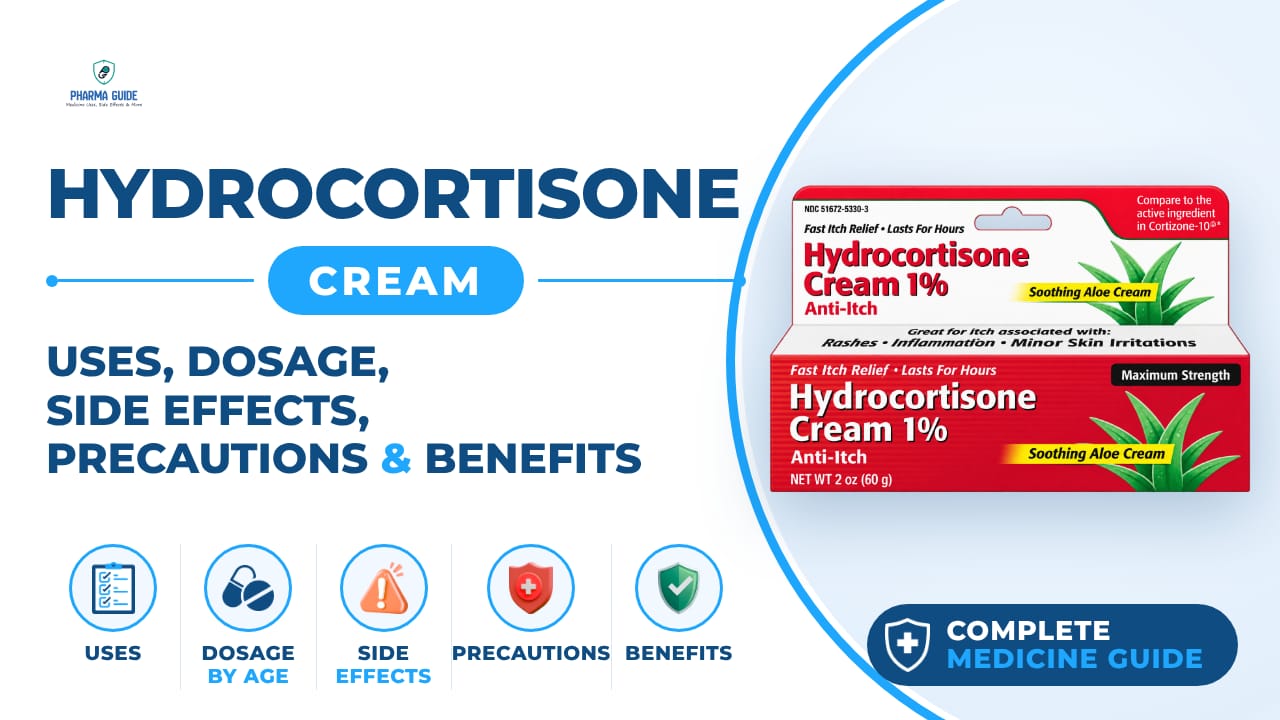
| Generic name | Hydrocortisone |
|---|---|
| Drug class | Corticosteroid (steroid) |
| Forms | Cream, Ointment, Lotion, Solution (liquid), Spray |
Quick overview
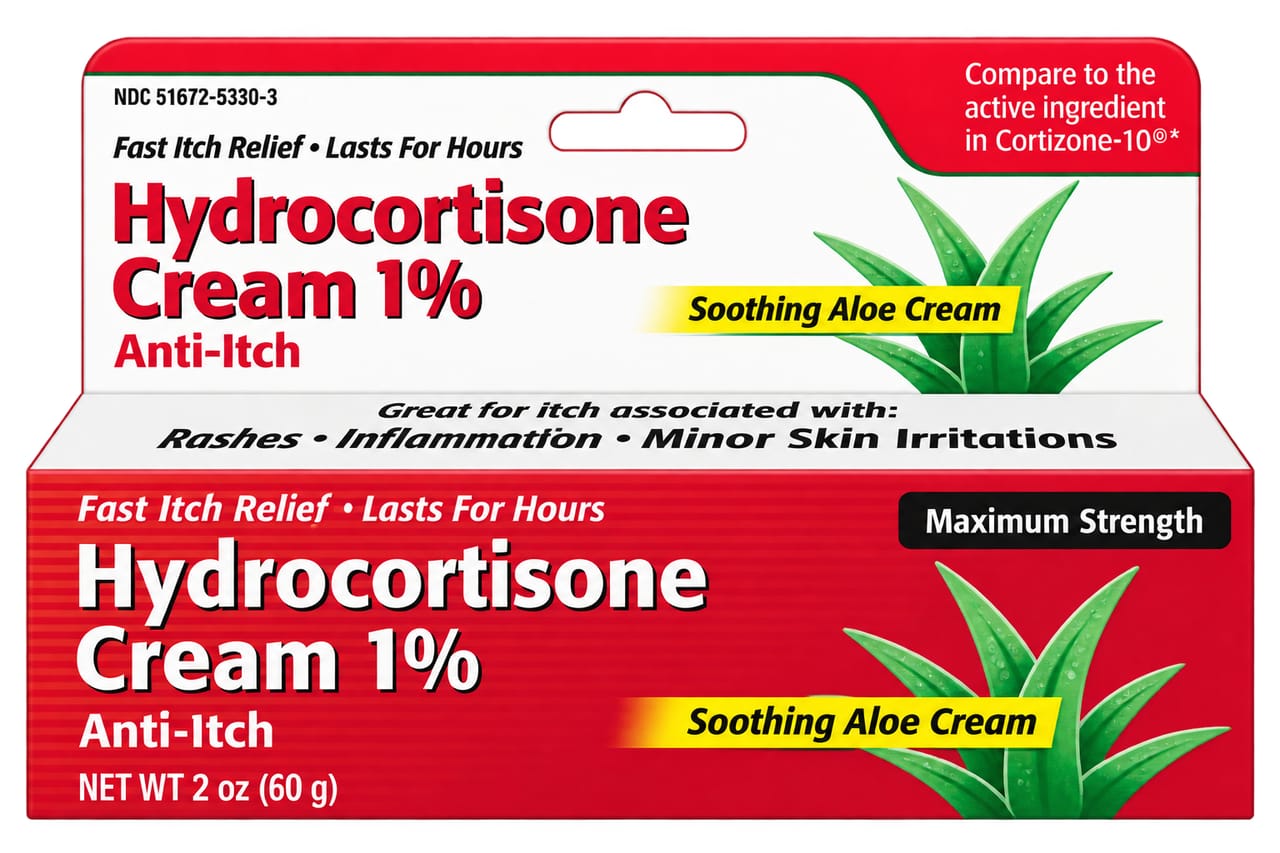
Hydrocortisone Cream is a mild steroid medicine, generic name hydrocortisone, from the corticosteroid drug class. It is applied directly to the skin to reduce redness, swelling, itching, and discomfort caused by a range of common skin conditions. It is available in several forms and strengths and should generally be used for short periods unless a doctor advises otherwise.
What is Hydrocortisone Cream
Hydrocortisone Cream is a mild steroid medicine applied to the skin. It reduces redness, swelling, itching, and discomfort caused by various skin conditions.
Hydrocortisone Cream uses
- Eczema
- Psoriasis
- Contact dermatitis (irritant or allergic)
- Insect bite and sting reactions
- Nappy rash, thrush, ringworm and athlete's foot (when combined with anti-fungal medicine)
Benefits of Hydrocortisone Cream
- Reduces inflammation, redness, swelling and itching of the skin
- Considered a mild steroid, so it tends to cause fewer side effects than stronger steroids
How Hydrocortisone Cream works
Hydrocortisone works by activating natural substances in the skin that reduce swelling, redness, and itching, and by blocking certain immune reactions that cause inflammation.
Hydrocortisone Cream dosage
Use once, twice, three, or up to four times a day depending on the product and your doctor's instructions. Wash your hands before applying the cream, unless you are applying it to the hands. Apply a thin, even layer to the affected area only and rub in gently until it disappears, then wash your hands afterwards, unless you are treating your hands.
Do not apply to cuts, wounds, or broken or infected skin. Do not use on the face, genital area, or around the anus unless a doctor or pharmacist says it is okay. Do not cover the treated area with a dressing or plaster unless told to by your doctor. Avoid contact with the eyes and do not swallow the cream. If using on a child's diaper area, do not cover with tight-fitting diapers or plastic pants.
Do not use for more than about one week in a row unless a doctor or pharmacist tells you to. If you miss an application, apply it as soon as you remember, but if it is nearly time for the next one, skip the missed one and continue as normal - do not double up.
| Age group | Dose |
|---|---|
| Under 2 Years | Use only if prescribed by a doctor |
| 2 Years and Above | Apply a thin layer to the affected area 1–2 times daily |
| Adults | Apply a thin layer as needed; avoid prolonged use without medical advice |
| Older Adults (65+ years) | Use a thin layer with caution, especially on thin or sensitive skin |
Available forms and strengths
- Cream
- Ointment
- Lotion
- Solution (liquid)
- Spray
Side effects of Hydrocortisone Cream
Common
- Thinning of the skin in the affected area
- Stretch marks
- Itchy rash
- Skin becoming lighter or darker than usual
- Small red lines (blood vessels) on the skin
- Burning, itching, irritation, redness, or dryness of the skin
- Acne
- Unwanted hair growth
- Bruising
- Fragile skin
- Oily skin
- Tingling of the skin
Serious
- An allergic reaction (anaphylaxis) with symptoms such as a swollen throat or tongue, itchy raised rash, and difficulty breathing
- Vision problems, such as blurred vision
- Weight gain, a puffy face, muscle weakness, dizziness, excessive hair growth or hair loss
- Skin condition getting worse after stopping the medicine, causing redness, burning or stinging, intense itching, peeling skin and oozing sores
- Signs of skin infection where the cream was applied, such as redness or swelling
- Slowed growth and delayed weight gain in children who use it long-term
Warnings and precautions
- Do not smoke or go near naked flames while using this cream, since clothing and bedding that have been in contact with it can catch fire more easily.
- Do not use on cuts, wounds, or broken or infected skin, including cold sores, acne, athlete's foot or chickenpox.
- Do not use on the face, penis, or vulva without talking to a doctor or pharmacist first, since it can damage the skin in these areas.
- Do not cover the treated skin with a dressing or plaster unless your doctor tells you to.
- Do not use for more than about a week unless a doctor or pharmacist advises otherwise, and if prescribed for long-term use, don't stop suddenly as this can cause a withdrawal reaction.
- Do not swallow the cream - get medical help if it is swallowed by accident.
- Check with a doctor or pharmacist before using hydrocortisone during pregnancy.
- It is generally not recommended unless your doctor decides the benefits outweigh the risks, and the smallest amount for the shortest time is usually advised.
- Hydrocortisone can usually be used while breastfeeding, but check with a doctor or pharmacist first. If used on the chest or breasts, wash it off before feeding your baby.
- For kidney concerns: apply only a thin layer and avoid using more than the recommended amount. Do not use on infected, broken, or severely damaged skin unless advised by a doctor.
- For liver concerns: avoid contact with eyes, mouth, and sensitive areas unless specifically directed. Do not use for long periods without medical supervision.
- You can eat and drink as normal while using hydrocortisone cream, ointment or lotion.
- Hydrocortisone cream is not expected to affect your ability to drive or use machinery, but be careful until you know how it affects you.
Storage
- Store below 25°C
- Do not freeze
- Do not store in the bathroom or near a sink
- Keep out of the sight and reach of children
- Do not use after the expiry date
- Do not throw away medicines via wastewater or household waste - ask your pharmacist how to dispose of medicines you no longer use
- Return any unused medicine to your pharmacist
When to see a doctor
- Get medical help right away if you have signs of a serious allergic reaction, such as a swollen throat or tongue, an itchy raised rash, or difficulty breathing.
- Contact a doctor if you notice blurred vision or other visual disturbances while using this cream.
- Get medical help if you think you or someone else has swallowed hydrocortisone cream, even if there are no symptoms.
- Stop using the cream and tell your doctor immediately if you notice a skin rash, or reddening or itching of the skin, as these may be signs of an allergic reaction.
- If your skin condition doesn't improve, or gets worse, after using the cream for a week, speak to your doctor since this could be a sign of infection or allergy.
Alternatives
- Desonide Cream
- Triamcinolone Cream
- Mometasone Cream
Watch the video
FAQs
What is Hydrocortisone Cream used for?
It is used to treat eczema, psoriasis, contact dermatitis, insect bite and sting reactions, and (combined with anti-fungal medicine) nappy rash, thrush, ringworm and athlete's foot.
How long can I use Hydrocortisone Cream?
It should generally not be used for more than about one week in a row unless a doctor or pharmacist advises otherwise.
Can I use Hydrocortisone Cream on my face?
No, you should not use it on the face, genital area, or around the anus unless a doctor or pharmacist says it is okay.
What are the common side effects of Hydrocortisone Cream?
Common side effects include thinning of the skin, stretch marks, itchy rash, changes in skin color, burning, itching, irritation, redness, dryness, acne, unwanted hair growth, bruising, fragile skin, oily skin, and tingling.
Can Hydrocortisone Cream be used during pregnancy?
It is generally not recommended during pregnancy unless a doctor decides the benefits outweigh the risks, using the smallest amount for the shortest time.
General information, not medical advice
Your prescriber and the leaflet in your pack know your situation. This page does not.
- Follow your prescriber and the leaflet
- Don't start, stop, or change a dose on your own
- Doses and warnings differ by country and product
Sources
Video
Related medicines
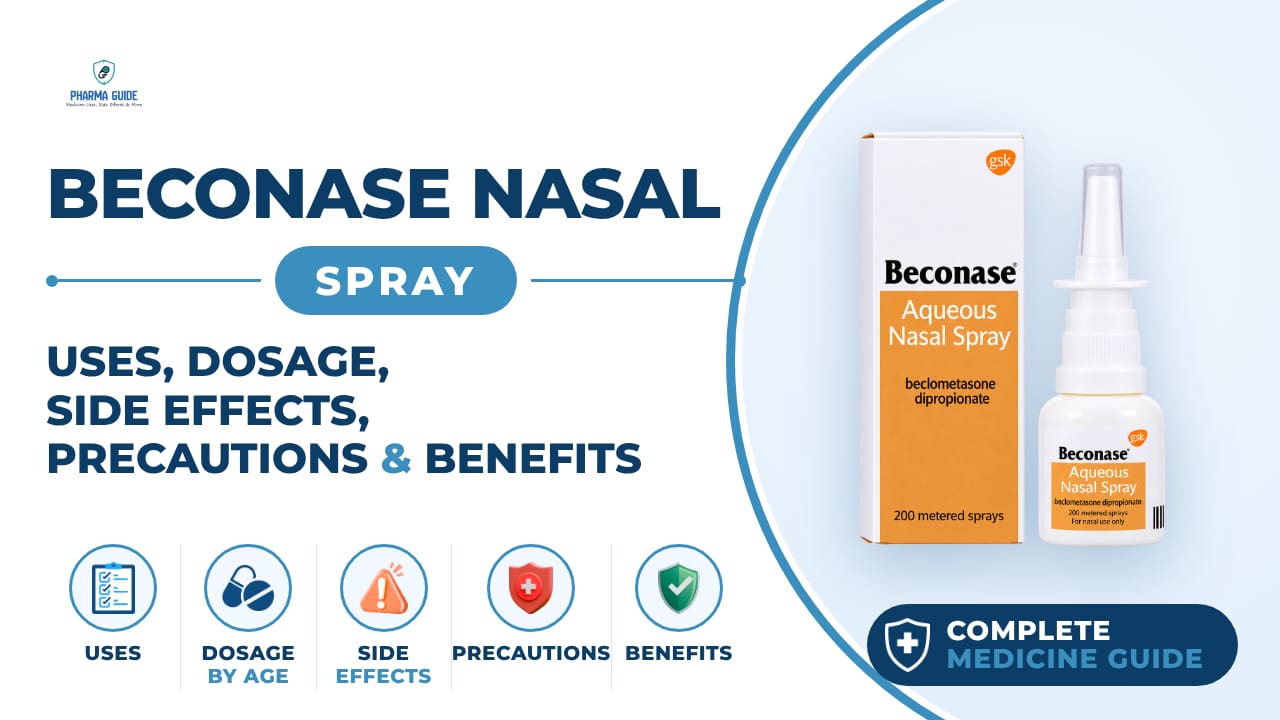
Beconase Nasal Spray: Uses, Dosage, Side Effects, Precautions and Alternates
Corticosteroid (steroid)
Beconase Nasal Spray contains beclometasone to treat hay fever, allergic rhinitis, and prevent nasal polyps returning. Learn dosage, side effects, and
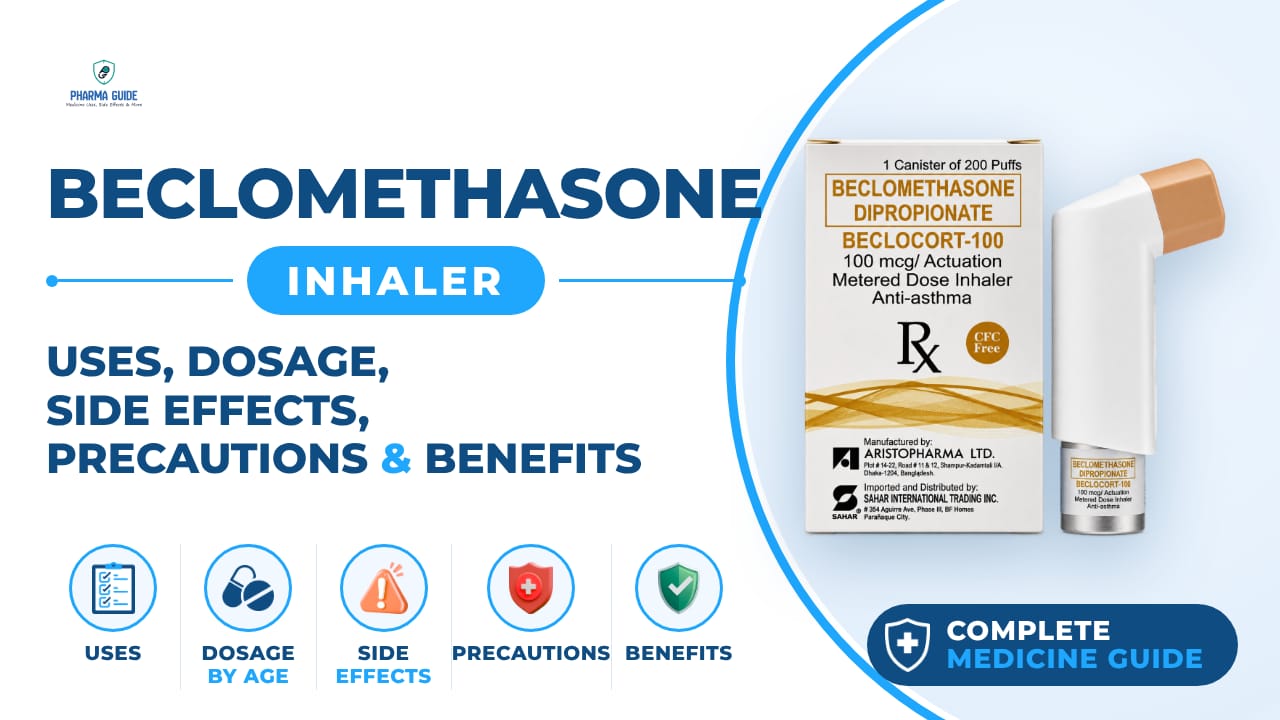
Beclomethasone Inhaler: Uses, Dosage, Side Effects, Precautions and Alternates
Corticosteroid (steroid)
Beclomethasone Inhaler is a prescription corticosteroid used to prevent asthma symptoms by reducing airway inflammation. Learn dosage, benefits, side effects,