
Safety
General information, not medical advice
Your prescriber and the leaflet in your pack know your situation. This page does not.
- Follow your prescriber and the leaflet
- Don't start, stop, or change a dose on your own
- Doses and warnings differ by country and product
Hydroxyzine Capsule: Uses, Dosage, Side Effects, Precautions and Alternates
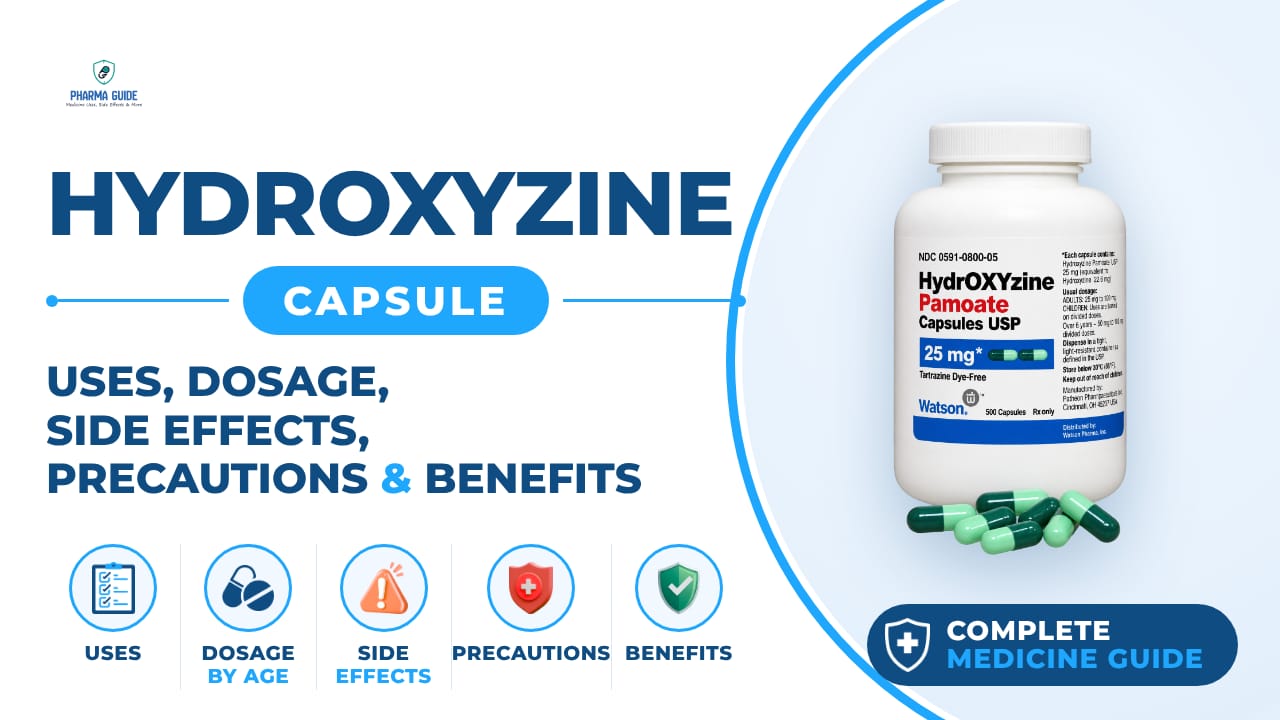
| Generic name | Hydroxyzine |
|---|---|
| Drug class | Antihistamine |
| Forms | Tablet, Syrup, Capsule, Injection, Oral solution |
Quick overview
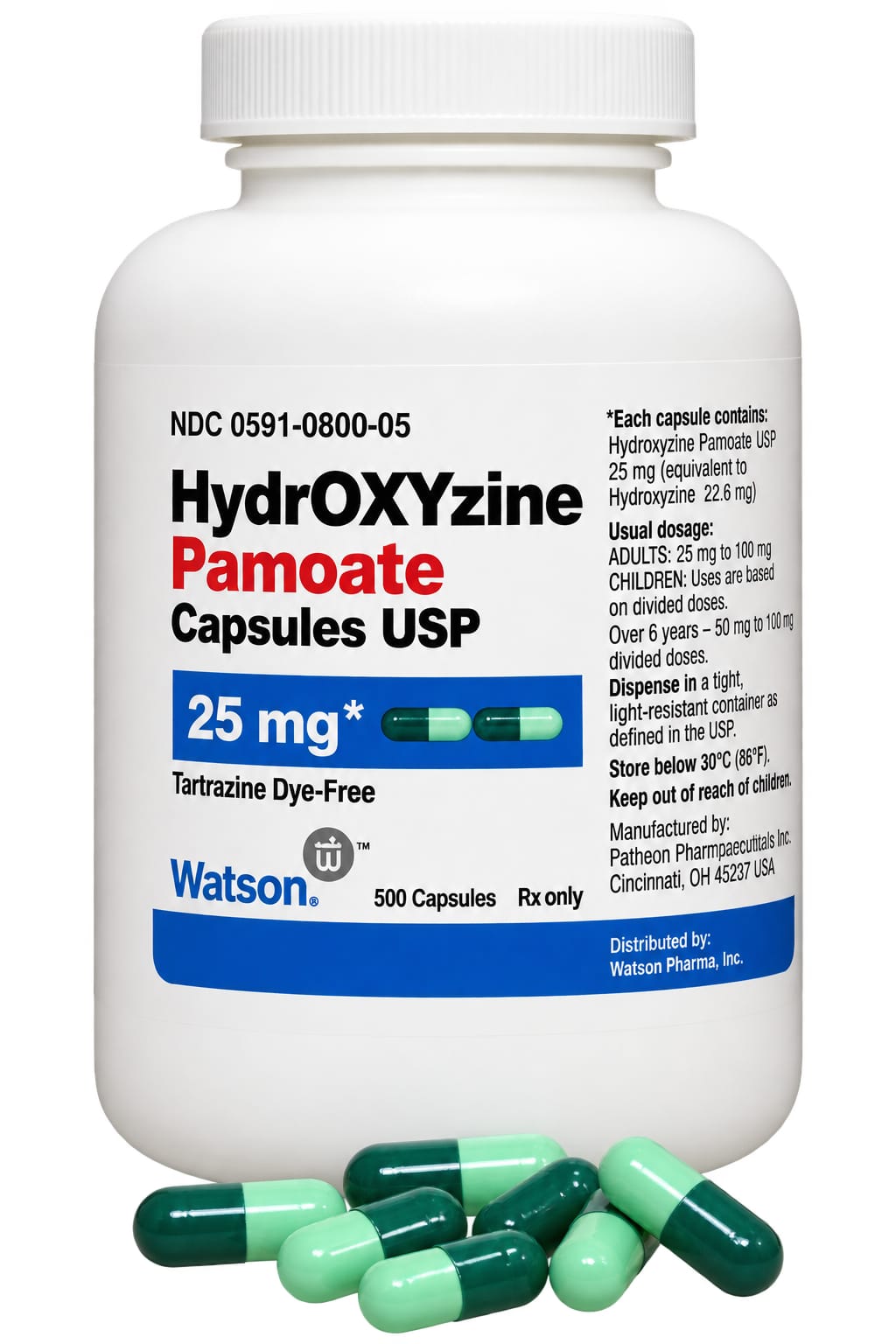
Hydroxyzine Capsule is a prescription antihistamine used to help control anxiety and tension, relieve itching from allergic skin conditions, and provide sedation before and after surgery. It comes as capsules, tablets, syrup, and injection. It works by blocking histamine and by calming certain deeper parts of the brain. It should be used exactly as prescribed, with attention to certain precautions in older adults, pregnancy, and people with kidney or liver problems.
What is Hydroxyzine Capsule
Hydroxyzine is a prescription antihistamine used to help control anxiety and tension, relieve itching from allergic skin conditions, and provide sedation before and after surgery. It comes as capsules, tablets, syrup, and injection.
Hydroxyzine Capsule uses
- Anxiety and tension caused by nervous and emotional conditions
- Itching from allergic skin conditions such as chronic hives, eczema-type rashes, and contact rashes
- Sedation before and after surgery
- Nausea and vomiting (injection form only, given in hospital settings)
Benefits of Hydroxyzine Capsule
- Helps relieve anxiety and tension.
- Helps reduce itching caused by allergic skin conditions, such as hives or dermatitis.
- Has antihistamine effects that help control allergy-related itching.
- Produces a calming and sedating effect, which may help when anxiety causes restlessness.
- May be used as a sedative before or after certain medical procedures.
- Can provide short-term relief of nervousness and agitation when prescribed.
How Hydroxyzine Capsule works
Hydroxyzine blocks a natural substance called histamine that the body produces during allergic reactions, which relieves itching. It also works by reducing activity in certain deeper parts of the brain, which produces a calming, sedating effect.
Hydroxyzine Capsule dosage
Take this medicine exactly as directed by your doctor; do not take more, more often, or for longer than prescribed. Take capsules with a full glass of water. You can take it with or without food; if it upsets your stomach, take it with food. Take it at the same time each day as directed on the prescription label. If you miss a dose, take it as soon as you remember, but if it is almost time for your next dose, skip the missed dose and go back to your regular schedule; do not double doses. Talk to your doctor about use in children, as precautions apply for children as young as 6 years. People 65 years and older may have a stronger reaction and may need a smaller dose. Do not share this medicine with others.
| Age group | Dose |
|---|---|
| Under 6 years | Capsule usually not suitable; pediatric dosing should use an age-appropriate formulation under medical supervision |
| 6–11 years | Dose is weight- and indication-based; generally use a pediatric formulation |
| 12–17 years | Dose is individualized by indication and body weight |
| 18–64 years | Commonly 50–100 mg/day in divided doses; use the lowest effective dose |
| 65+ years | Generally avoid when possible; if required, use a lower dose cautiously |
Available forms and strengths
- Tablet
- Syrup
- Capsule
- Injection
- Oral solution
Side effects of Hydroxyzine Capsule
Common
- Drowsiness
- Dry mouth
- Headache
- Dizziness
- Confusion (especially in older adults)
- Nausea
- Blurred vision
- Constipation
- Tiredness
Serious
- Chest pain, discomfort, or tightness
- Cough
- Difficulty swallowing
- Fainting
- Fast heartbeat
- Hives, itching, or skin rash
- Irregular or slow heart rate
- Swelling of the eyelids, face, lips, or tongue
- Trouble breathing
- Unusual tiredness or weakness
- Seizures or convulsions
- Hallucinations (seeing or hearing things that are not there)
- Trembling or shaking of the hands or feet
- Serious skin reaction with fever and pus-filled sores across swollen, red skin (acute generalized exanthematous pustulosis)
- Heart rhythm changes such as fast or irregular heartbeat, dizziness, feeling faint, chest pain
Warnings and precautions
- Hydroxyzine should not be used if you have a heart rhythm problem called prolonged QT interval.
- Hydroxyzine may cause a serious skin reaction called acute generalized exanthematous pustulosis; tell your doctor if you get a fever, skin rash, or worsening skin problems.
- If you have had a serious allergic reaction to hydroxyzine, you should also avoid cetirizine and levocetirizine, since a similar reaction can happen with those medicines.
- Hydroxyzine can cause a heart rhythm problem called QT prolongation, which can lead to a serious irregular heartbeat called Torsade de Pointes.
- Older adults should generally not take hydroxyzine because it is not as safe as other medicines that treat the same condition.
- Tell your doctor about your full medical history, including heart disease, kidney or liver disease, glaucoma, asthma or other breathing problems, and thyroid or urinary problems, before taking hydroxyzine.
- Hydroxyzine should not be used during early pregnancy unless your doctor tells you to, because it may harm the unborn baby.
- Hydroxyzine should not be used while breastfeeding, since it is not known if it passes into breast milk but many medicines do.
- Hydroxyzine is removed from the body by the kidneys, so it should be used with caution if you have kidney problems, as it may build up in your body and increase side effects.
- Hydroxyzine is broken down by the liver, so it should be used with caution if you have liver problems, as it may build up in your body and increase side effects.
- Do not drink alcohol while taking hydroxyzine, since it can make alcohol's effects stronger and increase the risk of drowsiness and dizziness.
- This medicine may make you dizzy or drowsy, so do not drive or do anything dangerous until you know how it affects you.
Storage
- Store at 20–25°C (68–77°F) at controlled room temperature.
- Keep in a cool, dry place away from excessive heat.
- Protect capsules from light and moisture.
- Keep in the original, tightly closed container until use.
- Avoid storing in bathrooms or other hot and humid areas.
- Keep out of reach and sight of children.
When to see a doctor
- Get emergency help right away if you have signs of overdose, such as reduced awareness, drowsiness, nausea, seizures, severe sleepiness, or vomiting.
- Call your doctor right away if you notice any changes in your heart rhythm, such as dizziness, fainting, or a fast, pounding, or uneven heartbeat.
- Stop taking hydroxyzine and call your doctor right away if you develop a skin rash, if a skin condition gets worse, or if you have any other sign of an allergic reaction.
- Seek emergency medical attention if you think you have taken too much of this medicine.
- Call your doctor immediately if you become pregnant while taking hydroxyzine.
Alternatives
- Buspirone
- Promethazine
- Chlorpheniramine
- Diphenhydramine
Watch the video
FAQs
What is Hydroxyzine Capsule used for?
It is used to help control anxiety and tension, relieve itching from allergic skin conditions like hives and eczema-type rashes, and provide sedation before and after surgery.
How does Hydroxyzine Capsule work?
It blocks histamine, a natural substance the body produces during allergic reactions, which relieves itching, and it reduces activity in certain deeper parts of the brain to produce a calming, sedating effect.
What is the usual adult dose of Hydroxyzine Capsule?
For adults 18–64 years, the dose is commonly 50–100 mg per day in divided doses, using the lowest effective dose as directed by a doctor.
Can older adults take Hydroxyzine Capsule?
Older adults should generally avoid hydroxyzine because it is not as safe as other medicines for the same condition, and if needed, a lower dose should be used cautiously since they may have a stronger reaction.
What are the serious side effects of Hydroxyzine Capsule?
Serious side effects include chest pain, fainting, fast or irregular heartbeat, swelling of the face or tongue, trouble breathing, seizures, hallucinations, trembling, and a serious skin reaction with fever and pus-filled sores.
General information, not medical advice
Your prescriber and the leaflet in your pack know your situation. This page does not.
- Follow your prescriber and the leaflet
- Don't start, stop, or change a dose on your own
- Doses and warnings differ by country and product
Sources
Video
Related medicines
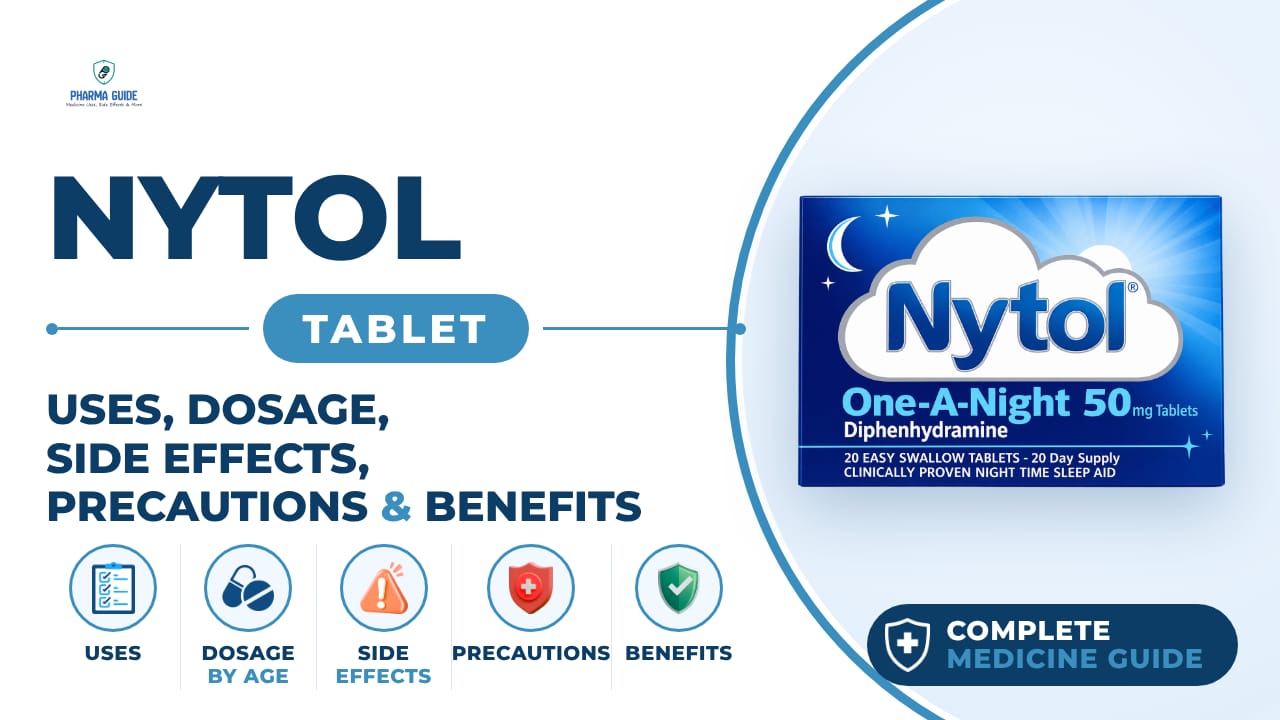
Nytol Tablet: Uses, Dosage, Side Effects, Precautions and Alternates
Antihistamine
Nytol Tablet contains diphenhydramine, used for short-term relief of occasional sleeplessness. Learn its dosage, benefits, side effects, and precautions.
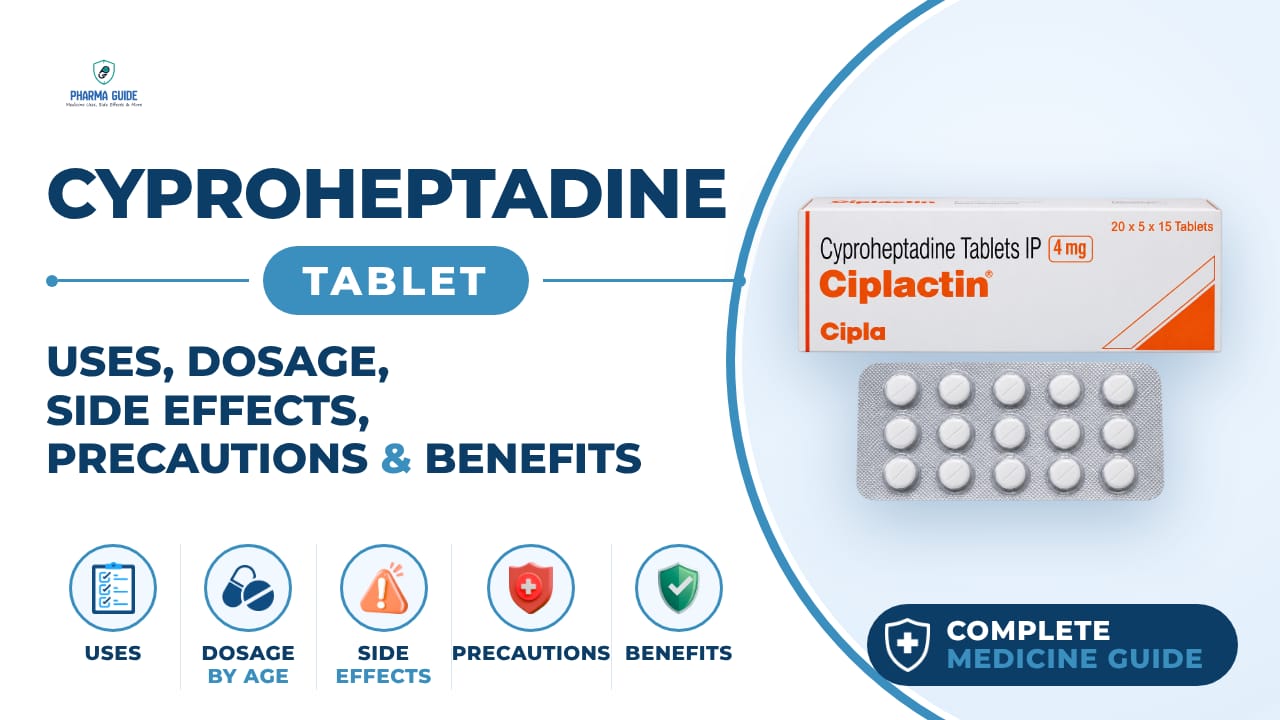
Cyproheptadine Tablet: Uses, Dosage, Side Effects, Precautions and Alternates
Antihistamine
Cyproheptadine Tablet is an antihistamine used for allergies, hives, and migraine headaches. Learn its uses, dosage, side effects, and precautions.