
Safety
General information, not medical advice
Your prescriber and the leaflet in your pack know your situation. This page does not.
- Follow your prescriber and the leaflet
- Don't start, stop, or change a dose on your own
- Doses and warnings differ by country and product
Irbesartan Tablet: Uses, Dosage, Side Effects, Precautions and Alternates
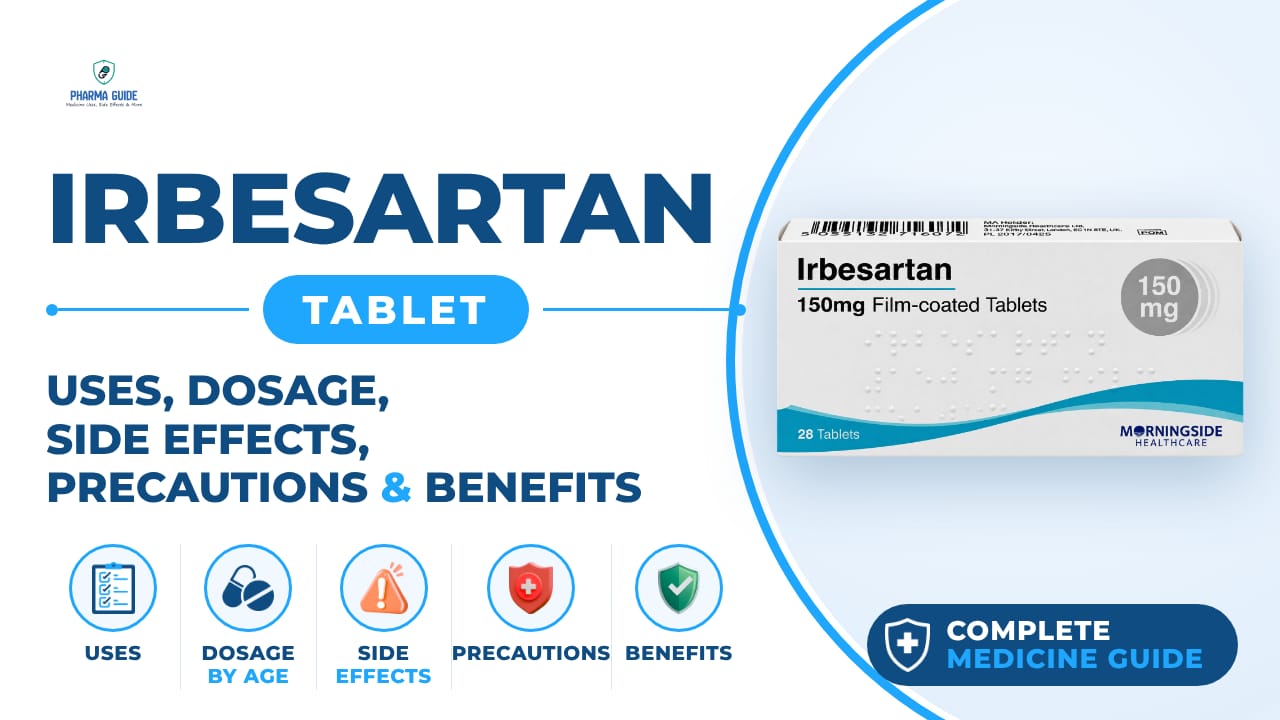
| Generic name | Irbesartan |
|---|---|
| Drug class | Angiotensin II receptor blocker (ARB) |
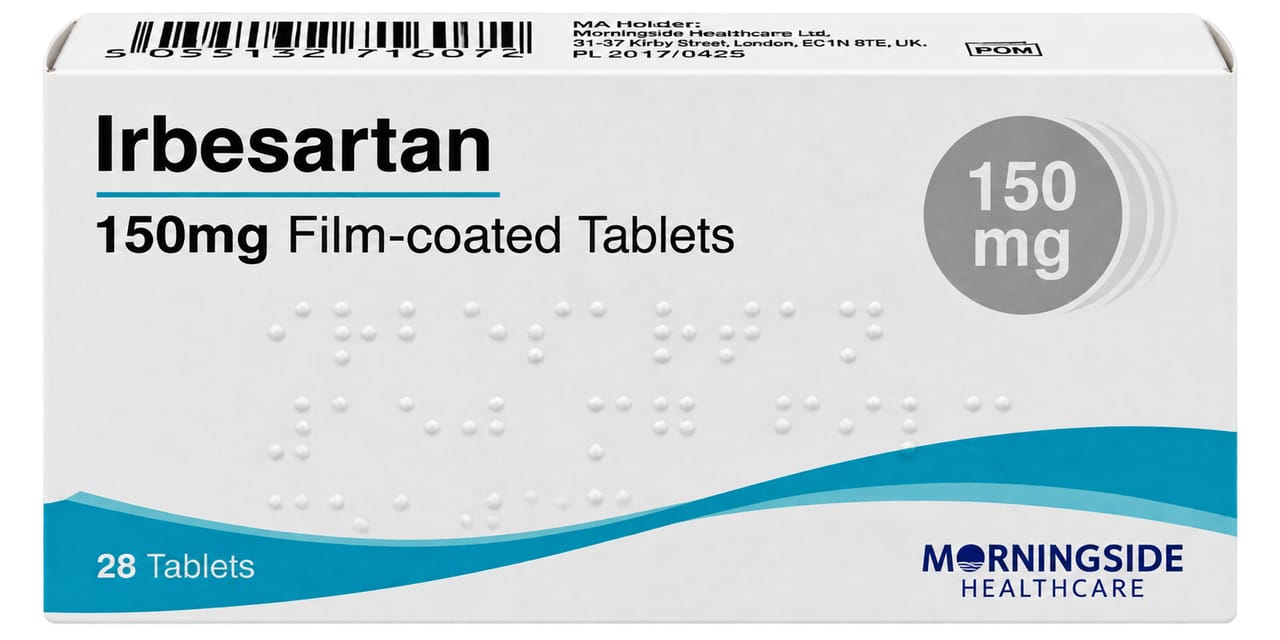
| Forms | Tablet (75 mg, 150 mg, 300 mg) |
Quick overview
Irbesartan Tablet (generic name Irbesartan) is a prescription angiotensin II receptor blocker (ARB) used to treat high blood pressure and to help protect the kidneys in people with type 2 diabetes and kidney disease. It works by relaxing and widening blood vessels, making it easier for the heart to pump blood. It is usually taken once a day, with or without food, and should be used exactly as prescribed by a doctor.
What is Irbesartan Tablet
Irbesartan is a prescription medicine used to treat high blood pressure and to help protect the kidneys in people with type 2 diabetes and kidney disease. It belongs to a group of medicines called angiotensin II receptor blockers (ARBs), which help relax blood vessels.
Irbesartan Tablet uses
- Treatment of high blood pressure (hypertension)
- Treatment of kidney disease (diabetic nephropathy) in people with type 2 diabetes, high blood pressure, and protein in the urine
Benefits of Irbesartan Tablet
- Lowers blood pressure, which reduces the risk of stroke and heart attack
- Slows the worsening of kidney disease in people with type 2 diabetes and high blood pressure
- Less likely to cause dry cough compared to ACE inhibitors
- Usually taken only once a day
How Irbesartan Tablet works
Angiotensin II is a substance in the body that narrows blood vessels and raises blood pressure. Irbesartan blocks the action of angiotensin II, which relaxes and widens blood vessels, making it easier for the heart to pump blood and lowering blood pressure. It also helps protect the kidneys in people with diabetes.
Irbesartan Tablet dosage
Irbesartan Tablet can be taken with or without food. Swallow the tablet whole with a glass of water, taking it at about the same time each day. Do not stop taking this medicine or change your dose without checking with your doctor. Do not skip meals while taking this medicine. If you miss a dose, skip it if it is almost time for your next dose; do not take a double dose to make up for a missed one. Continue taking this medicine until your doctor tells you to stop. Older adults may process the drug more slowly and may need a lower dose or different schedule.
| Age group | Dose |
|---|---|
| Under 18 years | Not routinely recommended; doctor's advice required |
| 18 years & older | 150 mg once daily |
| Adults | 150 mg once daily; may be increased to 300 mg once daily |
| Older adults | Usually 150 mg once daily, adjusted by doctor |
Available forms and strengths
- Tablet (75 mg, 150 mg, 300 mg)
Side effects of Irbesartan Tablet
Common
- Dizziness
- Low blood pressure when standing up (orthostatic hypotension)
- Tiredness or fatigue
- Diarrhea
- Heartburn/indigestion
- Headache
- Nausea/vomiting
Serious
- Swelling of the face, lips, tongue, or throat (angioedema) which may cause difficulty swallowing or breathing
- Severe, sudden hives or itchy skin swellings
- Signs of kidney problems such as passing little or no urine, unusual tiredness, nausea, or swelling in feet/ankles/hands
- Signs of high potassium levels such as nausea, muscle weakness, or irregular heartbeat
- Yellowing of skin or eyes (jaundice) or other signs of liver problems
- Ringing in the ears (tinnitus)
- Muscle pain or weakness
Warnings and precautions
- Do not take this medicine if you are pregnant or planning to become pregnant, because it can seriously harm or cause death to an unborn baby, especially in later pregnancy.
- Tell your doctor right away if you become pregnant. This medicine is not recommended while breastfeeding because it is not known if it is safe for the nursing infant.
- People with kidney problems, kidney artery narrowing, or those on dialysis may be at higher risk of worsening kidney function and should have their kidney function checked regularly during treatment.
- Tell your doctor if you have liver problems, as this may need to be considered before taking this medicine.
- Drinking alcohol may make dizziness or light-headedness worse while taking this medicine. This medicine may cause dizziness or light-headedness, so be careful driving or using machinery until you know how it affects you.
- This medicine can seriously harm or cause death to an unborn baby. Stop taking it as soon as pregnancy is detected and tell your doctor right away.
- People who are dehydrated or have low salt levels (for example from heavy diuretic use) may experience symptomatic low blood pressure when starting this medicine.
- Do not take potassium supplements or salt substitutes containing potassium without talking to your doctor first, as this medicine can raise blood potassium levels.
- Do not stop taking this medicine or change your dose without checking with your doctor, as this could cause your blood pressure to rise suddenly.
- Make sure you drink enough water during exercise and in hot weather, as not having enough fluids can increase the risk of low blood pressure or kidney damage.
Storage
- Store at 20° to 25°C (68° to 77°F); brief changes between 15° to 30°C (59° to 86°F) are allowed
- Keep tablets in a cool, dry place where the temperature stays below 25°C
- Keep tablets in their packaging until it is time to take them
- Store away from moisture, heat, or sunlight; do not store in the bathroom, near a sink, or in a car
- Keep out of reach of children
- Take unused or expired medicine to a pharmacy for safe disposal
- Do not use this medicine after the expiry date
When to see a doctor
- Get emergency help right away if you have swelling of the face, lips, tongue, or throat, or trouble breathing or swallowing.
- Stop the medicine and get emergency help if you have sudden, severe, itchy skin swellings (hives).
- Call your doctor right away if you have symptoms that may mean kidney problems, such as passing little or no urine, drowsiness, nausea, vomiting, breathlessness, loss of appetite, or weakness.
- Call your doctor right away if you have symptoms of high blood potassium, such as nausea, diarrhea, muscle weakness, or a change in heart rhythm.
- Call your doctor right away if you notice yellowing of your skin or eyes, or other signs of liver problems like nausea, vomiting, loss of appetite, feeling unwell, fever, or dark urine.
- Tell your doctor right away if you feel very dizzy or light-headed, especially after your first dose or when your dose is increased.
- If you think you have taken too much of this medicine, seek urgent medical attention even if you feel fine.
Alternatives
- Losartan
- Valsartan
Watch the video
FAQs
What is Irbesartan Tablet used for?
Irbesartan Tablet is used to treat high blood pressure and to help protect the kidneys in people with type 2 diabetes, high blood pressure, and protein in the urine (diabetic nephropathy).
How does Irbesartan Tablet work?
Irbesartan blocks the action of angiotensin II, a substance that narrows blood vessels and raises blood pressure. By blocking it, Irbesartan relaxes and widens blood vessels, making it easier for the heart to pump blood and lowering blood pressure, while also helping protect the kidneys in people with diabetes.
What is the usual dosage of Irbesartan Tablet?
For adults 18 years and older, the usual dose is 150 mg once daily, which may be increased to 300 mg once daily. Older adults usually take 150 mg once daily, adjusted by their doctor. It is not routinely recommended for those under 18 years without a doctor's advice.
What are the common side effects of Irbesartan Tablet?
Common side effects include dizziness, low blood pressure when standing up, tiredness or fatigue, diarrhea, heartburn or indigestion, headache, and nausea or vomiting.
Can I take Irbesartan Tablet during pregnancy?
No, Irbesartan should not be taken during pregnancy as it can seriously harm or cause death to an unborn baby, especially in later pregnancy. Tell your doctor right away if you become pregnant while taking this medicine.
General information, not medical advice
Your prescriber and the leaflet in your pack know your situation. This page does not.
- Follow your prescriber and the leaflet
- Don't start, stop, or change a dose on your own
- Doses and warnings differ by country and product
Sources
Video
Related medicines
Edarbi Tablet: Uses, Dosage, Side Effects, Precautions and Alternates
Angiotensin II receptor blocker (ARB)
Edarbi Tablet (azilsartan) is an ARB used to treat high blood pressure in adults. Learn how it works, dosage, side effects, and precautions.
Azilsartan Tablet: Uses, Dosage, Side Effects, Precautions and Alternates
Angiotensin II receptor blocker (ARB)
Azilsartan Tablet is an ARB used to treat high blood pressure in adults. Learn about its uses, dosage, side effects, warnings, and alternatives.