
Safety
General information, not medical advice
Your prescriber and the leaflet in your pack know your situation. This page does not.
- Follow your prescriber and the leaflet
- Don't start, stop, or change a dose on your own
- Doses and warnings differ by country and product
Isocarboxazid Tablet: Uses, Dosage, Side Effects, Precautions and Alternates
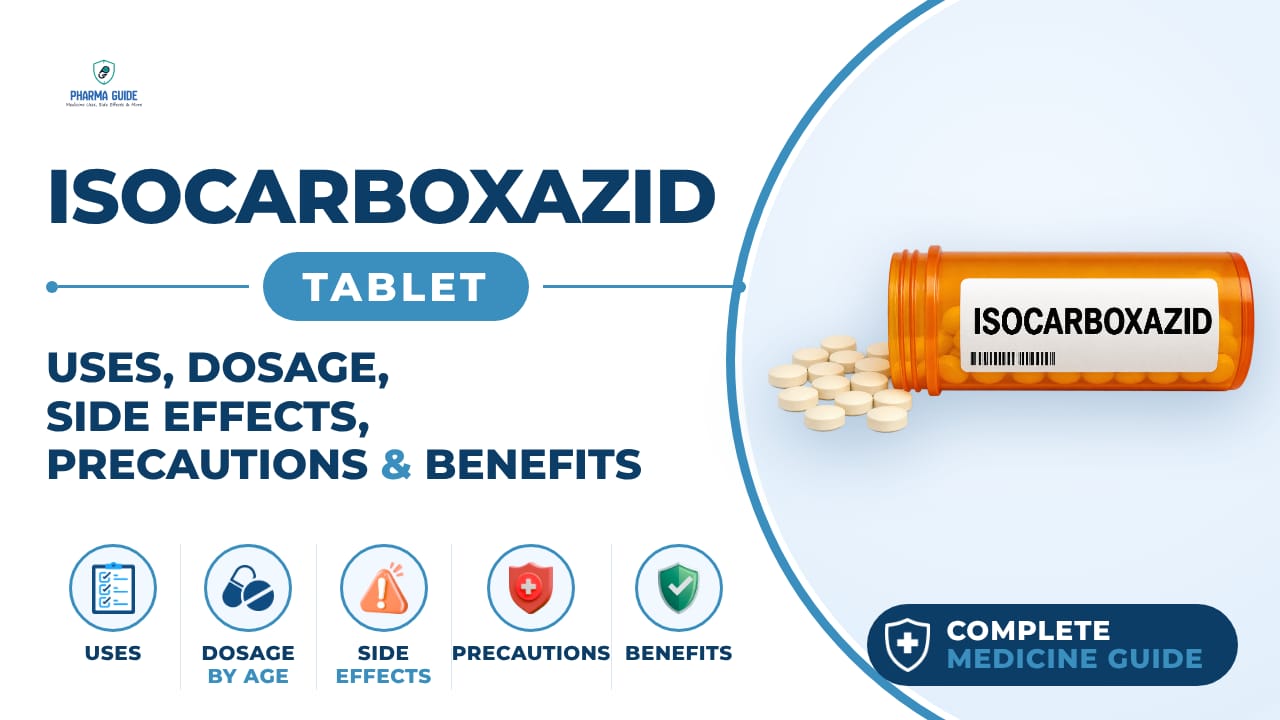
| Generic name | isocarboxazid |
|---|---|
| Drug class | Monoamine oxidase inhibitor (MAOI) |
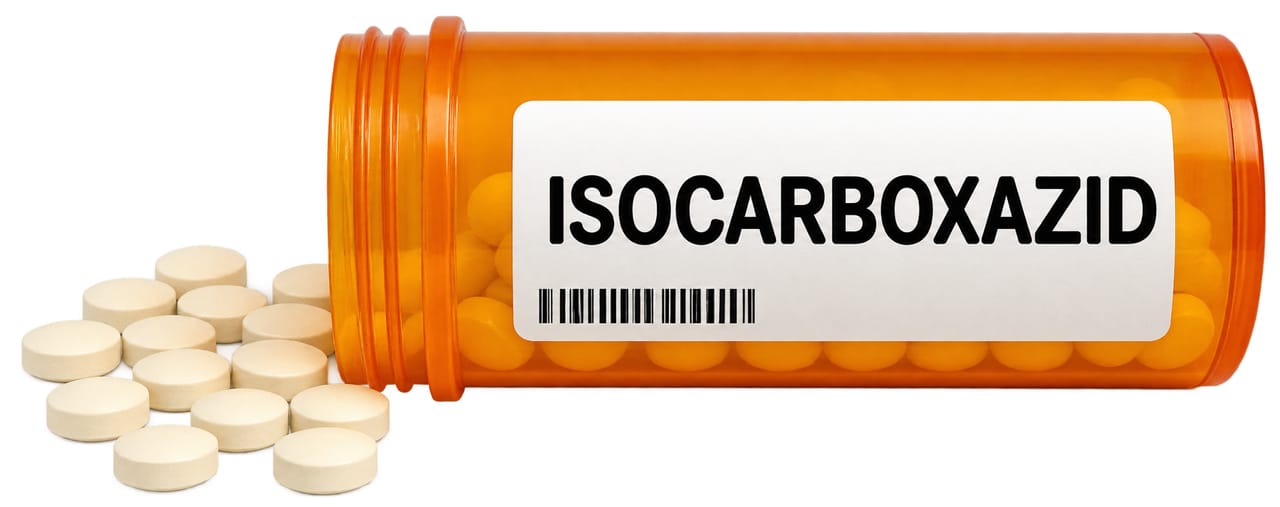
| Forms | Tablet (10 mg) |
Quick overview
Isocarboxazid Tablet (generic name isocarboxazid) is a prescription medicine belonging to the monoamine oxidase inhibitor (MAOI) class. It is used to treat depression, including depression with anxiety, panic, or phobias, especially when other antidepressants have not worked well enough. It is usually tried after other antidepressant treatments have been ineffective.
What is Isocarboxazid Tablet
Isocarboxazid is a prescription tablet that treats depression. It belongs to a group of medicines called monoamine oxidase inhibitors (MAOIs) and is usually tried after other antidepressants have not worked well enough.
Isocarboxazid Tablet uses
- Treats depression, including depression with anxiety, panic, or phobias, especially when other antidepressants have not worked
- Treats major depressive disorder
- May be used for depression that has not responded to other antidepressants
- Helps improve mood
- May improve energy and motivation
- May reduce other symptoms of severe depression
Benefits of Isocarboxazid Tablet
- May relieve symptoms of depression such as low mood, anxiety, panic, or phobic symptoms when other antidepressants have not helped
- Provides an option for treatment-resistant depression
- May help when other antidepressant classes have been ineffective
- Can improve overall depressive symptoms in selected patients
How Isocarboxazid Tablet works
Isocarboxazid works by blocking an enzyme called monoamine oxidase, which raises the levels of mood-related brain chemicals such as dopamine, norepinephrine, and serotonin.
Isocarboxazid Tablet dosage
Take the tablets by mouth with water or another liquid, at the same time each day. If you cannot swallow the tablets, you can crumble them and take them with food or liquid. It is usually taken two to four times a day in divided doses.
Your doctor will usually start you on a low dose and raise it gradually, no more than once every 2 to 4 days at first, and then no more often than once a week. It may take 3 to 6 weeks or longer to feel the full benefit; keep taking it even if you don't notice improvement right away, and tell your doctor if symptoms don't improve within the first 6 weeks.
Do not stop taking it suddenly without talking to your doctor; your dose may need to be lowered gradually. Do not take it in larger or smaller amounts, or for longer than your doctor has prescribed.
Tell your surgeon or dentist you are taking this medicine before any surgery, dental work, or emergency treatment; you may need to stop it for at least 10 days beforehand.
| Age group | Dose |
|---|---|
| Under 18 years | Safety and effectiveness are not established for routine use |
| 18–64 years | Usually starts at 10 mg twice daily; may be increased gradually by the prescriber |
| 65–74 years | Usually starts at a lower or cautious dose with slower titration |
Available forms and strengths
- Tablet (10 mg)
Side effects of Isocarboxazid Tablet
Common
- Headache
- Dizziness
- Drowsiness
- Tremors
- Trouble sleeping (insomnia)
- Constipation
- Nausea
- Dry mouth
- Diarrhea
- Weakness or extreme tiredness
- Forgetfulness
- Decreased sexual ability
- Frequent, painful, or difficult urination
Serious
- Signs of an allergic reaction such as hives, swelling of the face, lips, tongue, or throat, or trouble breathing
- Sudden, severe headache, stiff or sore neck, nausea, vomiting, cold sweat, vision problems, or sensitivity to light (possible sign of a hypertensive crisis)
- Chest pain, fast or slow heart rate, or irregular heartbeat
- Swelling or rapid weight gain
- Jaundice (yellowing of the skin or eyes) or other signs of liver problems such as dark urine, pale stools, loss of appetite, or upper stomach pain
- Feeling light-headed like you might pass out, or fainting
- Signs of serotonin syndrome such as confusion, fast or irregular heartbeat, muscle stiffness or twitching, sweating, high fever, chills, vomiting, diarrhea, or seizures
- Seizures or uncontrollable shaking or jerking of a part of the body
- Numbness, burning, or tingling in the arms or legs
- New or worsening depression, agitation, panic attacks, irritability, aggressive or impulsive behavior, or thoughts of harming yourself
Warnings and precautions
- Do not take this medicine if you have used another MAO inhibitor in the past 14 days, as this can cause a dangerous drug interaction.
- Eating foods high in tyramine while taking this medicine can raise your blood pressure to dangerous, life-threatening levels, so you must avoid them along with alcohol and caffeine.
- Children, teenagers, and young adults may have an increased risk of suicidal thoughts when starting antidepressants like this one; close monitoring by doctors and family is important.
- Do not give this medicine to anyone younger than 16 years old without a doctor's advice; some sources say it should not normally be given to anyone under 18.
- Many other medicines can cause serious problems or even death if combined with this medicine; tell your doctor about everything you've taken in the past 5 weeks.
- This medicine can remain in your body for up to 2 weeks after stopping it, so you must keep avoiding risky foods, drinks, and medicines during that time.
- Tell your doctor if you are pregnant or planning to become pregnant, as it is not known whether this medicine will harm an unborn baby. It is also not known if this medicine passes into breast milk or could harm a nursing baby, so talk to your doctor before breastfeeding while taking it.
- Tell your doctor if you have kidney disease, since this medicine should generally not be used in people with severe kidney disease. Tell your doctor if you have a history of liver disease, since this medicine should generally not be used in people with liver disease, and watch for signs of liver injury.
- Do not drink alcohol while taking this medicine, including non-alcoholic beer or wine, as it can add to drowsiness and dangerously raise blood pressure when combined with tyramine.
- This medicine can impair your thinking, reactions, or cause drowsiness and dizziness, so be careful driving or doing anything that requires alertness until you know how it affects you.
Storage
- Store at room temperature away from moisture and heat
- Keep the container tightly closed and out of reach of children
- Store between 15 and 30 degrees C (59 and 86 degrees F); keep from freezing
- Get rid of any unused medication after the expiration date
- Do not flush this medication down the toilet; use a medicine take-back program if available
- If no take-back program is available, mix the medicine with something like cat litter or coffee grounds, seal it in a bag, and throw it in the trash
When to see a doctor
- Get emergency help right away for signs of an allergic reaction, such as hives, trouble breathing, or swelling of the face, lips, tongue, or throat.
- Call your doctor or go to the emergency room right away if you get a severe headache, stiff or sore neck, chest pain, fast heartbeat, sweating, dizziness, or nausea and vomiting, since these can be signs of a dangerous spike in blood pressure.
- Seek emergency help or contact poison control right away if you think you have taken too much of this medicine; overdose can cause fast heartbeat, dizziness, fainting, blurred vision, nausea, seizures, or slowed breathing.
- Call your doctor right away if you or your family notice new or worsening depression, thoughts of harming yourself, agitation, panic attacks, trouble sleeping, aggressive behavior, or irritability.
- Check with your doctor right away if you notice signs of liver problems, such as dark urine, pale stools, nausea, vomiting, loss of appetite, stomach pain, or yellowing of your skin or eyes.
Alternatives
- Phenelzine
- Tranylcypromine
- Moclobemide where available
Watch the video
FAQs
What is Isocarboxazid Tablet used for?
It treats depression, including depression with anxiety, panic, or phobias, especially when other antidepressants have not worked well enough.
How does Isocarboxazid Tablet work?
It works by blocking an enzyme called monoamine oxidase, which raises levels of mood-related brain chemicals such as dopamine, norepinephrine, and serotonin.
How long does it take for Isocarboxazid Tablet to work?
It may take 3 to 6 weeks or longer to feel the full benefit, so you should keep taking it even if you don't notice improvement right away, and tell your doctor if symptoms don't improve within the first 6 weeks.
What foods should be avoided while taking Isocarboxazid Tablet?
Foods high in tyramine should be avoided, along with alcohol and caffeine, as they can raise blood pressure to dangerous, life-threatening levels.
What are the serious side effects of Isocarboxazid Tablet?
Serious side effects include signs of a hypertensive crisis, serotonin syndrome, allergic reaction, liver problems, seizures, irregular heartbeat, and new or worsening depression or suicidal thoughts.
General information, not medical advice
Your prescriber and the leaflet in your pack know your situation. This page does not.
- Follow your prescriber and the leaflet
- Don't start, stop, or change a dose on your own
- Doses and warnings differ by country and product
Sources
Video
Related medicines
Marplan Tablet: Uses, Dosage, Side Effects, Precautions and Alternates
Monoamine oxidase inhibitor (MAOI)
Marplan Tablet (isocarboxazid) is an MAOI for depression when other antidepressants fail. Learn uses, dosage, side effects, food interactions, and precautions.
Phenelzine Tablet: Uses, Dosage, Side Effects, Precautions and Alternates
Monoamine oxidase inhibitor (MAOI)
Phenelzine Tablet is an MAOI for treatment-resistant depression. Learn uses, dosage, food/drug interactions, side effects, warnings, and alternatives.