
Safety
General information, not medical advice
Your prescriber and the leaflet in your pack know your situation. This page does not.
- Follow your prescriber and the leaflet
- Don't start, stop, or change a dose on your own
- Doses and warnings differ by country and product
Kenalog Injection: Uses, Dosage, Side Effects, Precautions and Alternates
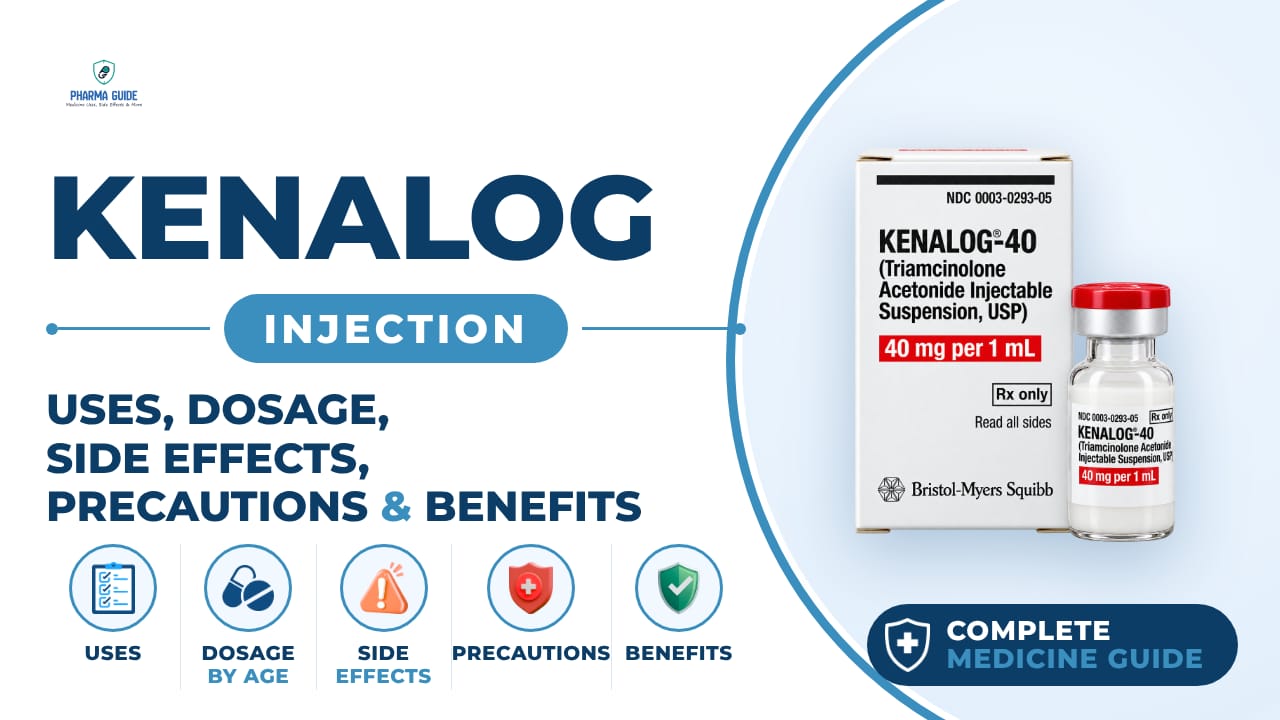
| Generic name | triamcinolone acetonide |
|---|---|
| Drug class | Corticosteroid |
| Forms | Injection |
Quick overview
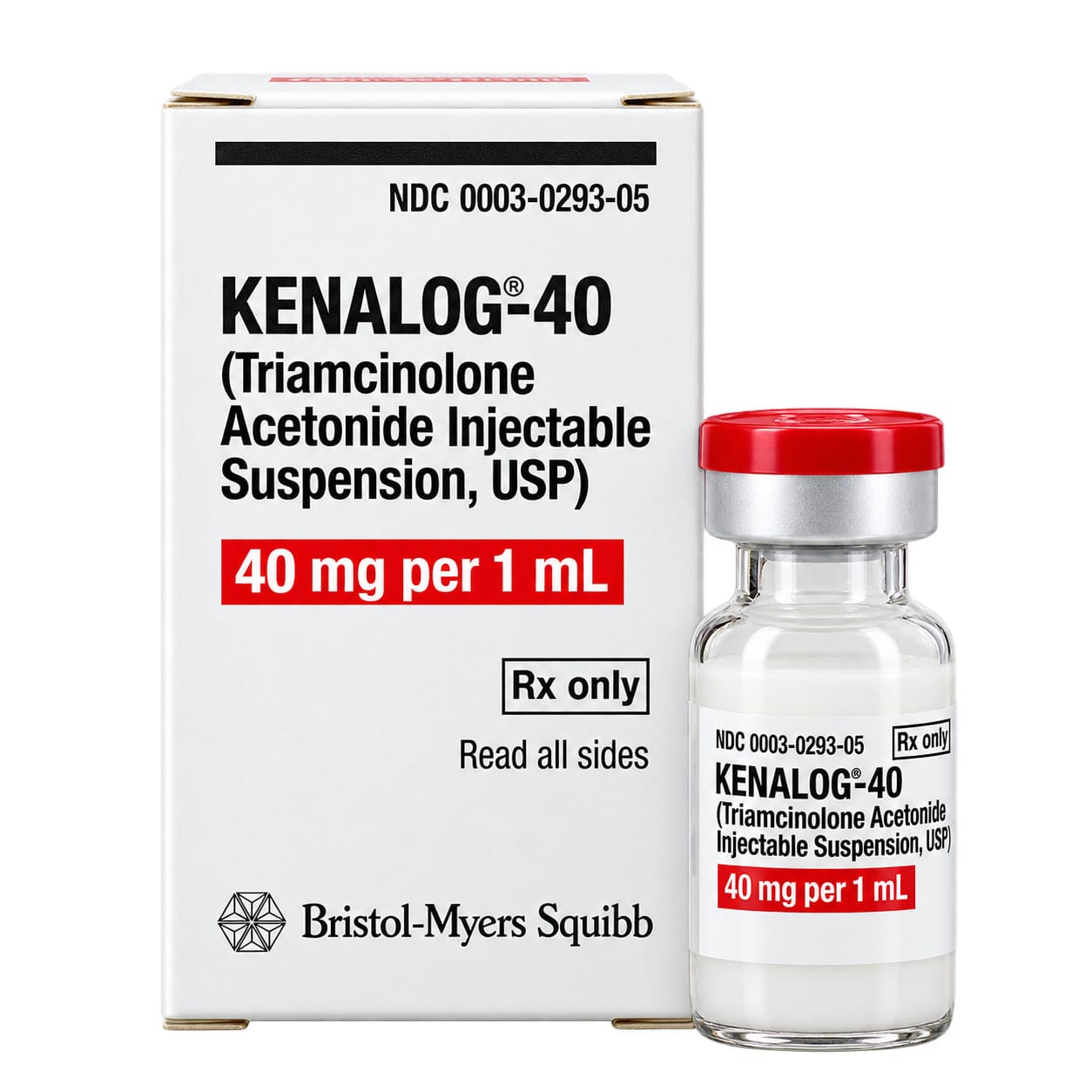
Kenalog Injection (triamcinolone acetonide) is a man-made corticosteroid given as a shot into a muscle or joint to reduce inflammation and calm an overactive immune response. It is used for severe allergic conditions, skin diseases, hormone disorders, certain digestive and blood conditions, and joint and connective tissue problems, among others. The injection is given only by a trained healthcare professional and can provide relief lasting several weeks from a single dose. Like other corticosteroids, it can cause a range of side effects and requires certain precautions.
What is Kenalog Injection
Kenalog-40 Injection is a man-made corticosteroid (glucocorticoid) given as a shot into a muscle or joint. It reduces inflammation and calms an overactive immune response.
Kenalog Injection uses
- Severe allergic conditions such as asthma, atopic dermatitis, contact dermatitis, drug reactions, and hay fever
- Skin diseases such as discoid lupus, lichen planus, alopecia areata, keloids, and severe erythema multiforme
- Adrenal gland and hormone disorders, including congenital adrenal hyperplasia
- Digestive conditions such as ulcerative colitis and regional enteritis, for short-term symptom control
- Blood disorders such as autoimmune hemolytic anemia and selected cases of low platelet count
- Leukemias and lymphomas, for symptom relief
- Multiple sclerosis flare-ups and swelling around brain tumors or after brain surgery
- Eye inflammation conditions not responding to other treatments
- Kidney disease causing protein in the urine (nephrotic syndrome)
- Lung conditions such as sarcoidosis and certain pneumonias
- Joint and connective tissue conditions such as rheumatoid arthritis, gout, bursitis, tendon sheath inflammation, tennis elbow, and osteoarthritis
Benefits of Kenalog Injection
- Reduces inflammation and swelling
- Eases pain and stiffness in affected joints
- Can control symptoms of severe allergic and skin conditions that haven't responded to other treatment
- Provides long-lasting relief from a single injection, sometimes for several weeks
How Kenalog Injection works
Kenalog contains triamcinolone acetonide, a corticosteroid hormone. It lowers the activity of the immune system, which reduces inflammation and swelling.
Kenalog Injection dosage
This medicine is given by a trained healthcare professional in a clinic or doctor's office — it is not self-administered. It is injected deep into a large muscle (usually the buttock) or directly into an affected joint or area of skin. The deltoid (shoulder) muscle should be avoided for injection because it is more likely to cause tissue thinning at the site.
The vial must be shaken well before the dose is drawn up to make sure the medicine is evenly mixed. Once drawn into the syringe, the medicine should be given right away so it does not settle.
If you miss a scheduled injection appointment, contact your doctor's office promptly to reschedule. This is a long-acting medicine and is not meant for treating sudden emergency situations. If you have been on this treatment for a while, it should be stopped gradually rather than all at once, under your doctor's guidance.
| Age group | Dose |
|---|---|
| Under 18 years | Not recommended |
| 18–64 years | 40 mg, once/month |
| 65+ years | 40 mg, once/month |
Available forms and strengths
- Injection
Side effects of Kenalog Injection
Common
- Pain, irritation, or swelling at the injection site
- Fluid retention and swelling in the arms, hands, legs, feet, or ankles
- Skin rash
- Weight gain
- Joint pain
- Fatigue
- Changes in skin color (lighter or darker)
- Increased sweating
- Acne
- Bloating
- Dizziness
- Headache
- Trouble sleeping
- Mild allergic reaction such as itching or flushing
Serious
- Severe allergic reaction: swelling of the face, lips, tongue, or throat, difficulty breathing or swallowing, hives, wheezing, sudden drop in blood pressure
- Signs of infection: fever, chills, sore throat, body aches, or an infection that seems to get worse or hidden
- Eye problems: blurred vision, vision loss, eye pain, light sensitivity, seeing halos around lights
- High blood sugar: increased thirst or urination, fatigue, blurred vision
- High blood pressure: shortness of breath, chest pain, swelling in ankles/legs, rapid heartbeat
- Low potassium: muscle weakness or cramps, irregular heartbeat, fatigue, tingling or numbness
- Bone problems such as osteoporosis: bone fractures, back pain that worsens with standing or walking
- Stomach ulcer: long-lasting stomach pain, vomiting blood, black or bloody stools
- Mood or mental changes: depression, mood swings, unusual euphoria, personality changes
- Muscle weakness or wasting (myopathy)
- Blood clots: pain, swelling, redness, or warmth in an arm or leg, or sudden chest pain/shortness of breath
- Joint damage: increased joint pain, swelling, reduced range of motion, especially with overuse after an injection
- Seizures or convulsions
- Adrenal gland problems: loss of appetite, stomach pain, fatigue, especially during stressful illness or surgery
Warnings and precautions
- This product contains benzyl alcohol and must never be given to newborn babies or premature infants, as it has been linked to serious toxicity and deaths in this group.
- This medicine must only be given into a muscle or joint. It must never be given into a vein, into the skin, into the eye, or into the spinal canal or epidural space.
- Rare but serious allergic reactions, including fatal anaphylaxis, have occurred with this medicine regardless of how it is given.
- This medicine should not be injected into the shoulder (deltoid) muscle because it is more likely to cause tissue wasting there; the buttock muscle is preferred.
- This is a long-acting medicine and is not suitable for treating sudden, acute emergency situations; people on this therapy may need extra steroid support during times of stress like surgery or serious illness, for up to a year after treatment.
- High doses of corticosteroids like this one should not be used to treat traumatic brain injury, as they have been linked to increased risk of death in that situation.
- This medicine can make infections worse or hide the signs of an infection, and it increases susceptibility to all types of infections.
- People taking this medicine should avoid contact with chicken pox or measles, as these illnesses can become serious or even fatal during corticosteroid treatment.
- Live vaccines should not be given to patients on immune-suppressing doses of this medicine.
- This medicine should not be injected into an already-infected joint, and signs of a new joint infection (increased pain, swelling, fever) need prompt medical evaluation.
- This medicine is not recommended for children under 6 years of age and must never be used in newborn or premature infants.
- Long-term use in children may slow growth, so children on extended treatment should have their growth monitored.
- It isn't known whether this medicine is safe to use during pregnancy. Animal studies have shown it can harm the developing fetus, so it should only be used in pregnancy if the benefit outweighs the risk, and babies born to treated mothers should be watched for signs of adrenal problems.
- This medicine can pass into breast milk and may affect a nursing infant's growth or hormone levels, so caution is needed if used while breastfeeding.
- People with kidney problems may need a dose adjustment, and this medicine should be used carefully if you have reduced kidney function because it can cause fluid buildup.
- People with liver disease, such as cirrhosis, may be more sensitive to the effects of this medicine, so your doctor may need to adjust your dose.
- Alcohol has not been shown to interact with this medicine, but ask your doctor or pharmacist if you have concerns about drinking while receiving treatment.
- It isn't known how this medicine affects the ability to drive or operate machinery, since this hasn't been specifically studied.
Storage
- Store at controlled room temperature, 20°–25°C (68°–77°F)
- Avoid freezing
- Protect from light
- Do not refrigerate
When to see a doctor
- Get emergency help right away if you have signs of a severe allergic reaction, such as swelling of the face, lips, tongue, or throat, trouble breathing or swallowing, hives, or wheezing.
- Contact your doctor right away if you notice signs of infection, such as fever, chills, or sore throat.
- Seek medical advice right away if you are exposed to chicken pox or measles and have not had these illnesses before.
- Get medical help if you develop a marked increase in joint pain along with swelling, further restriction of movement, fever, and feeling generally unwell, as this may signal a joint infection.
- Contact a healthcare professional, hospital emergency department, or poison control immediately if you think too much of this medicine was given, even without symptoms.
- Tell your doctor right away if you have symptoms of high blood sugar, such as increased thirst or urination.
Alternatives
- Methylprednisolone injection
- Hydrocortisone injection
- Prednisolone
Watch the video
FAQs
What is Kenalog Injection used for?
It treats severe allergic conditions, skin diseases, hormone disorders, digestive and blood conditions, joint and connective tissue problems, eye inflammation, certain lung conditions, and more by reducing inflammation and calming the immune response.
How is Kenalog Injection given?
It is given by a trained healthcare professional as a shot into a large muscle, usually the buttock, or directly into an affected joint or skin area. It should not be injected into the deltoid (shoulder) muscle, a vein, the skin, the eye, or the spinal canal.
How long does one Kenalog Injection last?
A single injection can provide relief from inflammation and symptoms lasting several weeks.
What are the common side effects of Kenalog Injection?
Common side effects include injection site pain or swelling, fluid retention, skin rash, weight gain, joint pain, fatigue, acne, bloating, dizziness, headache, and trouble sleeping.
Can Kenalog Injection be used in children?
It is not recommended for children under 6 years of age and must never be used in newborn or premature infants. Long-term use in children may slow growth, so growth should be monitored during extended treatment.
General information, not medical advice
Your prescriber and the leaflet in your pack know your situation. This page does not.
- Follow your prescriber and the leaflet
- Don't start, stop, or change a dose on your own
- Doses and warnings differ by country and product
Sources
Video
Related medicines
Fludrocortisone Tablet: Uses, Dosage, Side Effects, Precautions and Alternates
corticosteroid
Fludrocortisone Tablet helps treat Addison's disease and salt-losing adrenogenital syndrome by helping the body retain sodium and water. Learn uses, dosage,
Anusol-HC Suppository: Uses, Dosage, Side Effects, Precautions and Alternates
Corticosteroid
Anusol-HC Suppository is a short-term steroid treatment for hemorrhoid itching, swelling, and irritation. Learn uses, dosage, side effects, and warnings.