
Safety
General information, not medical advice
Your prescriber and the leaflet in your pack know your situation. This page does not.
- Follow your prescriber and the leaflet
- Don't start, stop, or change a dose on your own
- Doses and warnings differ by country and product
Lansoprazole Capsule: Uses, Dosage, Side Effects, Precautions and Alternates
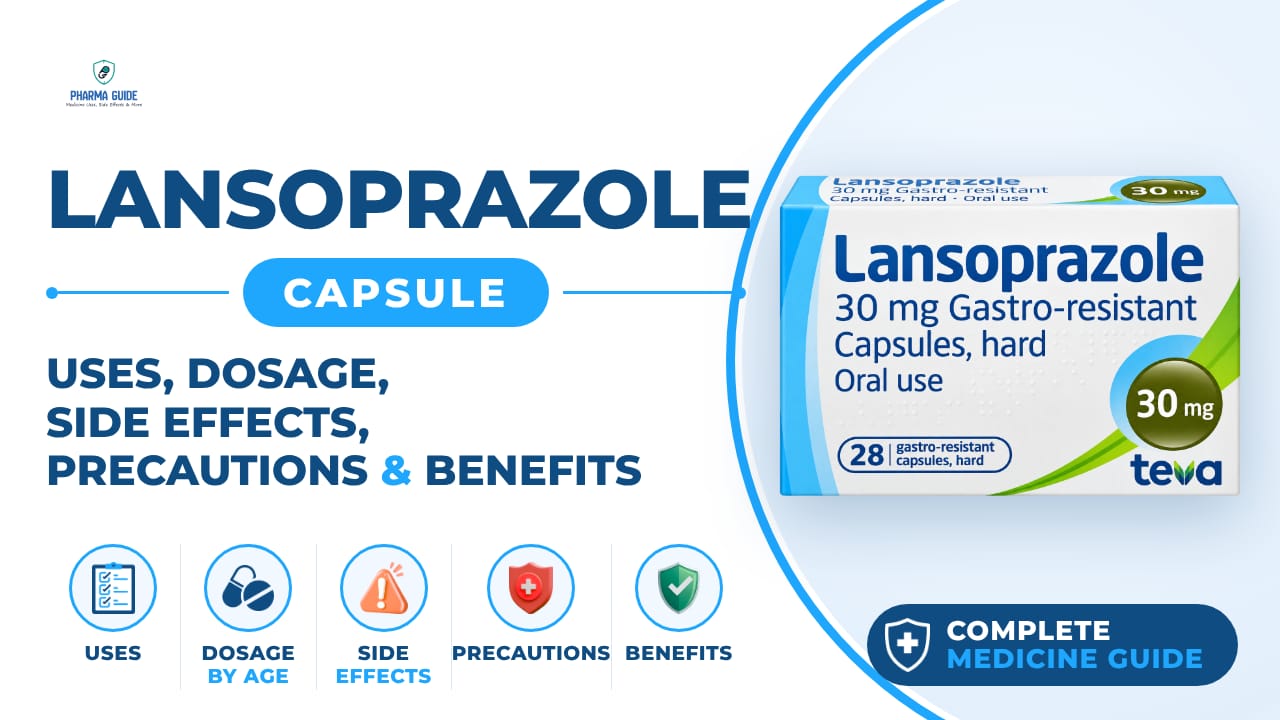
| Generic name | lansoprazole |
|---|---|
| Drug class | Proton pump inhibitor |
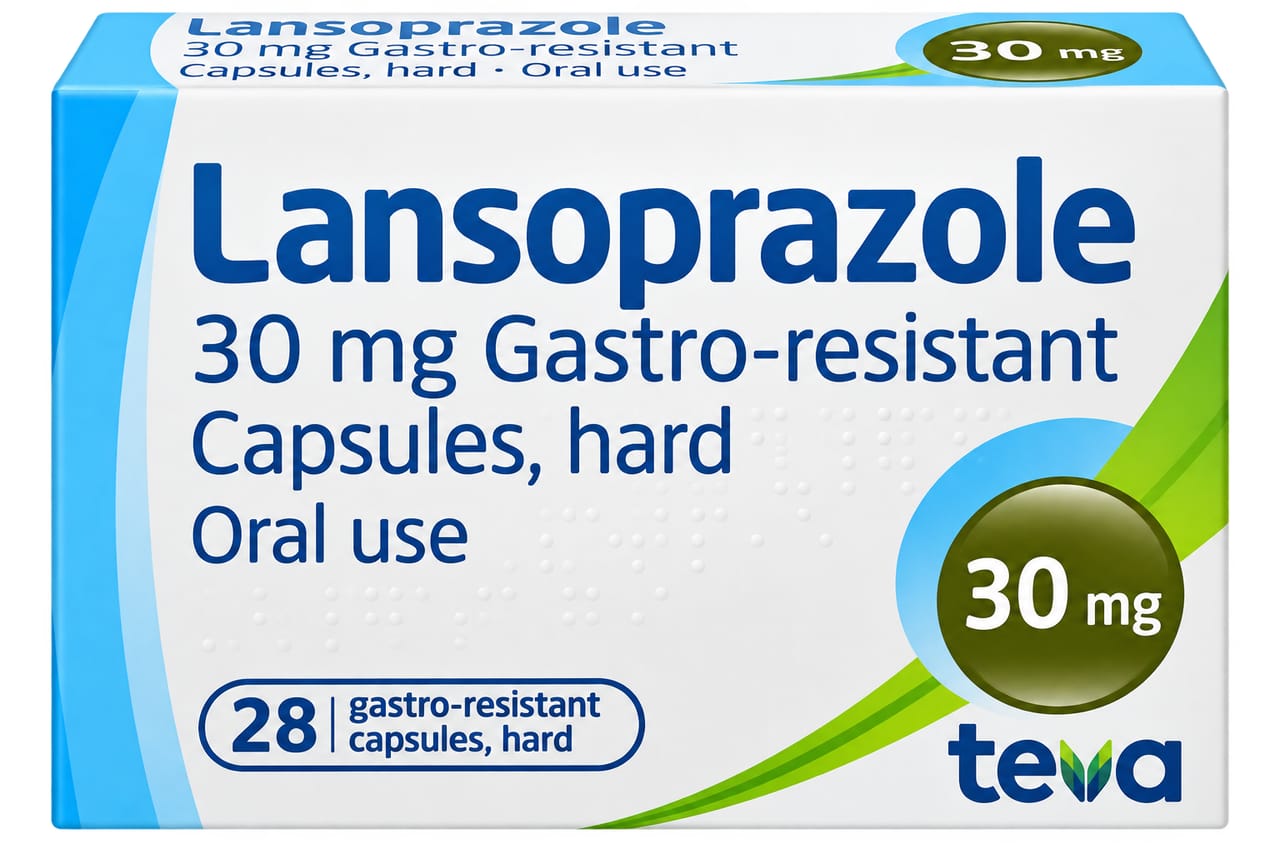
| Forms | Gastro-resistant hard capsule, Delayed-release tablet, Orally disintegrating tablet, Oral suspension (liquid) |
Quick overview
Lansoprazole Capsule is a proton pump inhibitor that reduces the amount of acid made by the stomach. It is used to treat ulcers, reflux oesophagitis, Zollinger-Ellison syndrome, and frequent heartburn, and to help eliminate Helicobacter pylori bacteria alongside antibiotics. The capsules are generally taken once daily on an empty stomach before a meal, and treatment should continue for the full length prescribed by a doctor.
What is Lansoprazole Capsule
Lansoprazole is a medicine that reduces the amount of acid made by the stomach. It belongs to a group of medicines called proton pump inhibitors (PPIs).
Lansoprazole Capsule uses
- Treatment of duodenal and gastric (stomach) ulcers confirmed by endoscopy or X-ray
- Treatment of reflux oesophagitis (inflammation of the gullet caused by stomach acid)
- Long-term prevention of reflux oesophagitis coming back
- Helping to remove the Helicobacter pylori bacterium together with antibiotics, and preventing ulcers from coming back in people with H. pylori-related ulcers
- Treatment of Zollinger-Ellison syndrome
- Treating frequent heartburn (over-the-counter use, 2 or more days a week)
Benefits of Lansoprazole Capsule
- Relieves symptoms such as heartburn, difficulty swallowing, and cough
- Helps heal acid damage to the stomach and esophagus
- Helps prevent ulcers
- May help prevent cancer of the esophagus
How Lansoprazole Capsule works
Lansoprazole blocks the pump in stomach cells that produces acid, cutting down how much acid the stomach makes.
Lansoprazole Capsule dosage
Swallow the capsules whole with enough liquid, such as a glass of water. The capsules may be opened, but the contents (minitablets/pellets) must not be chewed or crushed. If you have trouble swallowing, you may sprinkle the capsule contents on a spoonful of soft food or mix them into a small amount of juice and swallow right away without chewing; do not prepare this mixture ahead of time.
Take on an empty stomach, before a meal, since food reduces how well the medicine is absorbed. If also taking antacids or sucralfate, leave at least an hour between taking lansoprazole and these medicines. Take at the same time each day to help you remember.
Do not take a double dose if you miss one — just take the next dose at the regular time. Continue taking for the full length of treatment prescribed, even if you feel better.
Lansoprazole is not recommended for use in children because safety and effectiveness have not been established in this group. In elderly patients, the dose may need to be adjusted because the body clears lansoprazole more slowly; the daily dose should not go above the recommended maximum.
| Age group | Dose |
|---|---|
| Under 1 year | Doctor's advice required |
| 1–11 years | 15 mg once daily for certain acid-related conditions |
| 12–17 years | 15–30 mg once daily |
| 18 years & older | 15–30 mg once daily |
| Adults | 15–30 mg once daily |
Available forms and strengths
- Gastro-resistant hard capsule
- Delayed-release tablet
- Orally disintegrating tablet
- Oral suspension (liquid)
Side effects of Lansoprazole Capsule
Common
- Nausea
- Vomiting
- Diarrhoea
- Stomach ache
- Constipation
- Flatulence
- Upper abdominal pain
- Skin rash
- Nettle rash (urticaria)
- Itching
- Headache
- Dizziness
- Fatigue
Serious
- Severe stomach pain, or diarrhoea that is watery or bloody
- Signs of an allergic reaction such as hives, difficulty breathing, or swelling of the face, lips, tongue, or throat
- Kidney problems (fever, nausea, little or no urination, blood in urine, swelling, rapid weight gain)
- Signs of low magnesium (dizziness, irregular heartbeat, tremors or jerking muscle movements, muscle cramps or spasms, cough or choking feeling)
- New or worsening symptoms of lupus (joint pain and a skin rash on cheeks or arms that worsens in sunlight)
- Severe skin reactions with fever, chills, body aches, swollen glands, or a rash that blisters, peels, or bleeds (including Stevens-Johnson syndrome and toxic epidermal necrolysis)
- Unusual pain in the wrist, back, hip, or thigh (possible bone fracture)
- Inflammation of the liver or jaundice (yellowing of skin or eyes)
- Severe reduction in certain white blood cells (agranulocytosis)
- Changes in blood counts (low platelets, anaemia, low white blood cells)
- Visual disturbances, especially with long-term use
- Seizures
Warnings and precautions
- Use of this medicine during pregnancy is not recommended.
- Talk to your doctor, who will weigh the benefits and risks.
- Breastfeeding should be avoided while taking this medicine because there isn't enough experience with its use during breastfeeding, and animal studies suggest it passes into breast milk.
- No dose adjustment is generally needed for kidney problems, but the normal daily dose should not be exceeded.
- Caution is needed in people with liver problems; the dose may need to be lowered, and people with severe liver impairment should not take this medicine.
- This medicine can cause dizziness and tiredness, which may reduce your ability to drive or use machinery safely.
- Before starting treatment, doctors should confirm ulcers or reflux disease with proper testing, since this medicine can hide symptoms of a stomach tumor and delay diagnosis.
- Reducing stomach acid can raise the chance of certain gut infections, such as Salmonella and Campylobacter.
- If you take this medicine for longer than a year, your treatment should be reviewed regularly by your doctor to weigh benefits against risks.
- If you notice vision problems during long-term use, stop the medicine right away and see an eye doctor.
- People with certain rare sugar intolerances should not take this medicine because it contains sucrose.
- Long-term or frequent use may increase the risk of broken bones, especially in the hip, wrist, or spine.
- Taking this medicine for more than three years may lead to low vitamin B-12 levels.
- Do not take this medicine together with medicines containing rilpivirine.
Storage
- Do not store above 30°C
- Store in the original package in order to protect from moisture
- Keep out of the reach and sight of children
- Do not use after the expiry date which is stated on the carton and the blister
When to see a doctor
- Get emergency help if you have signs of a serious allergic reaction, like hives, trouble breathing, or swelling of the face, lips, tongue, or throat.
- Call your doctor right away if you have severe stomach pain or diarrhea that is watery or bloody.
- Seek care for signs of kidney problems, such as fever, nausea, little or no urination, blood in urine, swelling, or rapid weight gain.
- Get help for signs of low magnesium, including dizziness, irregular heartbeat, tremors, muscle cramps, or a choking feeling.
- Contact your doctor about any new or unusual pain in your wrist, back, hip, or thigh.
- Seek medical attention if you have a seizure.
- Watch for and report severe skin reactions, including fever, chills, body aches, swollen glands, or a rash that blisters, peels, or bleeds.
- If you think you may have overdosed, get emergency medical help or contact your local poison control center right away.
Alternatives
- Prevacid
- Combination therapy with amoxicillin and clarithromycin for H. pylori eradication
- Combination therapy with clarithromycin and metronidazole for H. pylori eradication
- Combination therapy with amoxicillin and metronidazole for H. pylori eradication
Watch the video
FAQs
How should Lansoprazole Capsule be taken?
Swallow the capsules whole with water on an empty stomach before a meal, since food reduces absorption. If swallowing is difficult, the contents may be sprinkled on soft food or mixed into juice and taken immediately without chewing. Take at the same time each day and complete the full prescribed course.
What should I do if I miss a dose?
Do not take a double dose. Just take the next dose at the regular time.
Can Lansoprazole Capsule be used during pregnancy or breastfeeding?
Use during pregnancy is not recommended, and a doctor should weigh the benefits and risks. Breastfeeding should be avoided because there isn't enough experience with its use during breastfeeding, and animal studies suggest it passes into breast milk.
What are the serious side effects of Lansoprazole Capsule?
Serious effects include severe stomach pain or watery/bloody diarrhoea, allergic reactions, kidney problems, low magnesium signs, lupus symptoms, severe skin reactions, possible bone fractures, liver inflammation or jaundice, blood count changes, visual disturbances, and seizures.
What precautions should be considered with long-term use?
Long-term or frequent use may increase the risk of broken bones, and use for more than three years may lead to low vitamin B-12 levels. Treatment lasting longer than a year should be reviewed regularly by a doctor, and any vision problems should prompt stopping the medicine and seeing an eye doctor.
General information, not medical advice
Your prescriber and the leaflet in your pack know your situation. This page does not.
- Follow your prescriber and the leaflet
- Don't start, stop, or change a dose on your own
- Doses and warnings differ by country and product
Sources
- European Medicines Agency (EMA) - Lansoprazol AbZ-Pharma Annex I, II, III
- Healio Clinical Guidance - Lansoprazole
- Drugs.com - Lansoprazole
Video
Related medicines

Aciphex Tablet: Uses, Dosage, Side Effects, Precautions and Alternates
Proton Pump Inhibitor
Aciphex Tablet (rabeprazole) is a PPI that reduces stomach acid to treat GERD, heartburn, and duodenal ulcers. Learn dosage, uses, side effects, and
Espra Tablet: Uses, Dosage, Side Effects, Precautions and Alternates
Proton Pump Inhibitor
Espra Tablet contains esomeprazole, a proton pump inhibitor used for acid reflux, peptic ulcers, and esophagitis. Learn dosage, side effects, and precautions.