
Safety
General information, not medical advice
Your prescriber and the leaflet in your pack know your situation. This page does not.
- Follow your prescriber and the leaflet
- Don't start, stop, or change a dose on your own
- Doses and warnings differ by country and product
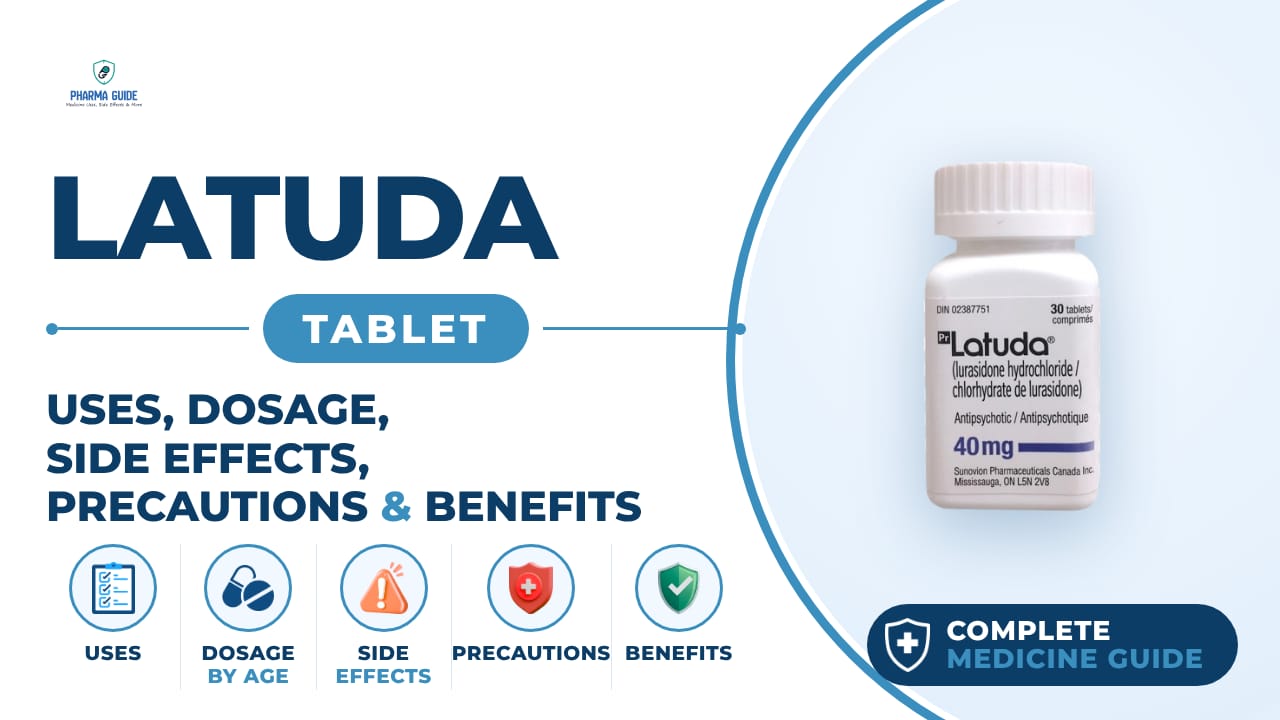
Latuda Tablet: Uses, Dosage, Side Effects, Precautions and Alternates
| Generic name | lurasidone (lurasidone hydrochloride) |
|---|---|
| Drug class | atypical antipsychotic |
| Forms | Tablet |
Quick overview
Latuda Tablet contains the active drug lurasidone, an atypical antipsychotic taken once daily as a swallowed tablet. It is used to treat bipolar depression (alone or with lithium/valproate) and schizophrenia in certain age groups. In studies, it improved depression and psychiatric symptom scores compared with placebo. It carries warnings for serious risks such as suicidal thoughts, neuroleptic malignant syndrome, and increased mortality in elderly patients with dementia-related psychosis.
What is Latuda Tablet
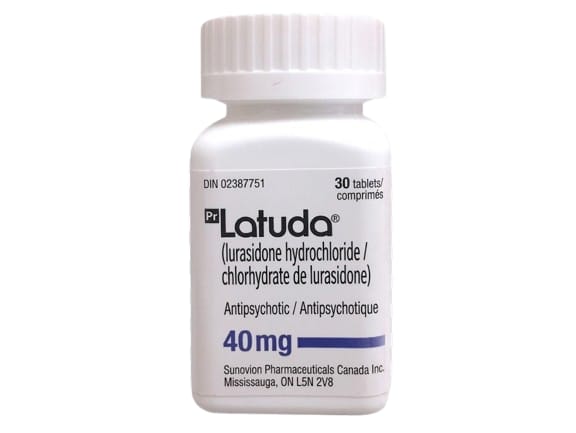
Latuda is a brand-name prescription medicine that contains the active drug lurasidone. It belongs to a group of medicines called atypical antipsychotics and comes as a tablet you swallow once a day.
Latuda Tablet uses
- Treating major depressive episodes (bipolar depression) related to bipolar I disorder, used alone in adults and children ages 10 years and older
- Treating bipolar depression as an add-on treatment with lithium or valproate in adults
- Treating schizophrenia in adults and children ages 13 years and older
Benefits of Latuda Tablet
- In adults with bipolar depression, Latuda improved depression symptom scores more than placebo over 6 weeks
- In children with bipolar depression, Latuda improved depression symptom scores more than placebo over 6 weeks
- In adults with bipolar depression on lithium or valproate, adding Latuda improved depression scores more than adding placebo
- In adults and adolescents with schizophrenia, Latuda improved psychiatric symptom scores more than placebo over 6 weeks
How Latuda Tablet works
Latuda is thought to work by increasing the activity of two brain chemicals, serotonin and dopamine, which helps ease symptoms of schizophrenia and the depressive phase of bipolar I disorder. The exact way it works isn't fully understood.
Latuda Tablet dosage
Take Latuda exactly as your doctor tells you to. Swallow the tablet whole; do not crush, split, or chew it. Take Latuda once a day at about the same time each day, with food — eating at least 350 calories helps your body absorb the medicine properly. If sleepiness is a problem, taking it in the evening before bedtime may help.
If you miss a dose, take it as soon as you remember, unless it's almost time for your next dose — in that case skip the missed dose and go back to your regular schedule. Don't take two doses at once.
Avoid grapefruit or grapefruit juice while taking this medicine. Avoid alcohol while taking this medicine, as it may worsen certain side effects. Don't stop taking this medicine suddenly without talking to your doctor first, as this can cause withdrawal symptoms.
| Age group | Dose |
|---|---|
| Under 18 years | Not recommended |
| 18–60 years | 20 mg, once/day |
| 60+ years | 20 mg, once/day |
Available forms and strengths
- Tablet
Side effects of Latuda Tablet
Common
- Difficulty thinking clearly, making decisions, or coordinating muscle movements
- Akathisia (feeling restless or needing to move around)
- Muscle stiffness or tremor
- Stuffy or runny nose
- Trouble moving or slow movements
- Insomnia (trouble sleeping)
- Vomiting
- Weight gain
- Sleepiness
- Nausea
- Diarrhea
- Anxiety
Serious
- Changes in metabolism leading to high blood sugar, high cholesterol or triglycerides, or weight gain
- Increased prolactin levels, causing lack of menstruation, unexpected breast milk production, breast growth in men, or erectile dysfunction
- Neuroleptic malignant syndrome (fever, muscle stiffness, confusion, changes in blood pressure/breathing/heart rate, excess sweating)
- Low white blood cell count (fever, infection, mouth sores)
- Increased risk of stroke in older adults with dementia-related psychosis
- Seizures
- Orthostatic hypotension (sudden drop in blood pressure when standing), which can cause dizziness, fainting, or falls
- Trouble regulating body temperature
- Trouble swallowing
- Allergic reaction, including severe swelling of the face, lips, tongue, or throat, and trouble breathing
- Tardive dyskinesia (uncontrolled, repetitive muscle movements)
- Risk of death in older adults with dementia-related psychosis
- Suicidal thoughts and behaviors
Warnings and precautions
- Elderly patients with dementia-related psychosis who take antipsychotic drugs like Latuda have an increased risk of death. Latuda is not approved to treat psychosis related to dementia.
- Latuda may increase the risk of suicidal thoughts and behaviors in children and young adults, especially in the first few months of treatment.
- Latuda can cause neuroleptic malignant syndrome, a rare but potentially life-threatening reaction with fever, muscle rigidity, confusion, and changes in heart rate or blood pressure.
- Latuda can cause tardive dyskinesia, a condition of uncontrolled, repetitive muscle movements that may not go away even after stopping the medicine.
- Latuda can affect your body's ability to control its temperature, so avoid getting overheated or dehydrated.
- Do not take Latuda with certain strong medications that affect how your body breaks it down, including some antifungal, antibiotic, and seizure medicines, as this can be dangerous.
- Avoid grapefruit and grapefruit juice while taking Latuda, since they can raise the level of the drug in your blood and increase side effect risk.
- It isn't known if Latuda is safe during pregnancy. Babies born to mothers who took Latuda in the last three months of pregnancy have had movement problems and withdrawal symptoms.
- Talk with your doctor about the risks and benefits if you're pregnant or planning pregnancy.
- It isn't known if Latuda passes into breast milk. Talk with your doctor about the risks and benefits before breastfeeding while taking this medicine.
- Your doctor may need to adjust your dose if you have kidney problems or liver problems.
- There's no known direct interaction between Latuda and alcohol, but drinking alcohol may make side effects like sleepiness and trouble thinking clearly worse. Talk with your doctor before drinking alcohol during treatment.
- Latuda can cause sleepiness, so you shouldn't drive or use machinery until you know how the medicine affects you.
Storage
- Store Latuda tablets at room temperature (77°F/25°C), with brief excursions allowed between 59°F and 86°F (15°C to 30°C).
- Keep the tablets in a tightly sealed container away from light.
- Avoid storing this medication in areas where it could get damp or wet, such as bathrooms.
- Keep out of the reach of children.
- If you no longer need the medicine, dispose of leftover tablets safely rather than keeping or sharing them; ask your pharmacist for guidance on safe disposal.
When to see a doctor
- Get emergency help right away if you have thoughts of suicide, attempt suicide, or notice sudden worsening of depression, severe agitation, panic attacks, or aggressive or violent behavior.
- Call your doctor right away if you have symptoms of a severe allergic reaction, such as swelling of the face, lips, tongue, or throat, or trouble breathing.
- Seek immediate medical care if you have signs of neuroleptic malignant syndrome, such as high fever, muscle rigidity, confusion, and changes in breathing or heart rate.
- Call your doctor right away if you notice uncontrollable movements of your face, tongue, or body, which could be signs of tardive dyskinesia.
- Get medical help right away if you feel dizzy, lightheaded, or faint when standing up, as this could signal a sudden drop in blood pressure.
- If you think you've taken too much Latuda, contact your doctor or poison control right away, or go to the nearest emergency room if symptoms are severe.
Alternatives
- Quetiapine
- Aripiprazole
- Vraylar
Watch the video
FAQs
What is Latuda Tablet used for?
Latuda is used to treat major depressive episodes related to bipolar I disorder (alone or with lithium/valproate) and to treat schizophrenia in certain age groups.
How should I take Latuda Tablet?
Swallow the tablet whole once a day at the same time, with food (at least 350 calories) to help absorption. Do not crush, split, or chew it.
What is the dosage of Latuda for adults?
For adults aged 18 to 60 and those over 60, the typical dose is 20 mg once a day. Latuda is not recommended for those under 18 except as specified for certain conditions.
What are the common side effects of Latuda?
Common side effects include difficulty thinking clearly, akathisia, muscle stiffness, insomnia, weight gain, nausea, and anxiety.
Can Latuda be taken with alcohol?
There's no known direct interaction between Latuda and alcohol, but drinking alcohol may worsen side effects like sleepiness and trouble thinking clearly.
General information, not medical advice
Your prescriber and the leaflet in your pack know your situation. This page does not.
- Follow your prescriber and the leaflet
- Don't start, stop, or change a dose on your own
- Doses and warnings differ by country and product
Sources
- Medical News Today: Latuda (lurasidone) article
- FDA Prescribing Information for LATUDA (lurasidone hydrochloride) tablets
- Talkspace: Lurasidone (Latuda) article
- WebMD: Lurasidone (Latuda) drug information
Video
Related medicines
Seroquel XR Tablet: Uses, Dosage, Side Effects, Precautions and Alternates
Atypical antipsychotic
Seroquel XR Tablet (quetiapine) treats schizophrenia, bipolar disorder, and depression. Learn about dosage, benefits, side effects, and key safety warnings.
Risperdal Consta Injection: Uses, Dosage, Side Effects, Precautions and Alternates
Atypical antipsychotic
Risperdal Consta Injection is a long-acting risperidone shot given every 2 weeks for schizophrenia and bipolar I maintenance. Learn uses, dosage, and side