
Safety
General information, not medical advice
Your prescriber and the leaflet in your pack know your situation. This page does not.
- Follow your prescriber and the leaflet
- Don't start, stop, or change a dose on your own
- Doses and warnings differ by country and product
Livalo Tablet: Uses, Dosage, Side Effects, Precautions and Alternates
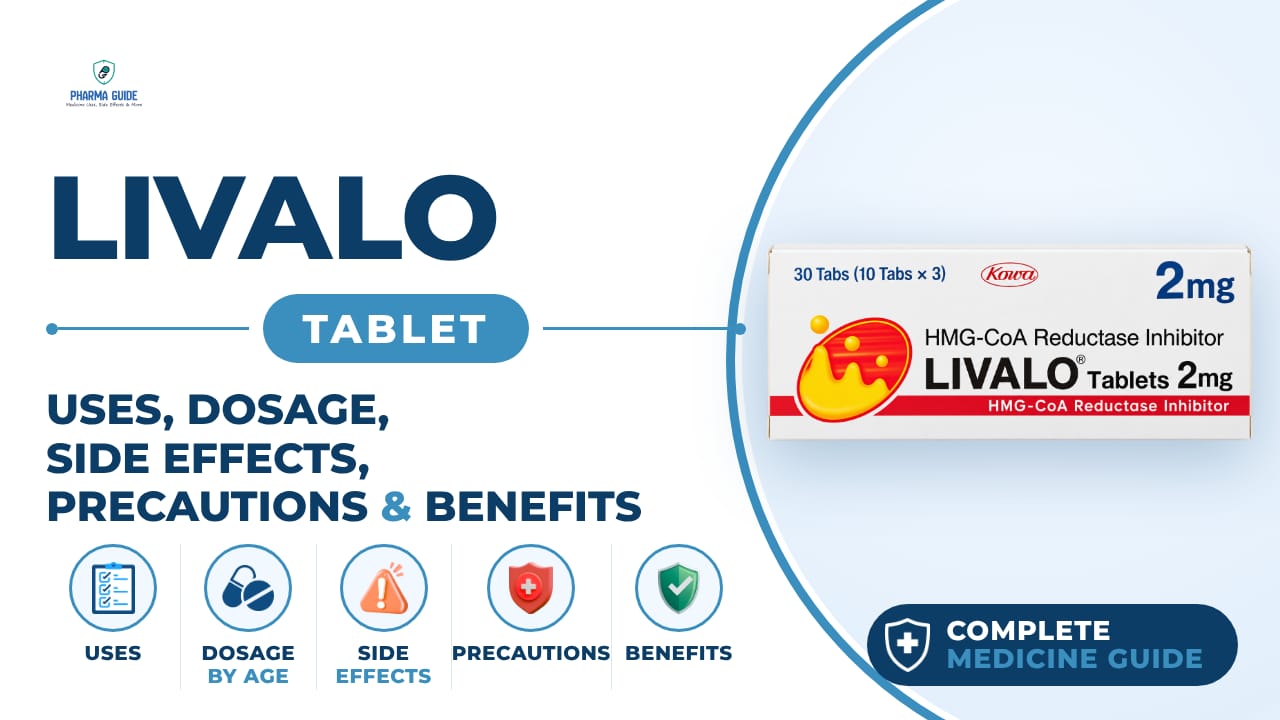
| Generic name | pitavastatin |
|---|---|
| Drug class | Statins |
| Forms | Tablet |
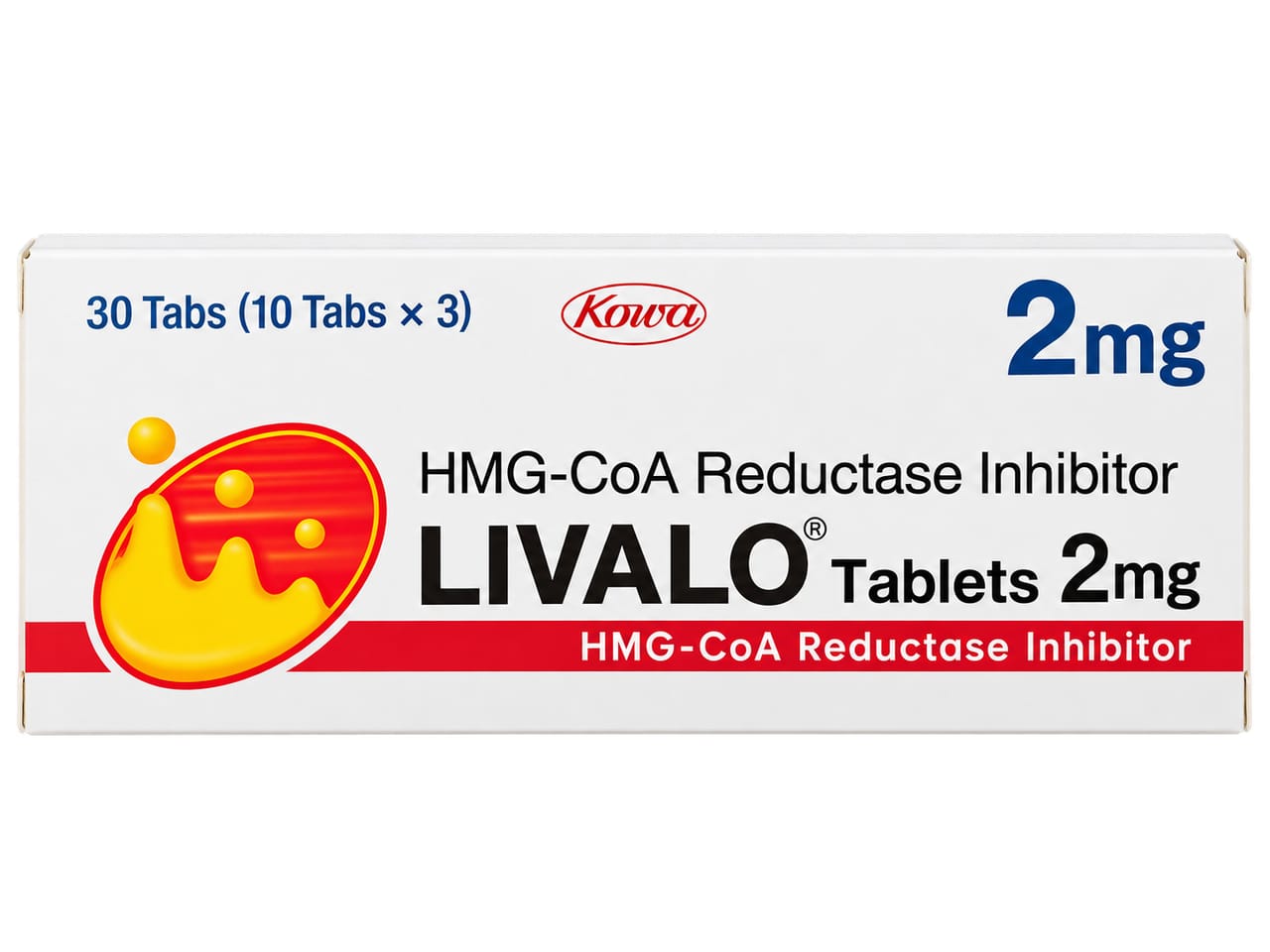
Quick overview
Livalo Tablet (pitavastatin) is a statin medicine used together with diet to lower bad cholesterol (LDL) and triglycerides while raising good cholesterol (HDL). It is used to treat high cholesterol in adults and an inherited form of high cholesterol in children at least 8 years old. It works by blocking a protein in the liver that makes cholesterol, and it is taken once a day with or without food.
What is Livalo Tablet
Livalo is a brand-name statin medicine taken as a tablet by mouth. It belongs to a group of drugs called HMG CoA reductase inhibitors, or statins, which are used to help manage cholesterol.
Livalo Tablet uses
- Used together with diet to lower blood levels of bad cholesterol (LDL) and triglycerides, and to raise good cholesterol (HDL)
- Used to treat high cholesterol in adults
- Used to treat an inherited form of high cholesterol (heterozygous familial hypercholesterolemia) in children at least 8 years old
Benefits of Livalo Tablet
- Lowering your cholesterol may help prevent heart disease and hardening of the arteries, conditions that can lead to heart attack, stroke, and vascular disease
- Generally lowers bad cholesterol (LDL) by about 30% to 49%
- Taken once per day with or without food
How Livalo Tablet works
Livalo works mainly by blocking a protein in the liver that makes cholesterol. This lowers bad cholesterol (LDL) and triglycerides in the blood, and slightly raises good cholesterol (HDL).
Livalo Tablet dosage
Take Livalo exactly as prescribed by your doctor and follow all directions on your prescription label. You may take Livalo with or without food, but take it at the same time each day. Swallow the tablets whole; do not cut, crush, or chew them.
Livalo is only part of a complete treatment program that also includes diet, exercise, and weight control. Avoid eating foods that are high in fat or cholesterol, since Livalo will not work as well if you do not follow a cholesterol-lowering diet.
If you miss a dose, take it as soon as you remember, but skip it if it is almost time for your next dose; do not take extra medicine to make up for a missed dose. Do not give this medicine to a child without medical advice.
| Age group | Dose |
|---|---|
| Under 8 years | Safety and effectiveness not established |
| 8–17 years | 2–4 mg once daily for heterozygous familial hypercholesterolemia |
| 18–64 years | 2–4 mg once daily |
| 65 years and older | 2–4 mg once daily, with individualized monitoring |
Available forms and strengths
Livalo is available as a tablet.
Side effects of Livalo Tablet
Common
- Muscle pain
- Pain in your arms or legs
- Back pain
- Diarrhea, constipation
- Increased blood sugar levels
- Joint pain
- Headache
Serious
- Breakdown of skeletal muscle tissue (rhabdomyolysis), potentially leading to kidney failure
- Confusion, memory problems
- Muscle weakness in your hips, shoulders, neck, and back; trouble lifting your arms, climbing, or standing
- Kidney problems - vomiting, pain in your side or lower back, little or no urinating, swelling, rapid weight gain
- Liver problems - loss of appetite, stomach pain (upper right side), tiredness, dark urine, clay-colored stools, jaundice (yellowing of the skin or eyes)
- Allergic reaction - hives, difficult breathing, swelling of your face, lips, tongue, or throat
- High blood sugar - irritability, increased thirst, frequent urge to urinate
Warnings and precautions
- Livalo can harm an unborn baby. Tell your doctor if you are pregnant or plan to become pregnant, so you can discuss whether to stop the medicine.
- Do not breastfeed while taking Livalo, since it can pass into breast milk and may harm a nursing baby.
- Tell your doctor if you have ever had kidney disease. Kidney problems can raise the risk of serious muscle breakdown with this medicine, and your doctor may need to adjust your dose.
- You should not take Livalo if you have active liver failure or decompensated cirrhosis. Tell your doctor about any liver problems, and you may need blood tests to check your liver function while using this medicine.
- Drinking alcohol can raise triglyceride levels and may increase your risk of liver damage while taking this medicine.
- Report unexplained muscle pain or weakness.
- Do not take Livalo if you have active liver failure or decompensated cirrhosis, or if you also take cyclosporine.
- Livalo can cause a condition that breaks down skeletal muscle tissue, which can lead to kidney failure. This is more likely in older adults and people with kidney disease or poorly controlled underactive thyroid.
- You may need to stop using Livalo for a short time if you have uncontrolled seizures, an electrolyte imbalance, severely low blood pressure, a severe infection or illness, dehydration, or are having surgery or a medical emergency.
- Statins like Livalo can rarely cause an autoimmune condition called immune-mediated necrotizing myopathy, which causes muscle inflammation and weakness that might continue even after stopping the medication.
- Tell your doctor about all other medicines you use, since certain drugs like colchicine, gemfibrozil, fenofibric acid, fenofibrate, or niacin-containing medicines can increase the risk of serious muscle problems when taken with Livalo.
Storage
- Store at room temperature away from moisture, heat, and light.
When to see a doctor
- Get emergency medical help if you have signs of an allergic reaction: hives, difficult breathing, or swelling of your face, lips, tongue, or throat.
- Call your doctor right away if you have unexplained muscle pain, tenderness, or weakness, especially with fever, unusual tiredness, and dark urine.
- Call your doctor right away if you have confusion or memory problems; muscle weakness in your hips, shoulders, neck, or back; trouble lifting your arms, climbing, or standing; signs of kidney problems like vomiting, pain in your side or lower back, little or no urinating, swelling, or rapid weight gain; or signs of liver problems like loss of appetite, upper right stomach pain, tiredness, dark urine, clay-colored stools, or yellowing of the skin or eyes.
- Get medical help right away if you have severe muscle pain, tenderness, or weakness; dark-colored urine; or fever, as these might be signs of rhabdomyolysis, a serious muscle breakdown condition.
- Get medical help right away if you have yellowing of the skin or eyes, severe stomach pain, dark or bloody stools, or dark urine, as these could be signs of liver damage.
- If overdose is suspected, seek emergency medical attention or contact your local poison control center right away.
Alternatives
- Simvastatin
- Pravastatin
- Rosuvastatin
- Atorvastatin
Watch the video
FAQs
What is Livalo Tablet used for?
Livalo is used with diet to lower bad cholesterol (LDL) and triglycerides and raise good cholesterol (HDL). It treats high cholesterol in adults and an inherited form of high cholesterol (heterozygous familial hypercholesterolemia) in children at least 8 years old.
How does Livalo Tablet work?
Livalo works mainly by blocking a protein in the liver that makes cholesterol, which lowers LDL and triglycerides in the blood and slightly raises HDL.
What is the dosage of Livalo Tablet?
For adults and children 8-17 years with heterozygous familial hypercholesterolemia, the dose is typically 2-4 mg once daily. It should be swallowed whole with or without food at the same time each day.
What are the common side effects of Livalo Tablet?
Common side effects include muscle pain, pain in the arms or legs, back pain, diarrhea, constipation, increased blood sugar levels, joint pain, and headache.
Who should not take Livalo Tablet?
Livalo should not be taken by people with active liver failure or decompensated cirrhosis, or those who also take cyclosporine. It can also harm an unborn baby, so it should not be used during pregnancy or breastfeeding.
General information, not medical advice
Your prescriber and the leaflet in your pack know your situation. This page does not.
- Follow your prescriber and the leaflet
- Don't start, stop, or change a dose on your own
- Doses and warnings differ by country and product
Sources
Video
Related medicines
Zocor Tablet: Uses, Dosage, Side Effects, Precautions and Alternates
Statins
Zocor Tablet (simvastatin) lowers LDL cholesterol and triglycerides, raises HDL, and reduces heart attack and stroke risk. Learn dosage, side effects, and

Injectafer Injection: Uses, Dosage, Side Effects, Precautions and Alternates
Iron products
Injectafer (ferric carboxymaltose) treats iron deficiency anemia and heart failure-related iron deficiency via IV. Learn uses, dosage, side effects, and