
Safety
General information, not medical advice
Your prescriber and the leaflet in your pack know your situation. This page does not.
- Follow your prescriber and the leaflet
- Don't start, stop, or change a dose on your own
- Doses and warnings differ by country and product
Makena Injection: Uses, Dosage, Side Effects, Precautions and Alternates
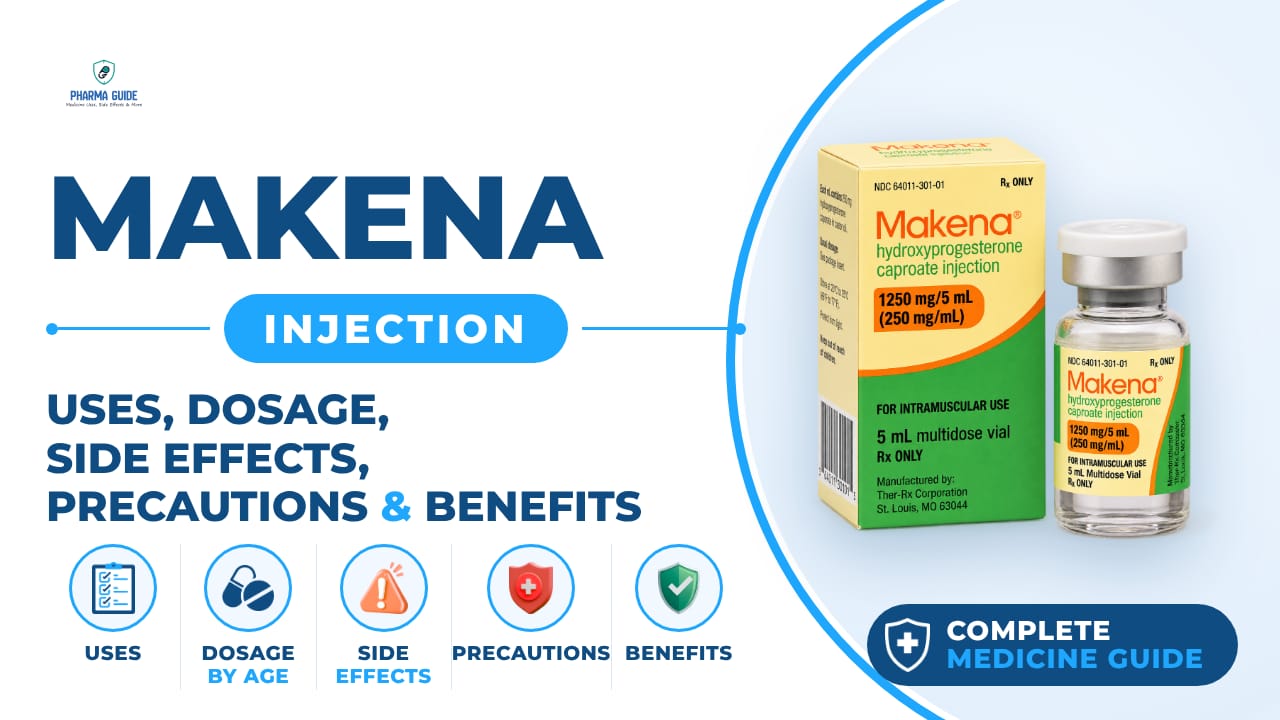
| Generic name | hydroxyprogesterone caproate |
|---|---|
| Drug class | Progestin |
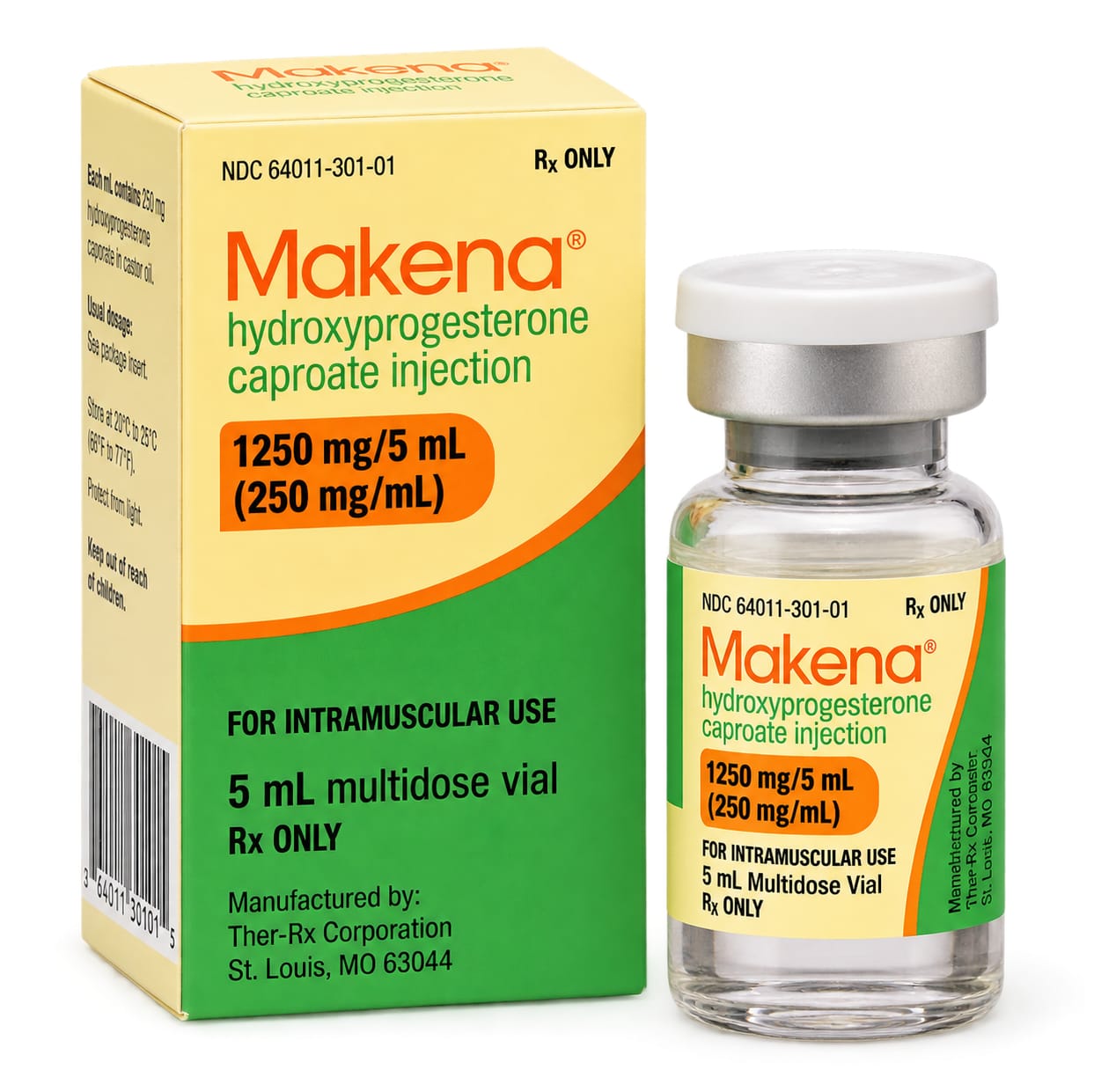
| Forms | Subcutaneous injection (auto-injector), Intramuscular injection (single-dose vial), Intramuscular injection (multi-dose vial) |
Quick overview
Makena (hydroxyprogesterone caproate) is a prescription progestin hormone that was used to lower the risk of a repeat premature birth in women pregnant with one baby who had previously had a premature delivery. It was given as a weekly injection by a healthcare provider, starting in the second trimester of pregnancy. In 2023, the FDA withdrew approval of Makena and its generics because they were not shown to be effective, and the Makena brand has been discontinued in the U.S.
What is Makena Injection
Makena is a prescription hormone medicine called a progestin, a man-made form of the female hormone progesterone. The FDA withdrew approval of Makena and its generics in 2023 because they were not shown to be effective, and the Makena brand has been discontinued in the U.S.
Makena Injection uses
- Used to lower the risk of premature birth in women who are pregnant with one baby and who have already had a premature baby in the past
- Not used to stop premature labor that has already started
- Not for use in women pregnant with more than one baby (twins, triplets, etc.)
Benefits of Makena Injection
- Was intended to help reduce the risk of recurrent spontaneous preterm birth
- Was used in women carrying one baby who had a prior spontaneous preterm birth
- Provided a long-acting form of hydroxyprogesterone caproate, a synthetic progestin
- Was designed to support pregnancy by providing progestational hormonal activity
- Was given as part of specialist obstetric care for women considered at higher risk of preterm delivery
How Makena Injection works
The exact way this medicine helps reduce the risk of repeat premature birth is not known. It is thought that added progesterone may change hormones and other substances that control womb contractions and the timing of labor, and may reduce inflammation and early rupture of the membranes around the baby.
Makena Injection dosage
Makena is given by a healthcare provider only — you should not inject yourself. It is given once every week, either as a shot under the skin in the back of the upper arm, or as a shot into the muscle in the upper outer area of the buttocks. Treatment usually starts in the second trimester of pregnancy and continues weekly until about week 37 of pregnancy or until the baby is born, whichever happens first. Follow your doctor's instructions about any restrictions on food, drinks, or activity, and keep all scheduled doctor appointments so your progress can be checked regularly.
| Age group | Dose |
|---|---|
| Under 18 years | Safety and effectiveness not established |
| Adult pregnant women | Previously 250 mg IM once weekly |
| Treatment start | Previously started between 16 weeks 0 days and 20 weeks 6 days of pregnancy |
| Treatment duration | Previously continued once weekly until 37 weeks of pregnancy or delivery, whichever occurred first |
| 65+ years | Not applicable for the former indication |
Available forms and strengths
- Subcutaneous injection (auto-injector)
- Intramuscular injection (single-dose vial)
- Intramuscular injection (multi-dose vial)
Side effects of Makena Injection
Common
- Pain, swelling, itching, rash, or a lump where the shot was given
- Nausea
- Diarrhea
- Hives
Serious
- Signs of an allergic reaction: hives, itching, trouble breathing, swelling of the face, lips, tongue, or throat
- Signs of a blood clot: sudden numbness or weakness, problems with vision or speech, swelling or redness in an arm or leg, leg pain that gets worse when you bend your foot
- Yellowing of the skin or eyes (jaundice)
- Swelling in the hands, ankles, or feet (fluid retention)
- Signs of high blood pressure: severe headache, blurred vision, pounding in the neck or ears, anxiety, nosebleed
- Symptoms of depression: sleep problems, weakness, mood changes
- Increasing pain, oozing, or bleeding where the injection was given
Warnings and precautions
- Do not use this medicine if you have uncontrolled high blood pressure, unusual vaginal bleeding, liver disease or liver cancer, jaundice caused by pregnancy, or a history of stroke, blood clots, circulation problems, or certain cancers
- This medicine is not approved for use in anyone younger than 16 years old
- The FDA has withdrawn approval of Makena and its generic versions because they were not shown to be effective at reducing the risk of preterm birth, and the benefits do not outweigh the known risks
- If you develop a blood clot while receiving this medicine, treatment should be stopped
- Tell your doctor if you have ever had kidney disease before starting this medicine
- This medicine should not be used if you have liver disease, liver cancer, or jaundice caused by pregnancy, since the liver breaks this medicine down and liver problems may affect how it is cleared from the body
Makena is used during pregnancy to lower the risk of a repeat premature birth, but it is not known whether it prevents medical problems in the newborn baby. Talk with your doctor about your baby's individual risk.
Small amounts of this type of hormone pass into breast milk, but studies have not found harmful effects on breastfed babies or on milk supply.
Storage
- Store at 20–25°C (68–77°F) at controlled room temperature
- Keep the vial in its original carton to protect it from light
- Protect from excessive heat and do not freeze or refrigerate
- Store the vial upright and keep it properly sealed until use
- Inspect before use; do not use if the solution contains particles or abnormal discoloration
- Keep securely stored and out of reach of children
When to see a doctor
- Call your doctor right away if you have sudden numbness or weakness, confusion, problems with vision or speech, yellowing of the skin or eyes, swelling in your hands or feet, or pain or redness in one or both legs
- Get emergency medical help right away if you have signs of an allergic reaction, such as hives, itching, difficulty breathing, or swelling of your face, lips, tongue, or throat
- Call your doctor if the injection site has increasing pain over time, oozing of blood or fluid, or swelling
Alternatives
- Individualized Preterm-Birth Prevention Plan
- Maternal-Fetal
- Serial Transvaginal Cervical-Length Monitoring
- Cervical Cerclage
- Vaginal Progesterone
Watch the video
FAQs
Is Makena still available in the U.S.?
No. In 2023, the FDA withdrew approval of Makena and its generics because they were not shown to be effective, and the Makena brand has been discontinued in the U.S.
What was Makena Injection used for?
Makena was used to lower the risk of a repeat premature birth in women pregnant with one baby who had previously had a premature delivery. It was not used to stop premature labor that had already started or in women pregnant with more than one baby.
How was Makena given?
Makena was given by a healthcare provider only, once every week, as a shot under the skin in the back of the upper arm or into the muscle in the upper outer buttocks. Treatment usually started in the second trimester and continued weekly until about week 37 of pregnancy or until the baby was born, whichever happened first.
What are the serious side effects of Makena Injection?
Serious side effects included signs of an allergic reaction, signs of a blood clot, jaundice, fluid retention in the hands or feet, signs of high blood pressure, symptoms of depression, and increasing pain, oozing, or bleeding at the injection site.
Does Makena pass into breast milk?
Small amounts of this type of hormone pass into breast milk, but studies have not found harmful effects on breastfed babies or on milk supply.
General information, not medical advice
Your prescriber and the leaflet in your pack know your situation. This page does not.
- Follow your prescriber and the leaflet
- Don't start, stop, or change a dose on your own
- Doses and warnings differ by country and product
Sources
Video
Related medicines
Norlutate Tablet: Uses, Dosage, Side Effects, Precautions and Alternates
Progestin
Norlutate Tablet (norethindrone acetate) treats abnormal uterine bleeding, endometriosis, and secondary amenorrhea. Learn uses, dosage, side effects, and
Progesterone Capsule: Uses, Dosage, Side Effects, Precautions and Alternates
Progestin
Progesterone Capsule is used with estrogen to manage menopause symptoms, protect the uterine lining, and induce periods in amenorrhea. Learn dosage, side