
Safety
General information, not medical advice
Your prescriber and the leaflet in your pack know your situation. This page does not.
- Follow your prescriber and the leaflet
- Don't start, stop, or change a dose on your own
- Doses and warnings differ by country and product
Melleril Tablet: Uses, Dosage, Side Effects, Precautions and Alternates

| Generic name | Thioridazine |
|---|---|
| Drug class | Phenothiazine antipsychotic |
| Forms | Tablet |
Quick overview
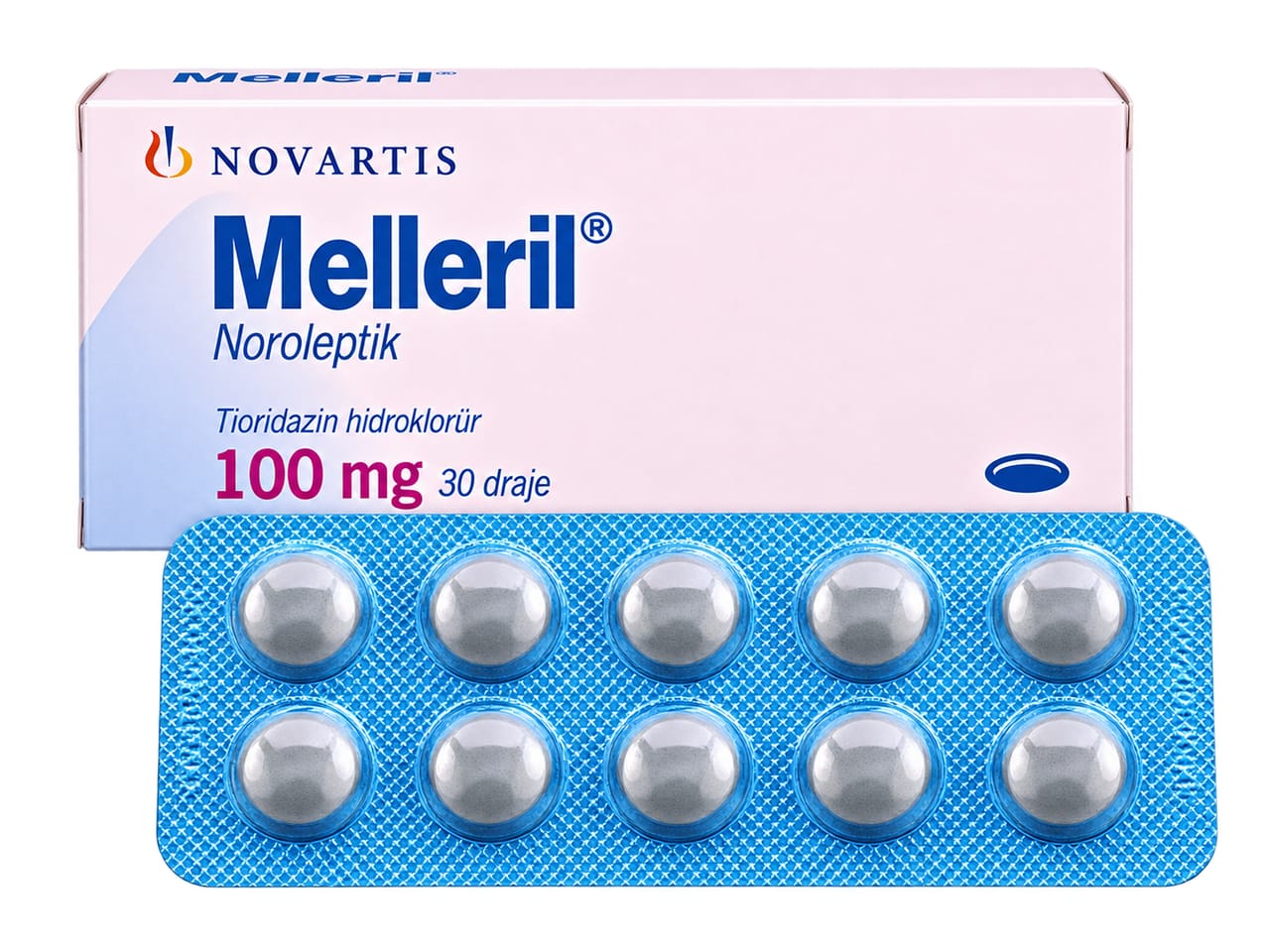
Melleril Tablet contains thioridazine, a phenothiazine antipsychotic medicine used to treat schizophrenia. It is usually given when other antipsychotic medicines have not worked well enough or could not be tolerated. It works by blocking dopamine receptors in the brain to help reduce symptoms such as hallucinations and delusions. It is available as a tablet.
What is Melleril Tablet
Melleril is an older (first-generation) antipsychotic medicine used to treat schizophrenia. It is usually given when other antipsychotic medicines have not worked well enough or could not be tolerated.
Melleril Tablet uses
- Managing severe symptoms of schizophrenia, such as hallucinations, delusions, and disorganized thinking
- Reducing agitation, aggression, and uncooperative behavior
- Helping stabilize mood and improve emotional control in people with schizophrenia
- Long-term maintenance treatment to help prevent schizophrenia symptoms from returning
Benefits of Melleril Tablet
- Can reduce hallucinations and delusions
- May help patients with schizophrenia function more effectively in daily life
- Can improve overall quality of life and social functioning in schizophrenia management
How Melleril Tablet works
Melleril works by blocking dopamine receptors in the brain, which reduces overactive nerve signals and helps lower psychotic symptoms like hallucinations and delusions.
Melleril Tablet dosage
Take this medication by mouth with a glass of water. Swallow the tablet whole; do not crush or chew it. Try to take it at the same time each day. It can be taken with or without food, as advised by your doctor. Keep taking it unless your care team tells you to stop, and do not stop taking it suddenly without talking to your doctor. Talk to your care team about use in children, since special precautions apply. If you miss a dose, take it as soon as you remember, but skip it if it is almost time for your next dose — do not take two doses at once.
| Age group | Dose |
|---|---|
| 2–11 years | Initial dose about 0.5 mg/kg/day in divided doses; specialist-directed |
| 12–17 years | Initial 0.5 mg/kg/day in divided doses; may be increased by a specialist up to 3 mg/kg/day |
| 18–64 years | Usually 50–100 mg three times daily initially; individualized according to response |
Available forms and strengths
- Tablet
Side effects of Melleril Tablet
Common
- Drowsiness or sleepiness
- Dry mouth
- Blurred vision
- Constipation or mild stomach upset
- Dizziness or lightheadedness, especially when standing up quickly
- Weight gain
- Diarrhea, nausea, or vomiting
- Breast swelling or discharge, or changes in menstrual periods
- Swelling in the hands or feet
- Skin sensitivity to sunlight
Serious
- Heart rhythm changes, such as fast or irregular heartbeat, chest pain, or trouble breathing
- Uncontrolled or repetitive body movements, muscle stiffness, spasms, tremors, or shuffling walk (possible signs of extrapyramidal symptoms)
- High fever, stiff muscles, sweating, fast or irregular heartbeat, and confusion (possible signs of neuroleptic malignant syndrome)
- Signs of low white blood cell counts, such as fever, chills, sore throat, or mouth sores
- Seizures
- Severe low blood pressure causing dizziness, fainting, or blurry vision
- Allergic reactions such as rash, itching, hives, or swelling of the face, lips, tongue, or throat
- High prolactin level signs, such as unusual breast tissue growth, nipple discharge, or changes in sex drive
Warnings and precautions
- This medicine can cause serious heart rhythm problems, including a dangerous condition called Torsades de Pointes, so regular ECG monitoring is important.
- It is not approved for treating behavior problems in older adults with dementia and can increase the risk of death in this group.
- Long-term or high-dose use can cause a serious, potentially permanent movement disorder, especially in women and older adults.
- Do not use this medicine if you have certain heart rhythm disorders, long QT syndrome, very high or very low blood pressure, or severe drowsiness or slowed breathing.
- Taking this medicine with certain other drugs that affect heart rhythm can cause serious heart problems.
- This medicine is not recommended during pregnancy unless clearly necessary, and using it late in pregnancy may cause breathing or feeding problems or withdrawal symptoms in the newborn.
- It may not be safe to breastfeed while taking this medicine; ask your doctor about the risks. People with kidney disease should be monitored closely because the drug is cleared from the body by the kidneys. People with liver disease should be monitored closely because the drug is processed by the liver. Avoid drinking alcohol while taking this medicine, since it can increase drowsiness, dizziness, and the risk of dangerous side effects.
- This medicine can affect coordination, reaction time, and judgment, so avoid driving or operating machinery until you know how it affects you.
Storage
- Store at room temperature between 20 and 25 degrees C (68 and 77 degrees F)
- Protect from light
- Keep out of the reach of children and pets
- Get rid of any unused medication after the expiration date
- Take the medication to a take-back program if possible
- If a take-back program is not available, check the label or ask your care team whether it can go in the trash; if so, mix it with something like cat litter or coffee grounds, seal it in a bag, and throw it away
- Do not flush unless you are told it is safe to do so
When to see a doctor
- Get emergency help right away if you have signs of an allergic reaction, such as hives, trouble breathing, or swelling of the face, lips, tongue, or throat.
- Call your doctor right away if you notice uncontrolled muscle movements in your arms, legs, or face.
- Call your doctor right away if you have a fast or pounding heartbeat, fluttering in your chest, shortness of breath, or sudden dizziness like you might pass out.
- Seek medical attention if you have a severe nervous system reaction with very stiff muscles, high fever, sweating, confusion, uneven heartbeat, or feeling like you might pass out.
- Get medical help if you have signs of low white blood cell counts, such as fever, chills, mouth sores, skin sores, sore throat, or trouble breathing.
- Seek help if you have a seizure.
- If you think you have taken too much of this medicine, contact a poison control center or go to an emergency room right away.
Alternatives
- Haloperidol
- Aripiprazole
- Quetiapine
- Olanzapine
Watch the video
FAQs
What is Melleril Tablet used for?
Melleril Tablet contains thioridazine and is used to manage severe schizophrenia symptoms like hallucinations, delusions, and disorganized thinking, reduce agitation and aggression, stabilize mood, and provide long-term maintenance to prevent symptoms from returning.
How does Melleril Tablet work?
Melleril works by blocking dopamine receptors in the brain, which reduces overactive nerve signals and helps lower psychotic symptoms like hallucinations and delusions.
What are the serious side effects of Melleril Tablet?
Serious side effects include heart rhythm changes, uncontrolled or repetitive body movements, neuroleptic malignant syndrome, low white blood cell counts, seizures, severe low blood pressure, allergic reactions, and high prolactin level signs.
Can Melleril Tablet be taken during pregnancy?
Melleril is not recommended during pregnancy unless clearly necessary, as using it late in pregnancy may cause breathing or feeding problems or withdrawal symptoms in the newborn.
What precautions should be followed while taking Melleril Tablet?
Regular ECG monitoring is important due to heart rhythm risks, alcohol should be avoided, and people with kidney or liver disease should be monitored closely. It can also affect coordination, so avoid driving until you know how it affects you.
General information, not medical advice
Your prescriber and the leaflet in your pack know your situation. This page does not.
- Follow your prescriber and the leaflet
- Don't start, stop, or change a dose on your own
- Doses and warnings differ by country and product
Sources
Video
Related medicines

Chlorpromazine Tablet: Uses, Dosage, Side Effects, Precautions and Alternates
Phenothiazine antipsychotic
Chlorpromazine Tablet (Thorazine) treats schizophrenia, bipolar disorder, nausea, and hiccups. Learn uses, dosage, side effects, and warnings.

Injectafer Injection: Uses, Dosage, Side Effects, Precautions and Alternates
Iron products
Injectafer (ferric carboxymaltose) treats iron deficiency anemia and heart failure-related iron deficiency via IV. Learn uses, dosage, side effects, and