
Safety
General information, not medical advice
Your prescriber and the leaflet in your pack know your situation. This page does not.
- Follow your prescriber and the leaflet
- Don't start, stop, or change a dose on your own
- Doses and warnings differ by country and product
Micardis Tablet: Uses, Dosage, Side Effects, Precautions and Alternates
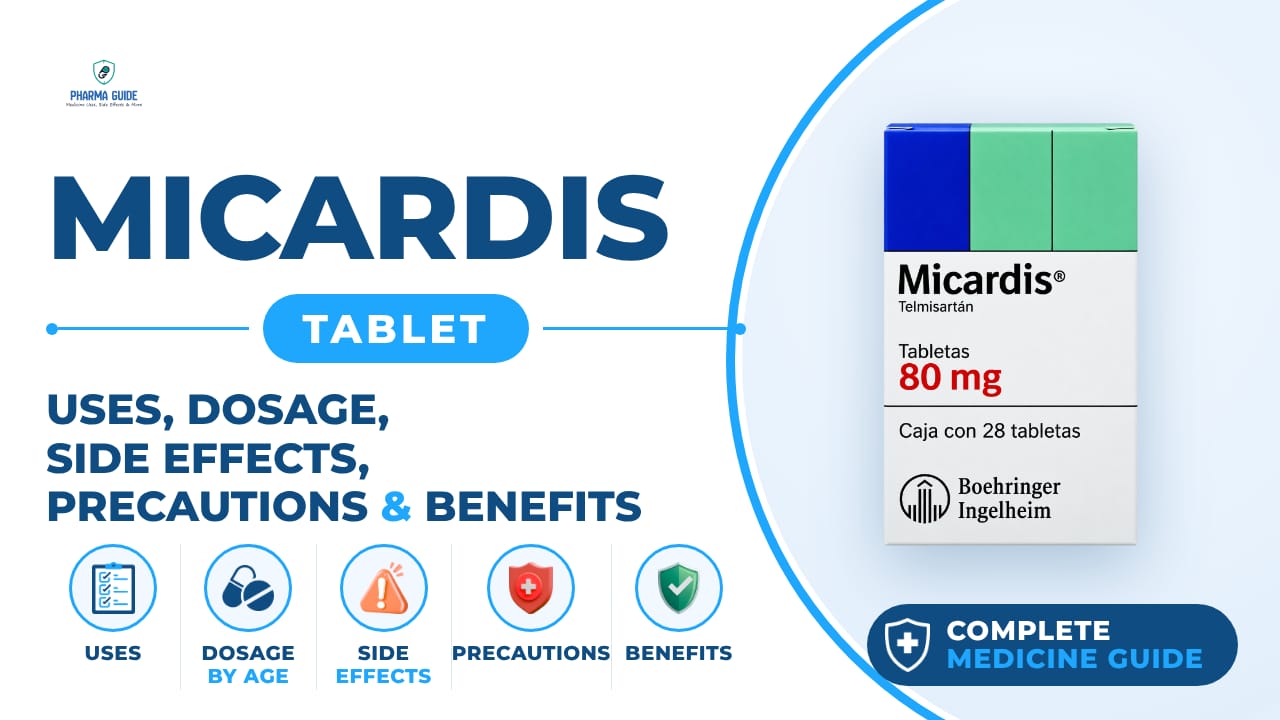
| Generic name | Telmisartan |
|---|---|
| Drug class | Angiotensin II receptor blocker (ARB) |
| Forms | Tablet |
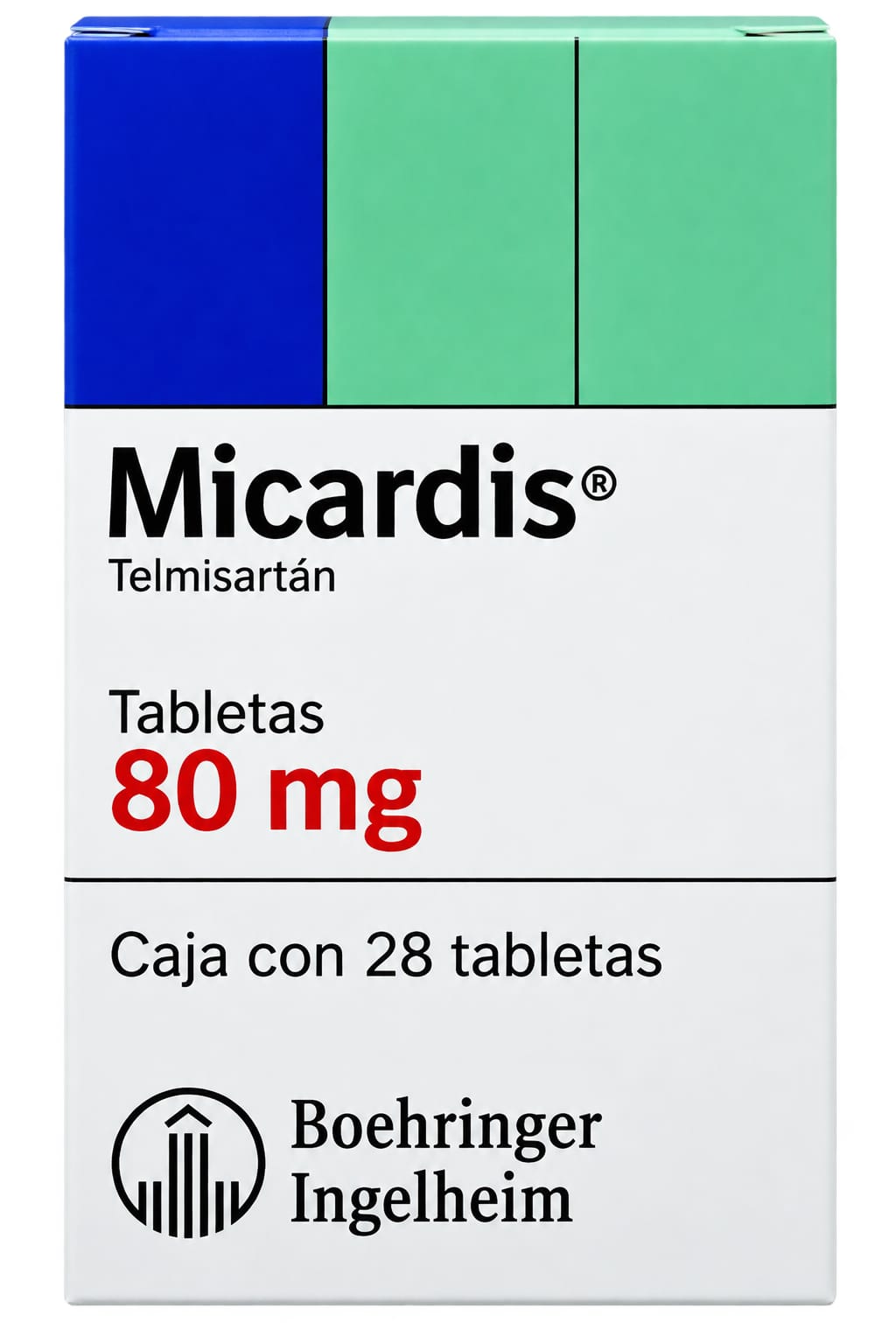
Quick overview
Micardis Tablet contains telmisartan, an angiotensin II receptor blocker used to treat high blood pressure and help prevent serious heart and blood vessel problems. It works by relaxing blood vessels, which lowers blood pressure and may reduce the risk of stroke or heart attack. It is also used in certain people with heart disease, past stroke, or diabetes to lower the risk of cardiovascular complications and to help protect kidney function. Micardis should be taken exactly as prescribed, usually once daily.
What is Micardis Tablet
Micardis is a medicine that contains telmisartan, which belongs to a group of medicines called angiotensin II receptor blockers. It is used to treat high blood pressure and to help prevent serious heart and blood vessel problems.
Micardis Tablet uses
- Treat high blood pressure (hypertension)
- Reduce the risk of stroke, heart attack, or death from heart problems in people 55 years or older with risk factors for serious heart disorders
- Prevent cardiovascular complications, including death due to cardiovascular causes, in patients older than 55 years with coronary artery disease, peripheral vascular disease, previous stroke, previous transient ischaemic attack (TIA), or high-risk diabetes with evidence of end-organ damage
- Protect kidney function in diabetics and prevent further damage
Benefits of Micardis Tablet
- Lowering blood pressure may lower your risk of a stroke or heart attack
- Helps control high blood pressure, which often has no symptoms but can lead to serious health problems if untreated
How Micardis Tablet works
Angiotensin II is a substance in the body that causes blood vessels to narrow, raising blood pressure. Telmisartan blocks the effect of angiotensin II, which relaxes the blood vessels and lowers blood pressure.
Micardis Tablet dosage
Take Micardis exactly as prescribed by your doctor and follow all directions on your prescription label. Take it at about the same time each day, either morning or evening, with or without food. Swallow the tablet whole with a full glass of water; do not break or crush it.
It may take a few weeks before your blood pressure is under control, so keep taking it even if you feel well. You may need to take this medicine long-term; do not stop or change the dose without checking with your doctor. This medicine is not recommended for use in children under 18 years of age.
If you miss a dose, take it as soon as you remember, but skip it if it is almost time for your next dose; do not take a double dose.
| Age group | Dose |
|---|---|
| Under 18 years | Not routinely recommended; doctor's advice required |
| 18 years & older | 40 mg once daily |
| Adults | 40 mg once daily; may be increased to 80 mg once daily |
| Older adults | 40 mg once daily, adjusted according to response |
Available forms and strengths
- Tablet: 40 mg
- Tablet: 80 mg
Side effects of Micardis Tablet
Common
- Stuffy nose, sinus pain
- Back pain
- Diarrhea
- Stomach pain or discomfort
- Dizziness
- Weakness
- Headaches
- Upper respiratory tract infections
- Flu-like symptoms
- Fatigue
- Indigestion
- Wind or excessive gas (flatulence)
- Trouble sleeping
- Dry mouth
- Increased sweating
- Muscle spasms or leg cramps or leg pain
- Painful joints
- Tendon pain or tendonitis-like symptoms
Serious
- Signs of an allergic reaction: hives, difficult breathing, swelling of face, lips, tongue, or throat
- A light-headed feeling, like you might pass out
- Little or no urination
- Swelling in your feet or ankles, rapid weight gain
- Unusual pain or tightness in your lower body
- A skin ulcer
- High blood potassium: nausea, weakness, tingly feeling, chest pain, irregular heartbeats, loss of movement
- Unexplained muscle pain, tenderness, or weakness especially with fever, unusual tiredness, and dark colored urine
- Symptoms of worsening kidney function: passing little or no urine, drowsiness, nausea, vomiting, breathlessness, loss of appetite, weakness
- Symptoms of low sodium levels: headache, dizziness, confusion, forgetfulness, weakness, unsteadiness or difficulty concentrating
- Signs of anaemia: tiredness, being short of breath when exercising, dizziness and looking pale
- Bleeding or bruising more easily than normal
- Signs of a blood infection: high fever, chills, headache, confusion and rapid breathing
- Symptoms of a urinary tract infection: burning sensation when passing urine, pain in the pelvis or mid-back, cloudy urine, straining or pain when passing urine
Warnings and precautions
- Do not use Micardis if you are pregnant. It can cause injury or death to the unborn baby, especially if taken during the second or third trimester. Tell your doctor right away if you become pregnant while taking this medicine.
- You should not breastfeed while using this medicine, as it is not known if it passes into breast milk and could affect your baby.
- Tell your doctor if you have kidney disease or are on dialysis, as this medicine may need to be used with caution and your kidney function may need to be checked.
- This medicine is not recommended if you have severe liver disease, and should be used with caution if you have other liver problems, as it may increase the risk of side effects.
- Avoid alcohol while taking this medicine, as it can add to the blood-pressure-lowering effect and cause dizziness, lightheadedness, headache, or changes in heart rate.
- Be careful driving or operating machinery until you know how this medicine affects you, since it may cause dizziness, light-headedness, or sleepiness.
- If you have diabetes, do not take Micardis with any medicine that contains aliskiren.
- You may also need to avoid taking Micardis with aliskiren if you have kidney disease.
- In rare cases, this medicine can cause breakdown of skeletal muscle tissue, leading to kidney failure.
- Do not take potassium supplements or use salt substitutes unless your doctor tells you to.
- Do not take this medicine if you have a rare hereditary condition of fructose intolerance.
Storage
- Store at room temperature away from moisture and heat
- Keep the tablets in their original package or container, along with any packet or canister of moisture-absorbing preservative
- Keep this medicine in its original packaging until you're ready to take a tablet
- Keep the tablets in the blister strip until it is time to take them
- Store it in a cool dry place away from moisture, heat or sunlight; and where temperature stays below 30°C
- Do not store it in the bathroom or near a sink, or in the car or on window sills
- Keep Micardis where children cannot reach it
- If your doctor tells you to stop taking Micardis or the expiry date has passed, take it to any pharmacy for safe disposal
- Do not take this medicine after the expiry date
When to see a doctor
- Get emergency medical help if you have signs of an allergic reaction: hives, difficult breathing, swelling of your face, lips, tongue, or throat.
- Call your doctor right away if you have unexplained muscle pain, tenderness, or weakness, especially with fever, unusual tiredness, and dark colored urine.
- Call your doctor if you become sick with vomiting or diarrhea, or if you are sweating more than usual, as you can easily become dehydrated on this medicine.
- Call your doctor straight away or go to the Emergency Department if you notice swelling of the face, lips, mouth, tongue or throat, or a severe and sudden itchy or raised skin rash, hives, or nettle rash.
- If you think you have used too much of this medicine, seek urgent medical attention even if you feel fine.
Alternatives
- Micardis HCT
- Targit 40 MG Tablet
- Tazloc 40 MG Tablet
- Telgard 40 MG Tablet
- Telista 40 MG Tablet
- Telvas 40 MG Tablet
- Micardis 80 MG Tablet
Watch the video
FAQs
What is Micardis Tablet used for?
Micardis is used to treat high blood pressure and to help prevent stroke, heart attack, or death from heart problems in people 55 years or older with risk factors for serious heart disorders. It also helps protect kidney function in diabetics.
How does Micardis Tablet work?
Micardis contains telmisartan, which blocks the effect of angiotensin II, a substance that causes blood vessels to narrow. By blocking this effect, it relaxes the blood vessels and lowers blood pressure.
What is the dosage of Micardis Tablet?
The usual adult dose is 40 mg once daily, which may be increased to 80 mg once daily. It should be taken at the same time each day, with or without food, and swallowed whole with water.
What are the common side effects of Micardis Tablet?
Common side effects include stuffy nose, back pain, diarrhea, stomach discomfort, dizziness, weakness, headaches, fatigue, indigestion, dry mouth, and muscle spasms or leg cramps.
Can I drink alcohol while taking Micardis Tablet?
Alcohol should be avoided while taking Micardis as it can add to the blood-pressure-lowering effect and cause dizziness, lightheadedness, headache, or changes in heart rate.
General information, not medical advice
Your prescriber and the leaflet in your pack know your situation. This page does not.
- Follow your prescriber and the leaflet
- Don't start, stop, or change a dose on your own
- Doses and warnings differ by country and product
Sources
Video
Related medicines
Edarbi Tablet: Uses, Dosage, Side Effects, Precautions and Alternates
Angiotensin II receptor blocker (ARB)
Edarbi Tablet (azilsartan) is an ARB used to treat high blood pressure in adults. Learn how it works, dosage, side effects, and precautions.
Azilsartan Tablet: Uses, Dosage, Side Effects, Precautions and Alternates
Angiotensin II receptor blocker (ARB)
Azilsartan Tablet is an ARB used to treat high blood pressure in adults. Learn about its uses, dosage, side effects, warnings, and alternatives.