
Safety
General information, not medical advice
Your prescriber and the leaflet in your pack know your situation. This page does not.
- Follow your prescriber and the leaflet
- Don't start, stop, or change a dose on your own
- Doses and warnings differ by country and product
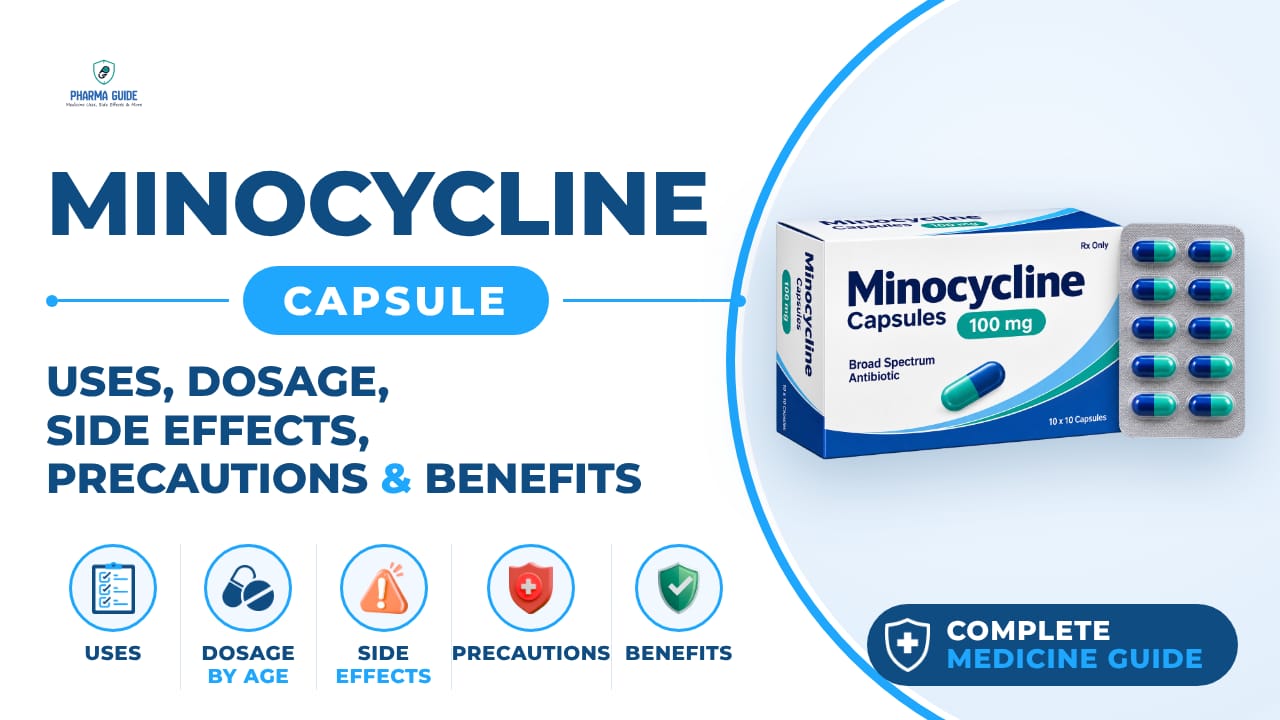
Minocycline Capsule: Uses, Dosage, Side Effects, Precautions and Alternates
| Generic name | Minocycline (as hydrochloride) |
|---|---|
| Drug class | Tetracycline antibiotic |
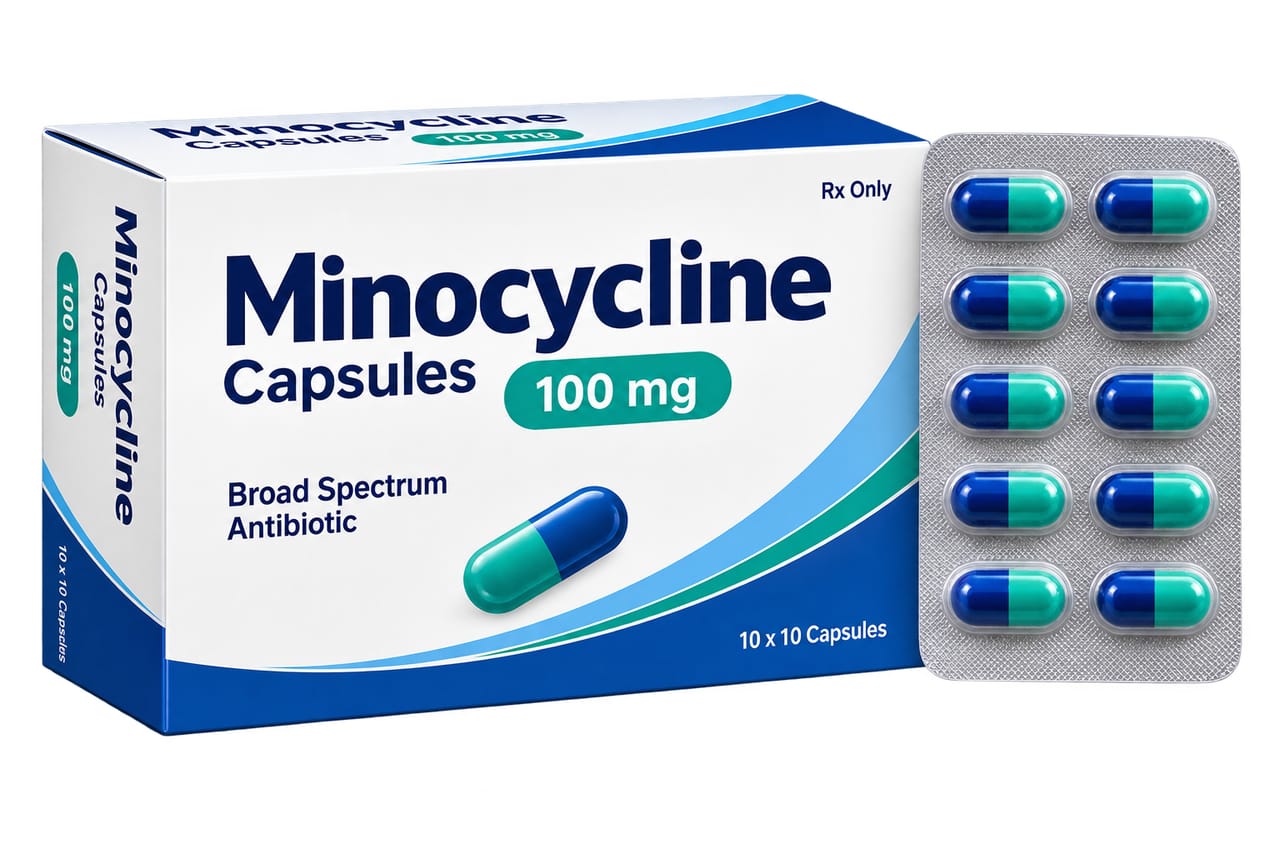
| Forms | Capsule (50 mg, 100 mg) |
Quick overview
Minocycline Capsule contains minocycline (as hydrochloride), an antibiotic belonging to the tetracycline class. It fights bacteria sensitive to it and is used for infections such as acne, skin infections, respiratory tract infections, urinary tract infections, and certain sexually transmitted infections. It does not work against viral infections like the common cold. It should be taken exactly as prescribed by a doctor.
What is Minocycline Capsule
Minocycline is an antibiotic that belongs to the tetracycline group. It fights bacteria in the body and is used to treat infections caused by bacteria that are sensitive to it, such as acne. It does not work against viral infections like the common cold.
Minocycline Capsule uses
- Treating bacterial infections caused by bacteria sensitive to minocycline
- Treating acne, including severe acne as an added therapy
- Treating skin infections
- Treating respiratory tract infections
- Treating urinary tract infections
- Treating certain sexually transmitted infections such as chlamydia, gonorrhoea and syphilis (as a second-line option when penicillin cannot be used)
- Treating tick fever and other infections caused by susceptible organisms
Benefits of Minocycline Capsule
- Helps clear up bacterial infections
- Can be used as an added treatment for severe acne
How Minocycline Capsule works
Minocycline is a tetracycline-type antibiotic. It mainly stops bacteria from growing by blocking the way they make the proteins they need to survive.
Minocycline Capsule dosage
Always use the medicine according to your doctor's instructions. Swallow the capsules whole with a full glass of water. Do not chew the capsules, and do not open them or spread out their contents, as this may cause irritation or ulcers in the food pipe.
Take the medicine while standing or sitting upright. Do not take it while lying down. You may take the medicine with or without food. Food and moderate milk consumption do not affect how well it is absorbed.
Do not take antacids, laxatives, multivitamins, or products containing calcium, magnesium, iron, aluminium, or zinc within 2 hours before or after taking this medicine, as they can make it less effective.
Take the medicine at set times as decided by your doctor. Keep taking the medicine for the full course, even if you feel better, and do not stop without talking to your doctor. If treatment is for acne, it will usually last at least 6 weeks.
If you forget a dose, take it as soon as you remember, then take the next dose at the set time. Do not take a double dose to make up for a forgotten one. Do not take medicines in the dark; check the label and dose each time.
| Age group | Dose |
|---|---|
| Under 8 years | Not recommended |
| 8–11 years | Pediatric dose only; prescribed by doctor |
| 12–17 years | 100 mg every 12 hours when prescribed |
| 18 years and older | 200 mg initially, then 100 mg every 12 hours |
Available forms and strengths
- Capsule (50 mg, 100 mg)
Side effects of Minocycline Capsule
Common
- Dizziness
- Spinning sensation (vertigo)
- Numbness, tingling or burning pain
- Hair loss
- Discoloration of skin or nails
- Muscle or joint pain
- Nausea, diarrhea, loss of appetite
- Swollen tongue, cough, trouble swallowing
- Rash, itching
- Headache
- Fever
- Ringing in the ears or other hearing problems
- Change in the color of the teeth
Serious
- Allergic reactions such as skin rash, swelling of the face, lips, mouth, tongue or throat, and breathing difficulties, which can be life-threatening
- Severe skin reactions such as Stevens-Johnson syndrome and toxic epidermal necrolysis, with blistering and peeling of the skin
- Severe headaches with vision problems (a sign of raised pressure in the skull)
- Yellowing of the skin or eyes, dark urine, pale stools, stomach pain (signs of severe liver problems)
- Producing little or no urine, painful or cloudy urine with lower back pain (signs of serious kidney problems)
- Chest pain, shortness of breath or fatigue (signs of inflamed heart muscle or the membrane around the heart)
- Lupus-like syndrome with joint pain, fever, muscle pain and rash
- Watery or bloody diarrhea, stomach cramps and fever (signs of intestinal inflammation, which may occur even weeks after the last dose)
- Reductions in blood cells causing infections, fever, unusual bruising or bleeding
- DRESS syndrome (drug reaction with fever, rash and blood abnormalities)
- Seizures
- Autoimmune hepatitis
- Severe stomach pain spreading to the back (a sign of inflamed pancreas)
Warnings and precautions
- Do not use this medicine if you are allergic to minocycline or to other tetracycline antibiotics, or to any of its ingredients. Do not use this medicine if you have Systemic Lupus Erythematosus (SLE). This medicine is not for babies or children under 12 years of age, as it may cause permanent discoloration and underdevelopment of tooth enamel.
- The medicine can make you more sensitive to sunlight and artificial light, causing an exaggerated sunburn. Avoid direct sun and tanning beds, protect your skin, and tell your doctor if your skin turns red. Long-term use may cause changes in skin, secretions and other organ colour (hyperpigmentation). Tell your doctor if this happens.
- Minocycline can make birth control pills less effective. Ask your doctor about using a non-hormonal method of birth control. Do not take this medicine together with penicillin antibiotics.
- Antibiotics including minocycline can cause a serious bowel infection (C. difficile diarrhea) that ranges from mild diarrhea to life-threatening colitis, sometimes appearing up to two months after the last dose.
- Do not use this medicine if you are pregnant or planning to become pregnant. It can harm the developing baby, including affecting the bones and teeth. Tell your doctor right away if you become pregnant while taking it.
- Do not breastfeed while taking this medicine, as it passes into breast milk and may harm the baby.
- Do not use this medicine if you have kidney failure. Tell your doctor if you have or have had kidney problems. If your kidney function is reduced, your doctor may give you a lower dose and monitor your kidneys.
- Tell your doctor if you have or have had liver problems. Minocycline can cause liver toxicity, so it should be used with caution in people with liver problems.
- Consult your doctor about drinking alcohol, as the combination might harm the liver.
- This medicine may cause dizziness, headaches, a spinning sensation, light-headedness, or vision or hearing problems that can affect your ability to drive or use machines. Do not drive if you feel these effects.
Storage
- Store in the original package below 25°C, away from excess heat, moisture, and light.
- Keep this and all medicines out of the reach and sight of children to avoid poisoning.
- Do not use the medicine after the expiry date on the package.
- Throw away any medicine that is outdated or no longer needed. Using expired minocycline can damage your kidneys.
When to see a doctor
- Stop the medicine and go to a doctor or emergency room right away if you have signs of a serious allergic reaction, such as skin rash, swelling of the face, lips, mouth, tongue or throat, or breathing difficulties.
- Stop the medicine and get urgent help if you have severe headaches with vision problems such as loss of vision, blurred vision or double vision, which can be a sign of raised pressure in the skull.
- Stop the medicine and get help if you have yellowing of the skin or eyes, dark urine, pale stools, loss of appetite or stomach pain, which can be signs of severe liver problems.
- Stop the medicine and get help if you develop a severe skin reaction with blistering or peeling of the skin, mouth, eyes and genitals.
- Contact your doctor if you have watery or bloody diarrhea, as this may be a sign of a serious bowel infection, even weeks after your last dose.
- If you take too much, go to a doctor or emergency room right away and bring the package. If a child accidentally swallows the medicine, get help immediately. You can also call your local poison control center. Overdose symptoms include dizziness, nausea and vomiting.
Alternatives
- Other tetracycline-group antibiotics are related medicines. Brand names for minocycline include Dynacin, Minocin, Minocin PAC, Minolira and Solodyn.
Watch the video
FAQs
What is Minocycline Capsule used for?
It treats bacterial infections sensitive to minocycline, including acne, skin infections, respiratory tract infections, urinary tract infections, certain sexually transmitted infections like chlamydia, gonorrhoea and syphilis, and tick fever.
How should I take Minocycline Capsule?
Swallow the capsule whole with a full glass of water while sitting or standing upright, not lying down. Do not chew or open it. It can be taken with or without food, but avoid antacids, laxatives, multivitamins, or products with calcium, magnesium, iron, aluminium or zinc within 2 hours of a dose.
What is the dosage of Minocycline Capsule for adults?
Adults 18 years and older typically take 200 mg initially, then 100 mg every 12 hours, as prescribed by a doctor.
What are the common side effects of Minocycline Capsule?
Common side effects include dizziness, vertigo, numbness or tingling, hair loss, skin or nail discoloration, muscle or joint pain, nausea, diarrhea, headache, fever, ringing in the ears, and tooth color changes.
Can pregnant or breastfeeding women take Minocycline Capsule?
No, it should not be used during pregnancy as it can harm the developing baby's bones and teeth, and it should not be taken while breastfeeding as it passes into breast milk.
General information, not medical advice
Your prescriber and the leaflet in your pack know your situation. This page does not.
- Follow your prescriber and the leaflet
- Don't start, stop, or change a dose on your own
- Doses and warnings differ by country and product
Sources
- Israel Ministry of Health patient leaflet, Minocycline 50 mg / 100 mg Capsules, Rafa Laboratories Ltd., revised February 2022
- FDA label, MINOCIN (minocycline hydrochloride) Pellet-Filled Capsules, Triax Pharmaceuticals, 2008
- Drugs.com, Minocycline, medically reviewed by Kaci Durbin, MD, last updated Aug 15, 2023
Video
Related medicines
Demeclocycline Tablet: Uses, Dosage, Side Effects, Precautions and Alternates
Tetracycline antibiotic
Demeclocycline Tablet is a tetracycline antibiotic for infections like Rocky Mountain spotted fever, STIs, and respiratory issues. Learn uses, dosage, and side
Achromycin Ointment: Uses, Dosage, Side Effects, Precautions and Alternates
Tetracycline antibiotic
Achromycin Ointment contains tetracycline to help control bacteria on the skin. Learn its uses, dosage, side effects, and precautions before use.