
Safety
General information, not medical advice
Your prescriber and the leaflet in your pack know your situation. This page does not.
- Follow your prescriber and the leaflet
- Don't start, stop, or change a dose on your own
- Doses and warnings differ by country and product
Mirabegron Tablet: Uses, Dosage, Side Effects, Precautions and Alternates
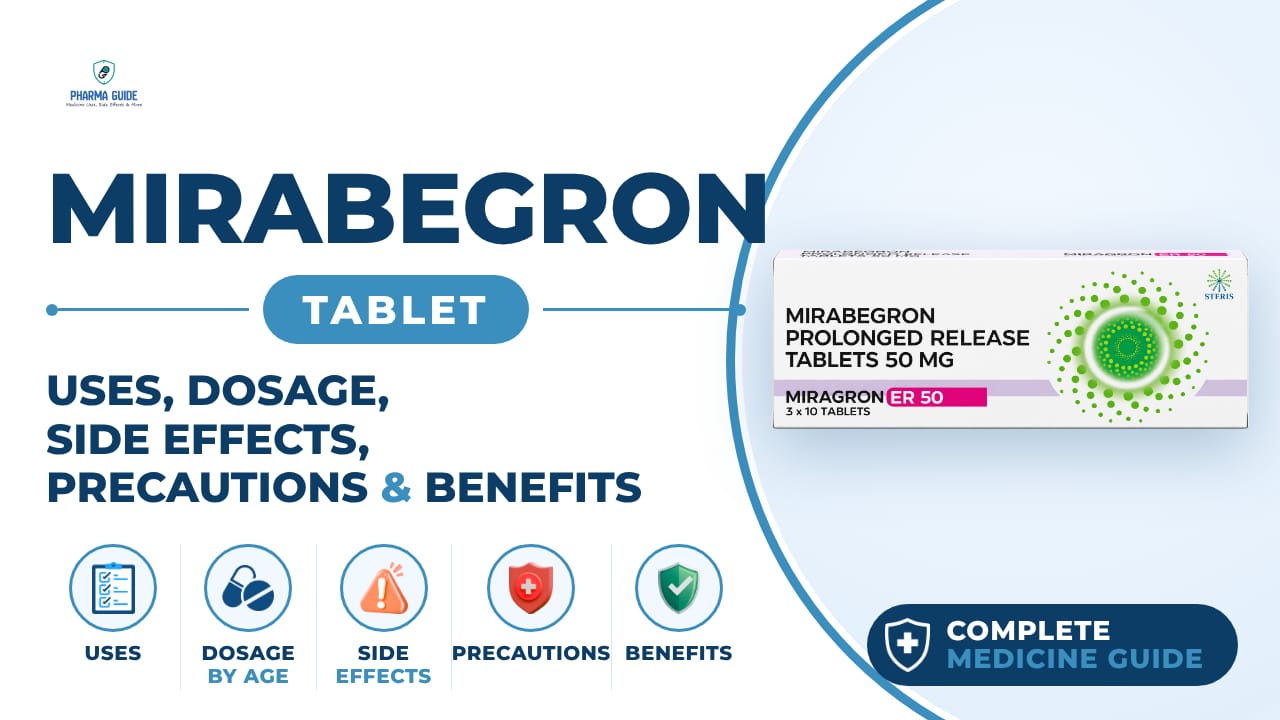
| Generic name | mirabegron |
|---|---|
| Drug class | Urinary antispasmodics |
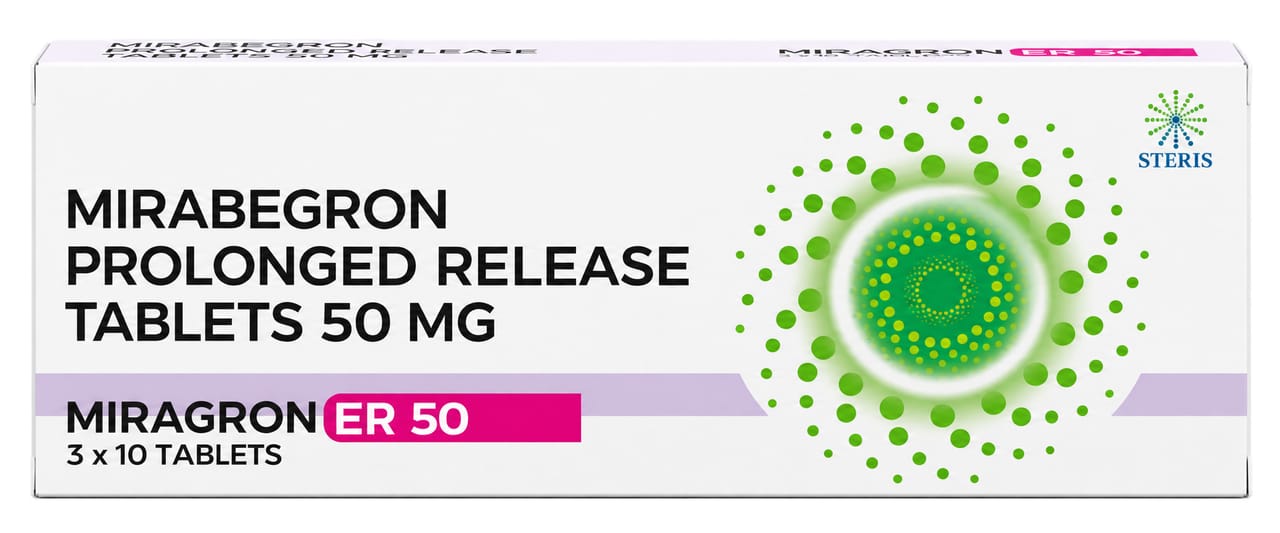
| Forms | Extended-release tablet (25 mg), Extended-release tablet (50 mg), Oral granules for suspension (in a related product) |
Quick overview
Mirabegron Tablet (mirabegron) is a prescription urinary antispasmodic used to treat overactive bladder symptoms in adults and neurogenic detrusor overactivity in certain children. It works by relaxing the bladder muscle so it can hold more urine. It is taken by mouth, usually once daily, and may take up to 8 weeks to show full symptom improvement.
What is Mirabegron Tablet
Mirabegron is a beta-3 adrenergic agonist. It is a prescription medicine taken by mouth to treat bladder control problems in adults and certain children.
Mirabegron Tablet uses
- Treatment of overactive bladder (OAB) in adults with symptoms of urge urinary incontinence, urgency, and urinary frequency
- Treatment of neurogenic detrusor overactivity (NDO) in children aged 3 years and older who weigh at least 35 kg (about 77 pounds)
Benefits of Mirabegron Tablet
- Helps reduce urinary urgency
- Reduces frequent urination
- Helps control urge incontinence
- Relaxes the bladder muscle
- Helps increase bladder storage capacity
- Treats symptoms of overactive bladder
How Mirabegron Tablet works
Mirabegron activates beta-3 receptors in the bladder muscle, which helps the bladder relax and hold more urine during the filling phase, increasing bladder capacity.
Mirabegron Tablet dosage
Swallow the tablet whole with water; do not chew, divide, or crush it. Adults can take it with or without food, while children should take it with food to help reduce certain risks. If a dose is missed, take it as soon as remembered unless more than 12 hours have passed since the missed dose; in that case, skip it and take the next dose at the usual time. Do not take two doses at one time. It may take up to 8 weeks before symptoms improve, so continue taking it as directed.
| Age group | Dose |
|---|---|
| 18–64 years | Usually 25 mg once daily; may be increased to 50 mg once daily if needed |
Available forms and strengths
- Extended-release tablet (25 mg)
- Extended-release tablet (50 mg)
- Oral granules for suspension (in a related product)
Side effects of Mirabegron Tablet
Common
- High blood pressure
- Nasopharyngitis (pain or swelling of the nose or throat)
- Urinary tract infection
- Headache
- Constipation
- Upper respiratory tract infection
- Joint pain (arthralgia)
- Diarrhea
- Fast heartbeat (tachycardia)
- Abdominal pain
- Fatigue
- Dry mouth (mainly when combined with solifenacin)
Serious
- Increased blood pressure, including dangerously high blood pressure with severe headache, blurred vision, or pounding in the neck or ears
- Inability to empty the bladder (urinary retention), especially in people with bladder outlet obstruction or those taking other OAB medicines
- Angioedema: swelling of the face, lips, tongue, or throat, with or without difficulty breathing, which can be life-threatening if it affects the airway
- Allergic reaction with hives or difficulty breathing
- Irregular heart rhythm (atrial fibrillation)
Warnings and precautions
- This medicine can raise blood pressure, especially in people who already have high blood pressure. Blood pressure should be checked regularly, and it is not recommended for people with severe uncontrolled high blood pressure.
- This medicine should be used carefully in people who have trouble emptying their bladder or who are taking other overactive bladder medicines, because of the risk of urinary retention.
- Swelling of the face, lips, tongue, or throat (angioedema) has happened with this medicine and can occur after the first dose or later. This can be life-threatening if it affects breathing.
- This medicine can increase the levels of certain other drugs processed by the body's CYP2D6 system, so monitoring or dose changes of those other drugs may be needed.
- Do not take this medicine if you are allergic to mirabegron or any of its ingredients.
- There is no human data on whether this medicine is safe during pregnancy. Animal studies showed some effects on fetal development at high doses. Talk to your doctor if you are pregnant or planning to become pregnant.
- It is not known if this medicine passes into breast milk in humans. Animal studies found it does pass into milk. Discuss the best feeding option with your doctor if you are breastfeeding.
- People with severe kidney problems may need a lower maximum dose, and this medicine is not recommended for those with very severe kidney disease or on dialysis.
- People with moderate liver problems may need a lower maximum dose, and this medicine is not recommended for those with severe liver disease.
Storage
- Store at room temperature between 68°F to 77°F (20°C to 25°C), with brief excursions allowed between 59°F to 86°F (15°C to 30°C)
- Keep the bottle closed
- Throw away (discard) medicine that is out of date or no longer needed
- Keep out of the reach of children
When to see a doctor
- Get emergency medical help right away if you notice swelling of the face, lips, tongue, or throat, or have trouble breathing — stop the medicine and seek care immediately.
- Call your doctor right away if you are unable to empty your bladder.
- Call your doctor if your blood pressure increases or your blood pressure problem gets worse.
- If you take too much of this medicine, contact your doctor or go to the nearest hospital emergency room right away.
- Tell your doctor about any side effect that bothers you or does not go away, or if you notice hives, skin rash, or itching.
Alternatives
- Oxybutynin
- Tolterodine
- Solifenacin
Watch the video
FAQs
What is Mirabegron Tablet used for?
It is used to treat overactive bladder symptoms like urgency, frequency, and urge incontinence in adults, and neurogenic detrusor overactivity in children aged 3 and older who weigh at least 35 kg.
How does Mirabegron Tablet work?
It activates beta-3 receptors in the bladder muscle, helping the bladder relax and hold more urine during the filling phase, which increases bladder capacity.
How long does it take for Mirabegron Tablet to work?
It may take up to 8 weeks before symptoms improve, so it should be continued as directed even if results aren't immediate.
What is the dosage of Mirabegron Tablet for adults?
Adults aged 18-64 years usually take 25 mg once daily, which may be increased to 50 mg once daily if needed. The tablet should be swallowed whole with water.
What are the serious side effects of Mirabegron Tablet?
Serious side effects include increased blood pressure, inability to empty the bladder (urinary retention), angioedema (swelling of face, lips, tongue, or throat), allergic reactions with hives or difficulty breathing, and irregular heart rhythm.
General information, not medical advice
Your prescriber and the leaflet in your pack know your situation. This page does not.
- Follow your prescriber and the leaflet
- Don't start, stop, or change a dose on your own
- Doses and warnings differ by country and product
Sources
- FDA Prescribing Information for Mirabegron Extended-Release Tablets (Qilu Pharmaceutical Co., Ltd.), Revised 4/2023 and 10/2025
- Bragg R, Hebel D, Vouri SM, Pitlick JM. Mirabegron: A Beta-3 Agonist for Overactive Bladder. Consult Pharm. 2014;29(12):823-837.
- Drugs.com Mirabegron Patient Medication Information, reviewed March 26, 2026
Video
Related medicines
Detrol Tablet: Uses, Dosage, Side Effects, Precautions and Alternates
Urinary antispasmodics
Detrol Tablet (tolterodine) treats overactive bladder symptoms like urgency, frequency, and leakage. Learn dosage, side effects, warnings, and alternatives.

Injectafer Injection: Uses, Dosage, Side Effects, Precautions and Alternates
Iron products
Injectafer (ferric carboxymaltose) treats iron deficiency anemia and heart failure-related iron deficiency via IV. Learn uses, dosage, side effects, and