
Safety
General information, not medical advice
Your prescriber and the leaflet in your pack know your situation. This page does not.
- Follow your prescriber and the leaflet
- Don't start, stop, or change a dose on your own
- Doses and warnings differ by country and product
Nizoral Shampoo: Uses, Dosage, Side Effects, Precautions and Alternates
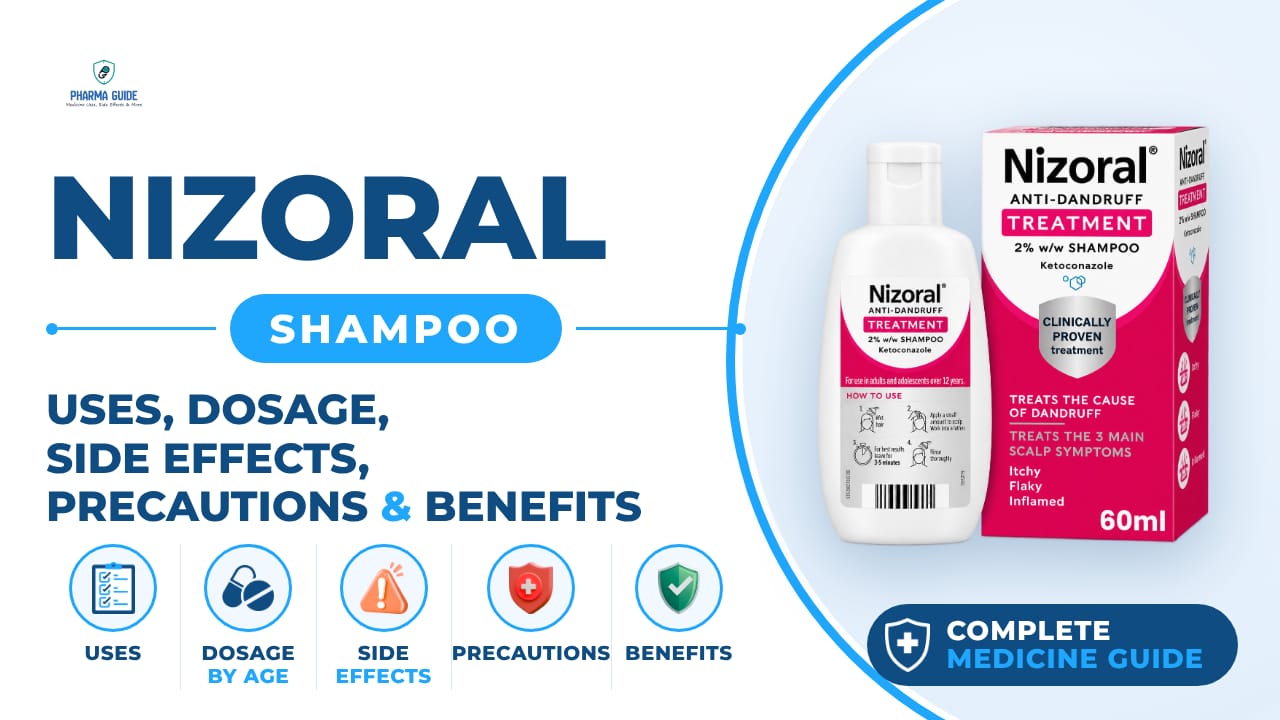
| Generic name | Ketoconazole |
|---|---|
| Drug class | Topical antifungal |
| Forms | Shampoo (topical liquid solution) |
Quick overview
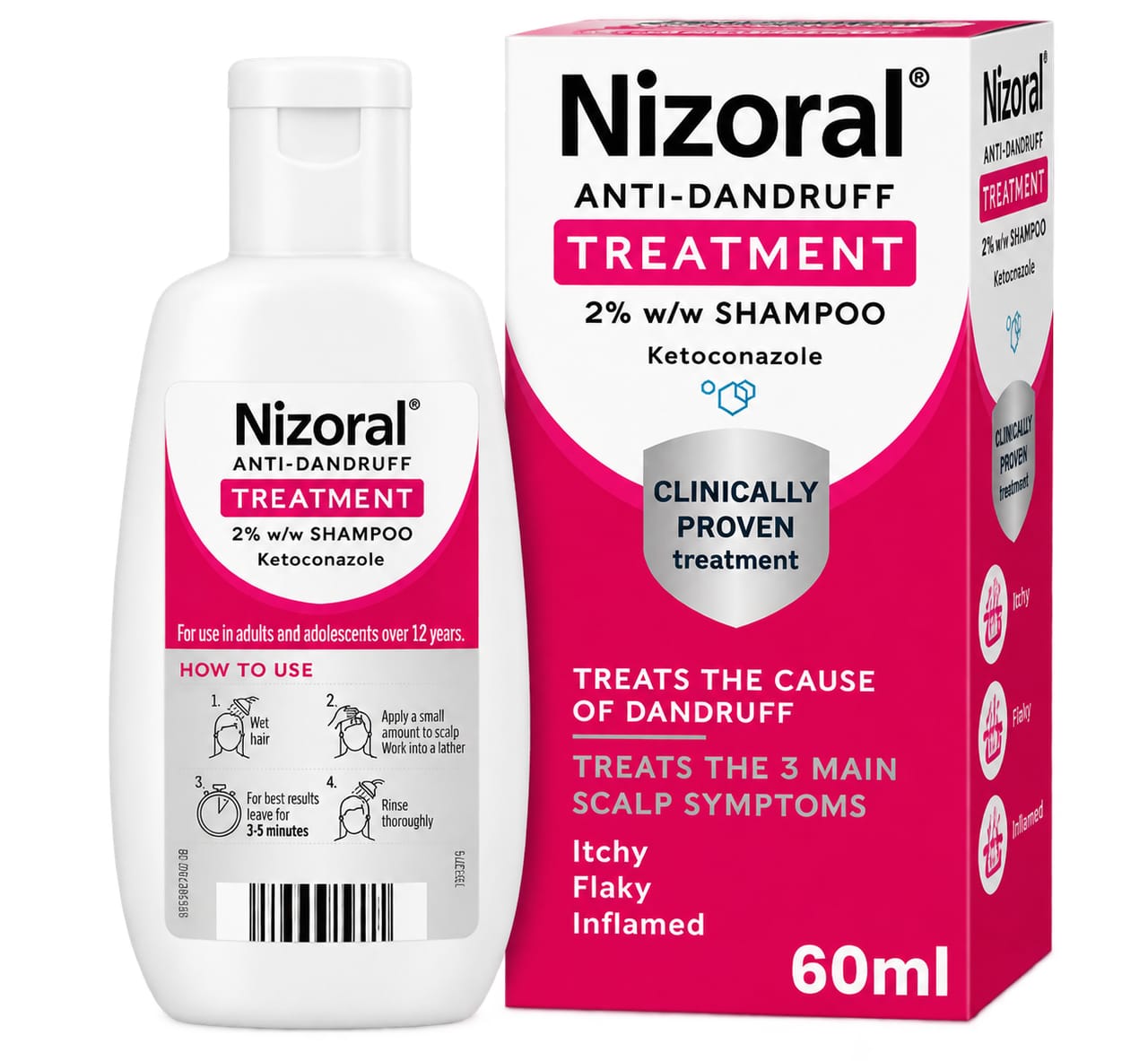
Nizoral Shampoo contains ketoconazole, a topical antifungal medicine used on the scalp and skin. It is used to treat fungal infections of the scalp, tinea (pityriasis) versicolor, and dandruff or seborrheic dermatitis. It is applied to the affected area, lathered, left briefly, and rinsed off, typically twice weekly for several weeks.
What is Nizoral Shampoo
Nizoral Shampoo is a clear, reddish solution containing ketoconazole, an antifungal medicine used on the scalp and skin.
Nizoral Shampoo uses
- Fungal infections of the scalp caused by yeast fungi, on greasy, reddish, inflamed scalp in adults and adolescents
- Treatment of tinea (pityriasis) versicolor
- Dandruff and seborrheic dermatitis
Benefits of Nizoral Shampoo
- Helps clear fungal skin and scalp infections
- Can be used for prevention as well as treatment of scalp fungal infections
How Nizoral Shampoo works
Ketoconazole works by interfering with a substance fungi need to build their cell membranes, which stops the fungus from growing.
Nizoral Shampoo dosage
Wash the infected area with the shampoo and rinse after a few minutes. For scalp fungal infections, treatment is usually applied twice weekly for several weeks, with less frequent use for prevention. Apply the shampoo to damp skin of the affected area and a wide margin surrounding it, lather, leave in place for a short time, then rinse off with water.
If you miss a treatment, use it as soon as you remember, but do not use it twice to make up for a missed dose. Avoid contact with the eyes; if it gets in your eyes, rinse gently with cold water. If swallowed, tell your doctor straight away. Use in children is not established.
| Age group | Dose |
|---|---|
| Under 12 years | Use only on doctor's advice |
| 12–17 years | Apply twice weekly for 2–4 weeks |
| Adults ≥18 years | Apply to scalp twice weekly for 2–4 weeks |
Available forms and strengths
- Shampoo (topical liquid solution)
Side effects of Nizoral Shampoo
Common
- Mild skin itching or irritation
- Dry skin
- Abnormal hair texture
- Scalp pustules
- Oiliness and dryness of hair and scalp
- Rash
- Hives
- Application site reactions
- Headache
- Infection of the hair roots
- Increase in production of tears
- Unusual hair loss or thinning
- Burning feeling
- Changes in how your hair feels
Serious
- Severe irritation or reddening of the skin, or other signs of allergy, during the first few days of treatment
- Allergic reaction with swelling of the face, lips, mouth, tongue or throat which may cause difficulty swallowing or breathing
- Peeling or blistering of the skin
- Hives
- Hair colour changes
- Anaphylaxis (a serious, life-threatening allergic reaction)
- Fast heartbeat
- Fever
- Hoarseness
- Joint pain, stiffness, or swelling
- Shortness of breath
- Swelling of the eyelids, face, lips, hands, or feet
- Tightness in the chest
- Trouble breathing or swallowing
- Wheezing
Warnings and precautions
- Do not use if you are allergic to ketoconazole or any other ingredient in this shampoo.
- If you are also using cortisone ointments like betamethasone or hydrocortisone on the same area for a long time and plan to stop, reduce the cortisone gradually over 2-3 weeks while continuing to use this shampoo.
- This shampoo may cause a severe allergic reaction called anaphylaxis, which can be life-threatening.
- This shampoo is for external use only; do not swallow it.
- Avoid contact with the eyes and mucous membranes.
- There are no known risks with using ketoconazole shampoo during pregnancy, but you should ask your doctor for advice before use if you are pregnant or think you might be.
- There are no known risks with using ketoconazole shampoo while breastfeeding, but ask your doctor for advice before use.
- This shampoo does not affect your ability to drive or use machines.
Storage
- Keep this medicine out of the sight and reach of children.
- Do not store above 25º C.
- Protect from light.
- Do not use Ketoconazole shampoo after the expiry date which is stated on the packaging. The expiry date refers to the last day of that month.
- Do not throw away any medicines via wastewater or household waste. Ask your pharmacist how to throw away medicines you no longer use.
When to see a doctor
- Stop using the shampoo and tell your doctor straight away if you notice severe irritation or reddening of the skin, or other signs of allergy, especially in the first few days of treatment.
- Get medical help right away if you have swelling of the face, lips, mouth, tongue or throat, or trouble breathing or swallowing.
- Call your doctor right away if you have a rash, itching, hoarseness, trouble breathing, trouble swallowing, or swelling of your hands, face, or mouth while using this medicine.
- Stop using this medicine and check with your doctor right away if you or your child have a skin rash, burning, stinging, swelling, or irritation on the skin.
- If you swallow any of the shampoo, tell your doctor straight away.
- If your skin problem does not improve within the expected time or gets worse, check with your doctor.
Alternatives
- Ciclopirox 1% shampoo
- Selenium sulfide 1–2.5% shampoo
- Zinc pyrithione 1–2% shampoo
- Coal tar shampoo
Watch the video
FAQs
What is Nizoral Shampoo used for?
It is used to treat fungal infections of the scalp, tinea (pityriasis) versicolor, and dandruff or seborrheic dermatitis.
How do you use Nizoral Shampoo?
Apply to damp skin of the affected area and a wide margin surrounding it, lather, leave in place for a short time, then rinse off with water. For scalp fungal infections, this is typically done twice weekly for 2–4 weeks.
What should I do if I miss a dose of Nizoral Shampoo?
If you miss a treatment, use it as soon as you remember, but do not use it twice to make up for a missed dose.
What are the common side effects of Nizoral Shampoo?
Common side effects include mild skin itching or irritation, dry skin, abnormal hair texture, scalp pustules, oiliness and dryness of hair and scalp, rash, hives, application site reactions, and headache.
Is Nizoral Shampoo safe to use during pregnancy?
There are no known risks with using ketoconazole shampoo during pregnancy, but you should ask your doctor for advice before use if you are pregnant or think you might be.
General information, not medical advice
Your prescriber and the leaflet in your pack know your situation. This page does not.
- Follow your prescriber and the leaflet
- Don't start, stop, or change a dose on your own
- Doses and warnings differ by country and product
Sources
Video
Related medicines
Naftifine Cream: Uses, Dosage, Side Effects, Precautions and Alternates
Topical antifungal
Naftifine Cream is a prescription antifungal that treats athlete's foot, jock itch, and ringworm. Learn how it works, dosage tips, side effects, and warnings.
Loprox Cream: Uses, Dosage, Side Effects, Precautions and Alternates
Topical antifungal
Loprox Cream (ciclopirox) is a prescription antifungal used for athlete's foot, jock itch, ringworm, and tinea versicolor. Learn dosage, uses, and side effects.