
Safety
General information, not medical advice
Your prescriber and the leaflet in your pack know your situation. This page does not.
- Follow your prescriber and the leaflet
- Don't start, stop, or change a dose on your own
- Doses and warnings differ by country and product
Nortriptyline Tablet: Uses, Dosage, Side Effects, Precautions and Alternates
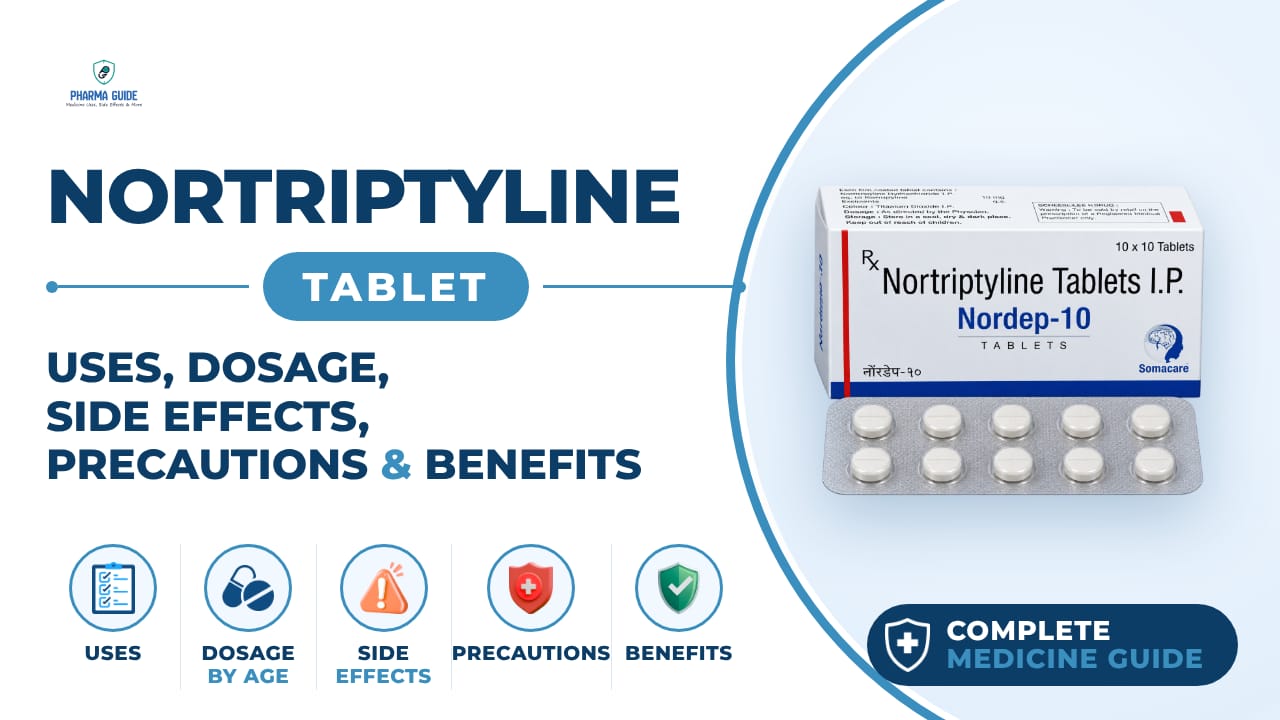
| Generic name | Nortriptyline hydrochloride |
|---|---|
| Drug class | Tricyclic antidepressant (TCA) |
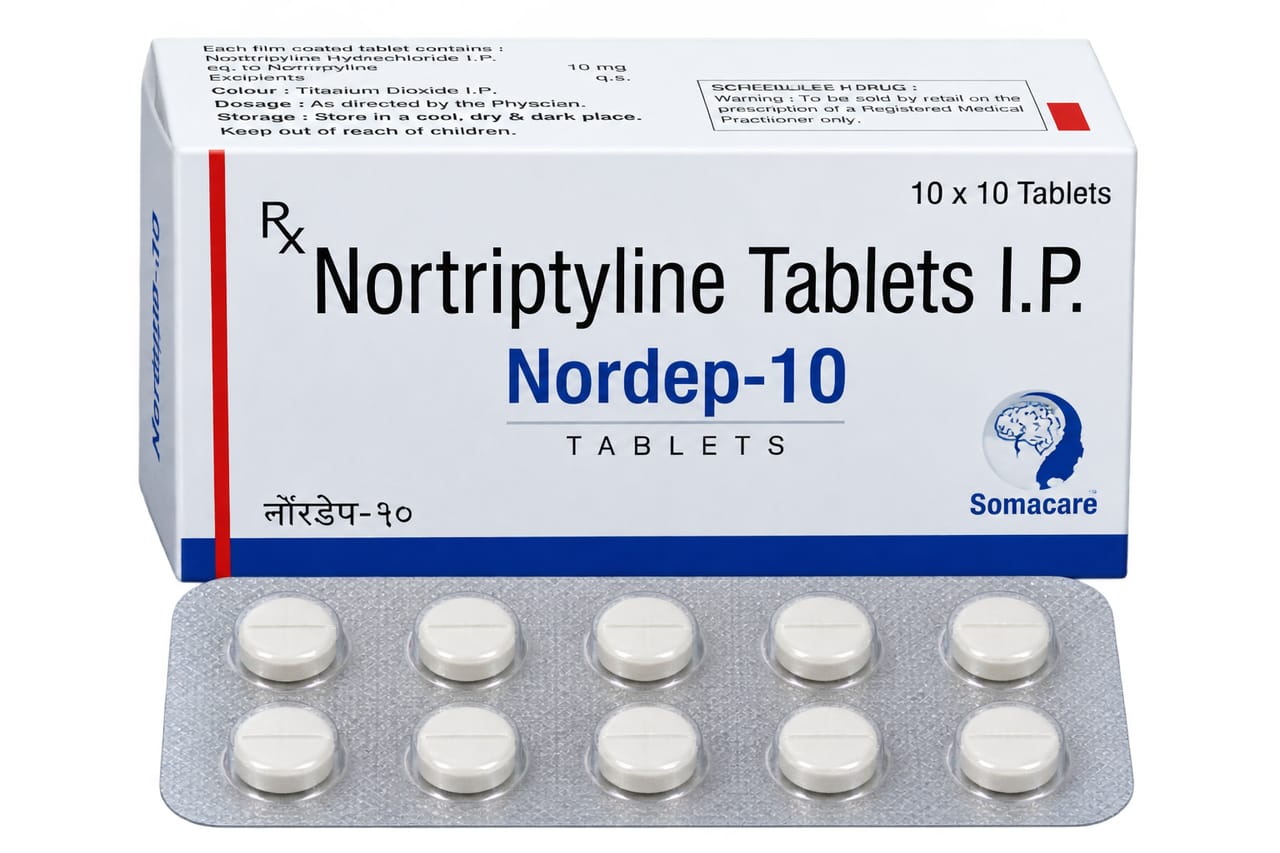
| Forms | Tablets (10mg, 25mg, 50mg), Capsules (10mg, 25mg, 50mg, 75mg), Oral solution (10mg or 25mg per 5ml) |
Quick overview
Nortriptyline Tablet contains nortriptyline hydrochloride, a tricyclic antidepressant (TCA) used to treat major depression in adults. It is also used for chronic nerve pain conditions, smoking cessation support, migraine prevention, neurogenic cough, and irritable bowel syndrome. It works by increasing levels of norepinephrine and serotonin in the brain and carries important warnings around suicidal thoughts, heart rhythm problems, and interactions with other medicines.
What is Nortriptyline Tablet
Nortriptyline is a medicine from the tricyclic antidepressant family. It contains the active ingredient nortriptyline hydrochloride and is used to treat major depression in adults.
Nortriptyline Tablet uses
- Major depression in adults
- Chronic neuropathic pain, including diabetic neuropathy, myofascial pain, trigeminal neuralgia, and postherpetic neuralgia
- Smoking cessation support
- Migraine prevention
- Neurogenic cough
- Irritable bowel syndrome
Benefits of Nortriptyline Tablet
- Nortriptyline was superior to placebo in achieving remission of bereavement-related major depressive episodes, with a remission rate of 56% for nortriptyline alone
- Nortriptyline was found to be superior to placebo and paroxetine in treating depression in patients with Parkinson's disease, with a response rate of 53%
- In elderly patients with recurrent major depression, a combination of nortriptyline and interpersonal psychotherapy resulted in a high remission rate of 78.7%
How Nortriptyline Tablet works
Nortriptyline works by blocking the reabsorption of norepinephrine and serotonin, two brain chemicals, so more of them build up in the brain. This is thought to help improve mood. For nerve pain, it also acts on receptors involved in pain signaling.
Nortriptyline Tablet dosage
Swallow the tablet whole with a drink of water; do not chew, as the tablets have a bitter taste. It can be taken with or without food. Take your medicine at the same time each day to keep levels steady in your body.
For pain, it may be taken once daily before bed; for depression, it may be taken several times a day or as a single daily dose, often at night to reduce drowsiness. You may not notice any improvement in your symptoms for up to 4 weeks after starting treatment.
Do not stop taking this medicine suddenly without talking to your doctor, as this can cause withdrawal symptoms. If you miss a dose, take it as soon as you remember; if it is almost time for your next dose, skip the missed dose and continue as usual - do not double up.
The score line on some tablets is only there to help you break the tablet if you have difficulty swallowing it whole.
| Age group | Dose |
|---|---|
| Under 18 Years | Use only if prescribed by a healthcare professional |
| Adults (18–64 Years) | 25–75 mg daily, adjusted according to condition |
| Older Adults (65+ Years) | 10–25 mg daily initially, adjusted based on response |
Available forms and strengths
- Tablets (10mg, 25mg, 50mg)
- Capsules (10mg, 25mg, 50mg, 75mg)
- Oral solution (10mg or 25mg per 5ml)
Side effects of Nortriptyline Tablet
Common
- Dry mouth
- Drowsiness
- Dizziness
- Constipation
- Blurred vision
- Trouble urinating
- Sweating
- Nausea
- Headache
- Tremor
- Blocked nose
- Weight gain
- Irregular or heavy heart beats
- Aggression
Serious
- Irregular heartbeat
- Confusion
- Seizures
- Severe chest pain
- Yellowing of the skin and eyes (jaundice)
- Bruising, bleeding, pallor or persistent sore throat and fever
- Suicidal thoughts or behaviour
- Bad constipation, swollen stomach, fever and vomiting (possible intestinal paralysis)
- Attacks of blurred or rainbow vision with eye pain (possible acute glaucoma)
- Fast or irregular heart rhythm that can lead to sudden cardiac death (torsades de pointes)
Warnings and precautions
- Nortriptyline carries a boxed warning about an increased risk of suicidal thoughts and behavior, especially in children, teenagers, and young adults. This risk means doctors must carefully weigh the need for treatment against this risk, and all patients should be watched closely for worsening symptoms.
- Do not take nortriptyline together with, or within 14 days of stopping, a monoamine oxidase inhibitor (MAOI), as this combination can cause a dangerous reaction called serotonin syndrome. Nortriptyline should not be used right after a recent heart attack.
- Stopping this medicine suddenly can cause withdrawal symptoms such as trouble sleeping, irritability, and sweating, so it should only be stopped under a doctor's guidance with a gradual dose reduction. This medicine should not be given to children and adolescents under 18, as its safety and effectiveness have not been established in this age group.
- People with a history of mania, schizophrenia, or bipolar disorder should be cautious, as nortriptyline can trigger a manic episode or worsen psychosis.
- Nortriptyline should not be used during pregnancy unless your doctor decides it is clearly necessary, after weighing the benefits and risks. If taken late in pregnancy, the newborn may have withdrawal symptoms.
- Your doctor will advise whether you should start, continue, or stop breastfeeding, or stop using this medicine, weighing the benefits of breastfeeding for your child against the benefit of treatment for you.
- If you have kidney problems, your doctor will increase or decrease your dose carefully and gradually, though the usual dose is often still given. People with liver disease usually need lower doses, and your doctor may check the level of nortriptyline in your blood.
- You should not drink alcohol while taking nortriptyline, since it can increase drowsiness and other side effects and raise the risk of suicidal thoughts or overdose. Do not drive or use machinery while taking nortriptyline unless you are sure your judgment and coordination are not affected, since the medicine may affect your ability to do these tasks safely.
Storage
- Keep this medicine out of the sight and reach of children
- This medicinal product does not require any special storage conditions
- Do not use this medicine after the expiry date which is stated on the blister, carton or bottle after EXP
- Do not throw away any medicines via wastewater or household waste; ask your pharmacist how to throw away medicines you no longer use
When to see a doctor
- Contact your doctor or go to a hospital right away if you have thoughts of harming or killing yourself at any time
- Tell your doctor immediately if you notice bad constipation, a swollen stomach, fever and vomiting, as this may mean part of your intestine has become paralyzed
- Tell your doctor immediately if you notice yellowing of the skin or eyes, as this may mean your liver is affected
- Tell your doctor immediately if you have bruising, bleeding, paleness, or a persistent sore throat and fever, as these can be early signs of blood or bone marrow problems
- Get an eye examination immediately if you have attacks of blurred vision, rainbow vision, and eye pain, as these may be signs of acute glaucoma
- Tell your doctor right away if you get a very fast heartbeat, dizziness, fainting, or seizures, as these could be signs of Brugada Syndrome
- If you or someone else takes too much nortriptyline, contact your doctor or go to the nearest hospital emergency department immediately, taking the box and any remaining tablets with you
- Stop taking nortriptyline and tell your doctor straight away if you get a rash or allergic reaction such as itching, swollen lips or tongue, or wheezing or shortness of breath
Alternatives
- Amitriptyline
- Fluoxetine
- Pregabalin
Watch the video
FAQs
What is Nortriptyline Tablet used for?
It is used to treat major depression in adults, as well as chronic nerve pain (such as diabetic neuropathy, myofascial pain, trigeminal neuralgia, and postherpetic neuralgia), smoking cessation support, migraine prevention, neurogenic cough, and irritable bowel syndrome.
How does Nortriptyline Tablet work?
It works by blocking the reabsorption of norepinephrine and serotonin in the brain, allowing these chemicals to build up, which helps improve mood. For nerve pain, it also acts on receptors involved in pain signaling.
How should I take Nortriptyline Tablet?
Swallow the tablet whole with water without chewing, as it has a bitter taste. It can be taken with or without food, at the same time each day. For pain it may be taken once daily before bed, while for depression it may be taken several times a day or as a single dose, often at night to reduce drowsiness. It may take up to 4 weeks to notice improvement.
What are the common side effects of Nortriptyline Tablet?
Common side effects include dry mouth, drowsiness, dizziness, constipation, blurred vision, trouble urinating, sweating, nausea, headache, tremor, blocked nose, weight gain, irregular or heavy heartbeats, and aggression.
Can I drink alcohol while taking Nortriptyline Tablet?
No, you should not drink alcohol while taking nortriptyline, as it can increase drowsiness and other side effects and raise the risk of suicidal thoughts or overdose.
General information, not medical advice
Your prescriber and the leaflet in your pack know your situation. This page does not.
- Follow your prescriber and the leaflet
- Don't start, stop, or change a dose on your own
- Doses and warnings differ by country and product
Sources
- https://www.rupahealth.com/post/nortriptyline-how-it-works-benefits-and-potential-risks
- https://www.medanta.org/medicine-detail/nortriptyline-uses-side-effects-precautions-and-dosage
- https://www.medicines.org.uk/emc/files/pil.11544.pdf
- https://www.accessdata.fda.gov/drugsatfda_docs/label/2012/018012s029,018013s061lbl.pdf
Video
Related medicines
Vivactil Tablet: Uses, Dosage, Side Effects, Precautions and Alternates
Tricyclic antidepressant (TCA)
Vivactil Tablet (protriptyline) is a tricyclic antidepressant for depression, especially in withdrawn or low-energy patients. Learn dosage, uses, and side
Pamelor Capsule: Uses, Dosage, Side Effects, Precautions and Alternates
Tricyclic antidepressant (TCA)
Pamelor Capsule (nortriptyline) treats depression in adults by raising mood-related brain chemicals. Learn uses, dosage, side effects, and precautions.