
Safety
General information, not medical advice
Your prescriber and the leaflet in your pack know your situation. This page does not.
- Follow your prescriber and the leaflet
- Don't start, stop, or change a dose on your own
- Doses and warnings differ by country and product
Nurofen Syrup: Uses, Dosage, Side Effects, Precautions and Alternates
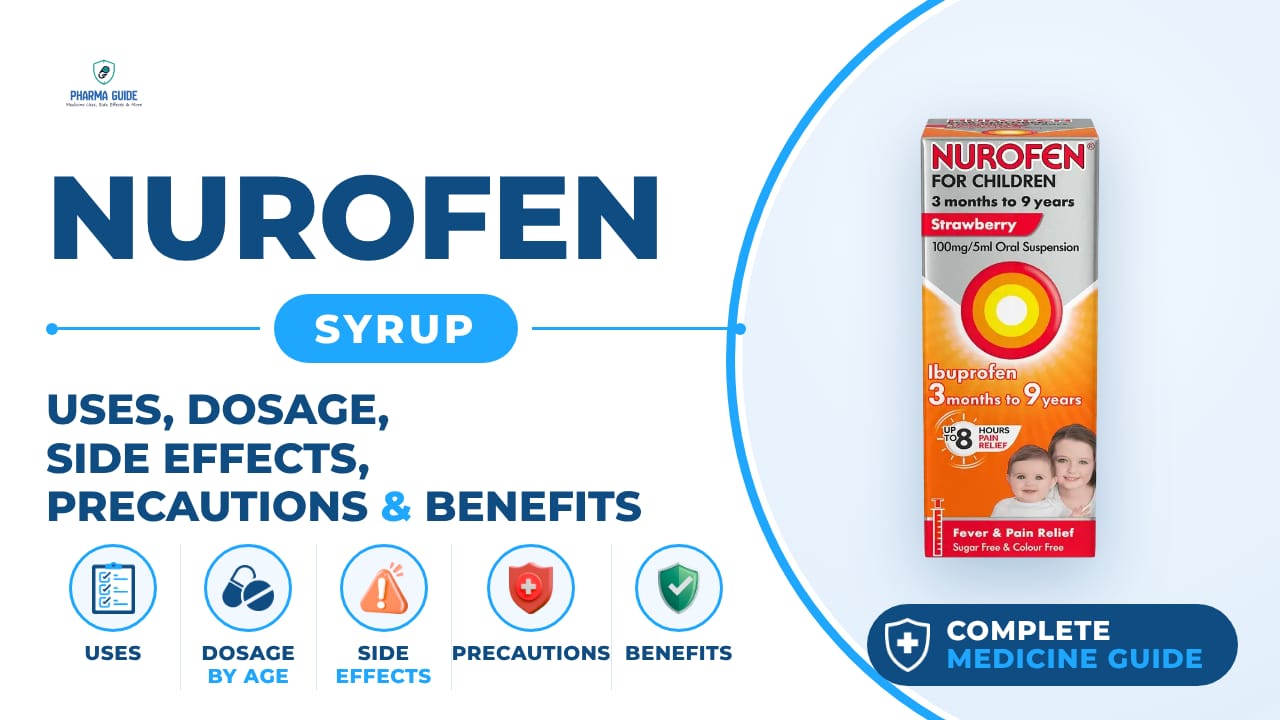
| Generic name | Ibuprofen |
|---|---|
| Drug class | Non-steroidal anti-inflammatory drug (NSAID) |
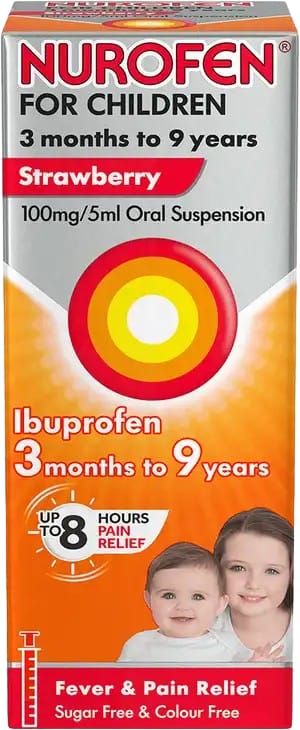
| Forms | Oral suspension (syrup) 100 mg/5 ml, orange flavour, Oral suspension (syrup) 100 mg/5 ml, strawberry flavour, Available in 100 ml, 150 ml and 200 ml packages |
Quick overview
Nurofen Syrup is a liquid ibuprofen suspension used to reduce fever and relieve mild to moderate pain in babies and children from 3 months to 12 years of age (weighing about 40 kg). It belongs to the non-steroidal anti-inflammatory drug (NSAID) class. It is used for conditions such as fever from immunisation, colds or flu, teething pain, toothache, earache, sore throats and minor aches and sprains. It comes with a syringe for accurate dosing and does not need to be taken with food or water.
What is Nurofen Syrup
Nurofen for Children is a liquid ibuprofen suspension for babies and children. It is used to reduce fever and to relieve mild to moderate pain in infants and children from 3 months to 12 years of age (weighing about 40 kg).
Nurofen Syrup uses
- Reducing fever, including fever from immunisation, cold or flu
- Relieving mild to moderate pain
- Relieving pain from teething, toothache, earache and sore throats
- Relieving minor aches and sprains
Benefits of Nurofen Syrup
- Provides fever and pain relief for babies and children
- Gives fever relief that lasts for up to 8 hours
- Comes with a syringe for accurate and easy dosing
- Does not need to be taken with food or water
How Nurofen Syrup works
Nurofen contains ibuprofen, which has anti-inflammatory properties and provides relief from fever and pain.
Nurofen Syrup dosage
Take by mouth. This medicine is for short-term use only. Always shake the bottle well before use. Use the syringe supplied to measure the dose accurately. Do not use a household teaspoon, as teaspoons vary in size and may not give the correct amount.
Patients with a sensitive stomach may take this medicine with or after a meal. The liquid formula does not have to be taken with food or water. Doses should be given every 6 to 8 hours, leaving at least 4 hours between doses. Do not give more than the recommended amount in 24 hours.
To remove the cap, press it downward and turn it anti-clockwise. After use, close the bottle with the cap, wash the syringe in warm water and let it dry.
Do not give this medicine to infants under 3 months of age or weighing less than 5 kg unless a doctor tells you to. Use in infants between 3 and 6 months of age is by a doctor's prescription only.
If your child is aged 3 to 6 months and symptoms persist or worsen after 24 hours, consult a doctor. For children over 6 months, if symptoms persist or worsen after 3 days, consult a doctor. For elderly people, talk to a doctor before taking this medicine.
| Age group | Dose |
|---|---|
| 3 months - 6 months, weighing over 5kg | One 2.5ml dose 3 times a day |
| 6 months - 12 months | One 2.5ml dose 3 or 4 times in 24 hours |
| 1 year - 3 years | One 5ml dose 3 times in 24 hours |
| 4 years - 6 years | One 7.5ml (5ml + 2.5ml) dose 3 times in 24 hours |
| 7 years - 9 years | One 10ml (5ml + 5ml) dose 3 times in 24 hours |
| 10 years - 12 years | One 15ml (5ml + 5ml + 5ml) dose 3 times in 24 hours |
Available forms and strengths
- Oral suspension (syrup) 100 mg/5 ml, orange flavour
- Oral suspension (syrup) 100 mg/5 ml, strawberry flavour
- Available in 100 ml, 150 ml and 200 ml packages
Side effects of Nurofen Syrup
Common
- Gastric irritation, which can cause indigestion and heartburn
- Headache (uncommon)
- Diarrhea, flatulence or constipation (rare)
- Mild diarrhea from the maltitol ingredient
Serious
- Blood in the stools or black tar-like stools
- Vomiting blood or dark particles that look like coffee grounds
- Unexplained wheezing, asthma, shortness of breath
- Skin rash that may be severe with blisters or peeling, itching or bruising, including Stevens–Johnson syndrome
- Rapid heart rate or fluid retention (swollen ankles or less urine)
- Stiff neck, headache, nausea, vomiting, fever and disorientation
- Swelling of the face, tongue or throat (signs of a severe allergic reaction)
- DRESS syndrome (rash, fever, swollen lymph nodes and raised eosinophils)
- Yellowing of the eyes, pale stool and dark urine (possible kidney or liver problems)
- Severe sore throat with high fever
- Unexplained bruising or bleeding, fatigue, or more infections than usual (possible blood disorders)
- Kidney or liver problems
- Stroke or heart problems
- Worsening of colitis or Crohn's disease
- High blood pressure
- Peptic ulcer, gastric bleeding or inflammation of the stomach lining
- Severe skin and soft tissue infections during chickenpox
Warnings and precautions
- There may be a link between medicines like Nurofen and a slight increase in the risk of heart attack or stroke. This risk increases with long-term treatment and high doses. Do not exceed the recommended dose or treatment duration.
- Do not use this medicine if you or your child are allergic to ibuprofen, aspirin, or any other NSAID, or to any of the ingredients. Do not use if you or your child have or have had a peptic ulcer, stomach perforation or gastric bleeding. It is recommended to avoid using this medicine when the patient has chickenpox. Do not exceed the recommended dose. Do not give this medicine to infants under 3 months of age or weighing less than 5 kg unless a doctor instructs you to.
- Consult a doctor before using this medicine during the first 6 months of pregnancy. Do not use it during the last 3 months of pregnancy.
- Studies found very low amounts of ibuprofen in breast milk, and it is unlikely that these amounts would affect a nursing baby.
- Do not use if you or your child have severe kidney failure. Tell the doctor before use if you or your child have or have had kidney problems or are dehydrated, as there is a risk of kidney problems.
- Do not use if you or your child have severe liver failure. Tell the doctor before use if you or your child have or have had liver problems.
- Taken at the recommended dose and treatment duration, this medicine has no effect on the ability to drive or operate machines.
Storage
- Store at a temperature below 25ºC.
- The preparation can be used for 6 months after the bottle is first opened.
- Do not use this medicine after the expiry date stated on the package and bottle. The expiry date refers to the last day of that month.
- Store this medicine and any other medicine in a safe place out of the sight and reach of children and infants to avoid poisoning.
When to see a doctor
- If you or your child take more than needed, or if a child accidentally swallows this medicine, go to a doctor or the nearest hospital right away. Symptoms may include nausea, abdominal pain, vomiting (possibly with a little blood), headache, ringing in the ears, confusion and jerky eye movement.
- Stop giving this medicine and see a doctor right away if there is blood in the stools, black tar-like stools, or vomiting of blood or dark particles that look like coffee grounds.
- Stop giving this medicine and see a doctor right away if there is unexplained wheezing, asthma, shortness of breath, skin rash (possibly severe with blisters or peeling), itching, bruises, rapid heart rate, or fluid retention.
- See a doctor right away if there is swelling of the face, tongue or throat, as these can be signs of a severe allergic reaction.
- See a doctor if your child's symptoms worsen or do not go away quickly, or if the illness comes with a rash, breathing difficulties, diarrhea or increased fatigue.
Alternatives
- Calpol
- Panadol
- Generic ibuprofen suspensions
- Ibuprofen liquids
- Advil
Watch the video
FAQs
What age group can use Nurofen Syrup?
It is used for babies and children from 3 months to 12 years of age, weighing about 40 kg. Infants aged 3 to 6 months should only use it on a doctor's prescription, and it should not be given to infants under 3 months or weighing less than 5 kg unless a doctor advises it.
How often can Nurofen Syrup be given?
Doses should be given every 6 to 8 hours, leaving at least 4 hours between doses, and you should not give more than the recommended amount in 24 hours.
Does Nurofen Syrup need to be taken with food?
No, the liquid formula does not need to be taken with food or water, though patients with a sensitive stomach may take it with or after a meal.
How should Nurofen Syrup be measured and stored?
Use the syringe supplied to measure the dose accurately rather than a household teaspoon. Store the syrup below 25ºC, and it can be used for 6 months after the bottle is first opened.
When should I consult a doctor while giving Nurofen Syrup?
For children aged 3 to 6 months, consult a doctor if symptoms persist or worsen after 24 hours. For children over 6 months, consult a doctor if symptoms persist or worsen after 3 days.
General information, not medical advice
Your prescriber and the leaflet in your pack know your situation. This page does not.
- Follow your prescriber and the leaflet
- Don't start, stop, or change a dose on your own
- Doses and warnings differ by country and product
Sources
Video
Related medicines
Aleve Arthritis Tablet: Uses, Dosage, Side Effects, Precautions and Alternates
Non-steroidal anti-inflammatory drug (NSAID)
Aleve Arthritis Tablet (naproxen sodium 220 mg) relieves pain, inflammation, and fever. Learn uses, dosage, side effects, warnings, and alternatives.

Anadin Ultra Capsule: Uses, Dosage, Side Effects, Precautions and Alternates
Non-steroidal anti-inflammatory drug (NSAID)
Anadin Ultra Capsule contains 200mg ibuprofen in a fast-dissolving liquid gel. Learn its uses, dosage, side effects and precautions before taking it.