
Safety
General information, not medical advice
Your prescriber and the leaflet in your pack know your situation. This page does not.
- Follow your prescriber and the leaflet
- Don't start, stop, or change a dose on your own
- Doses and warnings differ by country and product
Nurofen Tablet: Uses, Dosage, Side Effects, Precautions and Alternates
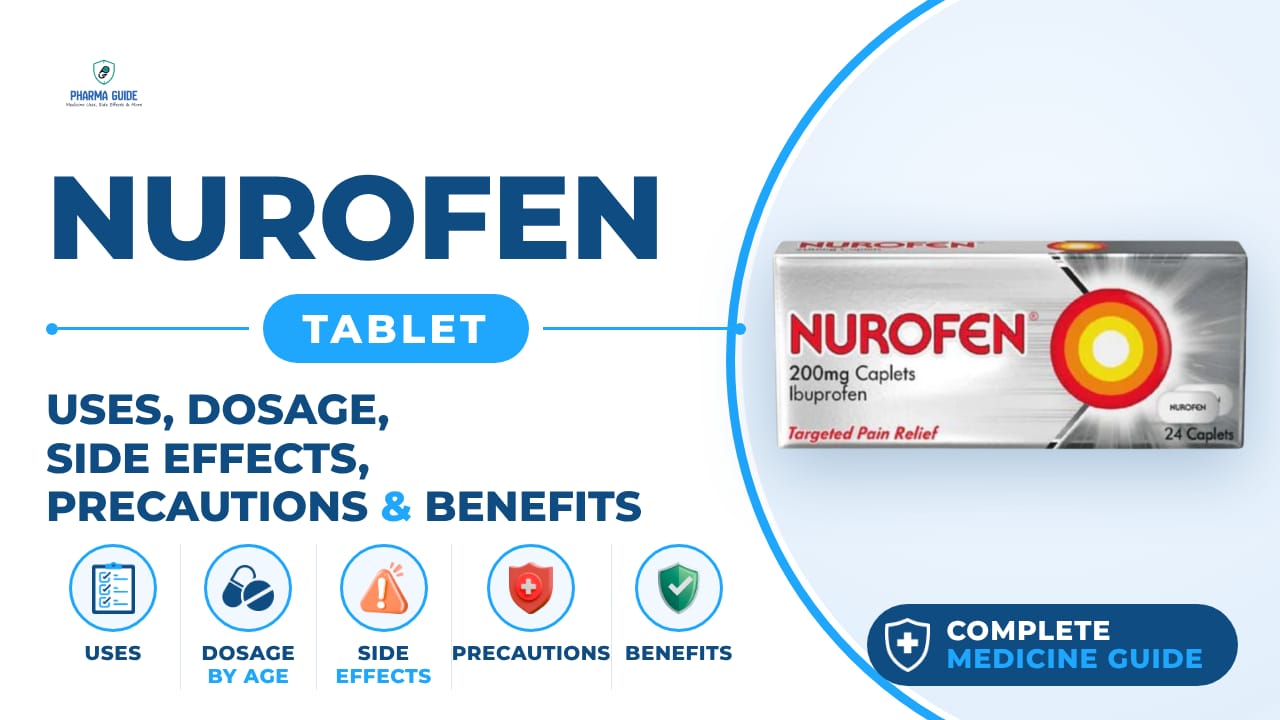
| Generic name | Ibuprofen |
|---|---|
| Drug class | Non-steroidal anti-inflammatory drug (NSAID) |
| Forms | Tablets, Caplets (capsule shaped tablets), Coated tablets |
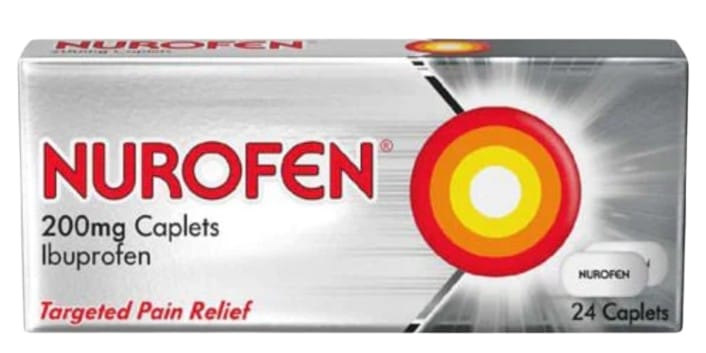
Quick overview
Nurofen Tablet contains ibuprofen, a non-steroidal anti-inflammatory drug (NSAID) available without a prescription. It works by changing the body's response to pain, swelling and high temperature. It is used for short-term relief of pain, fever and inflammation, and should be used at the lowest effective dose for the shortest time needed.
What is Nurofen Tablet
Nurofen contains ibuprofen, which belongs to a group of medicines called non-steroidal anti-inflammatory drugs (NSAIDs). These medicines work by changing the body's response to pain, swelling and high temperature. It is available without a prescription.
Nurofen Tablet uses
- Headaches and migraine pain
- Dental pain and neuralgia
- Period pain
- Rheumatic, muscular and back pain
- Feverishness and symptoms of cold and flu
- Symptomatic treatment of osteoarthritis
Benefits of Nurofen Tablet
- Provides fast and effective relief from pain
- Reduces fever
- Helps relieve swelling and inflammation
How Nurofen Tablet works
Nurofen works by changing the way your body responds to pain, swelling and high temperature.
Nurofen Tablet dosage
This product is for short term use only. Use the lowest effective dose for the shortest time needed to relieve symptoms. Swallow the tablets with a glass of water. Leave at least four hours between doses. Do not give to children under 12 years of age.
In children and adolescents between 12 and 18 years, if the medicine is needed for more than 3 days or if symptoms worsen, a doctor should be consulted. In adults, do not take for longer than 10 days unless your doctor tells you to. If you have an infection, consult a doctor without delay if symptoms such as fever and pain persist or worsen. Do not take a double dose to make up for a forgotten dose.
| Age group | Dose |
|---|---|
| Under 12 years | Not recommended for Nurofen 200 mg tablets |
| 12–17 years | 1–2 tablets (200–400 mg) every 4–6 hours as needed; maximum 6 tablets (1,200 mg) in 24 hours |
| 18 years and older | 1–2 tablets (200–400 mg) every 4–6 hours as needed; maximum 6 tablets (1,200 mg) in 24 hours |
Available forms and strengths
- Tablets
- Caplets (capsule shaped tablets)
- Coated tablets
Side effects of Nurofen Tablet
Common
- Indigestion, heartburn or feeling sick
- Stomach pain or other abnormal stomach problems
- Allergic reactions such as skin rashes, itching and peeling
- Headaches
Serious
- Signs of intestinal bleeding such as bright red stools, black tarry stools, vomiting blood or dark particles that look like coffee grounds
- Serious allergic reaction such as breathing difficulties, unexplained wheezing, dizziness, faster heartbeat or swelling of the face, tongue or throat
- Serious skin reactions such as blistering, peeling, ulcers or target-like patches (Stevens-Johnson syndrome, toxic epidermal necrolysis, erythema multiforme, exfoliative dermatitis)
- DRESS syndrome (skin rash, fever, swollen lymph nodes and increase in eosinophils)
- Acute generalised exanthematous pustulosis (a red, scaly widespread rash with bumps and blisters and fever)
- Kidney problems such as passing less or more urine, cloudy urine, blood in urine, back pain and swelling
- Aseptic meningitis with neck stiffness, headache, feeling sick, fever or confusion
- Blood disorder causing unexplained bruising or bleeding, fever, sore throat, mouth ulcers and severe exhaustion
- Drop in blood pressure or irregular heartbeat
- Stomach or intestinal ulcers with bleeding and perforation
- Liver problems
- Worsening of asthma or bronchospasm
- Swelling, high blood pressure, heart failure or heart attack
- Chest pain (a sign of Kounis syndrome)
- Worsening of colitis and Crohn's disease
- Small increased risk of heart attack or stroke
Warnings and precautions
- Anti-inflammatory and pain-killer medicines like ibuprofen may be linked with a small increased risk of heart attack or stroke, especially at high doses. Do not exceed the recommended dose or duration of treatment.
- Do not take this product with other NSAID-containing products such as aspirin or other ibuprofen products. If you are on low-dose aspirin, speak to your doctor or pharmacist first.
- This medicine may hide signs of infection such as fever and pain, which could delay proper treatment. If you take it while you have an infection and symptoms persist or worsen, consult a doctor without delay.
- Taking this medicine for longer than recommended or at higher than recommended doses puts you at risk of serious harm to the stomach, gut and kidneys, and very low potassium levels, which can be fatal.
- This medicine belongs to a group of medicines that may impair fertility in women. This is reversible on stopping the medicine. Tell your doctor if you have problems becoming pregnant.
- Do not take this medicine in the last 3 months of pregnancy, as it could harm your unborn baby or cause problems at delivery. Avoid it in the first 6 months of pregnancy unless your doctor advises otherwise. If taken for more than a few days from 20 weeks of pregnancy, it can cause kidney problems in your unborn baby. Tell your doctor if you become pregnant while taking Nurofen.
- Speak to your doctor or pharmacist before taking this medicine if you are breastfeeding. Ibuprofen passes into breast milk in very small amounts with no harmful effects to the infant, and it is not necessary to stop breastfeeding for short-term treatment at the recommended dose.
- Do not take this medicine if you have severe kidney problems. Check with your doctor or pharmacist before taking it if you have kidney problems. There is a risk of kidney impairment in dehydrated children and adolescents.
- Do not take this medicine if you have severe liver problems. Check with your doctor or pharmacist before taking it if you have liver problems.
- Taken at the recommended dose and duration of treatment, this medicine has no known effect on the ability to drive or use machines.
Storage
- Keep all medicines out of the sight and reach of children.
- Do not use after the expiry date stated on the carton after EXP. The expiry date refers to the last day of that month.
- Do not store above 25°C. Store in the original pack.
- Medicines should not be disposed of via waste water or household waste. Ask your pharmacist how to dispose of medicines no longer required.
When to see a doctor
- Immediately stop taking this medicine and contact your doctor or emergency services if you notice signs of an allergic reaction, including breathing problems, swelling of the face and neck, or chest pain.
- Stop taking the medicine and seek immediate medical help if you develop signs of intestinal bleeding, a serious allergic reaction, serious skin reactions, kidney problems, or aseptic meningitis.
- Stop using the medicine and seek medical attention immediately if you notice any skin rash, lesions of the mucous membranes, blisters or other signs of a serious skin reaction.
- If you take more than you should, or if children take this medicine by accident, always contact a doctor or nearest hospital to get advice on the risk and action to take.
- You must contact a doctor if your symptoms worsen or do not improve after 3 days for children and adolescents aged 12 to 18, and after 10 days for adults.
Alternatives
- Advil
- Motrin IB
- Generic Ibuprofen
- Ibuprofen
Watch the video
FAQs
What is Nurofen Tablet used for?
Nurofen Tablet is used for headaches and migraine pain, dental pain and neuralgia, period pain, rheumatic, muscular and back pain, feverishness and symptoms of cold and flu, and symptomatic treatment of osteoarthritis.
What is the dosage of Nurofen Tablet for adults?
Adults aged 18 years and older can take 1–2 tablets (200–400 mg) every 4–6 hours as needed, with a maximum of 6 tablets (1,200 mg) in 24 hours. It should not be taken for longer than 10 days unless advised by a doctor.
Can children take Nurofen Tablet?
Nurofen 200 mg tablets are not recommended for children under 12 years. For those aged 12–17 years, the dose is 1–2 tablets (200–400 mg) every 4–6 hours as needed, up to a maximum of 6 tablets (1,200 mg) in 24 hours, and a doctor should be consulted if needed for more than 3 days.
What are the common side effects of Nurofen Tablet?
Common side effects include indigestion, heartburn or feeling sick, stomach pain or other abnormal stomach problems, allergic reactions such as skin rashes, itching and peeling, and headaches.
Is Nurofen Tablet safe during pregnancy?
Nurofen should not be taken in the last 3 months of pregnancy as it could harm the unborn baby or cause problems at delivery, and should be avoided in the first 6 months unless advised by a doctor.
General information, not medical advice
Your prescriber and the leaflet in your pack know your situation. This page does not.
- Follow your prescriber and the leaflet
- Don't start, stop, or change a dose on your own
- Doses and warnings differ by country and product
Sources
Video
Related medicines
Aleve Arthritis Tablet: Uses, Dosage, Side Effects, Precautions and Alternates
Non-steroidal anti-inflammatory drug (NSAID)
Aleve Arthritis Tablet (naproxen sodium 220 mg) relieves pain, inflammation, and fever. Learn uses, dosage, side effects, warnings, and alternatives.
Anadin Ultra Capsule: Uses, Dosage, Side Effects, Precautions and Alternates
Non-steroidal anti-inflammatory drug (NSAID)
Anadin Ultra Capsule contains 200mg ibuprofen in a fast-dissolving liquid gel. Learn its uses, dosage, side effects and precautions before taking it.