
Safety
General information, not medical advice
Your prescriber and the leaflet in your pack know your situation. This page does not.
- Follow your prescriber and the leaflet
- Don't start, stop, or change a dose on your own
- Doses and warnings differ by country and product
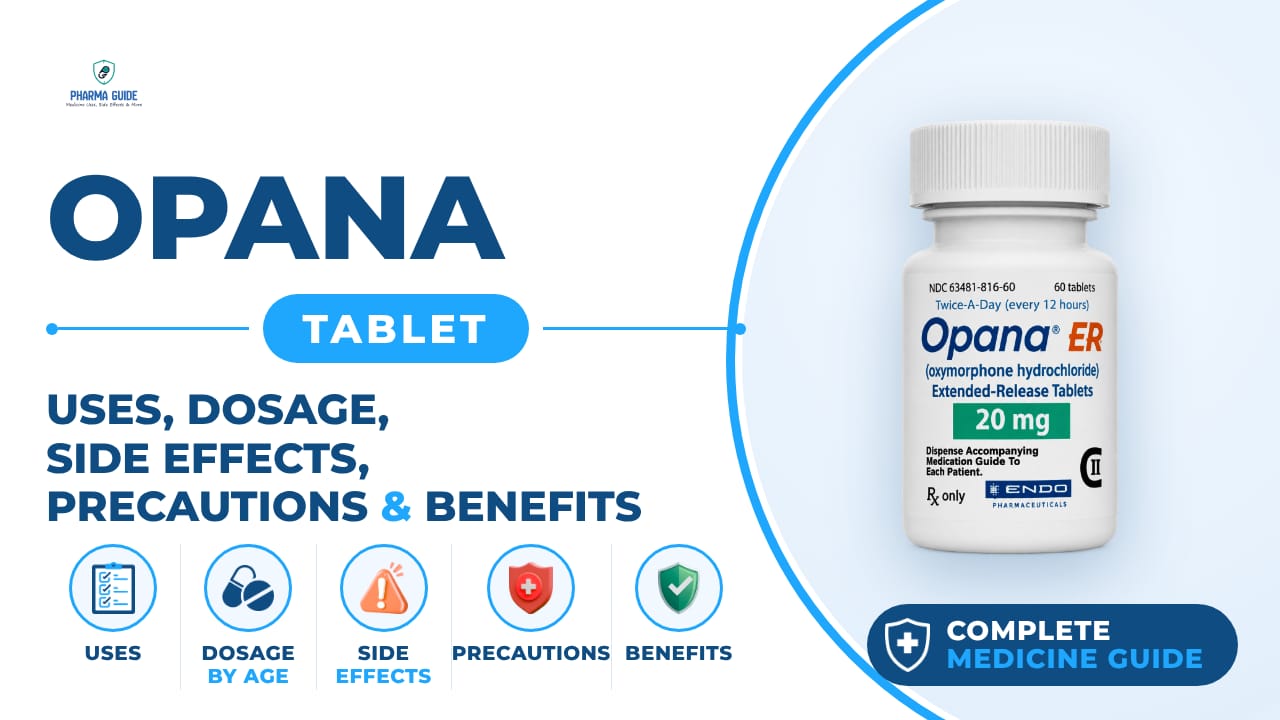
Opana Tablet: Uses, Dosage, Side Effects, Precautions and Alternates
| Generic name | Oxymorphone |
|---|---|
| Drug class | Opioids |
| Forms | Tablet, Extended-release tablet |
Quick overview
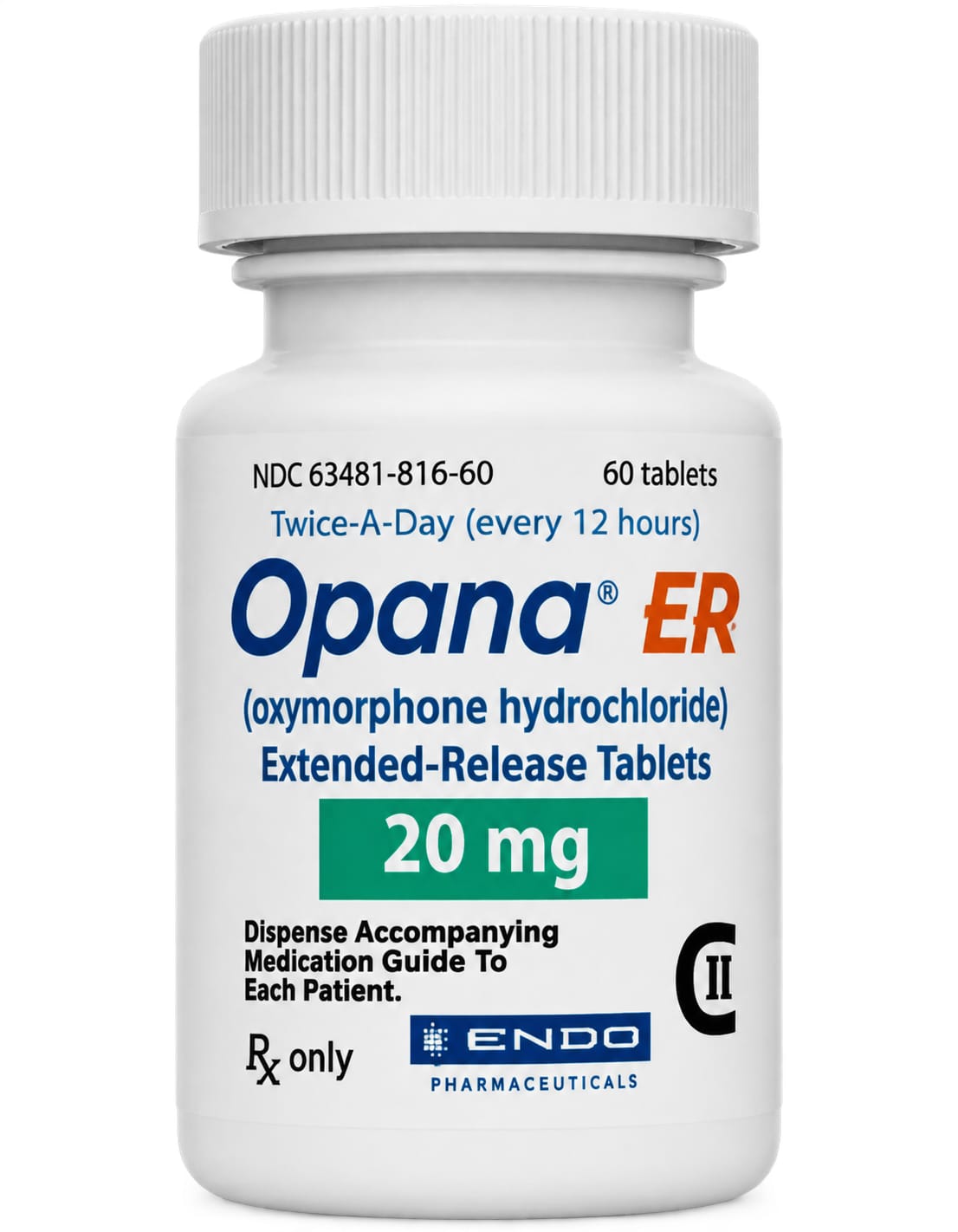
Opana Tablet (oxymorphone) is an opioid pain medication, sometimes called a narcotic, used to treat moderate to severe pain when other pain treatments are not strong enough or cannot be tolerated. The Opana brand name has been discontinued in the U.S., but generic oxymorphone tablets and extended-release tablets are still available. It works by binding to opioid receptors in the central nervous system to block pain signals. It must be used exactly as prescribed due to serious risks, including dependence, overdose, and dangerous breathing effects.
What is Opana Tablet
Opana is an opioid pain medication, sometimes called a narcotic. It is used to treat moderate to severe pain when other pain treatments are not strong enough or cannot be tolerated. The Opana brand name has been discontinued in the U.S., but generic oxymorphone tablets and extended-release tablets are still available.
Opana Tablet uses
- Treats moderate to severe pain
- Opana ER (extended-release) is for around-the-clock treatment of pain and should not be used on an as-needed basis
Benefits of Opana Tablet
- Provides effective pain relief when non-narcotic pain medicines fail
How Opana Tablet works
Opana binds to specific opioid receptors in the central nervous system to block pain signals from reaching the brain.
Opana Tablet dosage
Take Opana exactly as prescribed by your doctor and follow the directions on your prescription label. Never use it in larger amounts or for longer than prescribed.
Stop using all other around-the-clock opioid pain medications when you start taking Opana.
Take Opana on an empty stomach, at least 1 hour before or 2 hours after a meal, and take the medicine at the same times each day.
Swallow the tablet whole. Do not crush, chew, break, or dissolve it, since this can lead to a fatal overdose.
Take only one extended-release tablet at a time. Do not lick or wet the tablet before placing it in your mouth, to avoid choking.
Never crush or break a tablet to inhale the powder or dissolve it to inject, as this can cause death.
Do not stop using Opana suddenly after long-term use, or you could have unpleasant withdrawal symptoms. Ask your doctor how to safely stop using it.
If you miss a dose, skip it if it is almost time for your next dose. Do not take two doses at one time.
| Age group | Dose |
|---|---|
| Under 18 years | Not recommended / specialist use only |
| 18–64 years | Immediate-release: usually 10–20 mg every 4–6 hours as needed, individualized by response |
| 65 years & older | Start at a lower dose and increase cautiously |
| Adults | Dose depends on formulation, previous opioid exposure, pain severity, and response |
Available forms and strengths
- Tablet
- Extended-release tablet
Side effects of Opana Tablet
Common
- Dizziness
- Drowsiness
- Headache
- Tiredness
- Stomach pain
- Nausea
- Vomiting
- Constipation
- Dry mouth
- Increased sweating
Serious
- Weak or shallow breathing, or breathing that stops
- A light-headed feeling, like you might pass out
- Seizure (convulsions)
- Chest pain, wheezing, cough with yellow or green mucus
- Severe vomiting
- High serotonin levels: agitation, hallucinations, fever, sweating, shivering, fast heart rate, muscle stiffness, twitching, loss of coordination, nausea, vomiting, diarrhea
- Low cortisol levels: nausea, vomiting, loss of appetite, dizziness, worsening tiredness or weakness
- Allergic reaction: hives, difficult breathing, swelling of face, lips, tongue, or throat
Warnings and precautions
- Do not use Opana if you have severe asthma or breathing problems, a blockage in your stomach or intestines, or moderate to severe liver disease.
- Oxymorphone can slow or stop your breathing and may be habit-forming. Misusing Opana can cause addiction, overdose, or death, especially in a child or someone using the medicine without a prescription.
- Never share Opana with another person, especially someone with a history of drug abuse or addiction. Keep the medication where others cannot get to it.
- Do not stop using Opana suddenly after long-term use, as this could cause unpleasant withdrawal symptoms. Ask your doctor how to safely stop using it.
- Taking Opana during pregnancy may cause life-threatening withdrawal symptoms in the newborn. Babies born dependent on opioids may need medical treatment for several weeks.
- Ask a doctor before using Opana if you are breastfeeding. Tell your doctor if you notice severe drowsiness or slow breathing in the nursing baby.
- Tell your doctor if you have kidney problems before taking Opana.
- You should not use Opana if you have moderate to severe liver disease. Tell your doctor about any liver problems before taking it.
- Do not drink alcohol while taking Opana. Fatal side effects can occur if you use Opana with alcohol.
- Avoid driving or hazardous activity until you know how this medicine affects you, since dizziness or drowsiness can cause falls, accidents, or severe injuries.
Storage
Store at room temperature away from moisture, heat, and light.
Keep track of your medicine and be aware if anyone is using it improperly or without a prescription.
Do not keep leftover opioid medication. Ask your pharmacist where to locate a drug take-back disposal program. If there is no take-back program, flush the unused medicine down the toilet.
When to see a doctor
Get emergency medical help right away if you have signs of an allergic reaction: hives, difficult breathing, or swelling of your face, lips, tongue, or throat.
A caregiver should give naloxone and/or seek emergency medical help if you have slow breathing with long pauses, blue-colored lips, or are hard to wake up.
Call your doctor right away if you have weak or shallow breathing, breathing that stops, a light-headed feeling like you might pass out, seizures, chest pain, wheezing, cough with yellow or green mucus, severe vomiting, signs of high serotonin levels, or signs of low cortisol levels.
Seek emergency medical attention if an overdose is suspected. Overdose symptoms may include severe drowsiness, pinpoint pupils, slow breathing, or no breathing.
Alternatives
- Hydromorphone
- Oxycodone
- Buprenorphine
Watch the video
FAQs
What is Opana Tablet used for?
Opana is an opioid pain medication used to treat moderate to severe pain when other pain treatments are not strong enough or cannot be tolerated.
Is the Opana brand still available?
The Opana brand name has been discontinued in the U.S., but generic oxymorphone tablets and extended-release tablets are still available.
How should Opana Tablet be taken?
Take Opana exactly as prescribed, on an empty stomach at least 1 hour before or 2 hours after a meal, at the same times each day. Swallow tablets whole without crushing, chewing, breaking, or dissolving them, as this can lead to a fatal overdose.
What are the serious side effects of Opana Tablet?
Serious side effects include weak or shallow breathing or breathing that stops, light-headedness like you might pass out, seizures, chest pain, wheezing, severe vomiting, signs of high serotonin levels, signs of low cortisol levels, and allergic reactions.
Can you drink alcohol while taking Opana Tablet?
No, you should not drink alcohol while taking Opana, as fatal side effects can occur if you use Opana with alcohol.
General information, not medical advice
Your prescriber and the leaflet in your pack know your situation. This page does not.
- Follow your prescriber and the leaflet
- Don't start, stop, or change a dose on your own
- Doses and warnings differ by country and product
Sources
- https://www.drugs.com/opana.html
- https://californiaprimerecovery.com/opana-vs-roxicodone/
- https://www.mayoclinic.org/drugs-supplements/oxymorphone-oral-route/description/drg-20071555
- https://pmc.ncbi.nlm.nih.gov/articles/PMC2888551/
- https://blackbearrehab.com/substance-abuse/opana-abuse/
- https://www.webmd.com/drugs/oxymorphone-opana
- https://www.drugs.com/oxymorphone.html
- https://medlineplus.gov/druginfo/meds/a610022.html
- https://dailymed.nlm.nih.gov/dailymed/medguide.cfm?setid=27615b77-2550-4e46-87d9-b4d007a0e79f
- https://www.cvs.com/drug-info/oxymorphone-hydrochloride-er/10mg-er/tab/64896069713
- https://www.accessdata.fda.gov/drugsatfda_docs/label/2019/021611s016lbl.pdf
- https://dailymed.nlm.nih.gov/dailymed/drugInfo.cfm?setid=5ca97412-1594-4a4e-b5e4-8593ffa1b242&audience=consumer
- https://dailymed.nlm.nih.gov/dailymed/medguide.cfm?setid=e6e34c18-fbc6-4cab-9aed-0905d93c2ab6
Video
Related medicines
Kadian Capsule: Uses, Dosage, Side Effects, Precautions and Alternates
Opioids
Kadian Capsule was an extended-release morphine for severe, around-the-clock pain, often in cancer patients. Learn uses, dosage, side effects, and risks.
Oxymorphone Tablet: Uses, Dosage, Side Effects, Precautions and Alternates
Opioids
Oxymorphone Tablet is a strong opioid for severe pain, available in immediate-release and extended-release forms. Learn uses, dosage, side effects, and