
Safety
General information, not medical advice
Your prescriber and the leaflet in your pack know your situation. This page does not.
- Follow your prescriber and the leaflet
- Don't start, stop, or change a dose on your own
- Doses and warnings differ by country and product
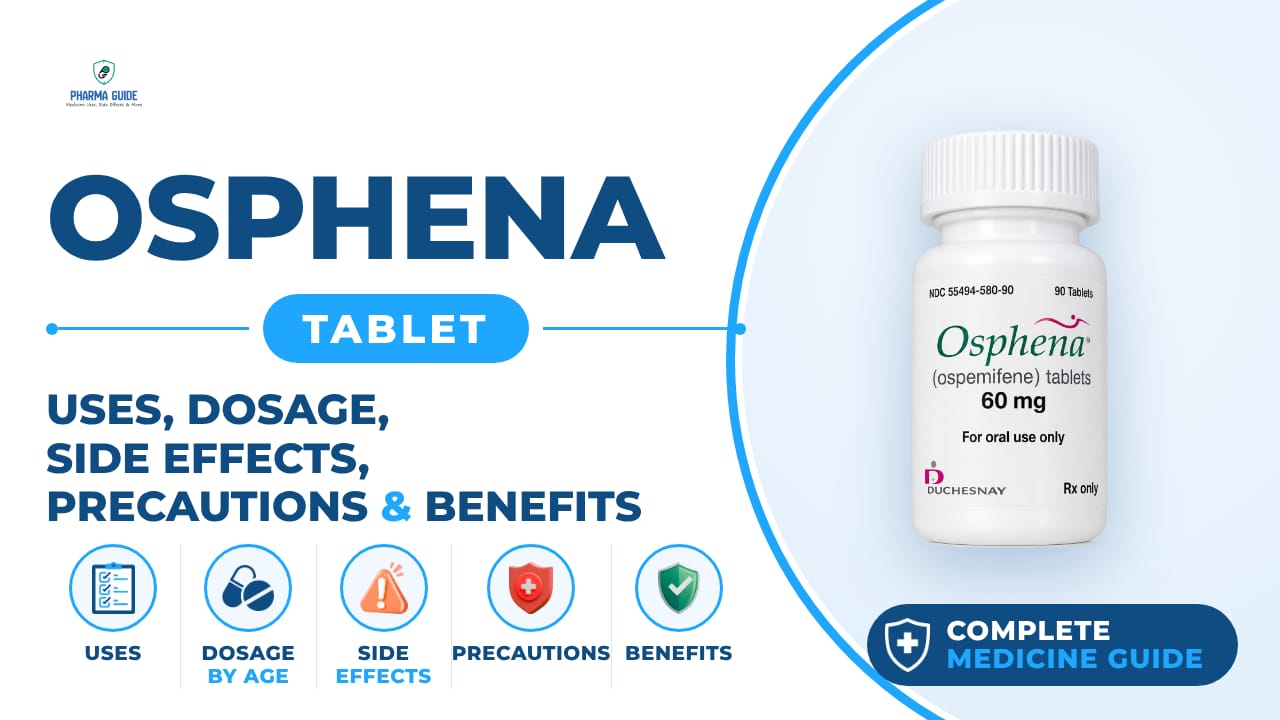
Osphena Tablet: Uses, Dosage, Side Effects, Precautions and Alternates
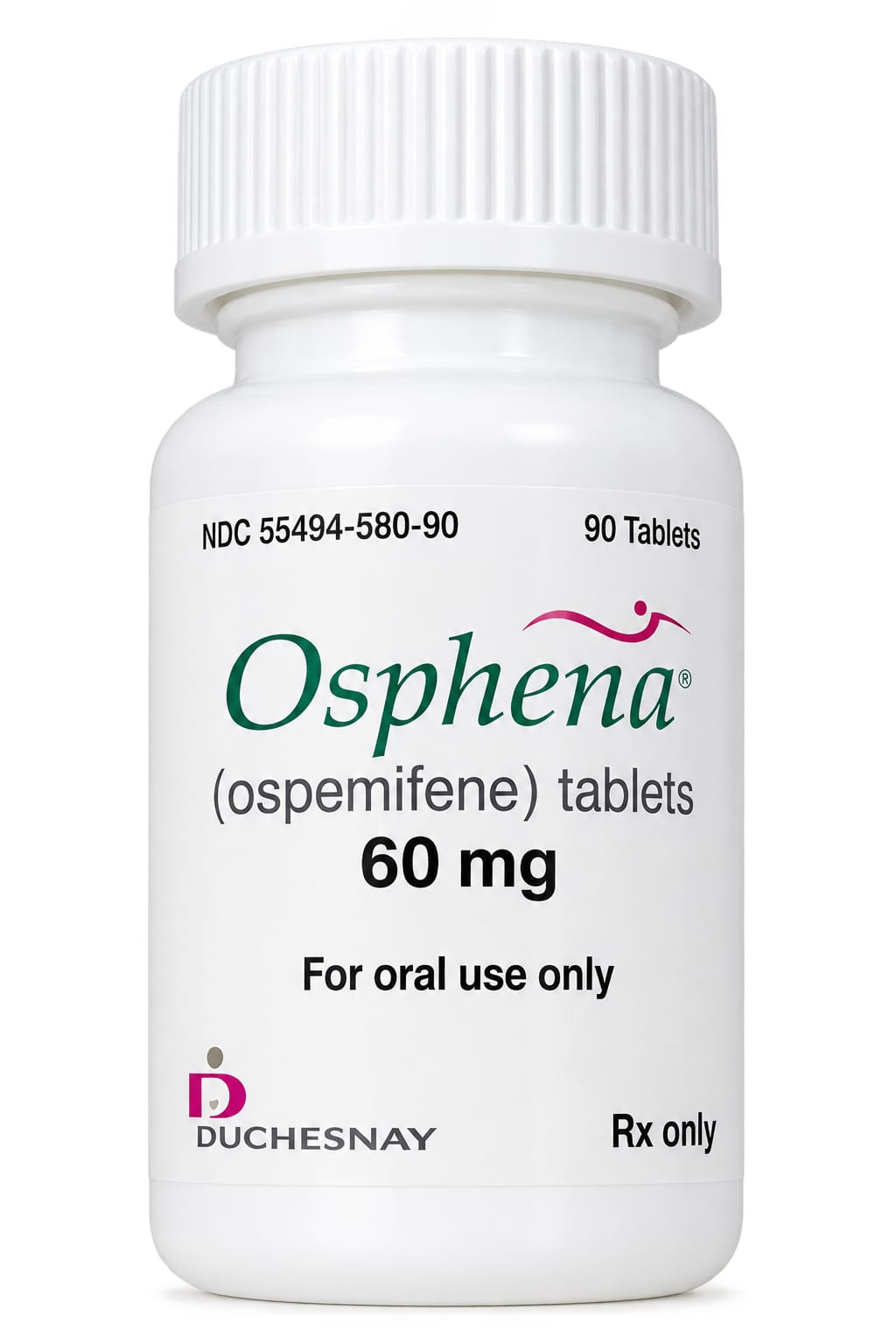
| Generic name | ospemifene |
|---|---|
| Drug class | Selective estrogen receptor modulator (SERM) |
| Forms | Oral tablet (60 mg) |
Quick overview
Osphena Tablet contains ospemifene, a selective estrogen receptor modulator (SERM). It is a prescription tablet used to treat vaginal dryness and painful sex caused by menopause. It acts like estrogen in the vaginal area, even though it is not itself a hormone.
What is Osphena Tablet
Osphena is a prescription tablet used to treat vaginal dryness and painful sex caused by menopause. It acts like estrogen in the vaginal area, even though it is not itself a hormone.
Osphena Tablet uses
- Reduces vaginal dryness after menopause
- Reduces pain during sex caused by menopause
Benefits of Osphena Tablet
- Helps relieve moderate to severe pain during sexual intercourse (dyspareunia) caused by menopause.
- Helps improve vaginal dryness associated with menopausal vaginal changes.
- Helps improve the thickness and condition of vaginal tissues.
- Helps reduce symptoms of vulvar and vaginal atrophy after menopause.
- Provides a non-vaginal oral treatment option for suitable postmenopausal women.
How Osphena Tablet works
During menopause, estrogen levels drop, which makes vaginal tissue dry and irritated. Osphena attaches to estrogen receptors and acts like estrogen in the vaginal area, which thickens the vaginal walls, increases moisture, and increases vaginal secretions, easing dryness and pain during sex.
Osphena Tablet dosage
Take this medicine once a day with food. Take it at the same time each day to help you remember. Do not share this medicine with anyone else, even if they have similar symptoms. Keep it out of the reach of children.
If you miss a dose, take it as soon as you remember; if it is almost time for the next dose, skip the missed dose and continue your regular schedule. Do not take double doses.
Women who are pregnant or may become pregnant should not handle this medication or breathe in dust from the tablets, since it can be absorbed through skin and lungs.
| Age group | Dose |
|---|---|
| Under 18 years | Not indicated; safety and effectiveness not established |
| 18+ years – Premenopausal women | Not indicated |
| Postmenopausal women | 60 mg orally once daily with food |
| 65–74 years | 60 mg once daily with food |
| 75+ years | Generally 60 mg once daily with food; clinical experience is more limited |
Available forms and strengths
- Oral tablet (60 mg)
Side effects of Osphena Tablet
Common
- Hot flashes
- Vaginal discharge or bleeding
- Muscle spasms
- Headache
- Excessive sweating, including night sweats
Serious
- Severe allergic reaction (breathing problems, swelling of face/lips/mouth/tongue/throat, hives, dizziness, fainting)
- Blood clots that can lead to stroke, heart attack, or a clot in the lungs or legs
- Uterine or endometrial cancer (abnormal vaginal bleeding, pain during sex, pain when urinating)
Warnings and precautions
- Osphena can increase the risk of blood clots, which may lead to stroke or heart attack, especially in people with certain risk factors like a history of blood clots, high blood pressure, high blood sugar, high cholesterol, tobacco use, or lupus.
- Osphena acts like estrogen in the uterus and can thicken the uterine lining, which may raise the risk of uterine or endometrial cancer in people with a uterus.
- Do not take Osphena if you have current or past blood clots in your veins or lungs, a history of stroke or heart attack, or cancer that needs estrogen to grow, such as some breast, ovarian, or uterine cancers.
- Do not take Osphena if you have unexplained vaginal bleeding that a healthcare provider has not diagnosed.
- You should have regular breast self-exams, provider breast exams, and mammograms before and during treatment with Osphena.
- Not moving around for a long time, such as during upcoming surgery or bed rest, may raise your risk of side effects like blood clots. Tell your provider about upcoming surgery or bed rest.
- Do not take Osphena if you are pregnant, since it may harm an unborn baby. If you become pregnant while taking it, contact your healthcare provider right away.
- It is not known whether Osphena passes into breast milk. Tell your healthcare provider if you are breastfeeding or plan to breastfeed, so they can advise you.
- Osphena should not be used if your liver is not working well. Your healthcare provider may test your liver function before you take this medicine.
- It isn't known if alcohol affects how Osphena works, but drinking alcohol may increase your risk of hot flashes while taking this medicine.
Storage
- Store at 20–25°C (68–77°F) at controlled room temperature.
- Keep tablets in the original, tightly closed container until use.
- Protect from excessive heat, moisture, and direct sunlight.
- Avoid storing in bathrooms or other hot and humid areas.
- Keep out of reach and sight of children and pets.
When to see a doctor
- Stop taking Osphena and get help right away if you have signs of a serious allergic reaction, such as trouble breathing or wheezing, a racing heart, swelling of the face, lips, mouth, tongue or throat, trouble swallowing, hives, or dizziness/fainting.
- Stop taking Osphena and get emergency help right away if you notice signs of a blood clot, such as chest pain, fast or abnormal heartbeat, trouble breathing, sudden weakness on one side of the body, sudden severe headache, slurred speech, or leg/arm swelling and pain.
- Call your healthcare provider right away if you notice abnormal vaginal bleeding or discharge, pain during sex, or pain or difficulty urinating, since these can be signs of uterine cancer.
- Get medical help right away if you or someone else has taken too much Osphena.
Alternatives
- Intrarosa
- Imvexxy
- Vagifem
- Yuvafem
Watch the video
FAQs
What is Osphena Tablet used for?
Osphena is a prescription tablet used to treat vaginal dryness and painful sex caused by menopause.
How does Osphena Tablet work?
Osphena attaches to estrogen receptors and acts like estrogen in the vaginal area, which thickens the vaginal walls, increases moisture, and increases vaginal secretions, easing dryness and pain during sex.
What is the dosage of Osphena Tablet?
The usual dose for postmenopausal women is 60 mg taken orally once daily with food, at the same time each day.
What are the common side effects of Osphena Tablet?
Common side effects include hot flashes, vaginal discharge or bleeding, muscle spasms, headache, and excessive sweating including night sweats.
Who should not take Osphena Tablet?
Osphena should not be taken by those with current or past blood clots in veins or lungs, a history of stroke or heart attack, cancer that needs estrogen to grow, unexplained vaginal bleeding, or poor liver function, and it should not be taken during pregnancy.
General information, not medical advice
Your prescriber and the leaflet in your pack know your situation. This page does not.
- Follow your prescriber and the leaflet
- Don't start, stop, or change a dose on your own
- Doses and warnings differ by country and product
Sources
Video
Related medicines

Ospemifene Tablet: Uses, Dosage, Side Effects, Precautions and Alternates
Selective estrogen receptor modulator (SERM)
Ospemifene Tablet treats menopausal vaginal dryness and painful intercourse. Learn how it works, dosage, side effects, warnings, and storage tips.

Injectafer Injection: Uses, Dosage, Side Effects, Precautions and Alternates
Iron products
Injectafer (ferric carboxymaltose) treats iron deficiency anemia and heart failure-related iron deficiency via IV. Learn uses, dosage, side effects, and