
Safety
General information, not medical advice
Your prescriber and the leaflet in your pack know your situation. This page does not.
- Follow your prescriber and the leaflet
- Don't start, stop, or change a dose on your own
- Doses and warnings differ by country and product
Otrivin Nasal Spray: Uses, Dosage, Side Effects, Precautions and Alternates
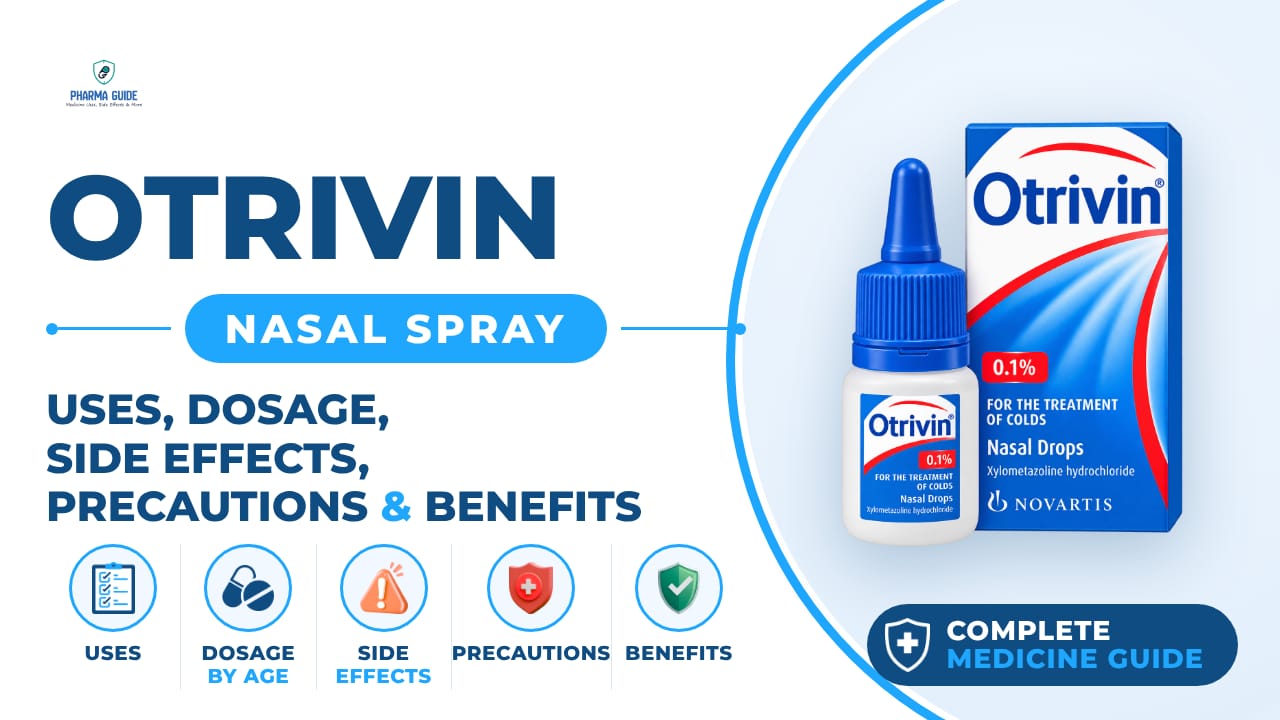
| Generic name | Xylometazoline hydrochloride |
|---|---|
| Drug class | Nasal decongestant |
| Forms | Nasal spray (metered-dose spray), Nasal drops, Nasal spray (squeeze bottle) |
Quick overview
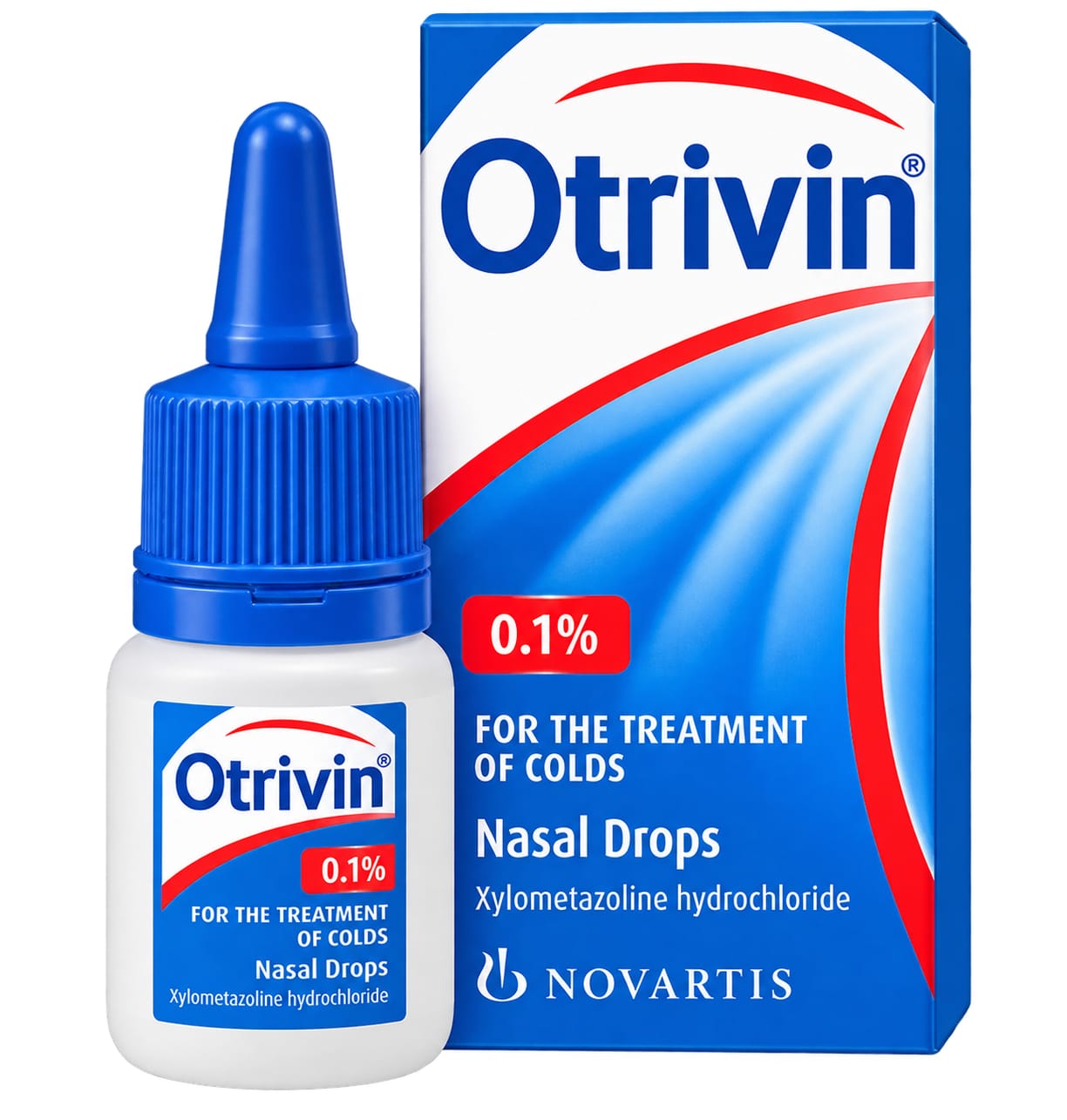
Otrivin Nasal Spray contains xylometazoline hydrochloride, a nasal decongestant. It is used to relieve a blocked nose caused by colds, flu, sinusitis, hay fever or other allergic rhinitis, and for short-term treatment of nasal congestion linked to colds. It works by narrowing blood vessels in the nose to reduce swelling, with action felt within a couple of minutes and lasting several hours. It is available as a nasal spray, nasal drops, and a squeeze bottle spray.
What is Otrivin Nasal Spray
Otrivin Adult Nasal Spray contains the active ingredient Xylometazoline hydrochloride. It is a nasal decongestant that quickly relieves a stuffy nose and helps clear nasal passages by reducing excessive nasal secretions.
Otrivin Nasal Spray uses
- Relief of blocked nose caused by colds, flu, sinusitis, hay fever or other allergic rhinitis
- Short-term treatment of nasal congestion in connection with colds
Benefits of Otrivin Nasal Spray
- Quickly relieves stuffy nose
- Helps clear nasal passages by reducing excessive nasal secretions
- Action is felt within a couple of minutes and lasts for several hours
How Otrivin Nasal Spray works
Otrivin works by narrowing the blood vessels in the nose. This reduces swelling and decongests the lining of the nose and throat, making it easier to breathe through the nose. It also contains ingredients that help prevent the nasal lining from drying out.
Otrivin Nasal Spray dosage
Use only in the nose, not in the eyes or mouth. Clear your nose before use. Before using for the first time, prime the pump as instructed; if not used for more than 7 days, re-prime the pump before use. Lean forward slightly, insert the nozzle into the nostril, and spray while breathing in gently through the nose. Repeat with the other nostril. Clean and dry the nozzle before replacing the cap after each use. Do not cut the nozzle.
It is recommended to use the last dose shortly before going to bed. Do not use more often than every 8 to 10 hours. Do not take a double dose if you forget a dose. Each spray bottle or pack should be used by only one person to avoid spreading infection.
Not recommended for use in children below 12 years of age; a Junior version is available for children aged 6 to 11 years. Do not exceed the recommended dosage, especially in children and the elderly. Do not use for more than a few days in a row unless advised by a doctor or pharmacist.
| Age group | Dose |
|---|---|
| Under 6 years | Do not use adult 0.1% spray |
| 6–11 years | Pediatric 0.05% formulation: 1 spray in each nostril, up to 2–3 times daily |
| 12 years & older | 0.1%: 1 spray in each nostril, up to 3 times daily |
| Adults | 0.1%: 1 spray in each nostril, up to 3 times daily |
Available forms and strengths
- Nasal spray (metered-dose spray) — 0.1%
- Nasal drops
- Nasal spray (squeeze bottle)
- Pediatric formulation — 0.05%
Side effects of Otrivin Nasal Spray
Common
- Headache
- Nasal dryness
- Nasal discomfort
- Nausea
- Application site burning
- Burning sensation or local irritation in the nose
- Dry nasal mucosa
Serious
- Allergic reactions such as itchy red rash with raised bumps (hives), difficulty breathing or speaking, or swelling of the lips, face or throat
- Irregular or fast heartbeat
- Increased blood pressure
- Transient blurred or impaired vision
- Apnoea (breathing pauses) in young infants and newborns
- Nosebleeds
- Sudden severe headache, nausea and vomiting, or visual disturbances
Warnings and precautions
- Do not use in children below 12 years of age.
- Do not use if you are allergic to xylometazoline or any other ingredients of this medicine.
- Do not use if you have had the pituitary gland removed by operation through the nose, or have had recent trans-nasal surgery.
- Do not use if you have narrow angle glaucoma (increased eye pressure).
- Do not use if you have chronic nasal inflammation with very dry nasal passages.
- Using it too often or for too long can cause nasal congestion to come back or get worse.
- Do not use for more than 3 days at a time unless a doctor or pharmacist advises it.
- Check with your doctor or pharmacist before use if you have high blood pressure, heart disease, an overactive thyroid, diabetes, an enlarged prostate or difficulty urinating, a tendency to nosebleeds, or a rare adrenal gland tumour.
- Do not use with, or within 14 days of, MAO inhibitor antidepressants, as this may greatly increase blood pressure.
- Using it with tricyclic or tetracyclic antidepressants may increase the effects of Otrivin.
- Do not spray into the eyes or mouth; it is only meant for the nose.
- Each pack should be used by only one person for hygiene reasons.
- If the carton seals are broken or missing, do not use the product and return it to where you bought it.
- Do not use Otrivin Adult Nasal Spray if you are pregnant. Check with your doctor or pharmacist if you are pregnant or intend to become pregnant. If you are breastfeeding, only use Otrivin if your doctor recommends it.
- Do not exceed the recommended number of sprays or daily doses. Avoid sharing the nasal spray with other people to prevent infection.
- Do not use for more than 5–7 days continuously; prolonged use can cause rebound nasal congestion. Use only the correct strength for the patient's age.
- Tell your doctor or pharmacist if you drink alcohol.
- Otrivin Adult Nasal Spray has little or no effect on the ability to drive or use machines, but be careful until you know how it affects you.
Storage
- Store below 30°C
- Keep out of reach and sight of children
- Do not use after the expiry date, which refers to the last day of that month
- Store in the original package
- Store in a cool, dry place away from moisture, heat or sunlight; do not store in the bathroom, near a sink, in the car, or on window sills
- If no longer needed or out of date, take it to any pharmacy for safe disposal; do not throw away in household waste
When to see a doctor
- Stop using and get medical help right away if you have signs of an allergic reaction, such as itchy raised rash, difficulty breathing or speaking, or swelling of the lips, face or throat.
- Stop using and get urgent medical help if you get a sudden severe headache, nausea and vomiting, or vision changes, as these could signal a rare but serious problem.
- If you think you or someone else has used too much, or swallowed the spray by accident, get urgent medical attention even if there are no symptoms yet.
- If the spray accidentally gets into your eyes, rinse thoroughly with running water and contact your doctor straight away.
- See a doctor if your congestion does not improve or gets worse.
Alternatives
- Otrivin Junior Nasal Spray
- Otrivin Menthol
Watch the video
FAQs
What is the active ingredient in Otrivin Nasal Spray?
Otrivin Nasal Spray contains xylometazoline hydrochloride, a nasal decongestant that narrows blood vessels in the nose to reduce swelling.
How quickly does Otrivin Nasal Spray work?
Action is felt within a couple of minutes and lasts for several hours.
How often can I use Otrivin Nasal Spray?
Do not use more often than every 8 to 10 hours, and do not use for more than 3 days at a time unless advised by a doctor or pharmacist, as it can cause rebound congestion if used too often or for too long.
Can children use Otrivin Nasal Spray?
The adult 0.1% spray is not recommended for children below 12 years of age; a Junior version with a 0.05% formulation is available for children aged 6 to 11 years.
Can I use Otrivin Nasal Spray if I am pregnant?
Do not use Otrivin Adult Nasal Spray if you are pregnant, and check with your doctor or pharmacist if you are pregnant or intend to become pregnant.
General information, not medical advice
Your prescriber and the leaflet in your pack know your situation. This page does not.
- Follow your prescriber and the leaflet
- Don't start, stop, or change a dose on your own
- Doses and warnings differ by country and product
Sources
Video
Related medicines
Afrin Nasal Spray: Uses, Dosage, Side Effects, Precautions and Alternates
Nasal decongestant
Afrin Nasal Spray (oxymetazoline) relieves nasal and sinus congestion from colds, allergies, and hay fever. Learn dosage, side effects, and warnings.

Injectafer Injection: Uses, Dosage, Side Effects, Precautions and Alternates
Iron products
Injectafer (ferric carboxymaltose) treats iron deficiency anemia and heart failure-related iron deficiency via IV. Learn uses, dosage, side effects, and