
Safety
General information, not medical advice
Your prescriber and the leaflet in your pack know your situation. This page does not.
- Follow your prescriber and the leaflet
- Don't start, stop, or change a dose on your own
- Doses and warnings differ by country and product
Oxistat Lotion: Uses, Dosage, Side Effects, Precautions and Alternates
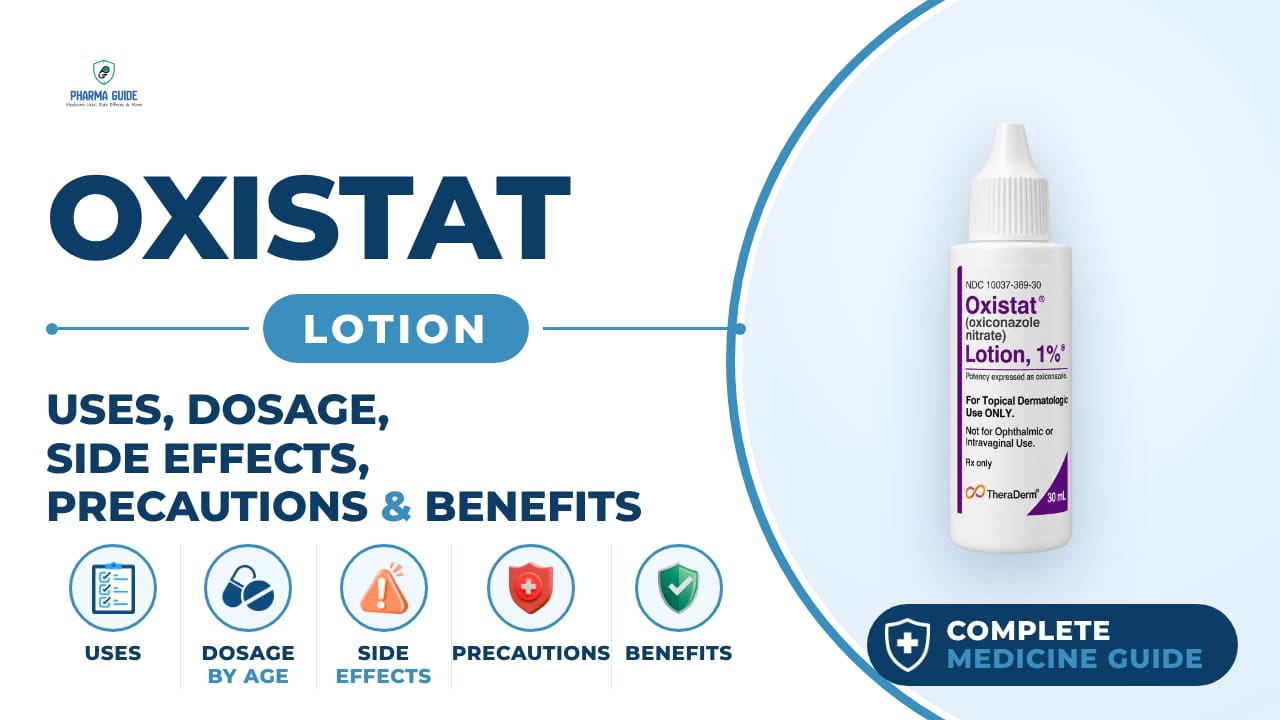
| Generic name | oxiconazole nitrate |
|---|---|
| Drug class | topical antifungal |
| Forms | 1% topical lotion |
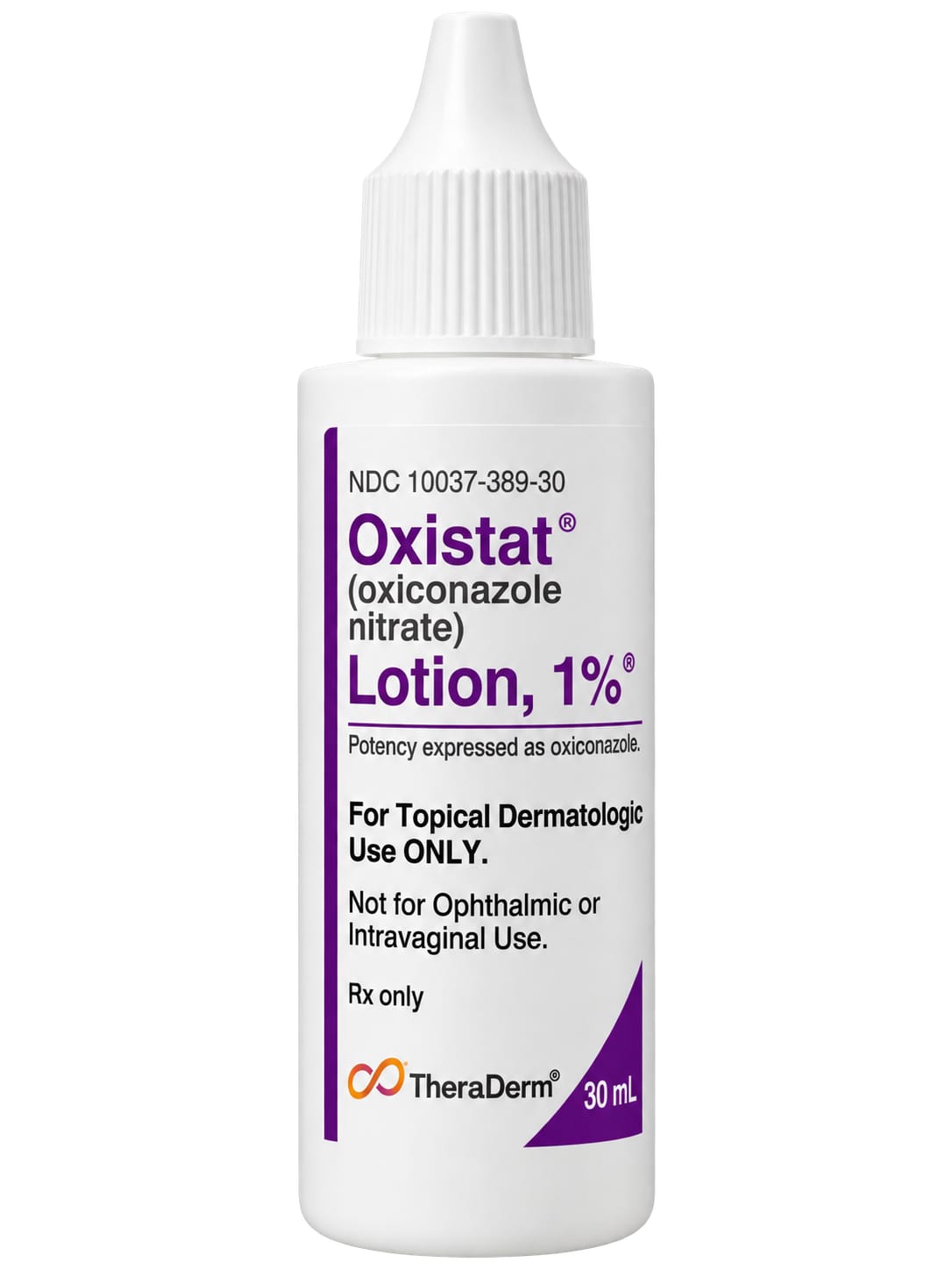
Quick overview
Oxistat Lotion is a prescription topical antifungal medicine containing oxiconazole nitrate. It is applied to the skin to treat fungal infections such as athlete's foot, ringworm, and jock itch. It works by stopping fungal growth and may also help relieve related itching.
What is Oxistat Lotion
Oxistat Lotion is a prescription antifungal medicine applied to the skin. It contains oxiconazole nitrate and is used to treat fungal skin infections.
Oxistat Lotion uses
- Treats tinea pedis (athlete's foot).
- Treats tinea corporis (ringworm of the body).
- Treats tinea cruris (jock itch).
- Inhibits the growth of susceptible dermatophytes.
- Helps relieve fungal-related itching.
Benefits of Oxistat Lotion
- Provides targeted antifungal activity.
- Helps control common fungal skin infections.
- May reduce itching and irritation.
- Helps improve fungal-related redness and scaling.
- Offers convenient once- or twice-daily application.
How Oxistat Lotion works
Oxistat is an antifungal medicine. It works by blocking the fungus from making a substance it needs for its cell membrane, which stops the fungus from growing.
Oxistat Lotion dosage
For use on the skin only; do not take by mouth. Wash your hands with soap and water before and after applying this medication, and also wash the skin area to be treated. Shake the lotion well before use.
Apply a thin layer to the affected area and the surrounding skin as directed by your doctor. You can use cotton balls or a soft cloth to apply the lotion. Do not bandage, wrap, or cover the treated area unless your doctor tells you to.
Avoid contact with the eyes, nose, mouth, and vagina; if it gets into these areas, rinse with water. Use the medication regularly at the same time each day for the full length of treatment prescribed by your doctor, even if symptoms improve or go away sooner.
Do not apply more often than prescribed, since this will not clear the infection faster but may increase side effects. Tell your doctor if symptoms do not improve after 2 to 4 weeks of treatment or if the condition gets worse. This medicine is not established for use in children; do not give to a child without medical advice.
| Age group | Dose |
|---|---|
| Under 2 years | Safety and effectiveness not established; no approved pediatric dosage |
| 2–12 years | Safety and effectiveness of the lotion not established; no standard pediatric dosage |
| 13–17 years | No established pediatric lotion dosage; specialist-directed treatment only |
| 18–74 years | Apply 1% lotion once or twice daily; treatment duration 2–4 weeks, depending on infection |
Available forms and strengths
- 1% topical lotion
Side effects of Oxistat Lotion
Common
- Skin itching (pruritus)
- Burning or stinging at the application site
- Redness (erythema) or irritation
- Scaling, tingling, or localized pain
Serious
- Severe allergic reactions
- Severe blistering, peeling, or worsening skin inflammation
- Signs of a serious allergic reaction such as hives, difficulty breathing, or swelling of the face, lips, tongue, or throat
Warnings and precautions
- This medicine is for use on the skin only. Do not use it in the mouth, eyes, or vagina.
- Do not use this medicine if you are allergic to oxiconazole or any of its ingredients.
- Do not cover, wrap, or bandage the treated skin area unless your doctor tells you to.
- If the treated skin becomes more irritated, itchy, burning, blistered, swollen, or starts oozing, tell your doctor.
- Do not share this medicine with other people, even if they have the same condition, as it may harm them.
- Safety and effectiveness in children have not been established.
- It is not known if or how this medicine could affect pregnancy or harm an unborn baby. This drug should be used during pregnancy only if clearly needed. Tell your doctor if you are pregnant or plan to become pregnant.
- This medicine passes into breast milk, so caution should be used if you are breastfeeding. Tell your doctor if you are breastfeeding or plan to breastfeed.
- No routine renal dosage adjustment is established. Systemic absorption from topical oxiconazole is generally low.
- No established hepatic-specific dosage adjustment is available.
- It isn't known if alcohol affects this medicine, but heavy drinking can weaken your immune system and make it harder for your body to fight the infection.
- Oxistat Lotion is not generally associated with sedation or impaired alertness.
Storage
- Store at room temperature, between 68 F and 77 F (20 C and 25 C)
- Can be exposed to temperatures between 59 F and 86 F (15 C and 30 C) for shorter periods, such as during transport
- Store in a cool, dry place, away from moisture and heat
When to see a doctor
- Get emergency medical help right away if you have signs of a serious allergic reaction, including breathing problems, wheezing, racing heart, fever, swollen lymph nodes, swelling of the face, lips, mouth, tongue, or throat, trouble swallowing, hives, nausea or vomiting, dizziness, fainting, stomach cramps, or joint pain.
- Call your doctor if you have severe blistering, itching, redness, peeling, dryness, or irritation of the treated skin.
- Call your doctor if your symptoms do not improve after 2 to 4 weeks of treatment, or if the infection gets worse.
- If someone swallows this medicine by accident, get emergency medical help or contact a poison control center right away.
Alternatives
- Clotrimazole Cream
- Generic Oxiconazole Cream
- Oxistat Cream
Watch the video
FAQs
What is Oxistat Lotion used for?
Oxistat Lotion is used to treat fungal skin infections such as athlete's foot (tinea pedis), ringworm (tinea corporis), and jock itch (tinea cruris). It also helps relieve related itching.
How is Oxistat Lotion applied?
Apply a thin layer to the affected area and surrounding skin once or twice daily as directed by your doctor. Wash hands and the treatment area before and after application, and do not bandage or cover the area unless instructed.
How long does it take for Oxistat Lotion to work?
Treatment typically lasts 2 to 4 weeks depending on the infection. Tell your doctor if symptoms do not improve after 2 to 4 weeks or if the condition worsens.
What are the common side effects of Oxistat Lotion?
Common side effects include skin itching, burning or stinging at the application site, redness or irritation, and scaling, tingling, or localized pain.
Can Oxistat Lotion be used during pregnancy or breastfeeding?
It is not known how Oxistat Lotion could affect pregnancy, so it should be used only if clearly needed. The medicine passes into breast milk, so caution is advised while breastfeeding; consult your doctor in either case.
General information, not medical advice
Your prescriber and the leaflet in your pack know your situation. This page does not.
- Follow your prescriber and the leaflet
- Don't start, stop, or change a dose on your own
- Doses and warnings differ by country and product
Sources
Video
Related medicines
Naftifine Cream: Uses, Dosage, Side Effects, Precautions and Alternates
Topical antifungal
Naftifine Cream is a prescription antifungal that treats athlete's foot, jock itch, and ringworm. Learn how it works, dosage tips, side effects, and warnings.
Loprox Cream: Uses, Dosage, Side Effects, Precautions and Alternates
Topical antifungal
Loprox Cream (ciclopirox) is a prescription antifungal used for athlete's foot, jock itch, ringworm, and tinea versicolor. Learn dosage, uses, and side effects.