
Safety
General information, not medical advice
Your prescriber and the leaflet in your pack know your situation. This page does not.
- Follow your prescriber and the leaflet
- Don't start, stop, or change a dose on your own
- Doses and warnings differ by country and product
Pancreatin Capsule: Uses, Dosage, Side Effects, Precautions and Alternates
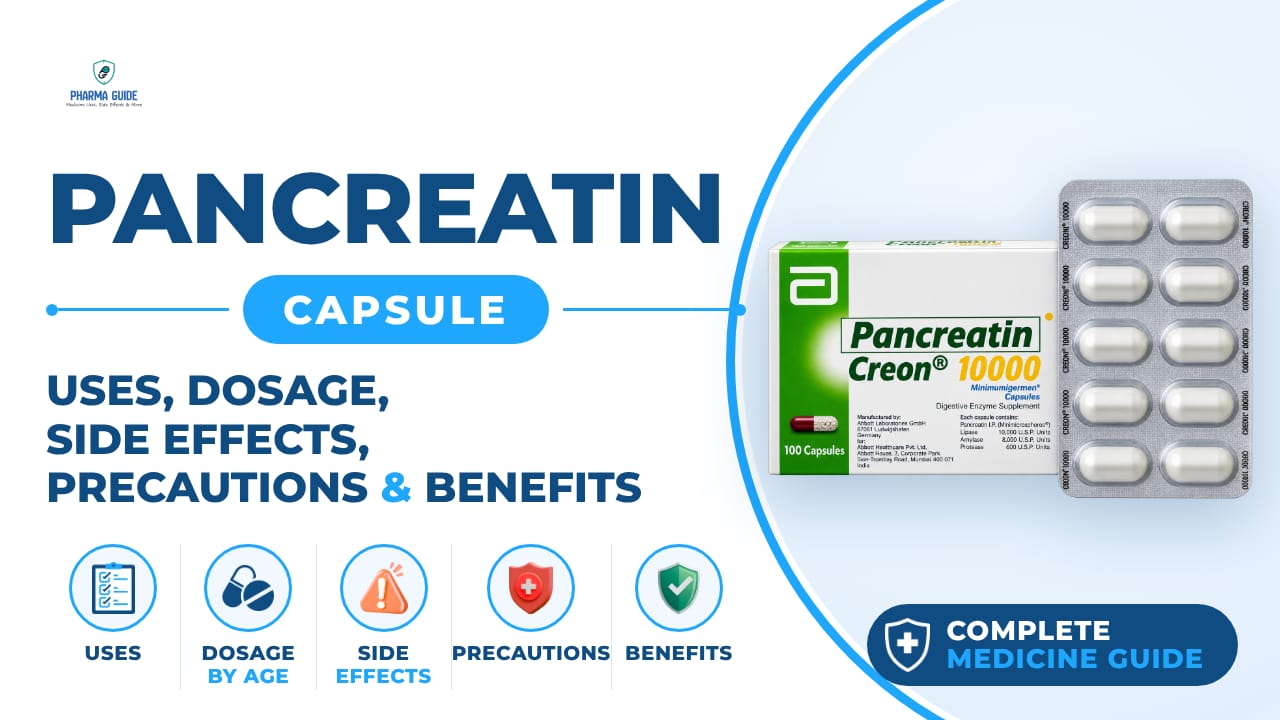
| Generic name | pancreatin |
|---|---|
| Drug class | Digestive enzymes |
| Forms | tablet, capsule, granules, powder |
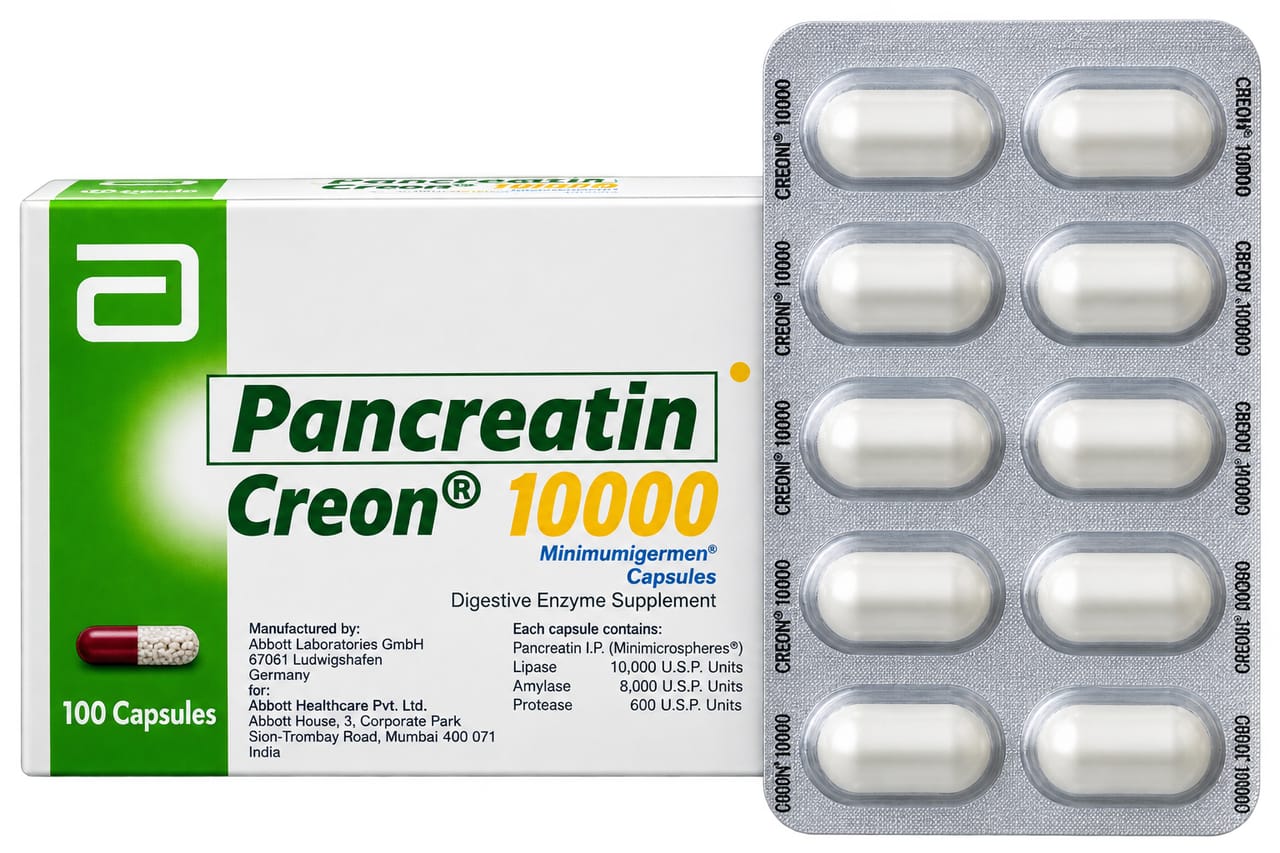
Quick overview
Pancreatin Capsule contains pancreatin, a combination of digestive enzymes (amylases, lipases, and proteases) derived from pork, normally produced by the pancreas. It is used to replace digestive enzymes when the body does not make enough of its own, such as in cystic fibrosis, pancreatitis, pancreatic cancer, or after pancreas surgery. It helps digest fats, proteins, and sugars, and supports better nutrient absorption.
What is Pancreatin Capsule
Pancreatin is a combination of digestive enzymes (proteins) that are normally produced by the pancreas and are important for digesting fats, proteins, and sugars. It is a mixture of porcine-derived pancreatic enzymes including amylases, lipases, and proteases. It belongs to the drug class of digestive enzymes.
Pancreatin Capsule uses
- Replacing digestive enzymes when the body does not have enough of its own, due to conditions such as cystic fibrosis, pancreatitis, pancreatic cancer, or pancreas surgery
- Treating steatorrhea (loose, fatty stools)
- Pancreatic insufficiency
- Surgeries on the upper gastrointestinal tract (gastric bypass surgery or gastrectomy)
Benefits of Pancreatin Capsule
- Helps improve digestion of food when the pancreas does not produce enough digestive enzymes
- Assists in breaking down fats, proteins, and carbohydrates
- Helps reduce bloating, gas, abdominal discomfort, and indigestion caused by pancreatic enzyme deficiency
- Helps reduce fatty or greasy stools (steatorrhea) and diarrhea related to poor digestion
- Improves nutrient absorption and may help maintain body weight in people with pancreatic insufficiency
- Commonly used in conditions such as chronic pancreatitis, cystic fibrosis, or after pancreatic surgery
How Pancreatin Capsule works
Pancreatin works by improving the digestion of food in people who don't have enough of their own pancreatic enzymes, which are needed to break down food.
Pancreatin Capsule dosage
Use exactly as directed on the label, or as prescribed by your doctor; do not use in larger or smaller amounts or for longer than recommended. Take with a meal or snack, along with a full glass of water. Do not hold the tablet in your mouth, as it may irritate the inside of your mouth. Do not crush, chew, or break the capsule or tablet; swallow it whole.
Pancreatic enzymes work best when taken at the start of meals. Take before each meal or snack, including formula or breast milk for infants. When opening capsules, do not mix the enzymes with milk or milk-based foods, since the lactose may break down the special coating on the beads. Some foods like popsicles, hard candy, or fruit juices do not require pancreatic enzymes to digest.
If a meal takes longer than 30 minutes, it may help to split the dose, taking part at the start and the rest partway through the meal. For young children who cannot swallow pills, the beads can be sprinkled without crushing onto a small amount of soft, acidic food that does not need chewing, such as applesauce.
Use regularly to get the most benefit; you may need to use this medicine for the rest of your life. Follow any special diet plan created by your doctor or nutrition counselor. Do not skip doses. If your doctor changes your brand, strength, or type of pancreatin, your dosage needs may change.
| Age group | Dose |
|---|---|
| Under 1 year | About 2,000–4,000 lipase units per 120 mL feeding |
| 1–3 years | About 1,000 lipase units/kg per meal |
| 4–17 years | About 500 lipase units/kg per meal |
| 18–64 years | Usually 500 lipase units/kg per meal initially; individualized to meals and symptoms |
| 65+ years | Usually adult weight-based dosing; individualized |
Available forms and strengths
- Tablet
- Capsule
- Granules
- Powder
Side effects of Pancreatin Capsule
Common
- Nausea
- Mild stomach pain
- Diarrhea
- Mild skin rash
- Abdominal pain or cramps
- Constipation
- Itching
Serious
- Severe nausea, vomiting, or diarrhea
- Severe stomach pain
- Swollen or painful joints
- Any changes in your symptoms
- Signs of an allergic reaction such as hives, difficult breathing, swelling of the face, lips, tongue, or throat
- Headaches
- Wheezing
- Difficulty talking
- Dizziness
- Collapse
Warnings and precautions
- Do not take pancreatin if you are allergic to pork proteins, or if you have a sudden flare-up of pancreatitis or a worsening long-term pancreas problem
- Tell your doctor if you have gout, asthma, or any allergies before taking this medicine
- Do not take other digestive enzymes at the same time unless your doctor tells you to
- Avoid taking an antacid within 1 hour before or after taking pancreatin
- This medicine is not recommended for people with a known allergy to pancreatin from pigs, or to other ingredients in the product
- This medicine is not recommended for people with fibrosing colonopathy, because it could make the condition worse
- This medicine is not recommended for people with a blockage in the gastrointestinal tract, because it could make the condition worse
- Use with caution in people with gout, kidney problems, or high uric acid levels, as this medicine can raise uric acid levels
- Long-term use of high doses may increase the risk of a bowel condition called fibrosing colonopathy
- Do not crush the capsule or tablet, or hold it in your mouth, because it can irritate the lining of the mouth. Do not crush it or mix it into food with a pH of 4.5 or higher
- If you have lactose intolerance, talk to your provider before taking pancreatin, since many products contain lactose
- Do not give laxatives or antacids to children taking higher strength pancreatin products, as this could increase the risk of intestinal damage
- Taking too many pancreatic enzymes may be harmful and can potentially damage the intestines
- It is not known whether pancreatin will harm an unborn baby. Do not use pancreatin without a doctor's advice if you are pregnant.
- It is not known whether pancreatin passes into breast milk or if it could harm a nursing baby. Do not use this medicine without a doctor's advice if you are breast-feeding.
- This medicine should be used with caution in people with kidney disease due to an increased risk of severe side effects. Close monitoring of kidney function, dose adjustments, or an alternative medicine may be needed.
- It is not known how this medicine interacts with alcohol. It is best to check with your doctor before drinking alcohol.
- This medicine does not cause sleepiness.
Storage
- Store in a cool, dry place, generally below 25°C unless the product label specifies otherwise
- Protect from heat, moisture, and direct sunlight
- Keep the container tightly closed
- Do not freeze
- Keep out of reach of children
When to see a doctor
- Get emergency medical help if you have signs of an allergic reaction such as hives, difficulty breathing, or swelling of your face, lips, tongue, or throat
- Call your doctor right away if you have severe nausea, vomiting, or diarrhea; severe stomach pain; swollen or painful joints; or any changes in your symptoms
- Call your doctor if your symptoms do not improve or get worse while using this medicine
- If you take too much, seek emergency medical attention or contact poison control right away
- Severe allergic reactions are a medical emergency. If you have symptoms of an anaphylactic reaction or shock, seek immediate medical attention
Alternatives
- Viokace
- Pancreaze
- Zenpep
- Creon
- Pancrelipase
Watch the video
FAQs
What is Pancreatin Capsule used for?
It is used to replace digestive enzymes when the body does not make enough of its own, such as in cystic fibrosis, pancreatitis, pancreatic cancer, or after pancreas surgery, and to treat steatorrhea and pancreatic insufficiency.
How should I take Pancreatin Capsule?
Take it with a meal or snack with a full glass of water, swallowing it whole without crushing, chewing, or holding it in your mouth. It works best when taken at the start of meals, and doses can be split if a meal lasts longer than 30 minutes.
What are the common side effects of Pancreatin Capsule?
Common side effects include nausea, mild stomach pain, diarrhea, mild skin rash, abdominal pain or cramps, constipation, and itching.
Who should not take Pancreatin Capsule?
It should not be taken by people allergic to pork proteins, those having a sudden flare-up of pancreatitis or worsening pancreas problems, or people with fibrosing colonopathy or a gastrointestinal blockage.
Can Pancreatin Capsule be taken during pregnancy?
It is not known whether pancreatin will harm an unborn baby, so it should not be used during pregnancy without a doctor's advice.
General information, not medical advice
Your prescriber and the leaflet in your pack know your situation. This page does not.
- Follow your prescriber and the leaflet
- Don't start, stop, or change a dose on your own
- Doses and warnings differ by country and product
Sources
Video
Related medicines
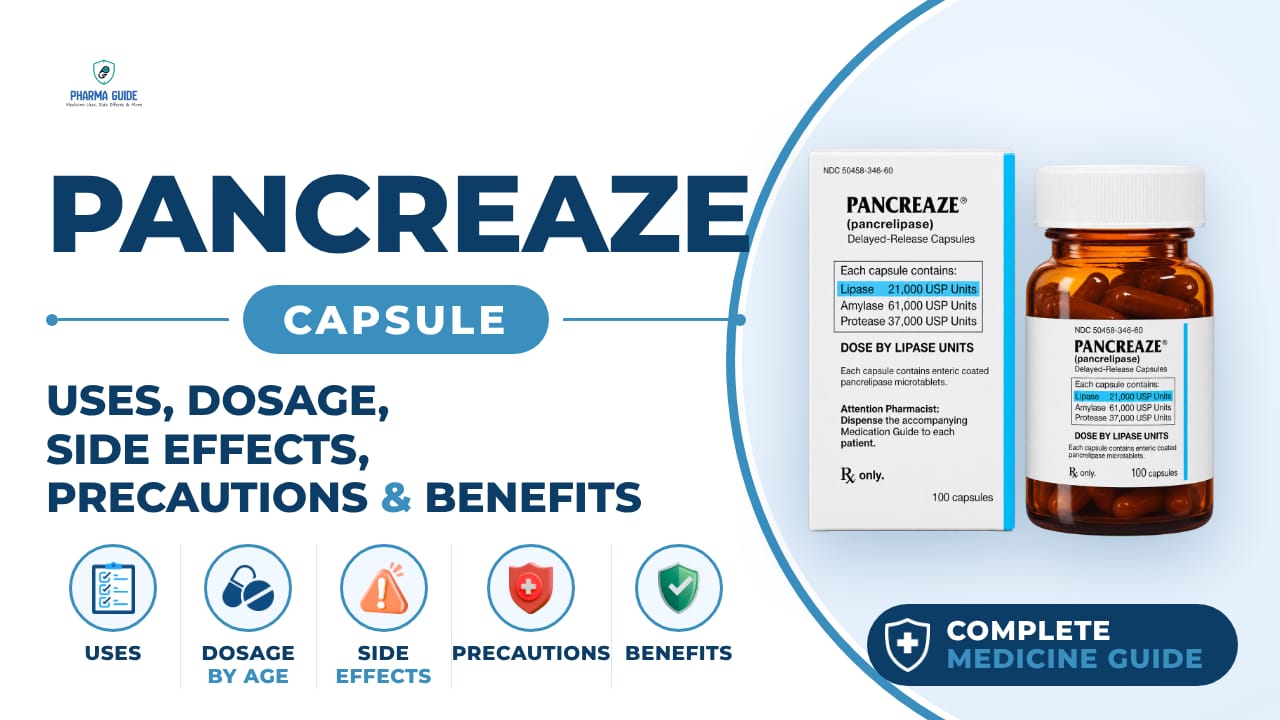
Pancreaze Capsule: Uses, Dosage, Side Effects, Precautions and Alternates
Digestive enzymes
Pancreaze Capsule contains pancrelipase enzymes used to treat exocrine pancreatic insufficiency, aiding digestion of fats, proteins, and sugars.
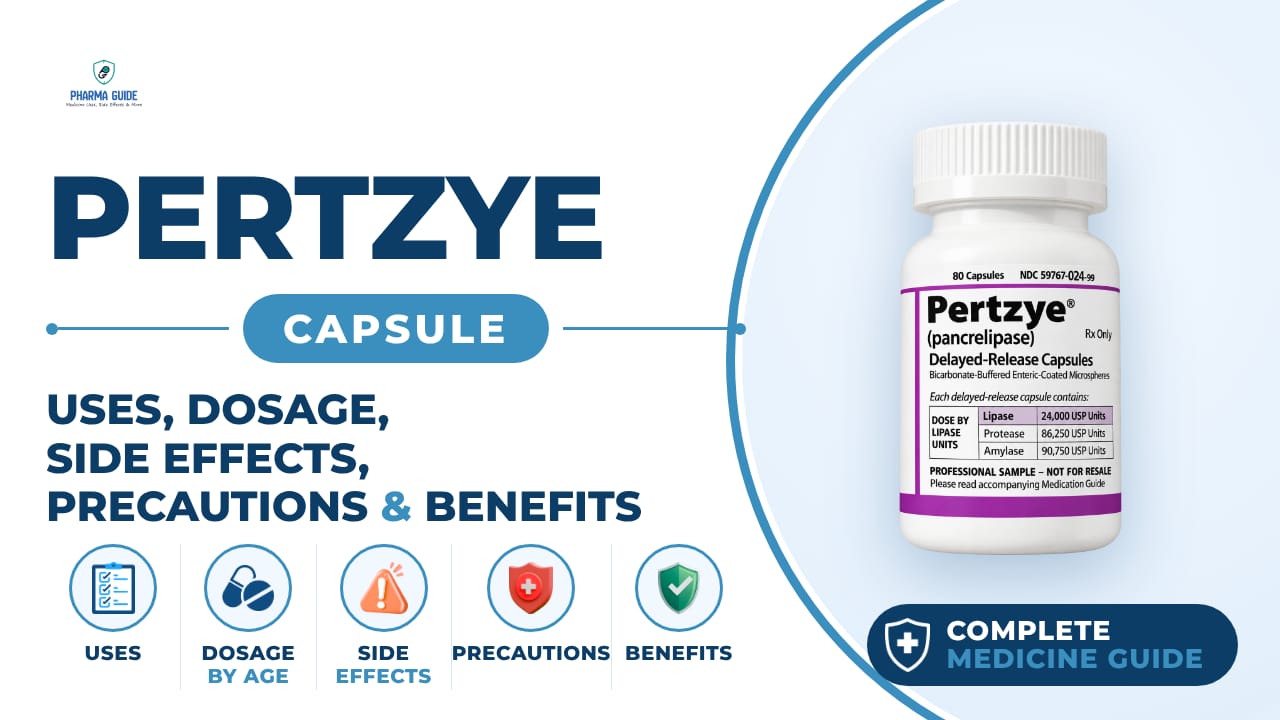
Pertzye Capsule: Uses, Dosage, Side Effects, Precautions and Alternates
Digestive enzymes
Pertzye (pancrelipase) capsules replace missing pancreatic enzymes to help digest fats, proteins, and carbs in cystic fibrosis and other EPI conditions.