
Safety
General information, not medical advice
Your prescriber and the leaflet in your pack know your situation. This page does not.
- Follow your prescriber and the leaflet
- Don't start, stop, or change a dose on your own
- Doses and warnings differ by country and product
Paracetamol Injection: Uses, Dosage, Side Effects, Precautions and Alternates
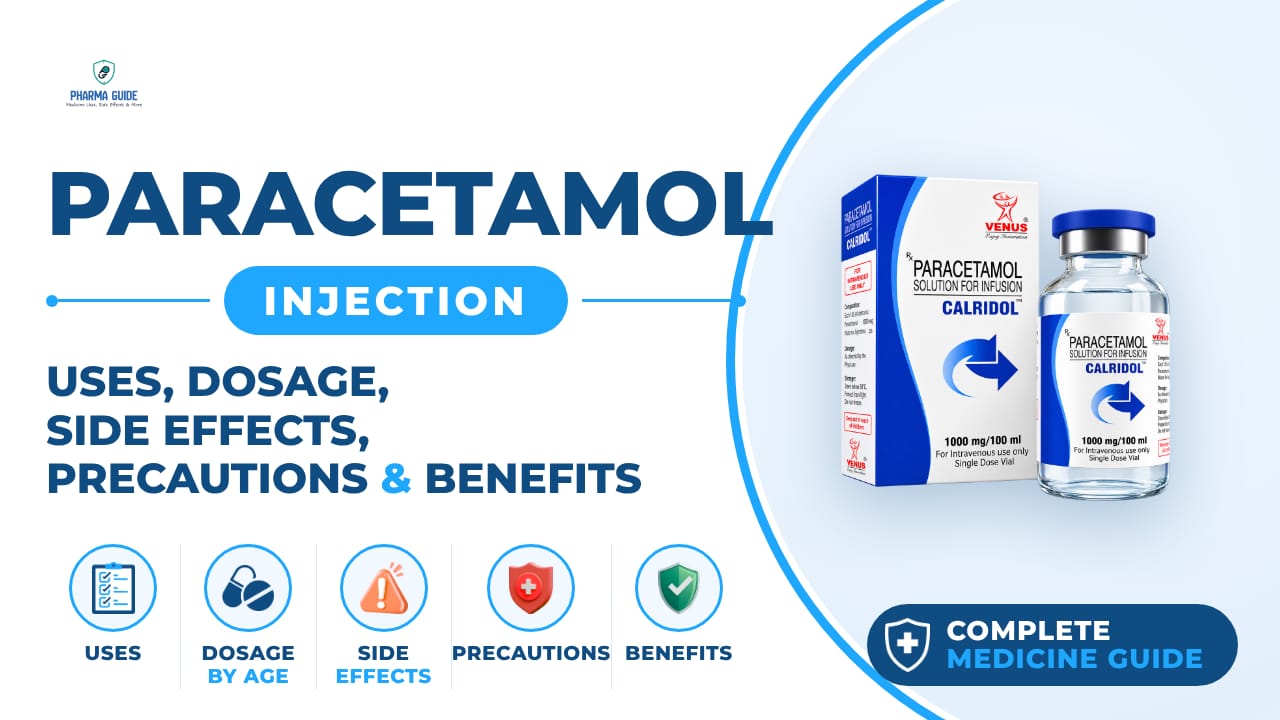
| Generic name | paracetamol |
|---|---|
| Drug class | Miscellaneous analgesics |
| Forms | Effervescent tablet, Intravenous (infusion) injection, Orally disintegrating tablet, Oral capsule, Oral powder, Oral suspension, Oral tablet, Suppository |
Quick overview
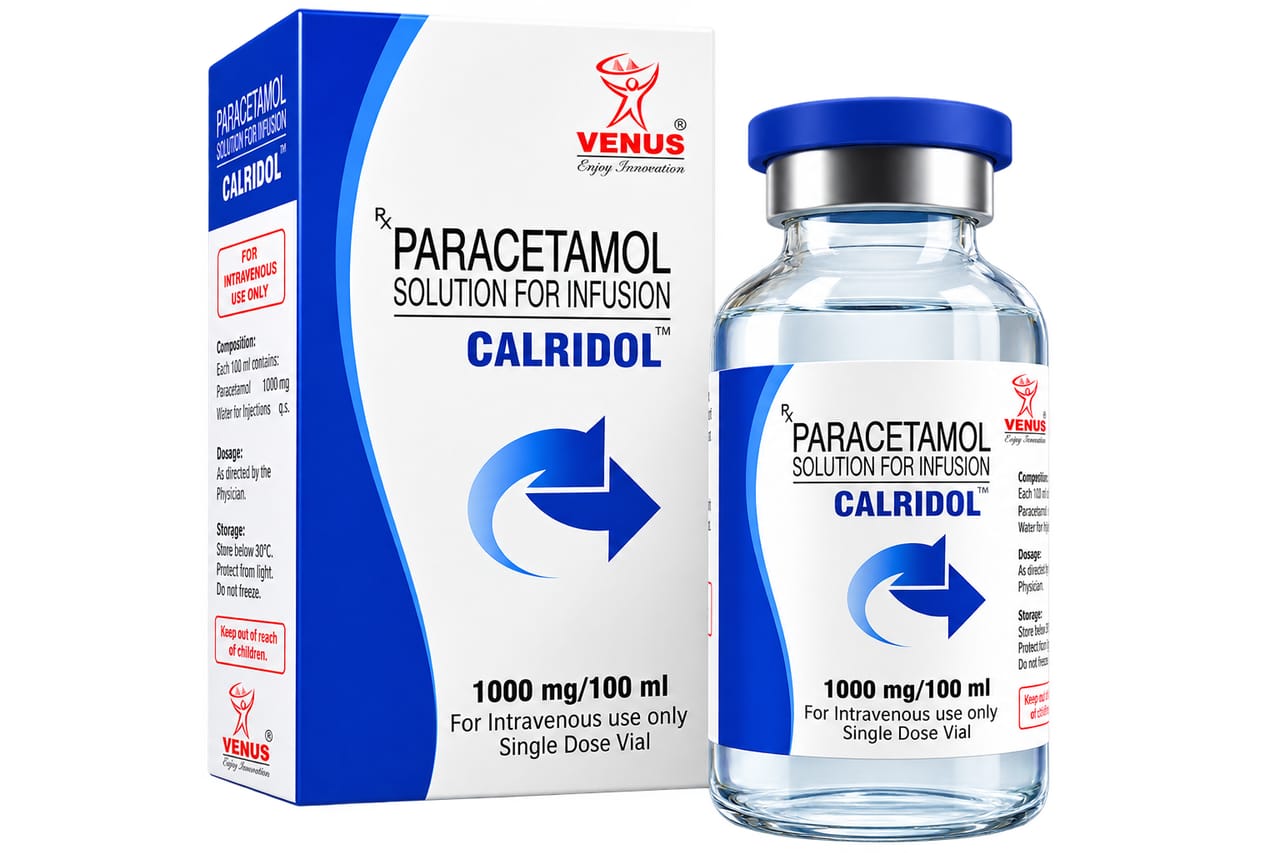
Paracetamol Injection is a pain reliever and fever reducer given as a solution for infusion into a vein. It is used to temporarily relieve mild-to-moderate pain and reduce fever, including after surgery. The dose depends on body weight, age, and kidney function, and is worked out by a healthcare provider.
What is Paracetamol Injection
Paracetamol is a pain reliever and fever reducer used to temporarily relieve mild-to-moderate pain and fever. The injection form is a solution for infusion given into a vein.
Paracetamol Injection uses
- Headache
- Tension headache
- Migraine
- Backache
- Rheumatic and muscle pain
- Mild arthritis/osteoarthritis
- Toothache
- Period pain
- Colds and flu symptoms
- Sore throat
- Sinus pain
- Post-operative pain
- Fever
Benefits of Paracetamol Injection
- Eases mild-to-moderate pain
- Lowers a high temperature (fever)
How Paracetamol Injection works
It is not fully understood how paracetamol works. It is thought to block chemical messengers in the brain that signal pain and to affect the messengers that control body temperature. It is also thought to reduce the production of prostaglandins, which the body makes in response to illness and injury.
Paracetamol Injection dosage
This form of paracetamol comes in vials and is given by intravenous (IV) infusion — an injection into your arm — over 15 minutes. The dose depends on your age, weight, and how well your kidneys work. Your healthcare provider will work out the dose you need.
Do not use paracetamol from more than one source at the same time, as many cold and flu medicines also contain it. Leave at least 4 hours between doses and do not use for more than 3 days unless your doctor tells you to. Contact your healthcare professional if your symptoms get worse or do not improve.
| Age group | Dose |
|---|---|
| Adult/adolescent ≥50 kg | 1,000 mg every 6 hours OR 650 mg every 4 hours |
| Adult/adolescent <50 kg | 15 mg/kg every 6 hours OR 12.5 mg/kg every 4 hours |
| Children 2–12 years | 15 mg/kg every 6 hours OR 12.5 mg/kg every 4 hours |
Available forms and strengths
- Effervescent tablet
- Intravenous (infusion) injection
- Orally disintegrating tablet
- Oral capsule
- Oral powder
- Oral suspension
- Oral tablet
- Suppository
Side effects of Paracetamol Injection
Common
- Redness or soreness in or around the rectum (with suppositories)
- Hypersensitivity reactions such as rashes and itching (rare)
- Lower than normal levels of red or white blood cells or platelets (rare)
Serious
- Severe allergic reactions including skin rashes, itching or hives
- Swelling of the throat, tongue or face
- Shortness of breath or wheezing
- Skin rash or peeling, or mouth ulcers
- Breathing problems
- Unexplained bruising or bleeding, or becoming unusually tired, or getting more infections than usual
- Liver problems (nausea, sudden weight loss, loss of appetite, yellowing of the eyes and skin)
Warnings and precautions
- It is dangerous to take more than the recommended dose of paracetamol. This can damage your liver and cause death. Do not take paracetamol if you are taking any other medicine that contains paracetamol or acetaminophen. Do not take paracetamol if you are allergic to it or any of the other ingredients in the product. Long-term daily use over several months or more can cause liver or kidney damage. A severe infection may increase your risk of metabolic acidosis. Signs include deep, rapid, difficult breathing, feeling sick, being sick and loss of appetite.
- Paracetamol can be used during pregnancy, but only if needed, at the lowest effective dose for the shortest possible time. Get medical advice before taking it.
- Paracetamol can be taken while breastfeeding. Only small amounts pass into breast milk and this is very unlikely to harm your baby. Take the recommended dose for the shortest possible time.
- Tell your healthcare provider if you have kidney problems before taking paracetamol.
- Tell your healthcare provider if you have liver problems before taking paracetamol.
- Drinking a small amount of alcohol is unlikely to be harmful while taking paracetamol, but you may be more open to side effects if you drink large amounts.
- Paracetamol is unlikely to affect your driving.
Storage
- Keep out of sight and reach of children
- Do not use the medicine after the expiry date
- Store paracetamol solution for infusion below 86°F (30°C). Do not refrigerate or freeze. Store in the original package and protect from light.
When to see a doctor
- If you or your child takes too much paracetamol, get medical help or contact your local poison control center right away, even if you feel well. If you have taken too much paracetamol, call your local emergency number immediately and ask for an ambulance, even if you have no symptoms. If you get any of the rare serious side effects, stop taking the medicine and contact your doctor immediately. Contact your doctor immediately if you get a combination of the symptoms of metabolic acidosis.
Alternatives
- Panadol
- Calpol
- Tylenol
- IV Ibuprofen
- IV Diclofenac
- Alvedon
Watch the video
FAQs
How is Paracetamol Injection given?
It is given as a solution for infusion into a vein (IV), administered over 15 minutes, with the dose worked out by a healthcare provider based on age, weight, and kidney function.
What is the adult dose of Paracetamol Injection?
Adults and adolescents weighing 50 kg or more typically receive 1,000 mg every 6 hours or 650 mg every 4 hours, while those under 50 kg receive 15 mg/kg every 6 hours or 12.5 mg/kg every 4 hours.
How long can Paracetamol Injection be used for?
Doses should be at least 4 hours apart, and it should not be used for more than 3 days unless a doctor advises otherwise.
What are the serious side effects of Paracetamol Injection?
Serious side effects include severe allergic reactions, swelling of the throat, tongue or face, breathing problems, unusual bruising or bleeding, and signs of liver problems such as nausea, weight loss, and yellowing of the skin or eyes.
Can Paracetamol Injection be used during pregnancy or breastfeeding?
It can be used during pregnancy if needed at the lowest effective dose for the shortest time, and it can also be taken while breastfeeding since only small amounts pass into breast milk.
General information, not medical advice
Your prescriber and the leaflet in your pack know your situation. This page does not.
- Follow your prescriber and the leaflet
- Don't start, stop, or change a dose on your own
- Doses and warnings differ by country and product
Sources
- Electronic Medicines Compendium (EMC) Paracetamol 500 mg Capsules
- Electronic Medicines Compendium (EMC) Panadol Original 500 mg Tablets Patient Information Leaflet
- Electronic Medicines Compendium (EMC) Calpol Infant Suspension 120 mg/5 ml Package Leaflet
- Electronic Medicines Compendium (EMC) Paracetamol 250 mg/5 ml Oral Suspension
- Drugs.com Paracetamol
- Healthdirect Australia Paracetamol
Video
Related medicines
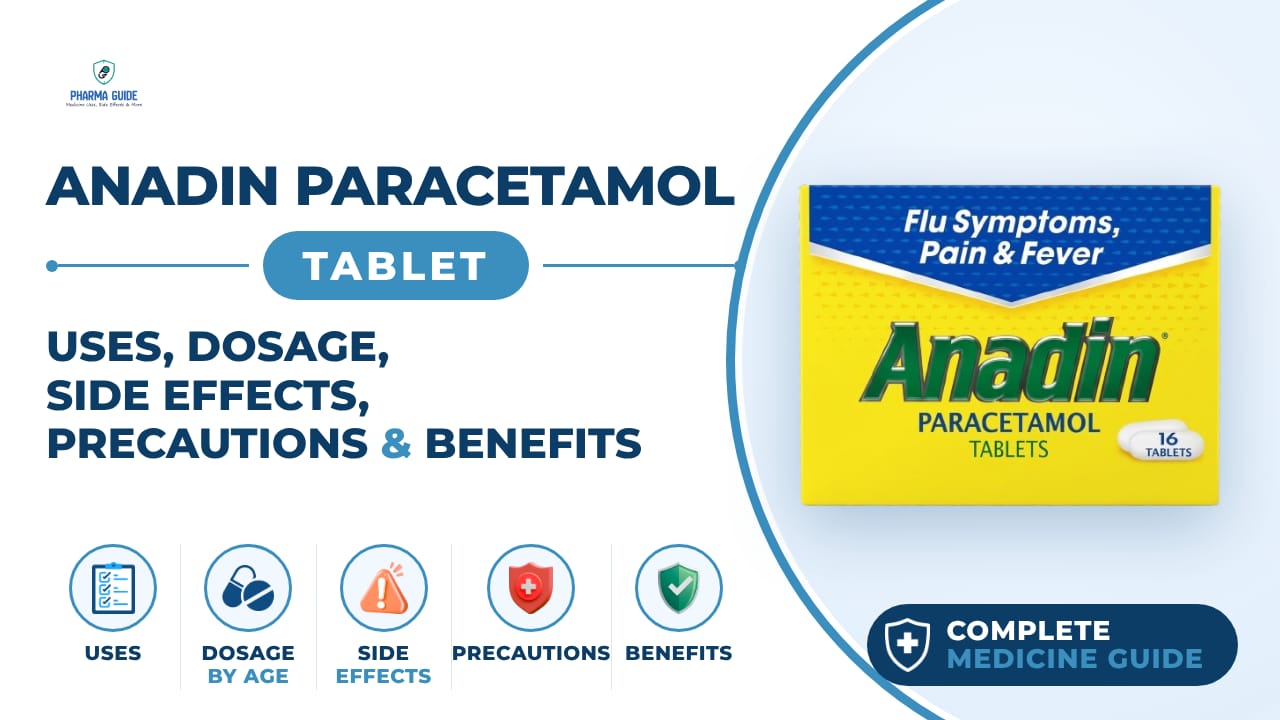
Anadin Paracetamol Tablet: Uses, Dosage, Side Effects, Precautions and Alternates
Miscellaneous analgesics
Anadin Paracetamol Tablet (500mg) relieves headache, fever, toothache, and body aches. Learn dosage, side effects, warnings, and precautions.

Injectafer Injection: Uses, Dosage, Side Effects, Precautions and Alternates
Iron products
Injectafer (ferric carboxymaltose) treats iron deficiency anemia and heart failure-related iron deficiency via IV. Learn uses, dosage, side effects, and