
Safety
General information, not medical advice
Your prescriber and the leaflet in your pack know your situation. This page does not.
- Follow your prescriber and the leaflet
- Don't start, stop, or change a dose on your own
- Doses and warnings differ by country and product
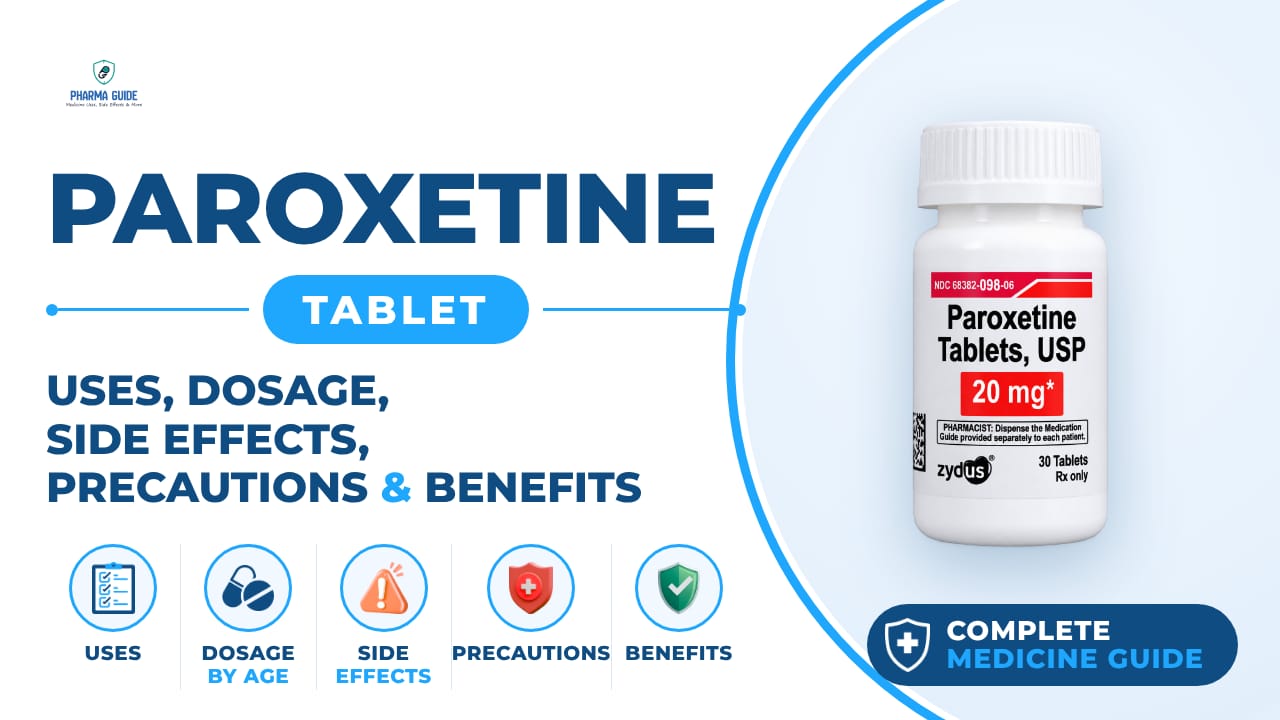
Paroxetine Tablet: Uses, Dosage, Side Effects, Precautions and Alternates
| Generic name | Paroxetine |
|---|---|
| Drug class | Selective serotonin reuptake inhibitor (SSRI) |
| Forms | Immediate-release oral tablet, Extended-release oral tablet, Oral capsule, Oral suspension (liquid) |
Quick overview
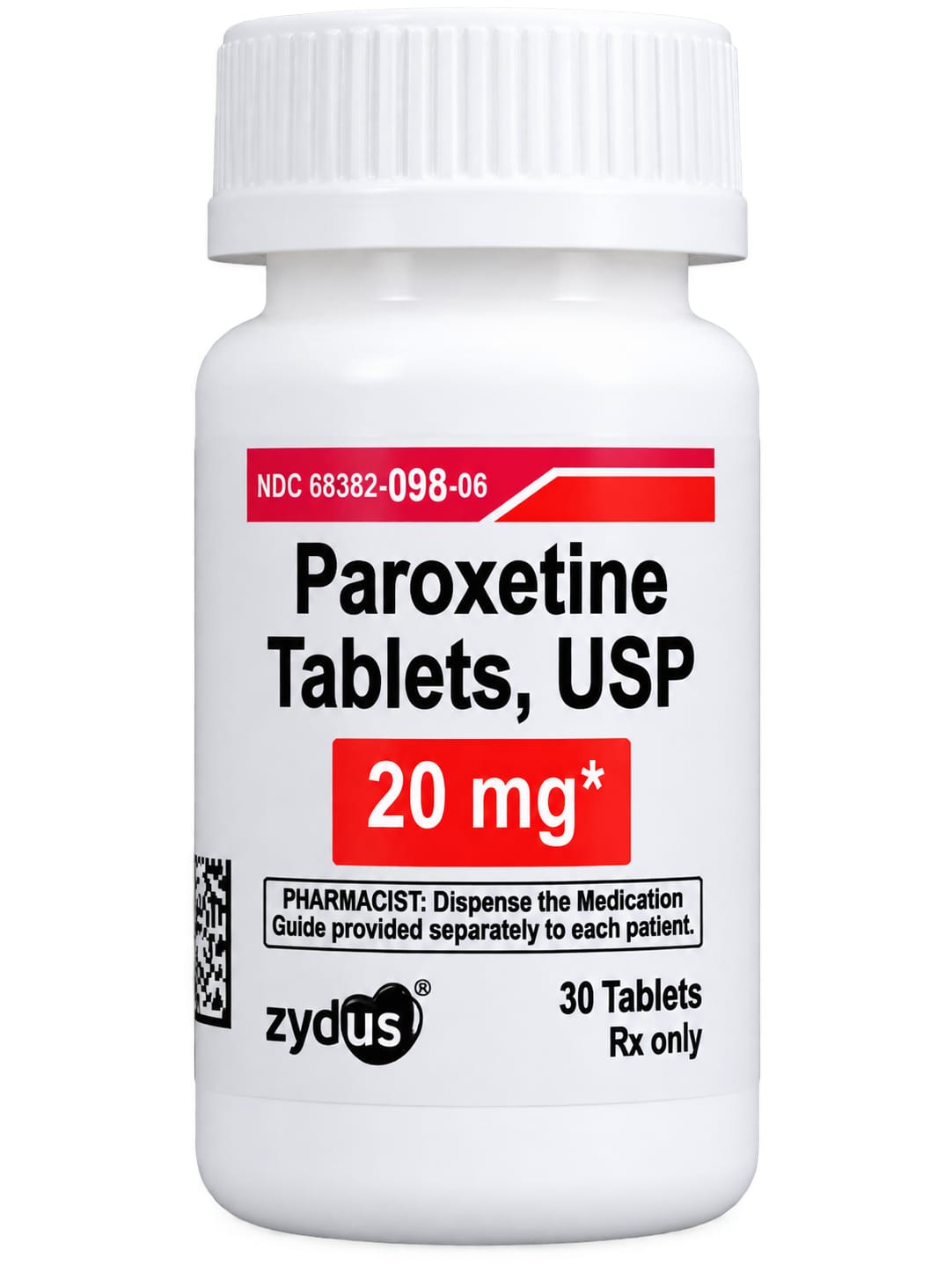
Paroxetine Tablet is a prescription antidepressant belonging to the SSRI (selective serotonin reuptake inhibitor) class. It is used to treat depression, obsessive-compulsive disorder, panic disorder, social anxiety disorder, generalized anxiety disorder, PTSD, premenstrual dysphoric disorder, and moderate to severe menopausal hot flashes (Brisdelle brand only). It is available as immediate-release and extended-release tablets, capsules, and oral suspension under brand names such as Paxil, Paxil CR, and Pexeva. It works by increasing serotonin levels in the brain to help regulate mood.
What is Paroxetine Tablet
Paroxetine is a prescription antidepressant that belongs to a group of medicines called SSRIs. It is available in immediate-release and extended-release tablet forms, as well as capsules and oral suspension, under brand names like Paxil, Paxil CR, and Pexeva.
Paroxetine Tablet uses
- Depression (major depressive disorder)
- Obsessive-compulsive disorder (OCD)
- Panic disorder
- Social anxiety disorder (social phobia)
- Generalized anxiety disorder (GAD)
- Post-traumatic stress disorder (PTSD)
- Premenstrual dysphoric disorder (PMDD)
- Moderate to severe hot flashes caused by menopause (Brisdelle brand only)
Benefits of Paroxetine Tablet
- Decreased feelings of depression and improved mood
- Decreased obsessions and compulsions
- Decreased anxiety and panic
- Fewer flashbacks and nightmares related to trauma
- Reduced tiredness, irritability, mood swings, sleeplessness, and anxiety linked to PMDD
How Paroxetine Tablet works
Paroxetine works by blocking the reabsorption (reuptake) of serotonin in the brain, which increases the amount of serotonin available. Serotonin is a chemical that helps regulate mood, and raising its levels can help ease depression, anxiety, and related symptoms.
Paroxetine Tablet dosage
Take this medication by mouth with water, at the same time every day. It can be taken with or without food; take it with food if it upsets your stomach. It is usually taken once a day, in the morning. Swallow tablets whole; do not cut, crush, or chew the extended-release tablet (the immediate-release tablet may be cut or crushed). If using the oral suspension, shake the bottle well before measuring each dose and use a proper measuring device, not a kitchen spoon.
Keep taking this medication unless your care team tells you to stop; stopping suddenly can cause withdrawal symptoms and may worsen your condition. It may take several weeks to a month or longer to feel the full effects, so continue treatment as prescribed. Special care may be needed for use in children; talk to your care team.
If you miss a dose, take it as soon as you remember. If it is almost time for your next dose, skip the missed dose and continue your regular schedule. Never take two doses at once.
| Age group | Dose |
|---|---|
| Under 18 Years | Use only if prescribed by a specialist |
| Adults (18–64 Years) | Initial dose: 20 mg once daily; adjusted based on condition (usual range 20–50 mg/day) |
| Older Adults (65+ Years) | Initial dose: 10 mg once daily; adjusted based on response (maximum dose depends on condition) |
Available forms and strengths
- Immediate-release oral tablet
- Extended-release oral tablet
- Oral capsule
- Oral suspension (liquid)
Side effects of Paroxetine Tablet
Common
- Nausea
- Sleepiness or drowsiness
- Weakness
- Dizziness
- Anxiousness or sleeplessness
- Delayed ejaculation
- Decreased sexual desire
- Impotence
- Sweating
- Shaking or tremors
- Decreased appetite
- Dry mouth
- Constipation
- Yawning
- Diarrhea
- Excessive sweating
- Upset stomach
- Change in sex drive or performance
Serious
- Thoughts of suicide or self-harm, worsening mood or depression
- New or worsened anxiety, panic attacks, agitation, restlessness, hostility, or irritability
- Serotonin syndrome (agitation, hallucinations, confusion, fast or irregular heartbeat, muscle stiffness, twitching, sweating, high fever, seizure, chills, vomiting, diarrhea)
- Allergic reactions (skin rash, itching, hives, swelling of face, lips, tongue, or throat, trouble breathing)
- Abnormal bleeding or bruising (bloody or black stools, vomiting blood, unusual bruising)
- Heart rhythm changes (fast or irregular heartbeat, dizziness, fainting, chest pain, trouble breathing)
- Low sodium levels (muscle weakness, fatigue, dizziness, headache, confusion)
- Sudden eye pain or vision changes such as blurry vision or seeing halos around lights
- Manic episodes (greatly increased energy, severe trouble sleeping, racing thoughts, reckless behavior)
- Bone fractures (unexplained bone pain, tenderness, swelling, bruising)
- Seizures or convulsions
Warnings and precautions
Antidepressants like paroxetine may increase suicidal thoughts and behaviors, especially in the first few months of treatment or after a dose change. This risk is higher in teenagers and young adults. Watch closely for any unusual changes in mood, behavior, thoughts, or feelings.
Paroxetine can cause a potentially life-threatening condition called serotonin syndrome, especially when combined with certain other medications. Symptoms can include agitation, hallucinations, confusion, trouble thinking, coma, coordination problems, and muscle twitching.
Do not stop taking this medicine suddenly. Stopping should be done gradually over 2 to 4 weeks under your doctor's guidance to avoid withdrawal symptoms like anxiety, irritability, restlessness, sleep changes, headache, sweating, nausea, dizziness, shaking, and confusion.
This drug may increase your risk of bleeding or bruising, especially if taken with aspirin, NSAIDs like ibuprofen or naproxen, or blood thinners like warfarin.
Do not take paroxetine with certain other medicines, including MAOIs, thioridazine, pimozide, linezolid, or intravenous methylene blue, because dangerous interactions and serious heart problems can occur.
Paroxetine is not approved for use in children.
Taking paroxetine during pregnancy may harm an unborn baby. Taking it during the first trimester may increase the risk of a heart problem at birth, and taking it during the third trimester may cause lung problems or other complications in the baby. However, stopping treatment could cause a relapse of depression, so talk with your doctor about the risks and benefits. Tell your doctor right away if you become pregnant.
Paroxetine passes into breast milk and may cause side effects in a nursing child. Talk to your doctor about the best way to feed your baby, since you may need to decide between stopping breastfeeding or stopping the medication.
If you have kidney disease, your body may not clear this drug as well, which can cause it to build up and increase side effects. Your doctor may need to lower your starting dose.
If you have liver disease, your body may not process this drug as well, which can cause it to build up and increase side effects. Your doctor may need to lower your starting dose.
Drinking alcohol while taking this medicine is not recommended, as it can increase the risk of side effects like drowsiness and dizziness.
This medication may affect your coordination, reaction time, or judgment, and may cause drowsiness or blurred vision. Do not drive or operate machinery until you know how it affects you.
Storage
- Store at or below 25 degrees C (77 degrees F) for controlled-release tablets; regular tablets can be stored between 59°F and 86°F (15°C to 30°C)
- Keep the medication away from light
- Do not store in moist or damp areas, such as bathrooms
- Keep out of the reach of children and pets
- Throw away any unused medication after the expiration date
- Ask your healthcare professional how to dispose of any medicine you do not use
When to see a doctor
- Get emergency help right away if you notice new or worsening thoughts of suicide, sudden mood or behavior changes, or worsening depression.
- Seek medical attention right away if you have symptoms of serotonin syndrome, such as agitation, hallucinations, fever, sweating, shivering, fast heart rate, muscle stiffness, twitching, loss of coordination, nausea, vomiting, or diarrhea.
- Get emergency medical help if you have signs of an allergic reaction, such as hives, difficulty breathing, or swelling of the face or throat, or a severe skin reaction with fever, sore throat, burning eyes, or skin blistering and peeling.
- Call your doctor right away if you experience eye pain, vision changes, or swelling and redness in or around your eyes.
- If you think you have taken too much of this medicine, contact a poison control center or go to the emergency room right away.
Alternatives
- Sertraline
- Citalopram
- Mirtazapine
Watch the video
FAQs
What is Paroxetine Tablet used for?
It is used to treat depression, obsessive-compulsive disorder, panic disorder, social anxiety disorder, generalized anxiety disorder, PTSD, premenstrual dysphoric disorder, and moderate to severe menopausal hot flashes (Brisdelle brand only).
How does Paroxetine Tablet work?
It works by blocking the reabsorption of serotonin in the brain, increasing the amount available to help regulate mood and ease depression, anxiety, and related symptoms.
What is the usual adult dose of Paroxetine Tablet?
Adults aged 18-64 usually start with 20 mg once daily, adjusted based on condition, with a usual range of 20-50 mg per day. Older adults typically start at 10 mg once daily.
What are the common side effects of Paroxetine Tablet?
Common side effects include nausea, drowsiness, weakness, dizziness, sleeplessness, decreased sexual desire, sweating, tremors, dry mouth, constipation, and diarrhea.
Can I stop taking Paroxetine Tablet suddenly?
No, you should not stop suddenly. Stopping should be done gradually over 2 to 4 weeks under your doctor's guidance to avoid withdrawal symptoms like anxiety, irritability, and dizziness.
General information, not medical advice
Your prescriber and the leaflet in your pack know your situation. This page does not.
- Follow your prescriber and the leaflet
- Don't start, stop, or change a dose on your own
- Doses and warnings differ by country and product
Sources
Video
Related medicines
Sertraline Capsule: Uses, Dosage, Side Effects, Precautions and Alternates
Selective serotonin reuptake inhibitor (SSRI)
Sertraline Capsule (SSRI) treats depression, OCD, panic disorder, PTSD, social anxiety, and PMDD. Learn dosage, side effects, and warnings before use.
Celexa Tablet: Uses, Dosage, Side Effects, Precautions and Alternates
selective serotonin reuptake inhibitor (SSRI)
Celexa Tablet (citalopram) treats major depressive disorder in adults by boosting serotonin. Learn about uses, dosage forms, side effects, and warnings.