
Safety
General information, not medical advice
Your prescriber and the leaflet in your pack know your situation. This page does not.
- Follow your prescriber and the leaflet
- Don't start, stop, or change a dose on your own
- Doses and warnings differ by country and product
Piriteze Tablet: Uses, Dosage, Side Effects, Precautions and Alternates
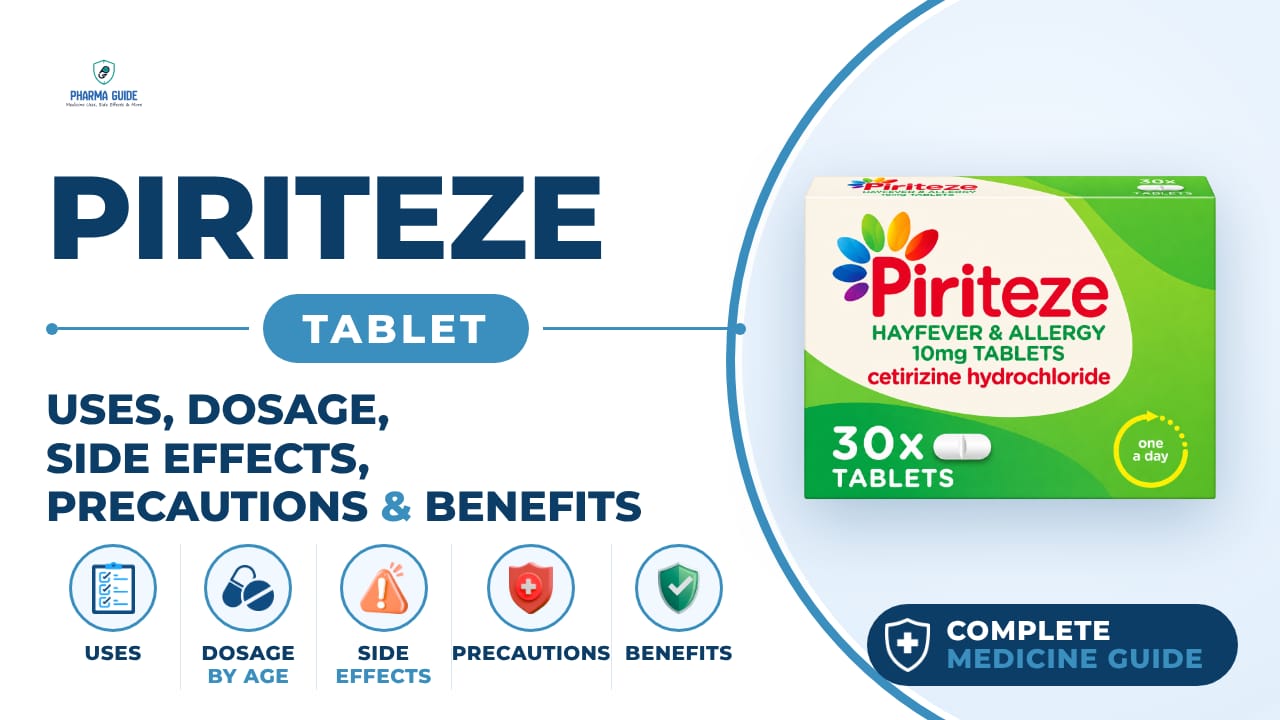
| Generic name | Cetirizine hydrochloride |
|---|---|
| Drug class | Antihistamine |
| Forms | Tablet, Syrup |
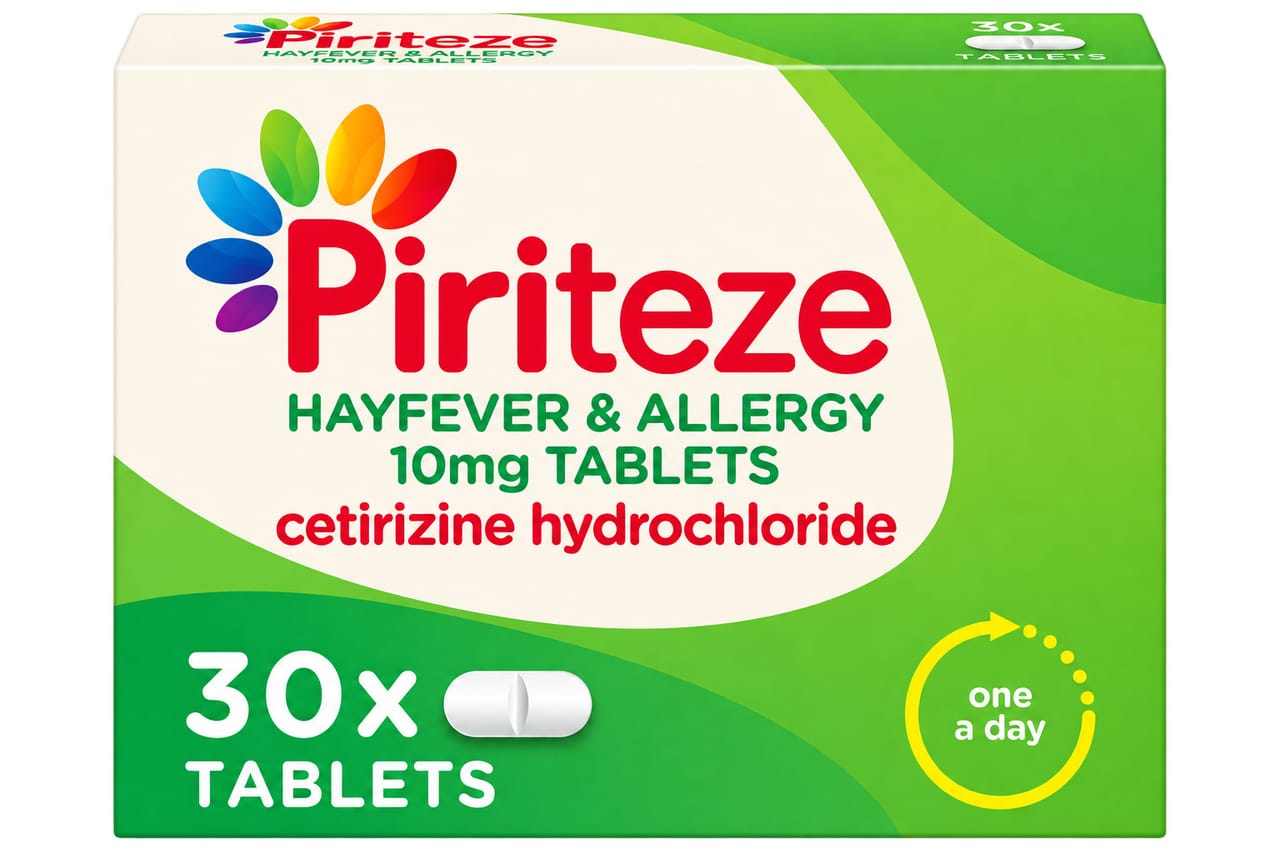
Quick overview
Piriteze Tablet contains cetirizine hydrochloride, a non-drowsy antihistamine used to relieve allergy symptoms such as hay fever, pet and dust allergies, and some skin reactions like hives. It provides up to 24-hour relief with once-daily dosing and works by blocking the effects of histamine in the body. Dosing depends on age, and it is available as tablets or syrup.
What is Piriteze Tablet
Piriteze Tablets contain cetirizine hydrochloride, a non-drowsy antihistamine used to relieve allergy symptoms such as hay fever, pet and dust allergies, and some skin reactions like hives.
Piriteze Tablet uses
- Symptomatic treatment of seasonal and perennial allergic rhinitis (hay fever and year-round allergies)
- Urticaria (hives and itchy skin rashes)
- Relief from pet, house dust mite and mould spore allergies
Benefits of Piriteze Tablet
- Provides up to 24-hour relief from allergy symptoms with once-daily dosing
- Non-drowsy formula suitable for daily use
- Relieves itchy or watery eyes, sneezing, runny nose, and some itchy skin rashes
How Piriteze Tablet works
Cetirizine is a non-drowsy antihistamine that blocks the effects of histamine in the body, which helps control allergy symptoms for 24 hours.
Piriteze Tablet dosage
Tablets should be swallowed whole with a glass of liquid. They can be taken with or without food. Children aged 6 to 12 years should only be given the tablet under adult supervision. Do not take more than one tablet in 24 hours.
| Age group | Dose |
|---|---|
| Under 2 years | Not recommended |
| 2–5 years | 2.5 mg once daily; may increase to 5 mg/day |
| 6–11 years | 5 mg once daily; maximum 10 mg/day |
| 12 years and older | 10 mg once daily |
Available forms and strengths
- Tablet
- Syrup
Side effects of Piriteze Tablet
Common
- Drowsiness
- Headache
- Dry mouth
- Dizziness
- Stomach discomfort
- Sore throat
- Diarrhea
- Difficulty urinating (rare)
Serious
- Allergic skin reactions
- Difficulty sleeping
- Liver function changes
- Drowsiness or sleepiness
- Headache
- Dry mouth
- Dizziness
- Nausea
- Tiredness or fatigue
Warnings and precautions
- If you are pregnant, talk to your doctor or pharmacist before taking this medicine.
- Cetirizine passes into breast milk, and a risk of side effects in breastfed babies cannot be ruled out, so talk to your doctor before use if breastfeeding.
- Talk to your doctor before use if you have kidney problems, as the dose may need to be adjusted in people with moderate to severe kidney impairment.
- Avoid drinking alcohol while taking this medicine, as it can increase sleepiness.
- This medicine may cause drowsiness in some people; if affected, do not drive or use machinery.
- Do not take more than the recommended dose.
- Do not use if you are allergic to cetirizine, hydroxyzine, or any of the tablet's ingredients.
- This medicine is not recommended for children under 6 years.
- This medicine may interact with other sedating antihistamines or medicines that cause drowsiness, such as sleep aids, anxiety medications or muscle relaxants.
- Do not take if you have end-stage kidney disease (severely reduced kidney function).
- This medicine may not be suitable if you have a history of urinary retention problems, such as spinal cord conditions or an enlarged prostate, or if you have epilepsy or a risk of seizures.
- Itching or hives may come back when you stop taking this medicine, and treatment may need to be restarted.
- If you are having allergy skin tests, antihistamines can affect the results, so a break of three days may be needed before testing.
- The tablets are not suitable for people with galactose intolerance, Lapp lactase deficiency, or glucose-galactose malabsorption, as they contain lactose.
Storage
- Store in a cool, dry place below 25°C
- Keep out of sight and reach of children
When to see a doctor
- See a doctor if your symptoms last longer than 7 days.
- Talk to a doctor if side effects persist or get worse, including changes in liver function.
Alternatives
- Fexofenadine
- Desloratadine
- Diphenhydramine
Watch the video
FAQs
What is Piriteze Tablet used for?
Piriteze Tablet is used for symptomatic treatment of seasonal and perennial allergic rhinitis (hay fever and year-round allergies), urticaria (hives and itchy skin rashes), and relief from pet, house dust mite and mould spore allergies.
How often should I take Piriteze Tablet?
Piriteze Tablet is taken once daily and provides up to 24-hour relief from allergy symptoms. You should not take more than one tablet in 24 hours.
What is the dosage of Piriteze Tablet for children?
Children aged 2–5 years can take 2.5 mg once daily, which may be increased to 5 mg/day, while children aged 6–11 years can take 5 mg once daily up to a maximum of 10 mg/day. It is not recommended for children under 2 years, and children aged 6 to 12 years should only take it under adult supervision.
What are the common side effects of Piriteze Tablet?
Common side effects include drowsiness, headache, dry mouth, dizziness, stomach discomfort, sore throat, diarrhea, and rarely, difficulty urinating.
Can I drink alcohol while taking Piriteze Tablet?
No, alcohol should be avoided while taking Piriteze Tablet as it can increase sleepiness.
General information, not medical advice
Your prescriber and the leaflet in your pack know your situation. This page does not.
- Follow your prescriber and the leaflet
- Don't start, stop, or change a dose on your own
- Doses and warnings differ by country and product
Sources
Video
Related medicines
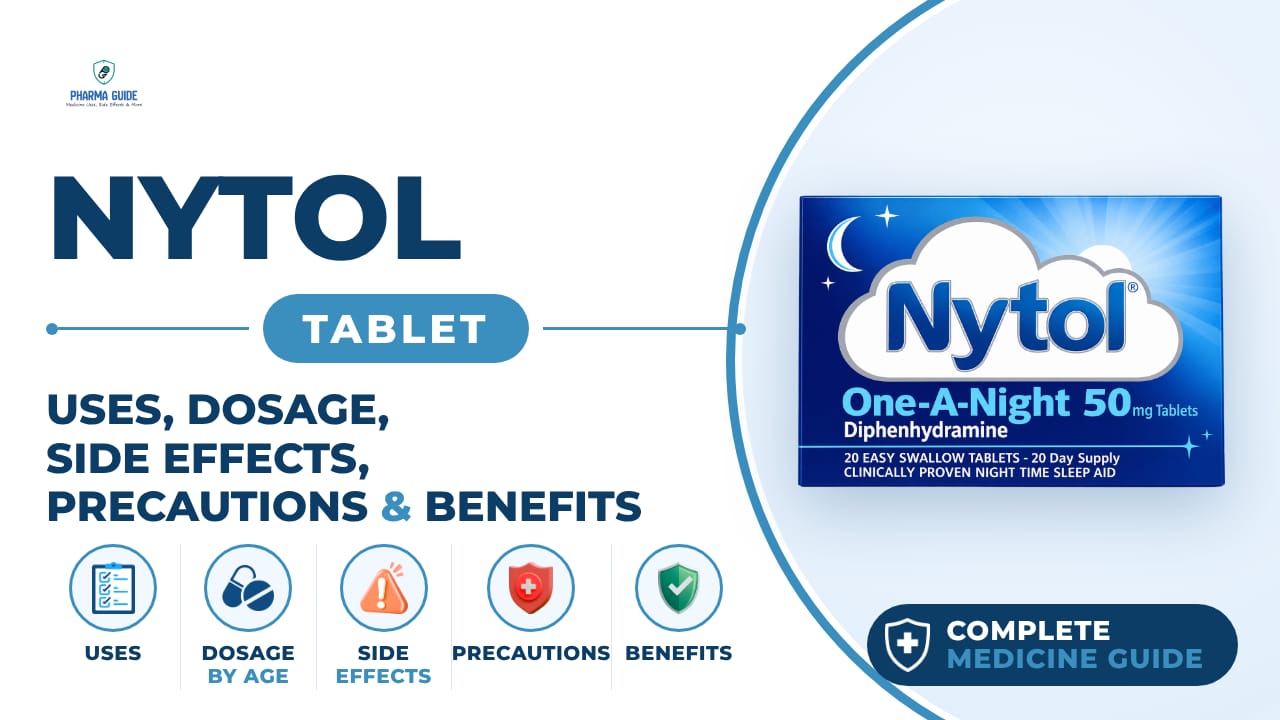
Nytol Tablet: Uses, Dosage, Side Effects, Precautions and Alternates
Antihistamine
Nytol Tablet contains diphenhydramine, used for short-term relief of occasional sleeplessness. Learn its dosage, benefits, side effects, and precautions.
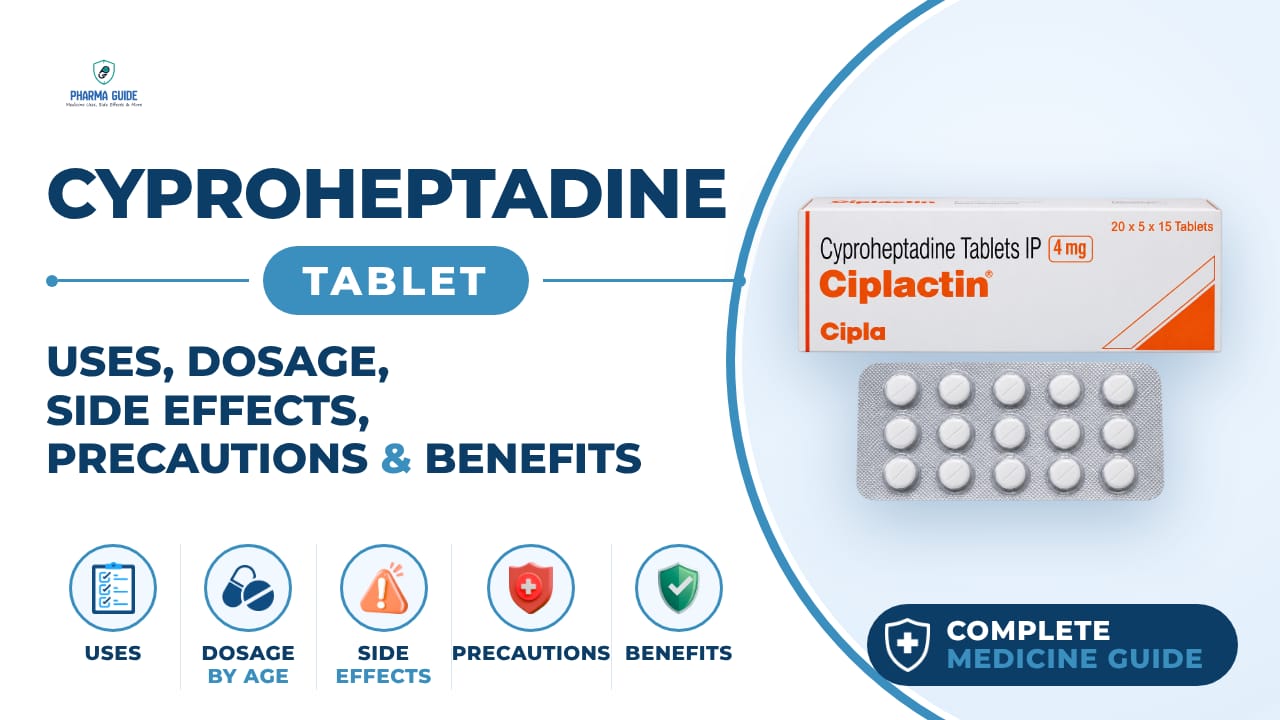
Cyproheptadine Tablet: Uses, Dosage, Side Effects, Precautions and Alternates
Antihistamine
Cyproheptadine Tablet is an antihistamine used for allergies, hives, and migraine headaches. Learn its uses, dosage, side effects, and precautions.