
Safety
General information, not medical advice
Your prescriber and the leaflet in your pack know your situation. This page does not.
- Follow your prescriber and the leaflet
- Don't start, stop, or change a dose on your own
- Doses and warnings differ by country and product
Ppi Rabium Tablet: Uses, Dosage, Side Effects, Precautions and Alternates
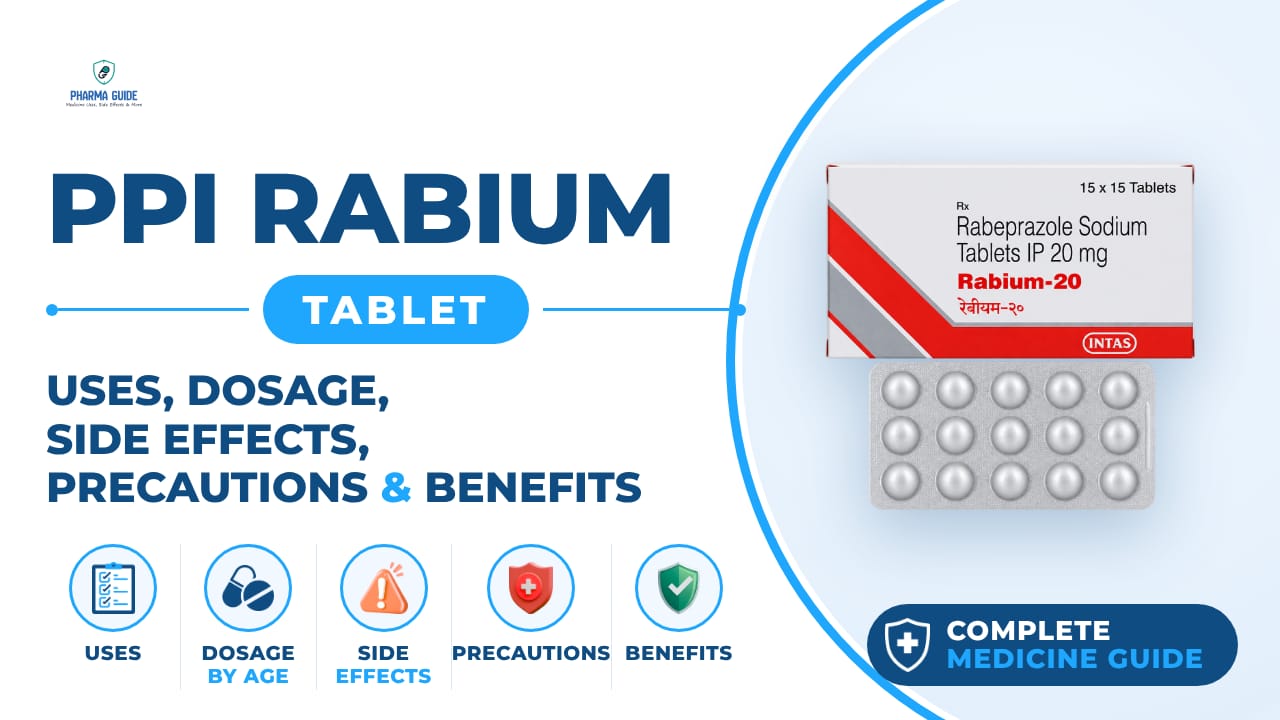
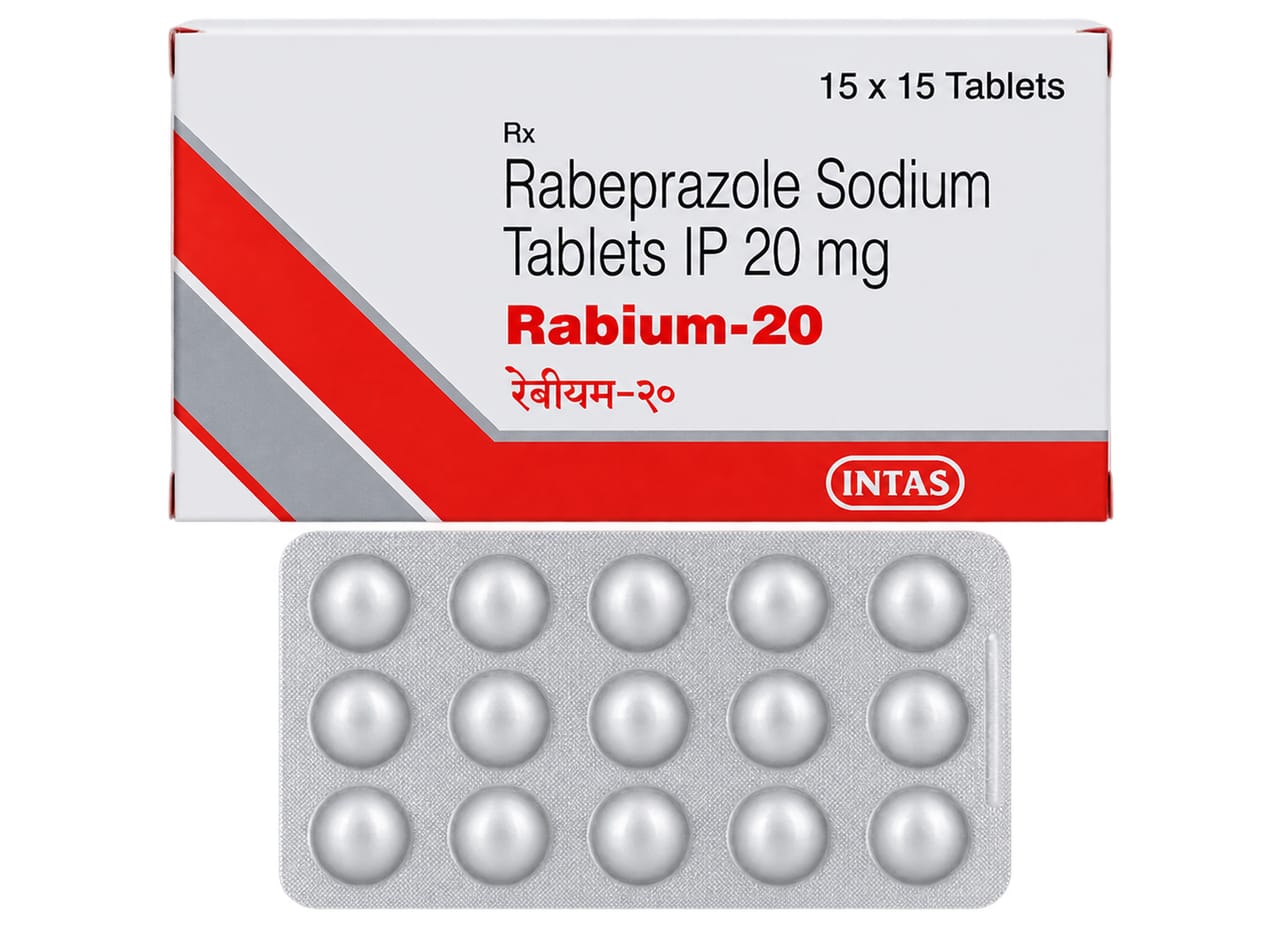
| Generic name | Rabeprazole |
|---|---|
| Drug class | Proton pump inhibitor (PPI) |
| Forms | Tablet |
Quick overview
Ppi Rabium Tablet contains rabeprazole, a proton pump inhibitor that reduces the amount of acid made in the stomach. It is used for conditions such as GERD, stomach and intestinal ulcers, Zollinger-Ellison syndrome, H. pylori infections, and NSAID-related ulcers. It works by blocking the proton pumps responsible for acid production, helping relieve heartburn and allowing the stomach lining to heal.
What is Ppi Rabium Tablet
Rabium is a medicine that contains rabeprazole. It belongs to a group of medicines called proton pump inhibitors, which reduce the amount of acid made in the stomach.
Ppi Rabium Tablet uses
- Treats gastroesophageal reflux disease (GERD), where stomach acid flows back into the food pipe
- Heals and prevents stomach and intestinal ulcers
- Manages Zollinger-Ellison syndrome, a condition with excessive stomach acid
- Treats infections caused by Helicobacter pylori bacteria
- Prevents ulcers caused by nonsteroidal anti-inflammatory drugs (NSAIDs)
- Relieves heartburn and chest pain caused by acid reflux
Benefits of Ppi Rabium Tablet
- Reduces stomach acid production to relieve heartburn and acid regurgitation
- Helps heal the stomach lining and ulcers
- Provides relief from acidity and indigestion
How Ppi Rabium Tablet works
Rabium blocks proton pumps in the stomach lining that produce acid, similar to turning down the volume on a radio. This lowers acid levels, which relieves heartburn and lets the stomach lining heal.
Ppi Rabium Tablet dosage
Take once daily, usually in the morning, before a meal. Swallow the tablet whole with a full glass of water; do not crush or chew it. It can be taken with or without food, though taking it about 30 minutes before a meal is often preferred. If a dose is missed, take it as soon as remembered unless it is almost time for the next dose; do not take two doses at once. It is not recommended for use in children. Follow the prescribed treatment length, which is often several weeks for conditions like GERD or ulcers; do not stop early without talking to your doctor.
| Age group | Dose |
|---|---|
| Under 12 Years | Use only if prescribed by a healthcare professional |
| 12 Years and Above | 20 mg once daily (depending on condition) |
| Adults (18–64 Years) | 20 mg once daily; dose may vary by medical condition |
| Older Adults (65+ Years) | 20 mg once daily; adjustment based on health condition |
Available forms and strengths
- Tablet
Side effects of Ppi Rabium Tablet
Common
- Headache
- Diarrhea
- Nausea
- Abdominal pain
- Sleeplessness
- Dizziness
- Cough
- Runny nose
- Sore throat
- Vomiting
- Stomach discomfort
Serious
- Allergic reactions
- Liver problems
- Increased risk of bone fractures with long-term use
- Vitamin B12 deficiency
- Increased risk of gastrointestinal infections
Warnings and precautions
- Rabium should not be taken during pregnancy. If you think you may be pregnant while taking this medicine, talk to your doctor right away.
- Rabium should not be taken while breastfeeding. Your doctor can prescribe safer alternatives.
- Take as prescribed, usually before meals, for those with kidney concerns.
- Rabium should be used with caution in people with liver disease and is not recommended for those with severe liver problems, as it may worsen liver function.
- Drinking alcohol does not change how Rabium works, but drinking large amounts of alcohol can increase acidity and make your stomach condition worse.
- Rabium may cause drowsiness and dizziness in some people, so it is not advisable to drive or use heavy machinery while taking it.
- Long-term use of Rabium can increase the risk of bone fractures, cause low magnesium levels leading to muscle spasms or irregular heartbeats, and may hide symptoms of stomach cancer.
- Do not use Rabium if you are allergic to rabeprazole or other proton pump inhibitors, and avoid it if you have a history of severe allergic reactions to PPIs or low magnesium levels.
- Long-term treatment can lead to vitamin B12 deficiency, which may cause pale skin, sore tongue, weakness, headache, disturbed vision, and irritability.
- Stopping Rabium suddenly can cause symptoms to return or get worse; always talk to your doctor before stopping.
Storage
- Store Rabium Tablet below 25°C, protected from direct sunlight, moisture and heat.
- Keep it out of the sight and reach from children and pets.
- Do not use expired medicines.
- Discard any unused medicine properly. Do not flush in the toilet or throw it into the drain.
When to see a doctor
- Get medical help right away if you have a serious allergic reaction with rash, hives, or swelling that makes breathing difficult.
- Talk to your doctor if you have stomach pain, trouble swallowing, a family history of stomach cancer, vomit food or blood, or have black stools.
- Seek medical attention if you experience symptoms like dizziness, seizures, or muscle cramps, which may signal low magnesium levels.
- Contact your doctor if you develop a skin reaction, frequent diarrhea, liver problems, or joint pain, skin rashes, and tiredness.
Alternatives
- Famotidine
- Lansoprazole
- Esomeprazole
- Pantoprazole
Watch the video
FAQs
What is Ppi Rabium Tablet used for?
It is used to treat GERD, stomach and intestinal ulcers, Zollinger-Ellison syndrome, H. pylori infections, NSAID-related ulcers, and to relieve heartburn and chest pain caused by acid reflux.
How should I take Ppi Rabium Tablet?
Take it once daily, usually in the morning before a meal, swallowing the tablet whole with a full glass of water without crushing or chewing it. It can be taken with or without food, though taking it about 30 minutes before a meal is often preferred.
What are the common side effects of Ppi Rabium Tablet?
Common side effects include headache, diarrhea, nausea, abdominal pain, sleeplessness, dizziness, cough, runny nose, sore throat, vomiting, and stomach discomfort.
Can Ppi Rabium Tablet be taken during pregnancy or breastfeeding?
No, Rabium should not be taken during pregnancy or while breastfeeding. Talk to your doctor if you think you may be pregnant, and ask about safer alternatives if breastfeeding.
What happens if I stop taking Ppi Rabium Tablet suddenly?
Stopping Rabium suddenly can cause symptoms to return or get worse, so you should always talk to your doctor before stopping the medicine.
General information, not medical advice
Your prescriber and the leaflet in your pack know your situation. This page does not.
- Follow your prescriber and the leaflet
- Don't start, stop, or change a dose on your own
- Doses and warnings differ by country and product
Sources
Video
Related medicines
Dexlansoprazole Capsule: Uses, Dosage, Side Effects, Precautions and Alternates
Proton pump inhibitor (PPI)
Dexlansoprazole Capsule is a PPI that reduces stomach acid to treat heartburn, GERD, and erosive esophagitis. Learn dosage, side effects, and warnings.
Risek Capsule: Uses, Dosage, Side Effects, Precautions and Alternates
Proton Pump Inhibitor (PPI)
Risek Capsule contains omeprazole and treats GERD, ulcers, H. pylori infection, and acid reflux by reducing stomach acid. Learn uses, dosage, and side effects.