
Safety
General information, not medical advice
Your prescriber and the leaflet in your pack know your situation. This page does not.
- Follow your prescriber and the leaflet
- Don't start, stop, or change a dose on your own
- Doses and warnings differ by country and product
Pramlintide Injection: Uses, Dosage, Side Effects, Precautions and Alternates

| Generic name | pramlintide |
|---|---|
| Drug class | Amylin analog |
| Forms | Injection |

Quick overview
Pramlintide Injection (pramlintide) is an amylin analog given by injection under the skin, used together with mealtime insulin to help control blood sugar in adults with type 1 or type 2 diabetes who have not reached their blood sugar goals with insulin alone. It works by slowing stomach emptying, reducing glucagon release, and increasing fullness. It is typically added after insulin therapy alone has not provided enough control, and it is not recommended for use in children.
What is Pramlintide Injection
Pramlintide is a man-made form of a hormone called amylin that occurs naturally in the body. It is given as an injection under the skin, along with mealtime insulin, to help control blood sugar in adults with type 1 or type 2 diabetes who have not reached their blood sugar goals with insulin alone.
Pramlintide Injection uses
- Used together with mealtime insulin to control blood sugar in adults with type 1 diabetes
- Used together with mealtime insulin to control blood sugar in adults with type 2 diabetes
- Usually given after insulin therapy alone has not controlled blood sugar well enough
Benefits of Pramlintide Injection
- Helps control blood sugar after meals
- Reduces post-meal glucose spikes
- May reduce appetite
- May support weight management
- Helps improve glucose control alongside insulin
How Pramlintide Injection works
Pramlintide works by slowing down how fast food leaves the stomach, which helps prevent blood sugar from rising too quickly after meals. It also blocks a hormone called glucagon so the liver releases less sugar, and it helps you feel full longer so you eat less.
Pramlintide Injection dosage
Follow all directions on your prescription label and use exactly as prescribed. Inject under the skin of the stomach area or thigh at the same time as your insulin, but as a separate injection in a different spot. Do not inject into the arm. Do not mix pramlintide and insulin together in the same syringe or injection. Use a different injection spot each time, at least 2 inches away from your insulin injection site.
Give the injection immediately before a major meal that has enough calories or carbohydrates; if you skip the meal, skip that dose. Let the pen warm up to room temperature before injecting to reduce discomfort. Do not use if the liquid looks cloudy, colored, or has particles in it. Use a new needle for every injection and never share your injection pen with anyone else. Continue your regular meal plan, exercise, and blood sugar testing routine while using this medicine. This medicine is not recommended for use in children.
| Age group | Dose |
|---|---|
| Under 18 years | Not recommended |
| 18–64 years | 15–60 mcg, before meals |
| 65+ years | 15–60 mcg, before meals |
Available forms and strengths
- Injection
Side effects of Pramlintide Injection
Common
- Nausea
- Vomiting
- Loss of appetite
- Headache
- Stomach pain
- Tiredness
- Joint pain
- Dizziness
- Cough
- Sore throat
- Redness, swelling, bruising, or itching at the injection site
Serious
- Severe allergic reaction: hives, difficulty breathing, swelling of face, lips, tongue, or throat
- Severe or prolonged nausea lasting several days
- Severe low blood sugar (hypoglycemia): headache, dizziness, drowsiness, vision changes, hunger, weakness, sweating, confusion, irritability, fast heart rate, feeling jittery or shaky, loss of consciousness, seizure
Warnings and precautions
Using pramlintide with insulin raises the risk of severe low blood sugar, especially in people with type 1 diabetes. This usually happens within 2 to 3 hours after the injection. Do not use this medicine if you have a stomach condition called gastroparesis (delayed stomach emptying), or if you cannot recognize the symptoms of low blood sugar.
Never mix pramlintide and insulin in the same syringe or injection; they must always be given as separate shots. Because this medicine slows stomach emptying, other medicines you take by mouth may be absorbed more slowly. Take oral medicines at least 1 hour before or 2 hours after your injection if their timing is important. Never share your injection pen with another person, even with a new needle, because this can spread infections.
This medicine has been discontinued in the US and is no longer available there; this information may not reflect current availability or guidance in other countries.
It is not known if pramlintide will harm an unborn baby. Tell your doctor if you are pregnant or planning to become pregnant so you can decide together how best to manage your blood sugar. It is also not known whether pramlintide passes into breast milk or could harm a nursing baby, so tell your doctor if you are breastfeeding.
Dosing does not need to be changed for people with mild, moderate, or severe kidney impairment, though this has not been studied in people with end-stage kidney disease. The effects of liver problems on this medicine have not been studied.
Avoid drinking alcohol, as it can lower blood sugar and increase the risk of severe hypoglycemia. Severe low blood sugar can affect your thinking and reactions. Do not drive, operate machinery, or do other dangerous activities until you know how this medicine affects you.
Storage
- Keep unopened injection pens in the refrigerator, protected from light, in their original carton
- Do not freeze; throw away the medicine if it has become frozen
- Throw away any unused pramlintide after the expiration date on the label
- Opened (in-use) pens may be kept in the refrigerator or at room temperature and should be used within 30 days, then thrown away even if medicine remains
- Keep out of the reach of children and pets
- Dispose of used needles in a puncture-proof sharps container; do not throw loose needles in household trash
- Do not flush medication down the toilet; use a medicine take-back program if available
When to see a doctor
- Get emergency medical help right away if you have signs of a serious allergic reaction, such as hives, trouble breathing, or swelling of your face, lips, tongue, or throat
- Call your doctor right away if you have severe ongoing nausea, as your dose may need to be changed
- Call your doctor right away if your blood sugar is lower than normal or you have symptoms of low blood sugar, such as hunger, headache, sweating, uncontrollable shaking, irritability, trouble concentrating, loss of consciousness, coma, or a seizure
- If you think you have taken too much and have severe low blood sugar and cannot eat or drink, use an emergency glucagon injection and seek emergency care
- Seek emergency medical help if someone has collapsed, had a seizure, is having trouble breathing, or cannot be woken up
Alternatives
- Liraglutide
- Lixisenatide
- Exenatide
Watch the video
FAQs
What is Pramlintide Injection used for?
It is used together with mealtime insulin to help control blood sugar in adults with type 1 or type 2 diabetes who have not reached their blood sugar goals with insulin alone.
How does Pramlintide Injection work?
It slows stomach emptying, blocks glucagon release so the liver makes less sugar, and helps you feel full longer so you eat less, which helps prevent blood sugar from rising too quickly after meals.
Can Pramlintide be mixed with insulin in the same syringe?
No, pramlintide and insulin must never be mixed together; they should always be given as separate injections at least 2 inches apart.
What is the main risk of using Pramlintide with insulin?
Using pramlintide with insulin raises the risk of severe low blood sugar (hypoglycemia), especially in people with type 1 diabetes, usually within 2 to 3 hours after the injection.
Is Pramlintide Injection still available in the US?
No, this medicine has been discontinued in the US and is no longer available there, though this information may not reflect availability in other countries.
General information, not medical advice
Your prescriber and the leaflet in your pack know your situation. This page does not.
- Follow your prescriber and the leaflet
- Don't start, stop, or change a dose on your own
- Doses and warnings differ by country and product
Sources
Video
Related medicines
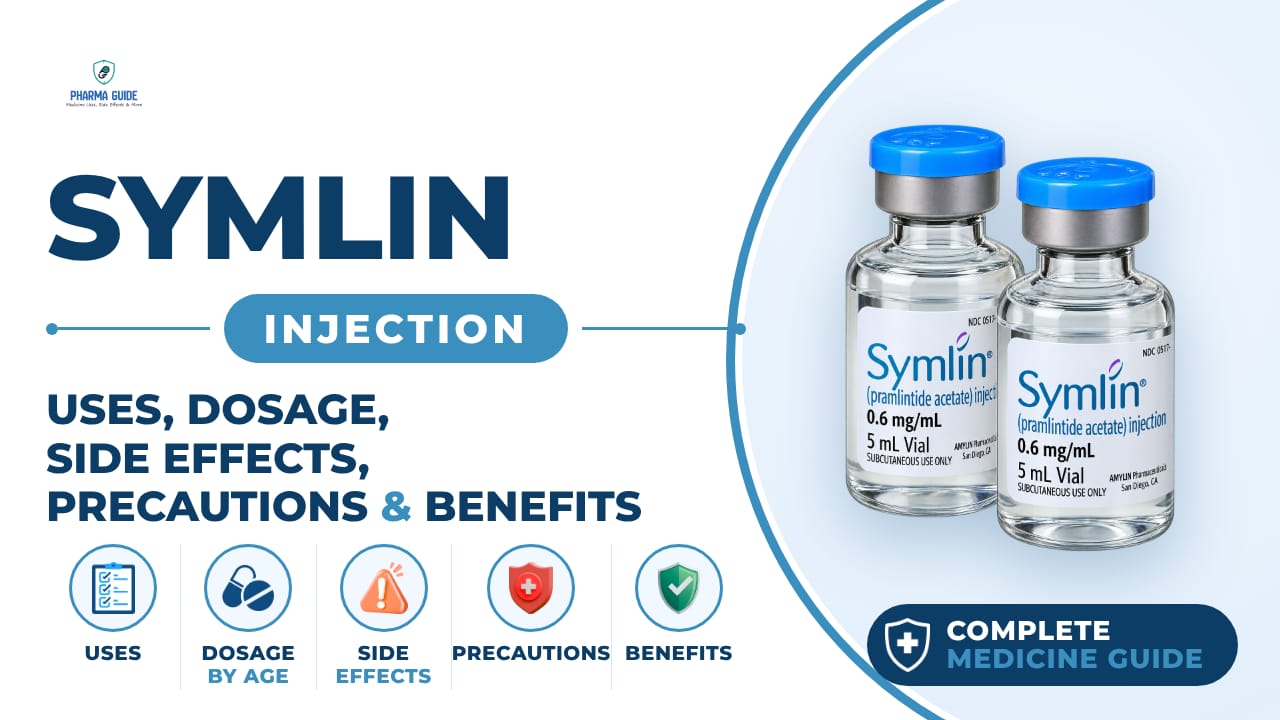
Symlin Injection: Uses, Dosage, Side Effects, Precautions and Alternates
amylin analog
Symlin Injection (pramlintide) is used with mealtime insulin to manage blood sugar in type 1 or type 2 diabetes. Learn dosage, side effects, and warnings.

Injectafer Injection: Uses, Dosage, Side Effects, Precautions and Alternates
Iron products
Injectafer (ferric carboxymaltose) treats iron deficiency anemia and heart failure-related iron deficiency via IV. Learn uses, dosage, side effects, and