
Safety
General information, not medical advice
Your prescriber and the leaflet in your pack know your situation. This page does not.
- Follow your prescriber and the leaflet
- Don't start, stop, or change a dose on your own
- Doses and warnings differ by country and product
Provigil Tablet: Uses, Dosage, Side Effects, Precautions and Alternates
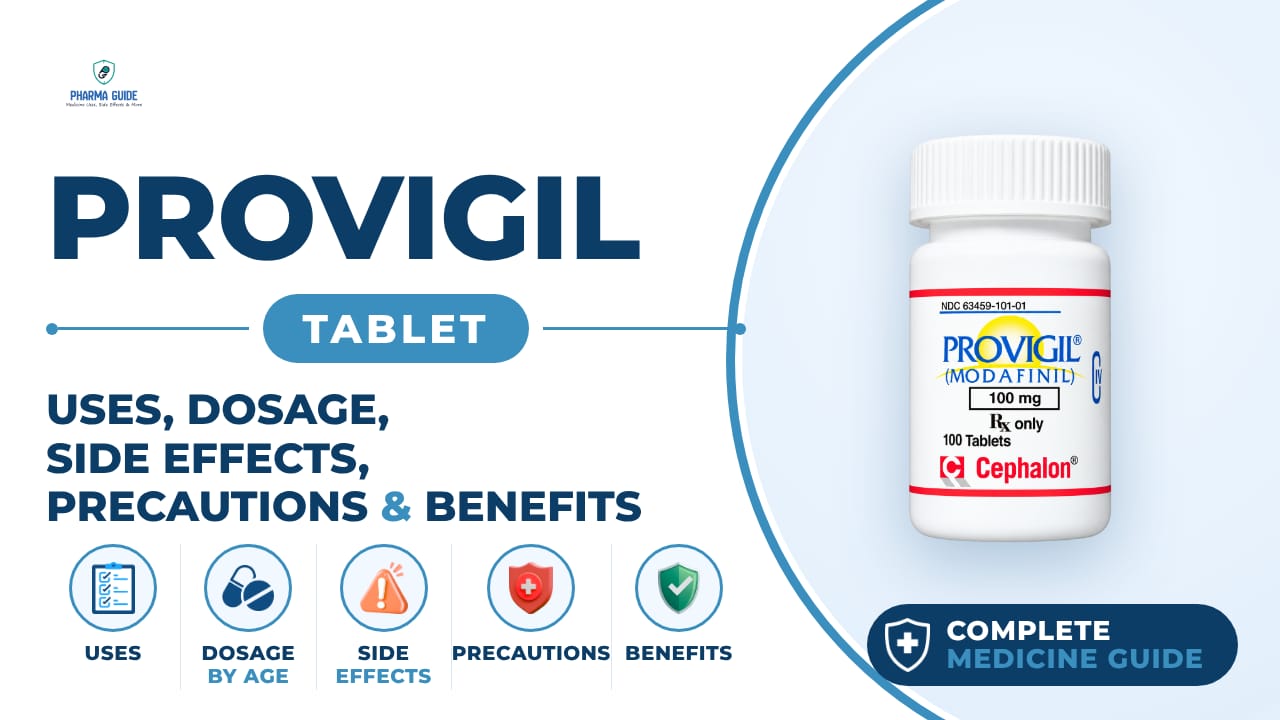
| Generic name | modafinil |
|---|---|
| Drug class | CNS stimulants |
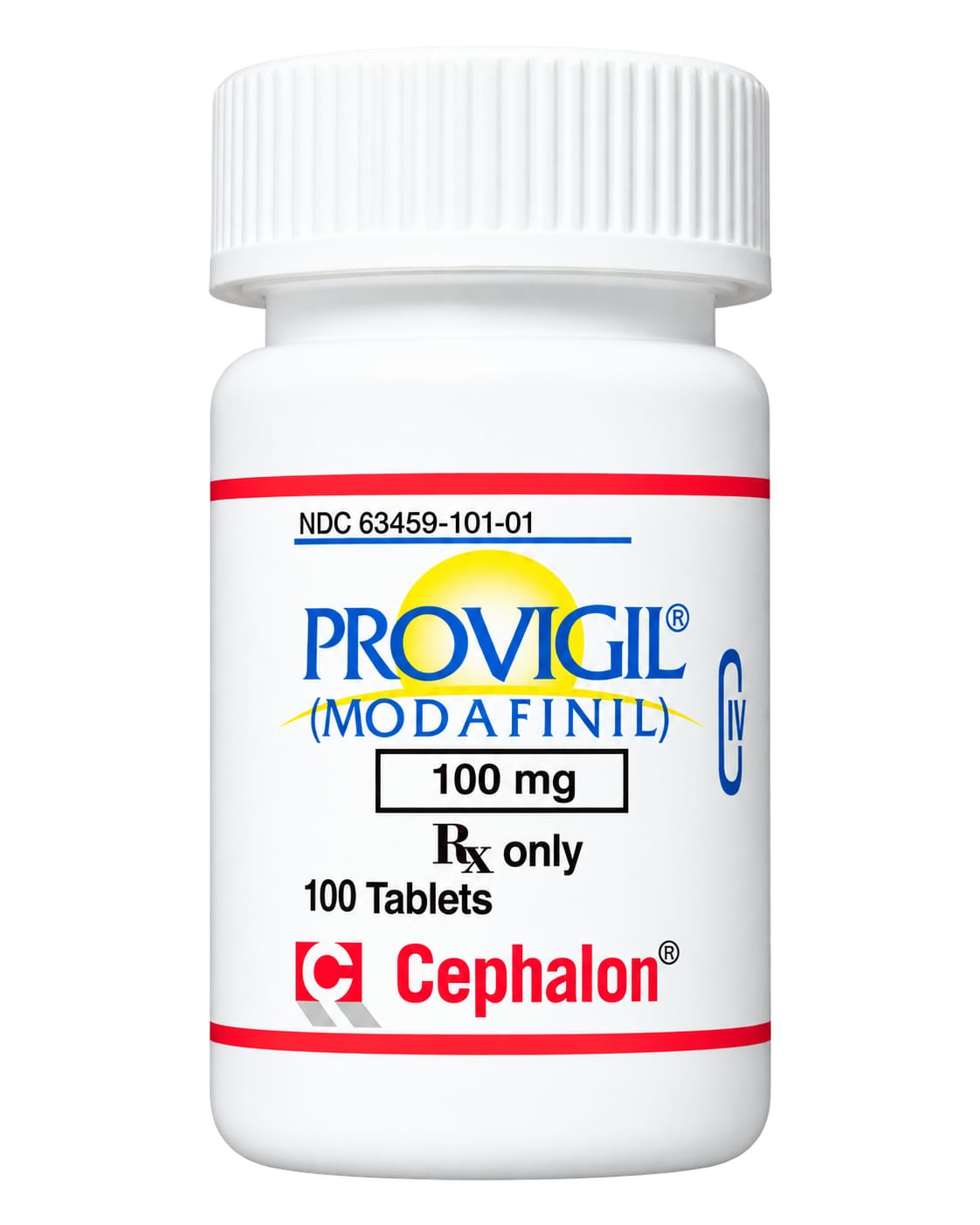
| Forms | oral tablet (100 mg and 200 mg) |
Quick overview
Provigil Tablet (modafinil) is a prescription medicine that belongs to the CNS stimulant class. It helps people stay awake and is used to treat extreme tiredness caused by sleep conditions such as narcolepsy, obstructive sleep apnea, and shift work sleep disorder. It is a controlled substance because it can be misused.
What is Provigil Tablet
Provigil (modafinil) is a prescription medicine that helps people stay awake. It treats extreme tiredness caused by sleep conditions such as narcolepsy, obstructive sleep apnea, and shift work sleep disorder. It belongs to a group of medicines called stimulants and is a controlled substance because it can be misused.
Provigil Tablet uses
- Narcolepsy, a condition where the brain cannot properly control the sleep-wake cycle
- Obstructive sleep apnea, a disorder where breathing stops and starts during sleep because the airway is blocked
- Shift work disorder, trouble sleeping or staying awake in people who work night, early morning, or rotating shifts
Benefits of Provigil Tablet
- Promotes wakefulness and helps reduce excessive daytime sleepiness
- Can help people feel more awake, though it does not cure the underlying sleep disorder
How Provigil Tablet works
It is not fully understood how this medicine works. It may act on brain chemicals that control sleep and wakefulness, possibly by mimicking adrenaline-like chemicals or increasing dopamine activity in the brain.
Provigil Tablet dosage
Take this medicine by mouth with water, swallowing the tablet whole. Take it at the same time every day as directed on your prescription label. You can take it with or without food; if it upsets your stomach, take it with food.
If you take it for narcolepsy or obstructive sleep apnea, take it in the morning when you wake up. If you take it for shift work disorder, take it about an hour before your work shift starts. Avoid taking it too close to your bedtime, since this can make it hard to fall asleep.
This medicine is usually taken once a day and is often used for a limited time; keep taking it unless your care team tells you to stop. If you miss a dose, take it as soon as you remember; if it is almost time for your next dose or close to bedtime, skip the missed dose and do not double up.
This medicine does not replace getting enough sleep or using other treatments such as a CPAP machine for sleep apnea. Special care and caution are needed when considering this medicine for children; it is not approved for use in anyone younger than 17.
Use exactly as prescribed by your doctor or pharmacist.
Available forms and strengths
- Oral tablet (100 mg and 200 mg)
Side effects of Provigil Tablet
Common
- Headache
- Dizziness
- Feeling nervous or anxious
- Back pain
- Nausea
- Diarrhea
- Upset stomach or indigestion
- Trouble sleeping (insomnia)
- Poor appetite
- Stuffy or runny nose
Serious
- Allergic reactions or angioedema, including skin rash, itching or hives, swelling of the face, eyes, lips, tongue, arms, or legs, trouble swallowing or breathing
- Increase in blood pressure
- Mood and behavior changes such as anxiety, nervousness, confusion, hallucinations, irritability, hostility, thoughts of suicide or self-harm, or worsening depression
- Severe skin reactions with rash, fever, and swollen lymph nodes, which may progress to blistering or peeling skin
- Chest pain, trouble breathing, or uneven heartbeats
- Signs of a severe allergic reaction called DRESS, including fever, swollen lymph nodes, jaundice, or stomach cramps
Warnings and precautions
- This medicine can cause severe skin reactions such as Stevens-Johnson Syndrome and Toxic Epidermal Necrolysis, which can be life-threatening. Stop the medicine and get emergency help if you develop a rash, blisters, peeling skin, or mouth sores.
- This medicine can cause serious allergic reactions, including swelling of the face, lips, tongue, or throat, and trouble breathing. Stop the medicine and get emergency help if this happens.
- This medicine may cause serious mental health changes, including new or worsening depression, anxiety, hallucinations, aggression, or thoughts of suicide.
- This medicine may reduce how well hormonal birth control works. Talk to your doctor about using a backup, non-hormonal method of birth control while taking it and for one month after stopping.
- This medicine can be misused or lead to dependence. Keep it safe, never share it, and selling or giving it away is illegal.
- This medicine can cause chest pain, which may be a sign of a heart problem, especially in people with certain heart conditions. Stop the medicine and get emergency help if you have chest pain, trouble breathing, or an irregular heartbeat.
- It isn't known for sure if this medicine can harm an unborn baby, but animal studies suggest it might. Tell your doctor if you are pregnant or planning to become pregnant.
- It isn't known if this medicine passes into breast milk or could harm a nursing baby. Tell your doctor if you are breastfeeding.
- Tell your care team if you have kidney disease before starting this medicine.
- You may need a lower dose if your liver isn't working well. Your doctor may run tests to check your liver function.
- It's best to avoid alcohol while taking this medicine, since it may increase the risk of dizziness.
- This medicine can affect your thinking, coordination, or reaction time. Don't drive or do activities that need alertness until you know how it affects you.
Storage
- Store at room temperature between 20 and 25 degrees C (68 and 77 degrees F)
- Store away from moisture and heat
- Keep out of the reach of children and pets
- Keep it in a safe place to protect it from theft; do not share it with anyone
- Get rid of any unused medication after the expiration date
- Take the medication to a medication take-back program if possible, checking with your pharmacy or law enforcement for a location
- If a take-back option isn't available, check the label or package insert for disposal instructions; if trash disposal is safe, remove the medicine from its container, mix it with cat litter, dirt, or coffee grounds, seal it in a bag, and throw it away
When to see a doctor
- Get emergency help right away if you notice signs of a severe skin reaction, such as painful red or purple skin that looks burned, blisters, or peeling, especially with fever.
- Get emergency help if you have swelling of the face, lips, tongue, or throat, or trouble breathing or swallowing.
- Call your doctor right away if you have new or worsening depression, anxiety, hallucinations, aggressive behavior, or thoughts of suicide.
- Stop the medicine and call your doctor right away if you develop chest pain, a fast or abnormal heartbeat, or trouble breathing.
- If you think you've taken too much of this medicine, get emergency medical help right away or contact a poison control center.
Alternatives
- Pitolisant
- Solriamfetol
- Armodafinil
Watch the video
FAQs
What is Provigil Tablet used for?
Provigil Tablet (modafinil) is used to treat extreme tiredness caused by narcolepsy, obstructive sleep apnea, and shift work sleep disorder.
How should I take Provigil Tablet?
Take it by mouth with water, swallowing the tablet whole, at the same time every day. For narcolepsy or sleep apnea, take it in the morning; for shift work disorder, take it about an hour before your shift. It can be taken with or without food.
What are the common side effects of Provigil Tablet?
Common side effects include headache, dizziness, nervousness or anxiety, back pain, nausea, diarrhea, upset stomach, insomnia, poor appetite, and stuffy or runny nose.
Can Provigil Tablet affect birth control?
Yes, it may reduce how well hormonal birth control works, so a backup non-hormonal method is recommended while taking it and for one month after stopping.
What precautions should I take while on Provigil Tablet?
Avoid alcohol, use caution with activities requiring alertness like driving, and seek emergency help for signs of severe skin reactions, allergic reactions, chest pain, or mood changes such as suicidal thoughts.
General information, not medical advice
Your prescriber and the leaflet in your pack know your situation. This page does not.
- Follow your prescriber and the leaflet
- Don't start, stop, or change a dose on your own
- Doses and warnings differ by country and product
Sources
Video
Related medicines
Concerta Tablet: Uses, Dosage, Side Effects, Precautions and Alternates
CNS stimulants
Concerta Tablet is an extended-release stimulant for ADHD in children, teens, and adults. Learn uses, dosage, side effects, and precautions.
Amphetamine Sulfate Tablet: Uses, Dosage, Side Effects, Precautions and Alternates
CNS stimulants
Amphetamine Sulfate Tablet is a Schedule II CNS stimulant used for narcolepsy, ADHD, and short-term obesity treatment. Learn dosage, side effects, and