
Safety
General information, not medical advice
Your prescriber and the leaflet in your pack know your situation. This page does not.
- Follow your prescriber and the leaflet
- Don't start, stop, or change a dose on your own
- Doses and warnings differ by country and product
Quetiapine Tablet: Uses, Dosage, Side Effects, Precautions and Alternates
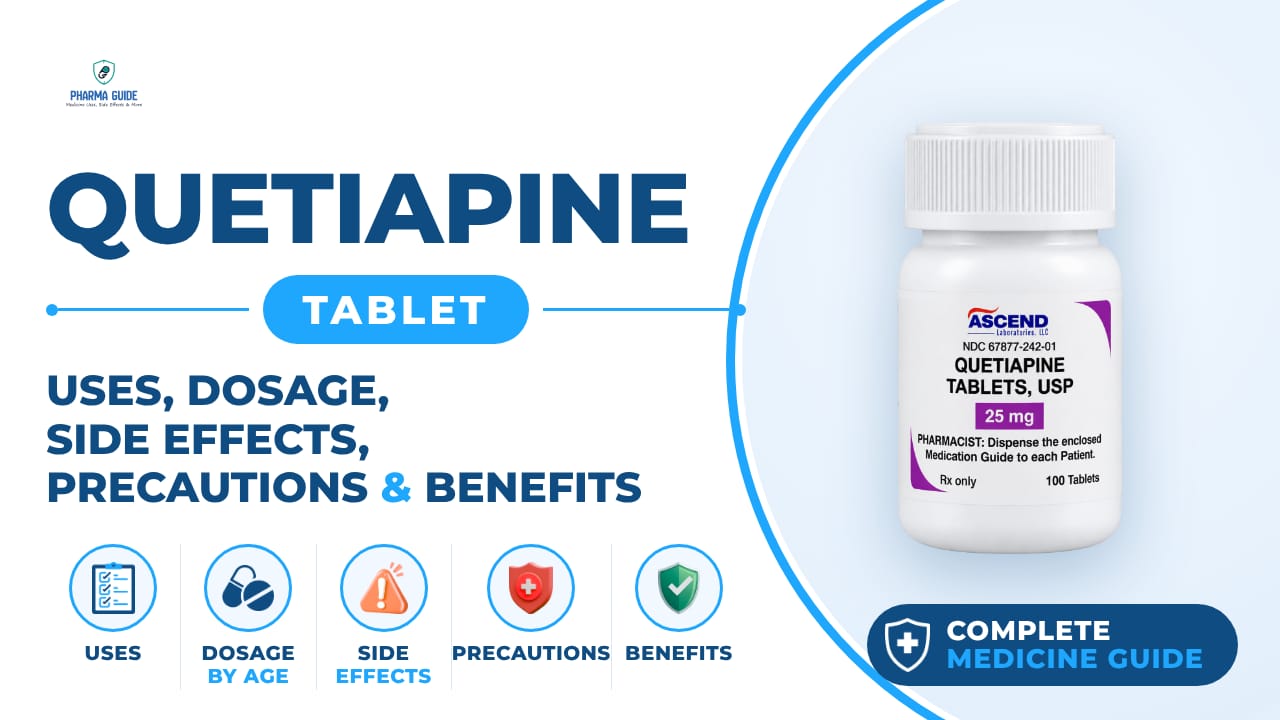
| Generic name | Quetiapine |
|---|---|
| Drug class | Atypical antipsychotics |
| Forms | Oral tablet (immediate-release), Oral tablet, extended-release |
Quick overview
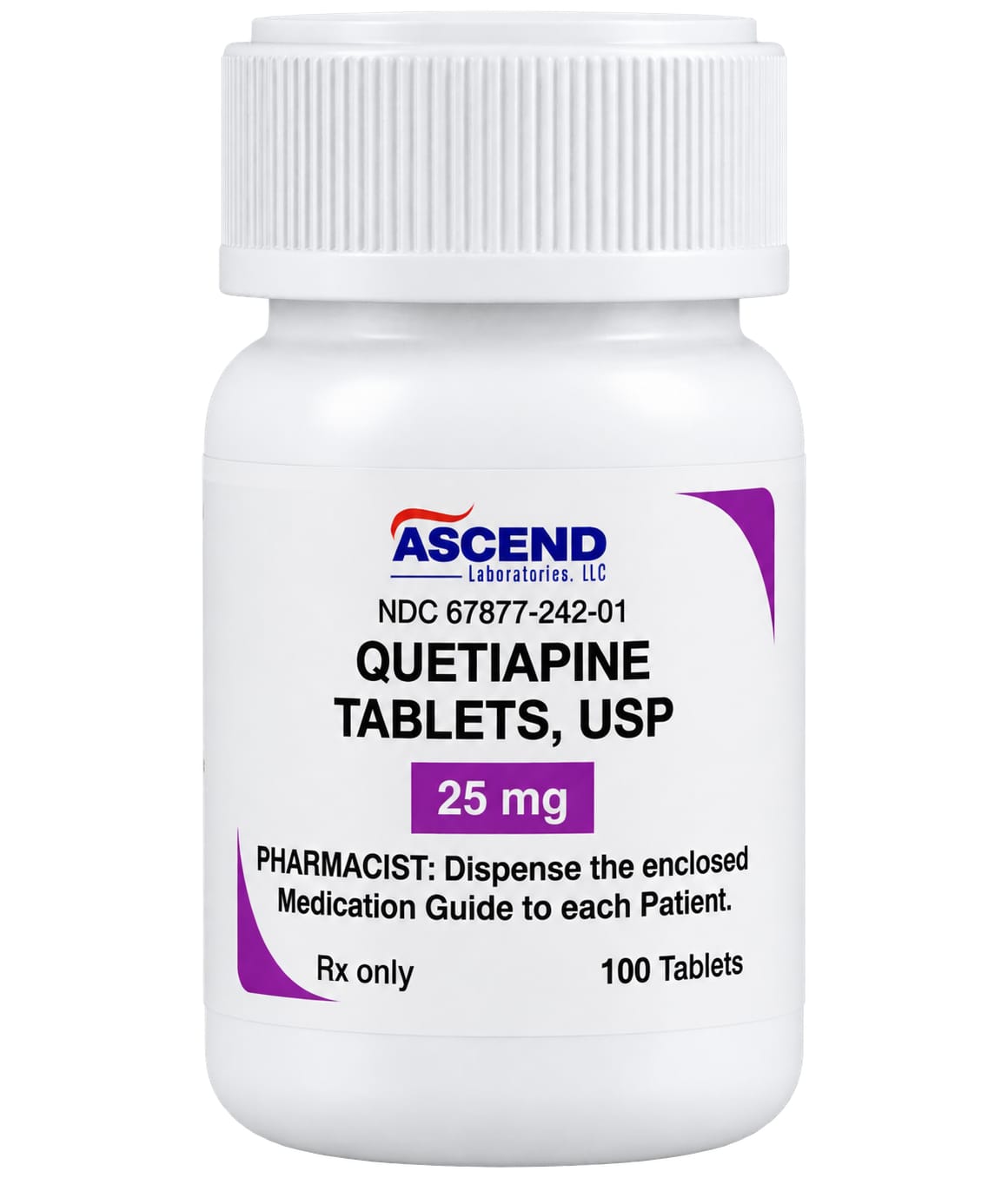
Quetiapine Tablet (generic name Quetiapine) is a prescription atypical antipsychotic also sold as Seroquel and Seroquel XR. It is used for schizophrenia and bipolar disorder, and as an add-on treatment for major depressive disorder. It comes as a regular tablet and an extended-release tablet, and should be used exactly as prescribed by a doctor.
What is Quetiapine Tablet
Quetiapine is a prescription antipsychotic medicine. It comes as a regular tablet and as an extended-release tablet, and is also sold under the brand names Seroquel and Seroquel XR.
Quetiapine Tablet uses
- Schizophrenia in adults and in children 13 years and older
- Manic or mixed episodes of bipolar disorder, alone or with lithium or divalproex
- Depressive episodes of bipolar disorder
- Manic episodes of bipolar disorder in children 10 years and older (extended-release)
- Add-on treatment with antidepressants for major depressive disorder in adults
- As part of a treatment program for bipolar disorder and schizophrenia in children and teenagers
Benefits of Quetiapine Tablet
- Can help manage symptoms of schizophrenia such as unusual thoughts and behavior
- Can help control manic and depressive mood swings in bipolar disorder
- Can improve mood, thinking, and behavior by helping balance brain chemicals
- Can boost the effect of antidepressants in major depressive disorder
- Helps manage hallucinations, delusions, and disorganized thinking
How Quetiapine Tablet works
Quetiapine changes the activity of certain natural brain chemicals, mainly dopamine and serotonin, which helps regulate mood, thinking, and behavior.
Quetiapine Tablet dosage
You can take regular tablets with or without food. Take extended-release tablets without food or with a light meal. Swallow tablets whole; do not crush, chew, or break them (especially extended-release tablets). Try to take it at the same time every day to keep a steady level of medicine in your body. Do not stop taking this medicine suddenly without talking to your doctor, since this may cause withdrawal symptoms or make your condition worse. If you miss a dose, take it as soon as you remember, but skip it if it's almost time for your next dose — do not double up. Older adults may be started on a lower dose or a different schedule.
| Age group | Dose |
|---|---|
| Under 10 Years | Use only if prescribed by a specialist |
| 10–17 Years | Initial dose: 25 mg twice daily; adjusted based on condition |
| Adults (18–64 Years) | Initial dose: 25–50 mg/day; adjusted based on condition (usual range varies by use) |
| Older Adults (65+ Years) | Lower starting dose; adjusted gradually based on response and health condition |
Available forms and strengths
- Oral tablet (immediate-release)
- Oral tablet, extended-release
Side effects of Quetiapine Tablet
Common
- Speech problems
- Dizziness, drowsiness, tiredness
- Feeling like you might pass out
- Lack of energy
- Fast heartbeats
- Increased appetite, weight gain
- Upset stomach, vomiting, constipation
- Stomach pain, nausea
- Sore throat
- Stuffy nose, dry mouth
- Difficulty moving
- Chills
- Confusion
- Blurred vision
- Loss of balance control
- Difficulty or painful urination
- Dry skin
- Irregular menstrual periods
- Loss of appetite
- Headache
- Acid or sour stomach
- Sneezing
Serious
- Uncontrolled muscle movements in the face (chewing, lip smacking, frowning, tongue movement, blinking or eye movement)
- Breast swelling and tenderness, nipple discharge, impotence, missed menstrual periods
- Trouble swallowing, severe constipation
- Painful or difficult urination
- High blood pressure, fast, slow or uneven heart rate
- Light-headed feeling, sudden numbness or weakness, severe headache
- Blurred vision, eye pain or redness, seeing halos around lights
- A seizure, feeling unusually hot or cold
- Signs of infection - fever, chills, sore throat, body aches, unusual tiredness, loss of appetite, bruising or bleeding
- Severe nervous system reaction - very stiff (rigid) muscles, high fever, sweating, confusion, fast or uneven heartbeats, tremors, feeling like you might pass out (neuroleptic malignant syndrome)
- Underactive thyroid symptoms - tiredness, depressed mood, dry skin, thinning hair, decreased sweating, weight gain, puffiness in your face, feeling more sensitive to cold
- High blood sugar - increased thirst, increased urination, dry mouth, fruity breath odor
- Low white blood cell counts - fever, mouth sores, skin sores, sore throat, cough
- Signs of blood clots
- Fainting
- New or worsening suicidal thoughts or behavior
Warnings and precautions
- Quetiapine is not approved to treat psychosis in older adults with dementia, and drugs like it raise the risk of death in this group.
- In the first few months of treatment, this medicine may increase suicidal thoughts or actions in some children, teens, and young adults, especially those with depression or bipolar illness.
- High doses or long-term use can cause a serious, possibly permanent movement disorder. The risk increases the longer you use the medicine, especially in women and older adults.
- This medicine can cause a severe allergic reaction with trouble breathing and swelling of the throat or tongue; do not take it again if you've had this reaction before, as it could be fatal.
- Do not stop this medicine suddenly without your doctor's advice, as your condition may worsen or you may get withdrawal symptoms like trouble sleeping, nausea, and vomiting.
- This medicine can make it harder for your body to cool down, so avoid getting overheated or dehydrated during exercise, hot weather, or from not drinking enough fluids.
- Taking antipsychotic medicine in the last 3 months of pregnancy may cause serious problems in the newborn. Tell your doctor right away if you become pregnant, and do not stop the medicine on your own without medical advice.
- Ask your doctor if it's safe to breastfeed while using this medicine.
- Quetiapine should be used with caution if you have or had liver problems, since your doctor may need to monitor your liver function and adjust your dose.
- Do not drink alcohol while taking this medicine, as dangerous side effects could occur.
- This medicine can cause dizziness and drowsiness. Avoid driving or hazardous activity until you know how it affects you, as it can cause falls, accidents, or serious injuries.
Storage
- Store at room temperature away from moisture and heat
- Store in a closed container, away from heat, moisture, and direct light
- Keep from freezing
- Keep out of the reach of children
- Do not keep outdated medicine or medicine no longer needed; ask your healthcare professional how to dispose of unused medicine
When to see a doctor
- Get emergency help right away if you have signs of an allergic reaction: hives, difficulty breathing, or swelling of your face, lips, tongue, or throat.
- Tell your doctor right away if you have new or sudden mood or behavior changes, including worse depression or anxiety, panic attacks, trouble sleeping, feeling agitated, hostile, aggressive, or restless, or thoughts of suicide or self-harm.
- Call your doctor right away if you have signs of a severe nervous system reaction such as very stiff muscles, high fever, sweating, confusion, uneven heartbeats, tremors, or feeling like you might pass out.
- Check with your doctor right away if you have seizures, difficulty breathing, a fast heartbeat, high fever, high or low blood pressure, increased sweating, loss of bladder control, severe muscle stiffness, unusually pale skin, or tiredness — these could be signs of neuroleptic malignant syndrome.
- Call your doctor right away if you notice increased thirst or urination, which could be signs of high blood sugar.
- Contact your doctor right away if you notice symptoms of heart rhythm problems, such as a fast, pounding, or uneven heartbeat.
- Check with your doctor right away if you develop uncontrolled movements of the face, tongue, arms, or legs, which could be signs of tardive dyskinesia.
Alternatives
- Risperidone
- Aripiprazole
- Lurasidone
Watch the video
FAQs
What is Quetiapine Tablet used for?
It is used to treat schizophrenia, manic and depressive episodes of bipolar disorder, and as an add-on treatment with antidepressants for major depressive disorder in adults.
How should Quetiapine Tablet be taken?
Regular tablets can be taken with or without food, while extended-release tablets should be taken without food or with a light meal. Tablets should be swallowed whole, not crushed, chewed, or broken, and taken at the same time each day.
What are the common side effects of Quetiapine Tablet?
Common side effects include dizziness, drowsiness, tiredness, increased appetite, weight gain, upset stomach, dry mouth, constipation, headache, and blurred vision.
Can I stop taking Quetiapine Tablet suddenly?
No, you should not stop taking it suddenly without talking to your doctor, since this may cause withdrawal symptoms or make your condition worse.
What warnings should I know about Quetiapine Tablet?
It is not approved for psychosis in older adults with dementia due to increased risk of death, may increase suicidal thoughts in young people early in treatment, and can cause a serious movement disorder with long-term use.
General information, not medical advice
Your prescriber and the leaflet in your pack know your situation. This page does not.
- Follow your prescriber and the leaflet
- Don't start, stop, or change a dose on your own
- Doses and warnings differ by country and product
Sources
Video
Related medicines
Abilify Mycite Tablet: Uses, Dosage, Side Effects, Precautions and Alternates
Atypical antipsychotics
Abilify Mycite Tablet combines aripiprazole with a sensor to track doses. Learn its uses for schizophrenia, bipolar disorder, dosage, and side effects.
Vraylar Capsule: Uses, Dosage, Side Effects, Precautions and Alternates
Atypical antipsychotics
Vraylar Capsule (cariprazine) treats schizophrenia and bipolar disorder episodes, and adds to antidepressants for MDD. Learn uses, dosage, and side effects.