
Safety
General information, not medical advice
Your prescriber and the leaflet in your pack know your situation. This page does not.
- Follow your prescriber and the leaflet
- Don't start, stop, or change a dose on your own
- Doses and warnings differ by country and product
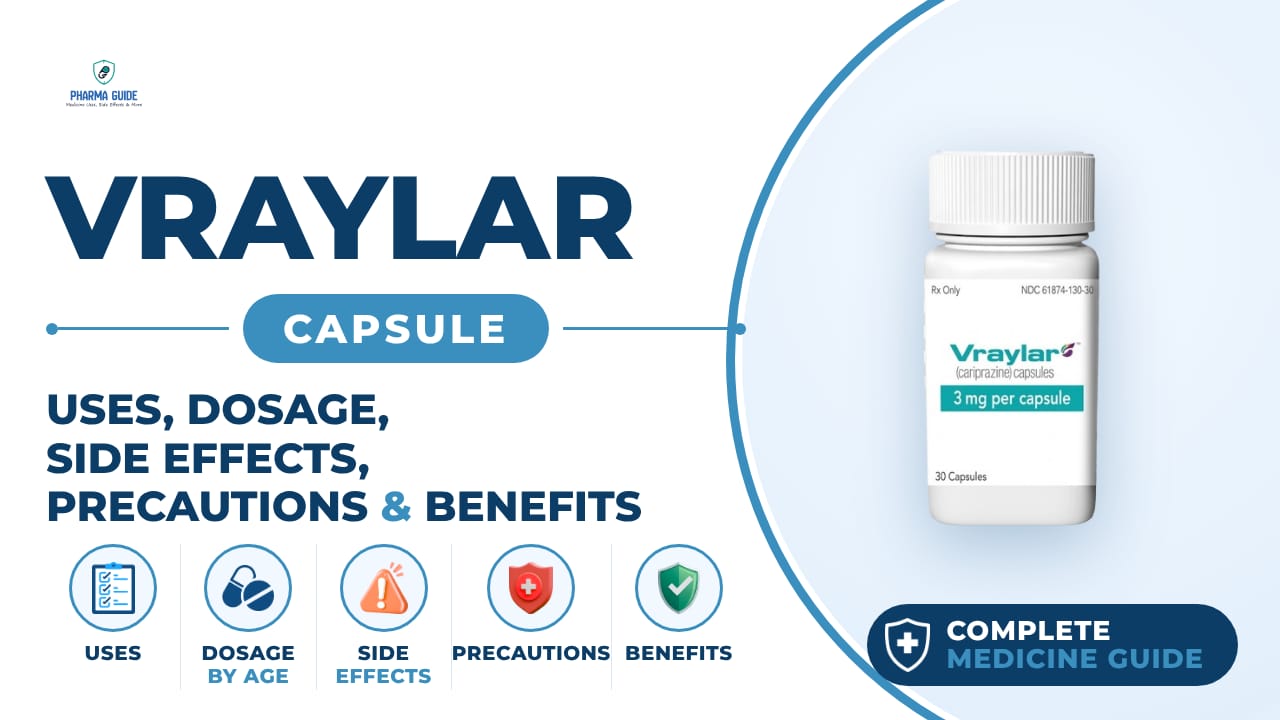
Vraylar Capsule: Uses, Dosage, Side Effects, Precautions and Alternates
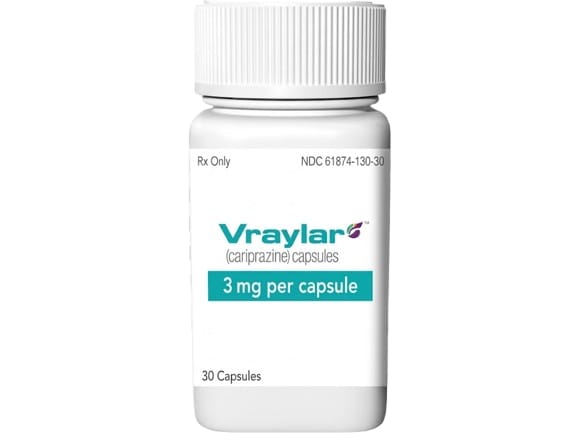
| Generic name | cariprazine |
|---|---|
| Drug class | Atypical antipsychotics |
| Forms | Capsules (0.5 mg, 0.75 mg, 1.5 mg, 3 mg, 4.5 mg, 6 mg) |
Quick overview
Vraylar Capsule (cariprazine) is a prescription atypical antipsychotic taken by mouth. It is used to treat schizophrenia, manic or mixed episodes and depressive episodes of bipolar I disorder, and as an add-on treatment for major depressive disorder. It works by acting on dopamine and serotonin receptors in the brain to help balance mood and thought-related brain chemicals.
What is Vraylar Capsule
Vraylar is a prescription medicine used to treat certain mental health conditions. It belongs to a group of medicines called atypical antipsychotics and comes as a capsule taken by mouth.
Vraylar Capsule uses
- Schizophrenia in adults and adolescents 13 years and older
- Acute manic or mixed episodes associated with bipolar I disorder in patients 10 years of age and older
- Depressive episodes associated with bipolar I disorder (bipolar depression) in adults
- Major depressive disorder (MDD) in adults, as an add-on treatment with an antidepressant
Benefits of Vraylar Capsule
- Improves depression symptoms in bipolar depression and major depressive disorder
- Improves psychiatric signs and symptoms in schizophrenia
- Reduces the severity of manic symptoms such as racing thoughts, impulsivity, decreased need for sleep, and inflated self-esteem
How Vraylar Capsule works
Vraylar is believed to work by balancing brain chemicals called serotonin and dopamine, which affect thoughts and mood. It acts on certain dopamine and serotonin receptors in the brain.
Vraylar Capsule dosage
Take Vraylar once a day, with or without food. It may take several weeks before your symptoms improve; keep using the medication as directed and tell your doctor if symptoms do not improve. Take exactly as prescribed and follow all directions on your prescription label. Your doctor may occasionally change your dose.
Vraylar may be taken either in the morning or at night, depending on your preference; some people find a certain time of day helps with certain side effects. If you miss a dose, take it as soon as you remember, but skip the missed dose if it is almost time for your next dose; do not take two doses at one time.
| Age group | Dose |
|---|---|
| Under 18 years | Not recommended |
| 18–60 years | 1.5 mg, once/day |
| 60+ years | 1.5 mg, once/day |
Available forms and strengths
Capsules: 0.5 mg, 0.75 mg, 1.5 mg, 3 mg, 4.5 mg, 6 mg
Side effects of Vraylar Capsule
Common
- Tremors
- Uncontrolled body movements
- Difficulty moving or slow movements (extrapyramidal symptoms)
- Restlessness or inability to sit still (akathisia)
- Sleepiness
- Nausea
- Vomiting
- Indigestion
- Constipation
- Feeling tired
- Trouble sleeping
- Increased appetite
- Dizziness
- Headache
- Diarrhea
- Heartburn
- Stomach pain
- Toothache
- Agitation
- Nervousness
- Weight gain
Serious
- Severe allergic reaction (hives, trouble breathing, swelling of face, lips, tongue, or throat)
- Severe skin reaction (Stevens-Johnson syndrome)
- Neuroleptic malignant syndrome (very stiff muscles, high fever, sweating, confusion, fast or uneven heartbeat)
- Uncontrolled muscle movements of the face, tongue, or body that may become permanent (tardive dyskinesia)
- High blood sugar (increased thirst, increased urination, dry mouth, fruity breath odor)
- Changes in cholesterol, triglycerides, or weight (metabolic changes)
- Signs of low white blood cell count (fever, chills, sore throat, mouth sores, frequent infections)
- Low blood pressure upon standing, light-headedness, fainting, or falls
- Seizures
- Trouble swallowing or accidentally inhaling food or drink
- Trouble controlling body temperature, feeling too hot
- New or worsening depression or anxiety, or thoughts of self-harm
- Higher risk of stroke and death in older adults with dementia-related psychosis
Warnings and precautions
- Vraylar is not approved for use in older adults with dementia-related psychosis because of an increased risk of death.
- Antidepressant medicines, including Vraylar when combined with an antidepressant, may increase suicidal thoughts or actions in some children and young adults, especially in the first few months of treatment or when the dose is changed.
- Vraylar may make it harder for your body to cool itself down. Strenuous exercise, extreme heat, dehydration, and certain medications can raise your body temperature, so use caution in these situations.
- High doses or long-term use of Vraylar can cause a serious movement disorder that may not be reversible, and the risk increases the longer you use the medicine, especially in older adults.
- Taking antipsychotic medicine in the last 3 months of pregnancy may cause withdrawal symptoms, breathing problems, feeding problems, fussiness, tremors, and limp or stiff muscles in the newborn. Tell your doctor right away if you become pregnant, and do not stop taking Vraylar without your doctor's advice.
- It is not known if Vraylar passes into breast milk. It may not be safe to breastfeed while using this medicine, so ask your doctor about any risks.
- Tell your doctor if you have kidney disease or liver disease before taking Vraylar.
- Avoid drinking alcohol while taking Vraylar, as dangerous side effects could occur.
- Avoid driving or hazardous activity until you know how this medicine affects you, since dizziness or drowsiness can cause falls, accidents, or severe injuries.
Storage
- Store Vraylar at room temperature, between 68°F to 77°F (20°C to 25°C)
- Protect the 3 mg and 4.5 mg capsules from light to help prevent color fading
- Can be exposed to temperatures between 59°F to 86°F (15°C to 30°C) for shorter periods of time, such as when transporting it
- Store in a cool, dry place
When to see a doctor
- Get emergency medical help if you have signs of an allergic reaction such as hives, trouble breathing, or swelling of your face, lips, tongue, or throat.
- Call your healthcare provider right away if you have a severe nervous system reaction with very stiff muscles, high fever, sweating, confusion, and a fast or uneven heartbeat.
- Call your healthcare provider right away if you have uncontrolled muscle movements of the face, tongue, or body that may become permanent.
- Call your healthcare provider right away if you have signs of high blood sugar such as increased thirst, increased urination, dry mouth, or fruity breath odor.
- Call your healthcare provider right away if you have signs of a low white blood cell count, such as fever, chills, sore throat, mouth sores, or frequent infections.
- Call your healthcare provider right away if you feel light-headed or faint when you stand up, or if you have a fall.
- Call your healthcare provider right away if you have a seizure.
- Call your healthcare provider right away if you have trouble swallowing, or accidentally inhale food or drink.
- Call your healthcare provider right away if you have trouble controlling your body temperature and feel too hot.
- Call your healthcare provider right away if you have new or worsening depression or anxiety, or thoughts of self-harm.
- Seek emergency medical attention or contact a poison control center if you think you have taken too much Vraylar.
Alternatives
- Lurasidone
- Brexpiprazole
- Aripiprazole
Watch the video
FAQs
What is Vraylar Capsule used for?
Vraylar is used to treat schizophrenia, acute manic or mixed episodes of bipolar I disorder, depressive episodes of bipolar I disorder, and as an add-on treatment with an antidepressant for major depressive disorder.
How should I take Vraylar Capsule?
Vraylar is taken once a day, with or without food, exactly as prescribed. It may take several weeks before symptoms improve. If a dose is missed, take it as soon as remembered unless it is almost time for the next dose, in which case the missed dose should be skipped.
What are the common side effects of Vraylar Capsule?
Common side effects include tremors, uncontrolled body movements, restlessness, sleepiness, nausea, vomiting, indigestion, constipation, tiredness, trouble sleeping, increased appetite, dizziness, headache, diarrhea, and weight gain.
Who should not take Vraylar Capsule?
Vraylar is not approved for older adults with dementia-related psychosis due to an increased risk of death, and it is not recommended for use in those under 18 years old.
Can Vraylar Capsule be taken during pregnancy?
Taking antipsychotic medicine like Vraylar in the last 3 months of pregnancy may cause withdrawal symptoms, breathing problems, feeding problems, fussiness, tremors, or limp or stiff muscles in the newborn, so you should tell your doctor right away if you become pregnant.
General information, not medical advice
Your prescriber and the leaflet in your pack know your situation. This page does not.
- Follow your prescriber and the leaflet
- Don't start, stop, or change a dose on your own
- Doses and warnings differ by country and product
Sources
Video
Related medicines

Abilify Mycite Tablet: Uses, Dosage, Side Effects, Precautions and Alternates
Atypical antipsychotics
Abilify Mycite Tablet combines aripiprazole with a sensor to track doses. Learn its uses for schizophrenia, bipolar disorder, dosage, and side effects.

Risperdal Tablet: Uses, Dosage, Side Effects, Precautions and Alternates
Atypical antipsychotics
Risperdal Tablet (risperidone) treats schizophrenia, bipolar mania, and autism-related irritability. Learn dosage, side effects, warnings, and precautions.