
Safety
General information, not medical advice
Your prescriber and the leaflet in your pack know your situation. This page does not.
- Follow your prescriber and the leaflet
- Don't start, stop, or change a dose on your own
- Doses and warnings differ by country and product
Risperdal Tablet: Uses, Dosage, Side Effects, Precautions and Alternates
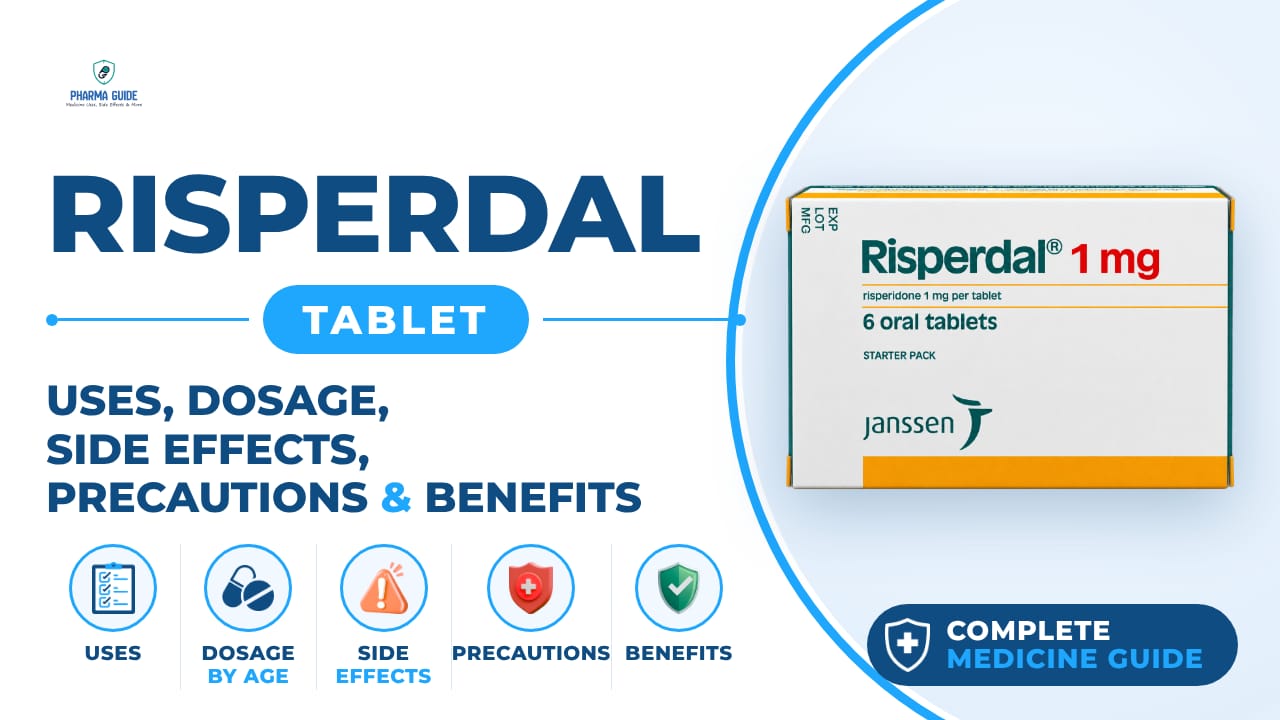
| Generic name | risperidone |
|---|---|
| Drug class | Atypical antipsychotics |
| Forms | Tablets, Oral solution (liquid), Orally disintegrating tablets |
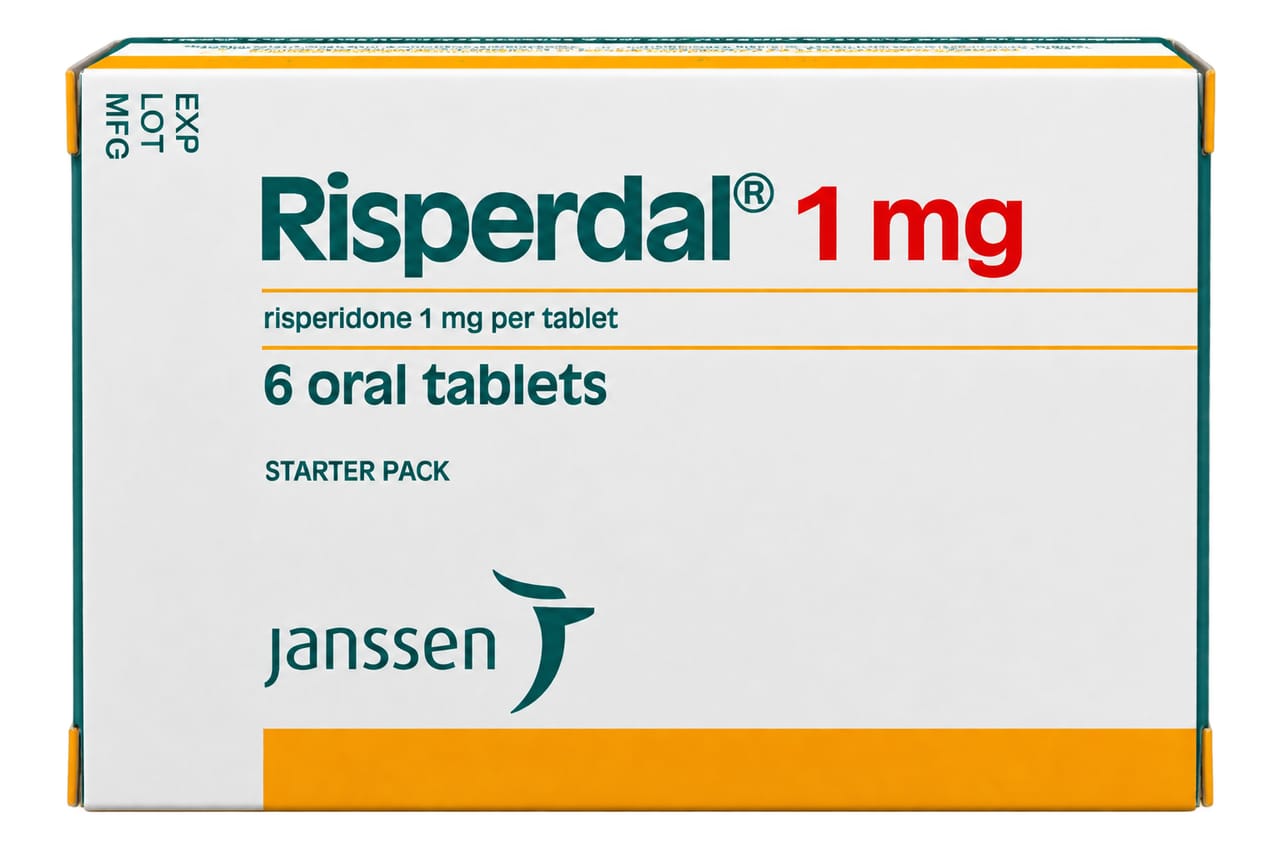
Quick overview
Risperdal Tablet (risperidone) is an atypical antipsychotic that works by changing the effects of certain chemicals in the brain. It is used to treat schizophrenia, bipolar mania, and irritability associated with autistic disorder in specific age groups. It may take several weeks before symptoms improve, and it should be used exactly as prescribed, with dosing individualized by age and health condition.
What is Risperdal Tablet
Risperdal is an antipsychotic medicine that works by changing the effects of chemicals in the brain. Its generic name is risperidone, and it belongs to the atypical antipsychotics drug class.
Risperdal Tablet uses
- Treatment of schizophrenia in adults and adolescents aged 13-17 years
- Alone, or with lithium or valproate, for short-term treatment of acute manic or mixed episodes of Bipolar I Disorder in adults, and alone in children and adolescents aged 10-17 years
- Treatment of irritability associated with autistic disorder in children and adolescents aged 5-16 years
Benefits of Risperdal Tablet
- Can help control symptoms of schizophrenia, bipolar mania, and autism-related irritability, though it may take several weeks before symptoms improve
- Effective at delaying relapse in patients with schizophrenia who had been clinically stable
How Risperdal Tablet works
Risperidone blocks certain brain chemical receptors, mainly dopamine and serotonin receptors, which is thought to help reduce symptoms like hallucinations, delusions, and mood instability.
Risperdal Tablet dosage
Risperdal can be taken with or without food. Take it at around the same time each day; it can be taken once or twice a day. Swallow the tablet whole with a drink of water; the score line is only there to help split the tablet if you have trouble swallowing it whole. Do not change or stop your dose without talking to your doctor first.
It may take up to several weeks before symptoms improve; keep taking the medicine as directed and tell your doctor if symptoms do not improve. Do not stop taking this medicine suddenly unless your doctor tells you to; your dose may need to be lowered gradually. Elderly patients, and those with kidney or liver problems, are usually started on a lower dose.
| Age group | Dose |
|---|---|
| Under 5 Years | Not recommended unless prescribed by a doctor |
| 5–17 Years | Usually 0.5 mg/day initially; adjusted based on condition |
| Adults (18–64 Years) | Usually 1–2 mg/day initially; may increase up to 4–6 mg/day depending on condition |
| Older Adults (65+ years) | Usually 0.5 mg once or twice daily initially; adjusted carefully |
Available forms and strengths
- Tablets
- Oral solution (liquid)
- Orally disintegrating tablets
Side effects of Risperdal Tablet
Common
- Headache
- Dizziness, drowsiness, feeling tired
- Tremors, twitching, or uncontrollable muscle movements
- Agitation, anxiety, restless feeling
- Depressed mood
- Dry mouth, upset stomach, diarrhea, constipation
- Weight gain
- Cold symptoms such as stuffy nose, sneezing, sore throat
- Increased appetite
- Difficulty falling or staying asleep
Serious
- Uncontrolled muscle movements in the face (chewing, lip smacking, frowning, tongue movement, blinking or eye movement)
- Breast swelling or tenderness, nipple discharge, impotence, lack of interest in sex, missed menstrual periods
- Severe nervous system reaction: very stiff muscles, high fever, sweating, confusion, fast or uneven heartbeats, tremors, feeling like you might pass out
- Low white blood cells: sudden weakness or ill feeling, fever, chills, sore throat, mouth sores, red or swollen gums, trouble swallowing, skin sores, cold or flu symptoms, cough, trouble breathing
- Low platelets: easy bruising, unusual bleeding, purple or red pinpoint spots under the skin
- High blood sugar: increased thirst, increased urination, dry mouth, fruity breath odor
- Painful erection lasting 4 hours or longer
- Severe skin reaction: fever, sore throat, burning eyes, skin pain, red or purple skin rash with blistering and peeling
- Signs of an allergic reaction: hives, difficulty breathing, swelling of the face, lips, tongue, or throat
- Stroke or mini-stroke: sudden change in mental state, weakness or numbness of face, arms, or legs, especially on one side, or slurred speech
Warnings and precautions
- Taking this medicine during the last three months of pregnancy may cause problems in the newborn, such as withdrawal symptoms, breathing problems, feeding problems, fussiness, tremors, and limp or stiff muscles. Tell your doctor if you become pregnant or plan to become pregnant.
- This medicine can pass into breast milk and may cause side effects in the baby, so women taking it should not breast-feed.
- People with kidney problems may need a lower starting dose and slower dose increases because the body may have less ability to clear the drug.
- People with liver problems may need a lower starting dose, since liver impairment can increase the amount of active drug in the blood.
- Avoid drinking alcohol while taking this medicine, since it can increase drowsiness and other side effects.
- This medicine may impair your thinking or reactions, so be careful driving or doing anything that requires you to be alert until you know how it affects you.
- Elderly patients with dementia-related psychosis treated with antipsychotic drugs have a higher risk of death. This medicine is not approved for treating dementia-related psychosis.
- This medicine may make you more sensitive to very hot or cold temperatures, making it easier to become overheated, dehydrated, or dangerously cold. Drink plenty of fluids, especially in hot weather and during exercise.
- Elderly patients with dementia-related psychosis have a higher chance of stroke or mini-stroke while taking this type of medicine.
- Getting up too quickly from sitting or lying down may cause dizziness, which can lead to falls or injuries.
Storage
- Store at room temperature away from moisture, heat, and light
- Keep the tablets in the original package until you are ready to use them
- Keep out of the reach of children
- Do not use the medicine after the expiry date on the packaging
- Return unused medicine to your pharmacist; do not dispose of it in drains or toilets
When to see a doctor
- Stop taking this medicine and call your doctor right away if you have fever, stiff muscles, confusion, sweating, fast or uneven heartbeats, restless muscle movements in your face or neck, tremor, trouble swallowing, feeling light-headed, or fainting.
- Get emergency medical help right away if you notice signs of an allergic reaction such as hives, difficulty breathing, or swelling of the face, lips, tongue, or throat.
- Get medical help right away if you have a painful erection lasting 4 hours or longer.
- If you think you may have taken too much of this medicine, seek emergency medical attention or contact your local poison control center right away.
Alternatives
- Zyprexa
- Seroquel
- Geodon
Watch the video
FAQs
What is Risperdal Tablet used for?
Risperdal is used to treat schizophrenia in adults and adolescents aged 13-17, acute manic or mixed episodes of Bipolar I Disorder in adults and children aged 10-17, and irritability associated with autistic disorder in children and adolescents aged 5-16.
How does Risperdal Tablet work?
Risperidone blocks certain brain chemical receptors, mainly dopamine and serotonin receptors, which is thought to help reduce symptoms like hallucinations, delusions, and mood instability.
How long does it take for Risperdal Tablet to work?
It may take several weeks before symptoms improve, so the medicine should be continued as directed even if improvement is not immediate, and a doctor should be told if symptoms do not improve.
Can Risperdal Tablet be taken during pregnancy or breastfeeding?
Taking this medicine during the last three months of pregnancy may cause problems in the newborn such as withdrawal symptoms and breathing issues. It can also pass into breast milk, so women taking it should not breast-feed.
What are the common side effects of Risperdal Tablet?
Common side effects include headache, dizziness, drowsiness, tremors or uncontrollable muscle movements, agitation, dry mouth, upset stomach, weight gain, increased appetite, and difficulty sleeping.
General information, not medical advice
Your prescriber and the leaflet in your pack know your situation. This page does not.
- Follow your prescriber and the leaflet
- Don't start, stop, or change a dose on your own
- Doses and warnings differ by country and product
Sources
- Drugs.com Risperdal Professional Monograph
- RISPERDAL Prescribing Information (FDA)
- RISPERDAL CONSTA Prescribing Information (FDA)
- Talkspace: Risperdal (Risperidone) Medication Overview
- MedlinePlus: Risperidone
- Risperdal Patient Information Leaflet
Video
Related medicines
Abilify Mycite Tablet: Uses, Dosage, Side Effects, Precautions and Alternates
Atypical antipsychotics
Abilify Mycite Tablet combines aripiprazole with a sensor to track doses. Learn its uses for schizophrenia, bipolar disorder, dosage, and side effects.
Vraylar Capsule: Uses, Dosage, Side Effects, Precautions and Alternates
Atypical antipsychotics
Vraylar Capsule (cariprazine) treats schizophrenia and bipolar disorder episodes, and adds to antidepressants for MDD. Learn uses, dosage, and side effects.