
Safety
General information, not medical advice
Your prescriber and the leaflet in your pack know your situation. This page does not.
- Follow your prescriber and the leaflet
- Don't start, stop, or change a dose on your own
- Doses and warnings differ by country and product
Razadyne Tablet: Uses, Dosage, Side Effects, Precautions and Alternates
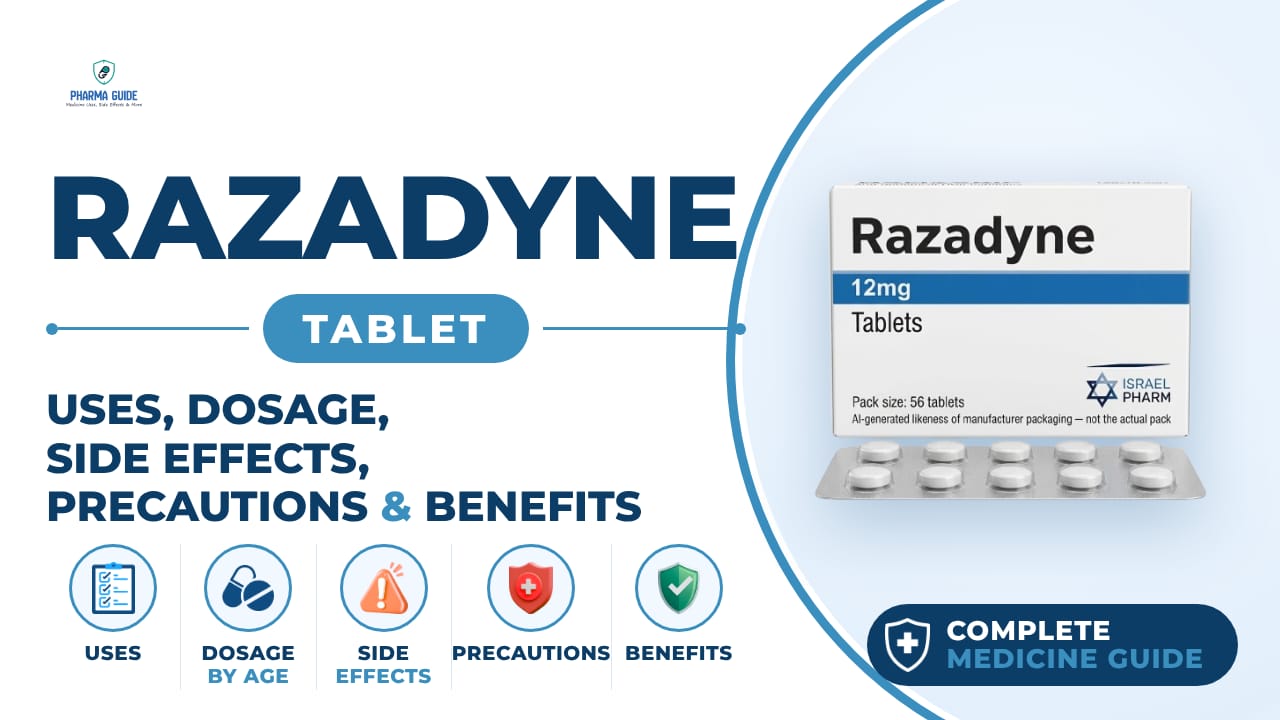
| Generic name | galantamine |
|---|---|
| Drug class | Cholinesterase inhibitor |
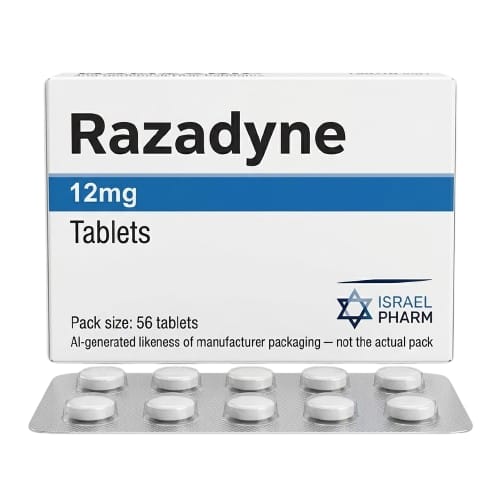
| Forms | Tablet, Extended-release capsule, Oral solution |
Quick overview
Razadyne Tablet (generic name galantamine) is a cholinesterase inhibitor used to treat mild to moderate dementia caused by Alzheimer's disease. It comes as tablets, extended-release capsules, and an oral solution, and works by increasing a natural brain chemical needed for memory, thinking, and reasoning. It is typically taken daily under a doctor's guidance, and users should be aware of possible side effects and precautions.
What is Razadyne Tablet
Razadyne is a prescription medicine used to treat mild to moderate dementia caused by Alzheimer's disease. It comes as tablets, extended-release capsules, and an oral solution.
Razadyne Tablet uses
- Mild to moderate Alzheimer's disease
- Memory impairment associated with Alzheimer's disease
- Cognitive decline
- Difficulty with thinking and reasoning
- Problems with daily functioning caused by Alzheimer's disease
Benefits of Razadyne Tablet
- Helps manage Alzheimer's disease symptoms.
- Supports memory function.
- May improve attention and thinking.
- Helps maintain daily functioning.
- May help with cognitive symptoms.
How Razadyne Tablet works
Razadyne works by increasing the amount of a natural brain chemical called acetylcholine, which the brain needs for memory, thinking, and reasoning. People with dementia usually have lower levels of this substance.
Razadyne Tablet dosage
Take exactly as prescribed; do not use in larger or smaller amounts or for longer than recommended. Take with a full glass of water, and drink plenty of fluids each day to avoid dehydration while on this medicine.
The extended-release capsule is usually taken once a day in the morning and works best when taken with food. Do not crush, chew, break, or open the extended-release capsule; swallow it whole. The short-acting tablet or oral solution is usually taken twice a day, with meals. Measure the liquid form with a proper dosing device, not a regular spoon.
If a dose is missed, take it as soon as remembered, but skip it if it's almost time for the next dose; do not double up. If treatment has been stopped for more than a few days, talk to your doctor before restarting, as a lower starting dose may be needed. Tell your surgeon you are taking this medicine before any surgery, as you may need to stop it for a short time.
| Age group | Dose |
|---|---|
| Under 18 years | Not recommended |
| 18–64 years | 16 mg/day |
| 65+ years | 16 mg/day |
Available forms and strengths
- Tablet
- Extended-release capsule
- Oral solution
Side effects of Razadyne Tablet
Common
- Nausea
- Vomiting
- Diarrhea
- Loss of appetite
- Weight loss/decrease
- Headache
- Dizziness
Serious
- Chest pain or slow heart rate
- Little or no urinating
- Blood in urine
- Signs of stomach bleeding (bloody or tarry stools, coughing up blood, or vomit that looks like coffee grounds)
- Liver problems (nausea, upper stomach pain, itching, tiredness, loss of appetite, dark urine, clay-colored stools, yellowing of skin or eyes)
- Dehydration symptoms (feeling very thirsty or hot, unable to urinate, heavy sweating, hot and dry skin)
- Light-headed feeling, like you might pass out
- Severe skin reaction (fever, sore throat, swelling of face or tongue, burning eyes, skin pain, followed by a red or purple rash that spreads and causes blistering and peeling)
- Signs of an allergic reaction (hives, difficulty breathing, swelling of face, lips, tongue, or throat)
- Seizures
Warnings and precautions
- Tell your doctor if you are pregnant or plan to become pregnant, since it is not known whether this medicine could harm an unborn baby.
- Tell your doctor if you are breastfeeding or plan to, as it is not known whether this medicine passes into breast milk or could affect a nursing baby.
- Tell your doctor if you have kidney disease, as your dose may need to be adjusted or this medicine may not be recommended.
- Tell your doctor if you have liver disease; people with moderate liver impairment usually need a lower dose, and this medicine is not recommended for severe liver impairment.
- This medicine may affect your thinking or reactions, so be careful when driving or doing anything that requires you to be alert.
- Serious skin reactions (including Stevens-Johnson syndrome) have happened with this medicine. Stop taking it and get medical help right away at the first sign of any skin rash.
- This medicine can affect heart rhythm, causing a slow heart rate or heart block; all patients should be considered at risk for these effects.
- This medicine can increase stomach acid and should be used with caution in people at risk for ulcers or stomach bleeding, such as those with a history of ulcers or who take NSAID pain relievers.
- This medicine may cause difficulty urinating due to bladder outflow obstruction.
- This medicine should be used carefully in people with a history of severe asthma or chronic obstructive pulmonary disease (COPD), and breathing should be monitored.
- This medicine is not recommended for people with mild cognitive impairment (a condition different from Alzheimer's disease), based on study data on deaths in that group.
Storage
- Razadyne ER extended-release capsules should be stored at 25°C (77°F); excursions permitted between 15°C to 30°C (59°F to 86°F)
- Razadyne Tablets should be stored at 25°C (77°F); excursions permitted to 15-30°C (59-86°F)
- Keep out of reach of children
When to see a doctor
- Get emergency medical help if you have signs of an allergic reaction such as hives, difficulty breathing, or swelling of your face, lips, tongue, or throat.
- Stop using Razadyne and call your doctor right away if you notice any skin rash, no matter how mild it seems.
- Call your doctor right away if you have chest pain or a slow heart rate, little or no urinating, blood in your urine, signs of stomach bleeding, signs of liver problems, signs of dehydration, or a light-headed feeling like you might pass out.
- Seek emergency medical attention if you think you have taken too much of this medicine, and contact your local poison control center.
Alternatives
- Exelon
- Memantine
- Donepezil
Watch the video
FAQs
What is Razadyne Tablet used for?
Razadyne is a prescription medicine used to treat mild to moderate dementia caused by Alzheimer's disease, including memory impairment, cognitive decline, and difficulty with thinking and reasoning.
How does Razadyne Tablet work?
Razadyne works by increasing the amount of a natural brain chemical called acetylcholine, which the brain needs for memory, thinking, and reasoning. People with dementia usually have lower levels of this substance.
How should Razadyne Tablet be taken?
Take exactly as prescribed with a full glass of water. The extended-release capsule is usually taken once a day in the morning with food and should be swallowed whole, not crushed or chewed. The short-acting tablet or oral solution is usually taken twice a day with meals.
What are the common side effects of Razadyne Tablet?
Common side effects include nausea, vomiting, diarrhea, loss of appetite, weight loss, headache, and dizziness.
What precautions should be taken with Razadyne Tablet?
Tell your doctor if you are pregnant, breastfeeding, or have kidney or liver disease. This medicine can affect heart rhythm, increase stomach acid, cause difficulty urinating, and should be used carefully in people with severe asthma or COPD. It may also affect thinking or reactions, so caution is needed when driving.
General information, not medical advice
Your prescriber and the leaflet in your pack know your situation. This page does not.
- Follow your prescriber and the leaflet
- Don't start, stop, or change a dose on your own
- Doses and warnings differ by country and product
Sources
Video
Related medicines
Galantamine Tablet: Uses, Dosage, Side Effects, Precautions and Alternates
Cholinesterase inhibitor
Galantamine Tablet treats mild to moderate Alzheimer's dementia by boosting acetylcholine. Learn uses, dosage, side effects, and precautions here.
Exelon Capsule: Uses, Dosage, Side Effects, Precautions and Alternates
Cholinesterase inhibitor
Exelon Capsule (rivastigmine) treats mild to moderate Alzheimer's or Parkinson's dementia. Learn uses, dosage, side effects, and precautions.