
Safety
General information, not medical advice
Your prescriber and the leaflet in your pack know your situation. This page does not.
- Follow your prescriber and the leaflet
- Don't start, stop, or change a dose on your own
- Doses and warnings differ by country and product
Rennie Chewable Tablet: Uses, Dosage, Side Effects, Precautions and Alternates
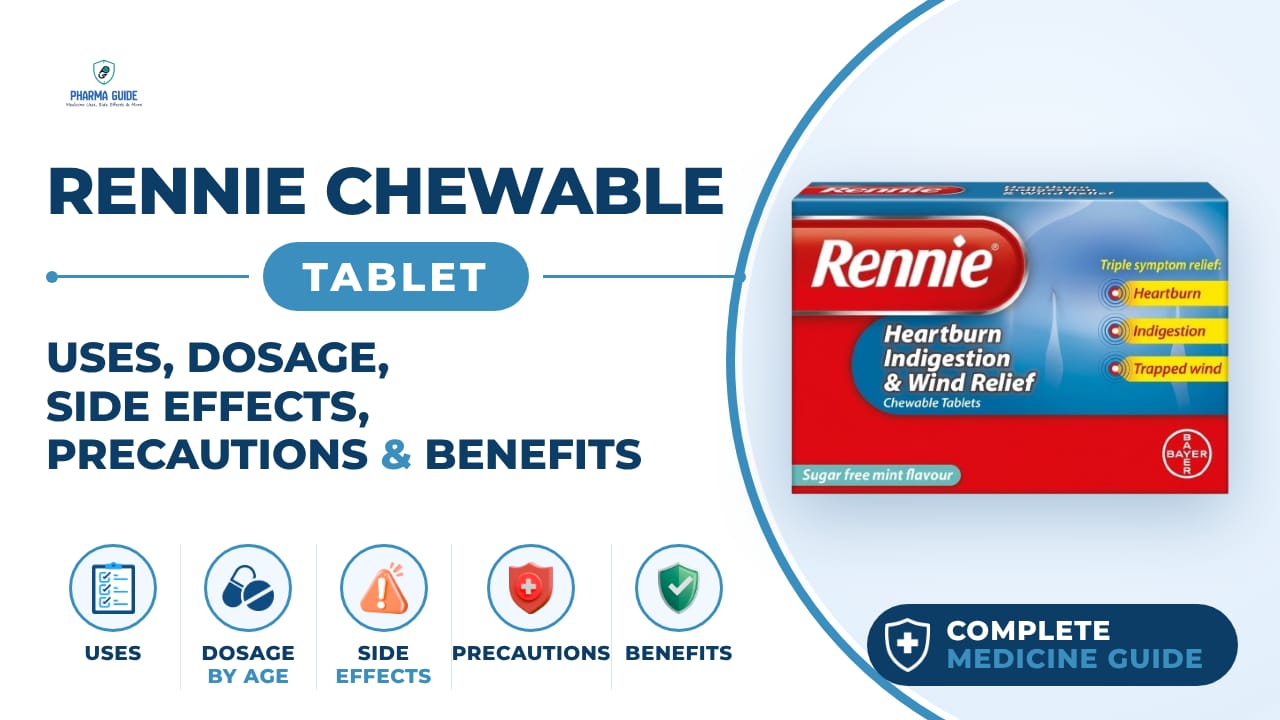
| Generic name | Calcium carbonate and magnesium carbonate |
|---|---|
| Drug class | Antacid |
| Forms | Chewable tablets, Oral suspension (liquid) |
Quick overview
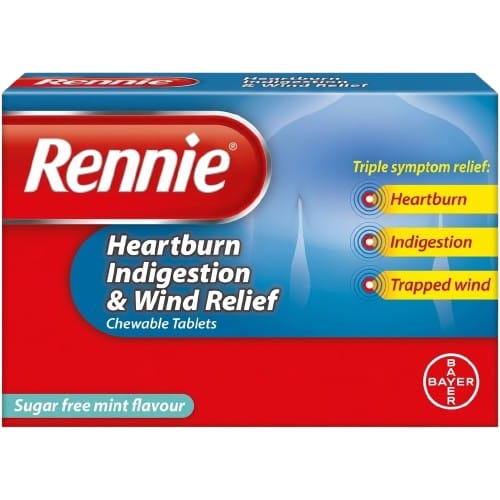
Rennie Chewable Tablet is an over-the-counter antacid containing calcium carbonate and magnesium carbonate, with some versions also containing simeticone. It is used to relieve heartburn, acid indigestion, and trapped wind, including heartburn in pregnancy. The tablets are chewed or sucked rather than swallowed whole and start working quickly to neutralise excess stomach acid.
What is Rennie Chewable Tablet
Rennie Chewable Tablets are an over-the-counter antacid medicine used to relieve heartburn, acid indigestion, and trapped wind. They contain calcium carbonate and magnesium carbonate, and some versions also contain simeticone to relieve wind and bloating.
Rennie Chewable Tablet uses
- Heartburn
- Acid indigestion (dyspepsia)
- Trapped wind and bloating
- Heartburn in pregnancy
Benefits of Rennie Chewable Tablet
- Neutralises excess stomach acid to relieve heartburn fast
- Relieves trapped wind and bloating with simeticone
- Chewable format works quickly without water needed
- Treats heartburn, indigestion, and wind in one tablet
How Rennie Chewable Tablet works
The tablets contain calcium carbonate and magnesium carbonate, which neutralise excess acid in the stomach. This reduces the burning feeling of heartburn and protects the stomach and food pipe from the acid. Some versions also contain simeticone, which breaks down trapped gas bubbles to ease bloating and wind. Because the tablets are chewed rather than swallowed whole, they start working quickly, often within minutes.
Rennie Chewable Tablet dosage
Chew or suck the tablets when symptoms occur — do not swallow them whole. Allow the tablets to dissolve fully in the mouth before swallowing. No water is needed. Tablets can be taken after meals and just before going to bed, or between meals if heartburn or stomach pain occurs. Leave 1 to 2 hours between taking this medicine and other medicines, to avoid affecting how they work. Avoid taking with large amounts of milk or dairy products. This medicine is not recommended for children under 12 years of age. Talk to your doctor if you do not feel better, or feel worse, after 7 days. It is best to avoid drinking alcohol while taking this medicine, because it can worsen symptoms.
| Age group | Dose |
|---|---|
| Under 12 years | Not recommended |
| 12–18 years | 1–2 tablets, as needed |
| 18–60 years | 1–2 tablets, as needed |
| 60+ years | 1–2 tablets, as needed |
Available forms and strengths
- Chewable tablets
- Oral suspension (liquid)
Side effects of Rennie Chewable Tablet
Common
- Constipation
- Diarrhoea
- Flatulence
- Nausea
- Stomach cramps or stomach discomfort
- Vomiting
Serious
- Hypersensitivity reactions including rash, hives, swelling of the face/lips/throat (angioedema), and severe allergic reaction (anaphylaxis)
- High calcium levels in the blood (hypercalcaemia) and high magnesium levels (hypermagnesaemia) with long-term high-dose use, causing nausea, weakness, and confusion
- Milk-alkali syndrome with prolonged high-dose use, especially in people with kidney problems
- Muscular weakness
- Rebound acid hypersecretion with prolonged use
- Increased risk of kidney stones with long-term use
Warnings and precautions
- Do not take if you are allergic to calcium carbonate, magnesium carbonate, or any other ingredient in the tablets.
- Do not take if you have high calcium levels in the blood, kidneys, or urine, or low phosphate levels in the blood.
- Do not take if you have severe kidney disease or kidney stones.
- Taking this medicine can hide the symptoms of other, more serious underlying conditions, so pain that does not go away should be checked by a doctor, especially if it could be heart-related.
- Do not take for more than 7 days without talking to a doctor.
- This medicine can affect how other medicines work, including certain antibiotics, thyroid medication, heart medicines like digoxin, bisphosphonates, and iron supplements. Leave 1 to 2 hours between doses.
- Do not take with large amounts of milk or dairy products.
- Contains sucrose and glucose, which may be harmful to teeth and should be considered by people with diabetes or sugar intolerance.
- This medicine can be used during pregnancy if taken as instructed and high doses are not used for a long time. Pregnant women should stick to the maximum recommended daily dose and avoid having a lot of milk or dairy products at the same time.
- This medicine can be used while breastfeeding if taken as instructed.
- Do not use if you have severe kidney disease or kidney stones. If you have any kidney problems, talk to your doctor before taking this medicine, because long-term use can increase calcium and magnesium levels in the blood and raise the risk of kidney stones.
- It is best to avoid alcohol while taking this medicine, as it can make indigestion symptoms worse.
Storage
- Store below 25°C in a dry place
- Keep away from direct sunlight and moisture
- Keep out of the sight and reach of children
- Do not use after the expiry date printed on the packaging
- Do not store in a bathroom or near a sink
- Do not dispose of medicines via wastewater or household waste — return unused tablets to your pharmacy
When to see a doctor
- Stop taking this medicine and get emergency medical help if you have a severe allergic reaction, such as rash, itching, swelling, or shortness of breath.
- See a doctor if you have unexplained weight loss, difficulty swallowing, or vomit blood along with your symptoms.
- Talk to a doctor if your symptoms do not improve, or get worse, after 7 days.
- If you take more than the recommended amount, drink plenty of water and contact your doctor or pharmacist. Watch for symptoms like nausea, vomiting, constipation, tiredness, increased urination, increased thirst, dehydration, and unusual muscle weakness.
Alternatives
- Maalox
- Tums
- Gaviscon
Watch the video
FAQs
What is Rennie Chewable Tablet used for?
It is used to relieve heartburn, acid indigestion, trapped wind and bloating, including heartburn during pregnancy.
How does Rennie Chewable Tablet work?
It contains calcium carbonate and magnesium carbonate, which neutralise excess stomach acid, while simeticone in some versions breaks down trapped gas bubbles to ease bloating and wind.
How should I take Rennie Chewable Tablet?
Chew or suck the tablets when symptoms occur without swallowing them whole, with no water needed, and leave 1 to 2 hours between taking this medicine and other medicines.
Can Rennie Chewable Tablet be taken during pregnancy?
Yes, it can be used during pregnancy if taken as instructed, with pregnant women sticking to the maximum recommended daily dose and avoiding large amounts of milk or dairy at the same time.
What are the side effects of Rennie Chewable Tablet?
Common side effects include constipation, diarrhoea, flatulence, nausea, stomach cramps, and vomiting, while serious effects can include allergic reactions and high calcium or magnesium levels with long-term high-dose use.
General information, not medical advice
Your prescriber and the leaflet in your pack know your situation. This page does not.
- Follow your prescriber and the leaflet
- Don't start, stop, or change a dose on your own
- Doses and warnings differ by country and product
Sources
Video
Related medicines
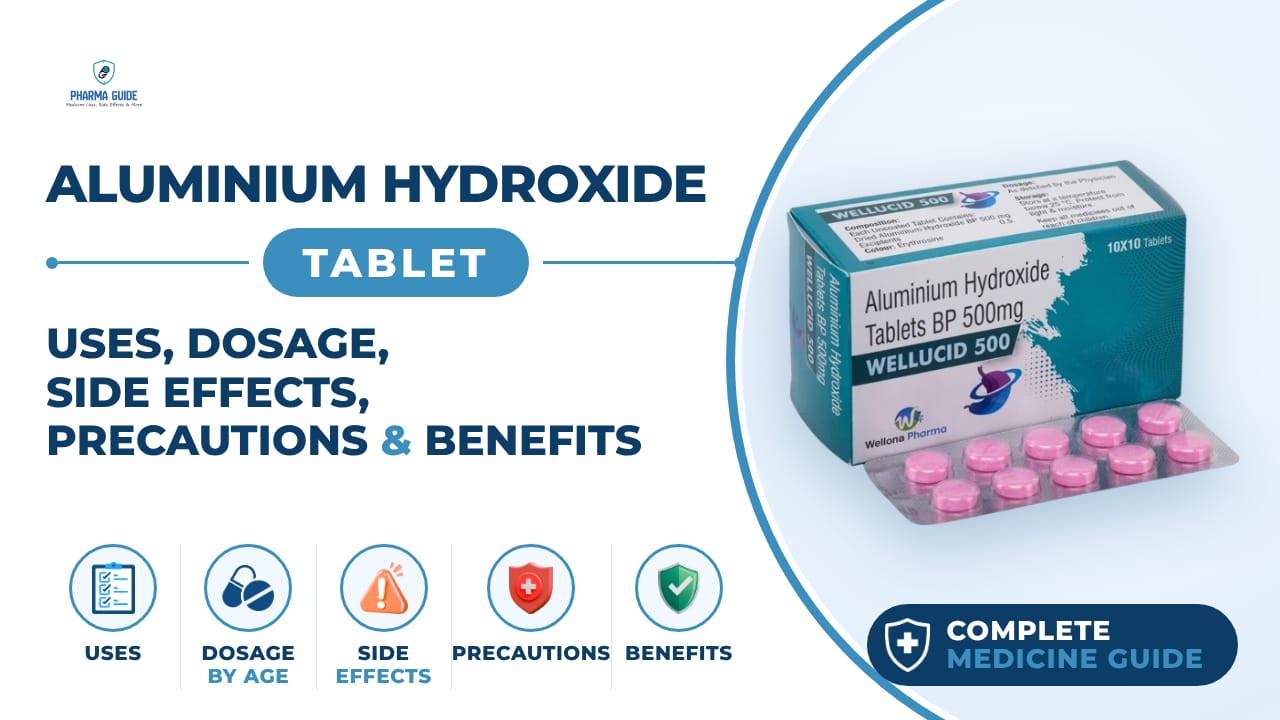
Aluminium Hydroxide Tablet: Uses, Dosage, Side Effects, Precautions and Alternates
Antacid
Aluminium Hydroxide Tablet relieves indigestion and heartburn and helps control high phosphate levels in kidney disease. Learn uses, dosage, and side effects.
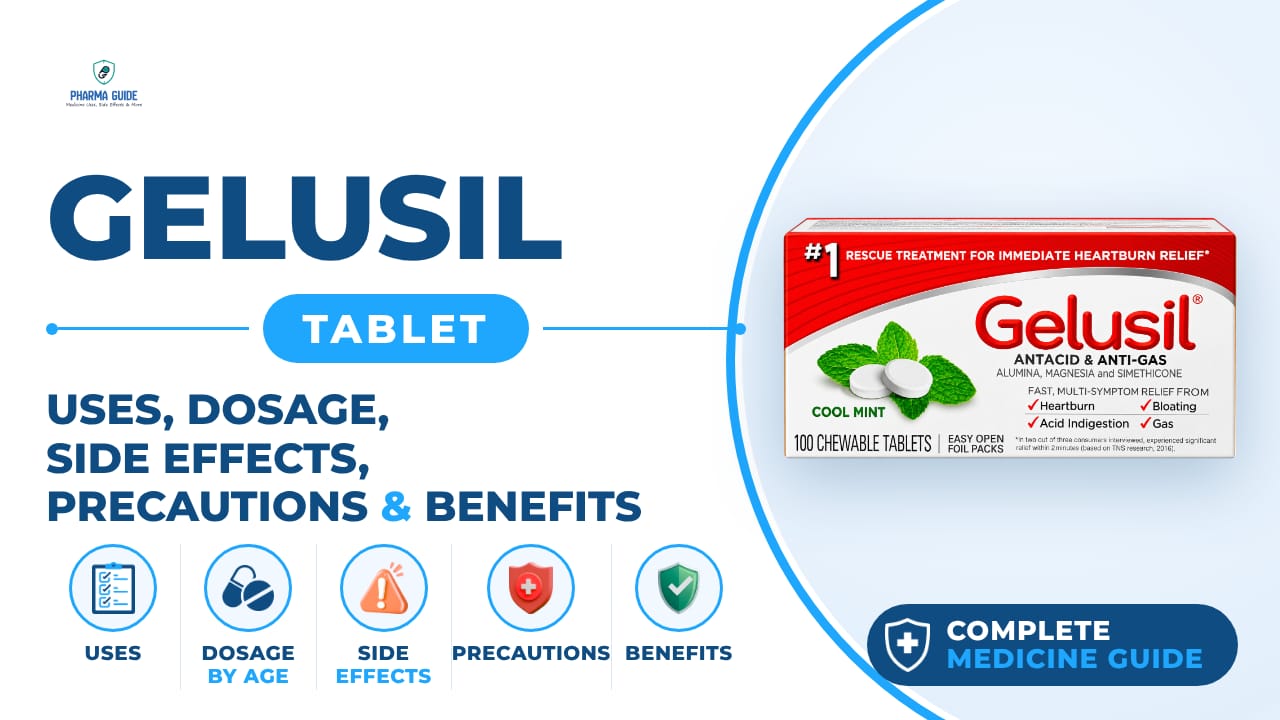
Gelusil Tablet: Uses, Dosage, Side Effects, Precautions and Alternates
Antacid
Gelusil Tablet relieves heartburn, acid indigestion, and gas by neutralizing stomach acid and breaking down gas bubbles. Learn uses, dosage, and side effects.