
Safety
General information, not medical advice
Your prescriber and the leaflet in your pack know your situation. This page does not.
- Follow your prescriber and the leaflet
- Don't start, stop, or change a dose on your own
- Doses and warnings differ by country and product
Retevmo Capsule: Uses, Dosage, Side Effects, Precautions and Alternates
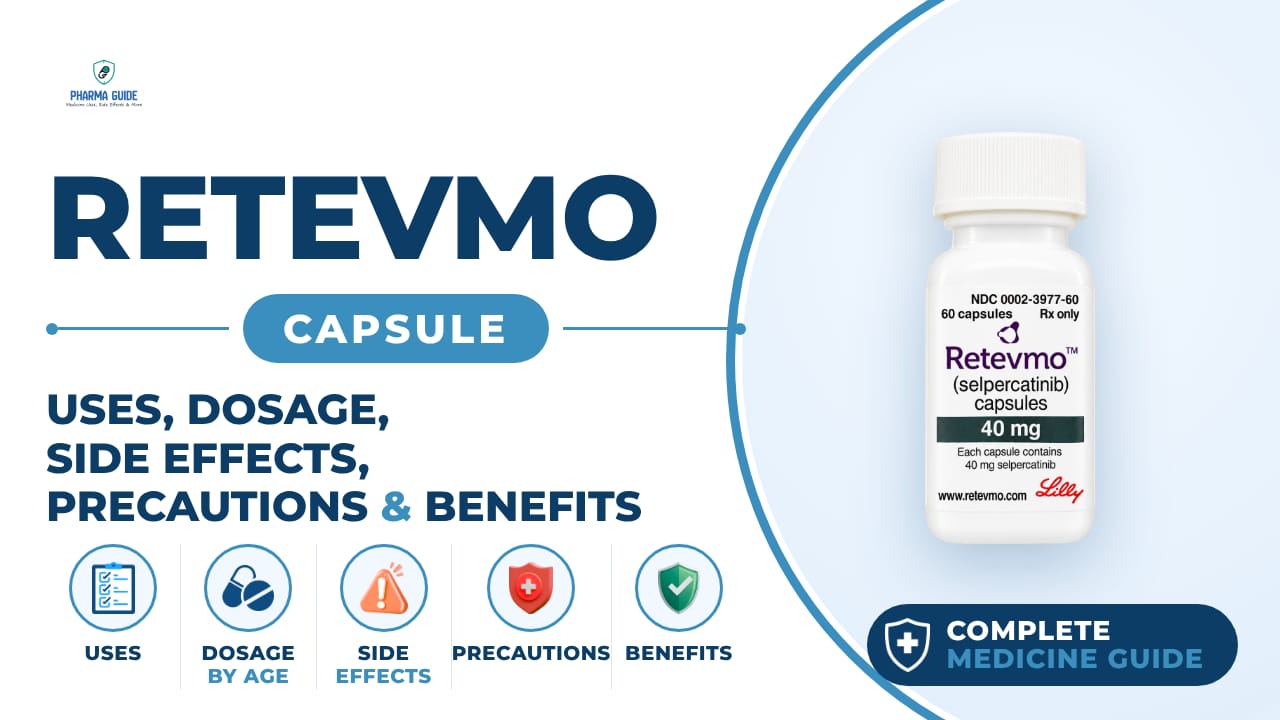
| Generic name | selpercatinib |
|---|---|
| Drug class | Kinase inhibitor |
| Forms | Capsules: 40 mg, 80 mg, Tablets: 40 mg, 80 mg, 120 mg, 160 mg |
Quick overview
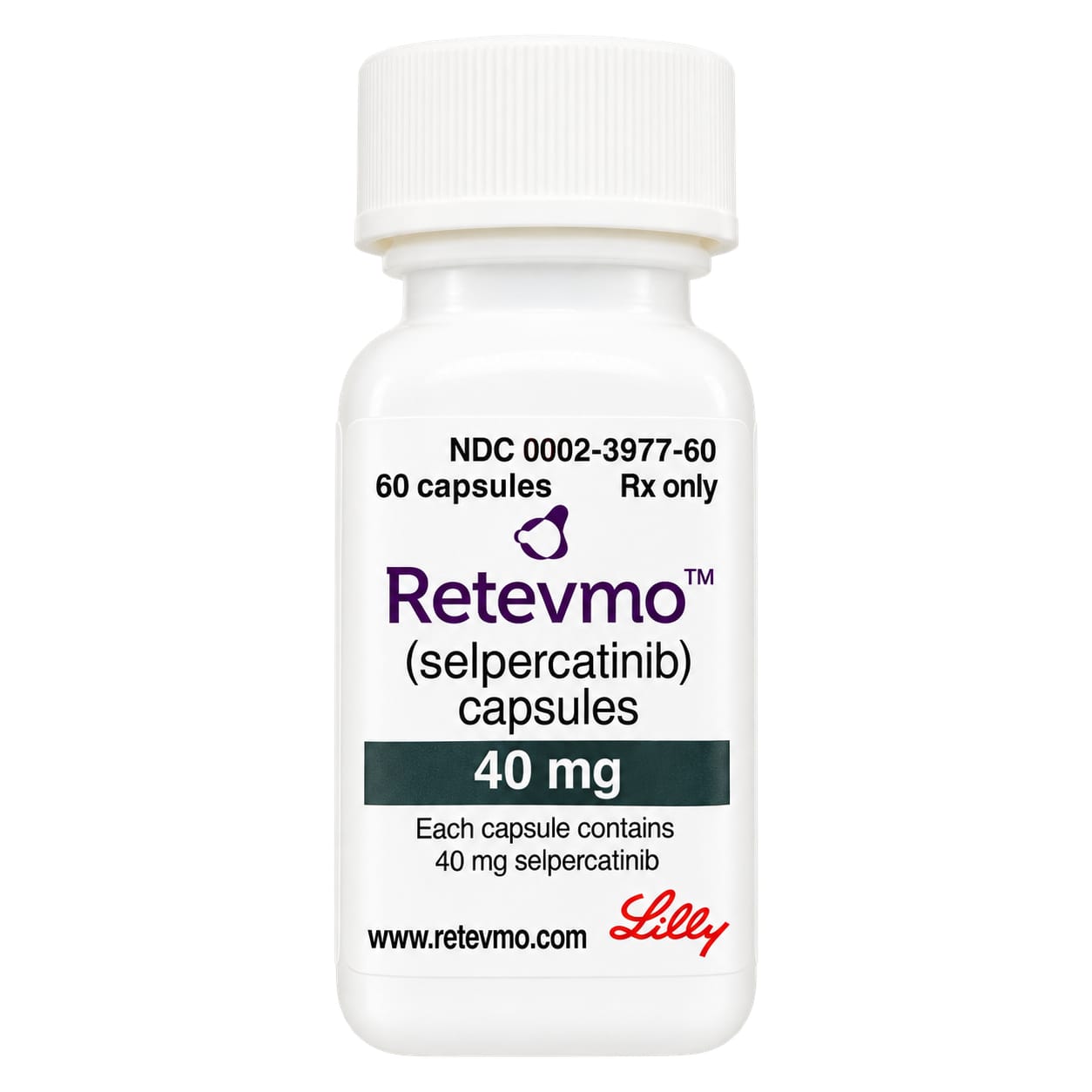
Retevmo Capsule (selpercatinib) is a prescription kinase inhibitor taken by mouth that works by blocking abnormal RET proteins driving certain cancers. It is used alone, not combined with other cancer therapies, for adults and certain children with RET-altered lung, thyroid, and other solid tumor cancers. It comes in capsule and tablet forms with different strengths, and dosing is based on age and body weight.
What is Retevmo Capsule
Retevmo is a prescription medicine taken by mouth that works by blocking abnormal RET proteins that drive the growth of certain cancers. It is used on its own, not combined with other cancer therapies.
Retevmo Capsule uses
- Adults with locally advanced or metastatic non-small cell lung cancer (NSCLC) with a RET gene fusion
- Adults and children 2 years of age and older with advanced or metastatic medullary thyroid cancer (MTC) with a RET mutation who need systemic therapy
- Adults and children 2 years of age and older with advanced or metastatic thyroid cancer with a RET gene fusion who need systemic therapy and whose cancer no longer responds to radioactive iodine (or for whom radioactive iodine is not appropriate)
- Adults and children 2 years of age and older with locally advanced or metastatic solid tumors with a RET gene fusion that have gotten worse after other treatment or who have no satisfactory treatment options
Benefits of Retevmo Capsule
- Treats certain RET fusion-positive cancers
- Treats certain RET-mutated medullary thyroid cancers
- Used for selected RET fusion-positive thyroid cancers
- Used for certain other RET fusion-positive solid tumors
- Blocks abnormal RET signaling that promotes cancer-cell growth
How Retevmo Capsule works
Retevmo blocks a protein called RET that can become abnormally active because of gene changes in some cancers. This abnormal RET protein tells cancer cells to grow and multiply. By blocking RET (and some related proteins), Retevmo can help slow or stop the growth of these cancers.
Retevmo Capsule dosage
Take Retevmo exactly as your healthcare provider tells you; do not change your dose or stop taking it unless your healthcare provider tells you to. It is usually taken by mouth twice a day, about 12 hours apart (or three times daily for some lower pediatric doses). Swallow capsules and tablets whole; do not crush or chew them.
Retevmo can be taken with or without food, unless you are also taking a proton pump inhibitor, in which case take it with food. If you take an H2 blocker, take Retevmo 2 hours before or 10 hours after the H2 blocker. If you take a locally-acting antacid, take Retevmo 2 hours before or 2 hours after the antacid.
If you or your child cannot swallow capsules or tablets, or have a feeding tube, only the 40 mg tablets can be dispersed in water or carrot puree and given by mouth or through the tube, following the product's Instructions for Use.
Do not take a missed dose if it is less than 6 hours until your next scheduled dose. If you vomit after taking a dose, do not take an extra dose; take your next dose at the regular scheduled time. Avoid taking St. John's wort, proton pump inhibitors, H2 blockers, and antacids unless your healthcare provider has told you how to manage timing with these medicines.
| Age group | Dose |
|---|---|
| 12–17 years, under 50 kg | 120 mg twice daily |
| 12–17 years, 50 kg or more | 160 mg twice daily |
| 18–64 years, under 50 kg | 120 mg twice daily |
Available forms and strengths
- Capsules: 40 mg, 80 mg
- Tablets: 40 mg, 80 mg, 120 mg, 160 mg
Side effects of Retevmo Capsule
Common
- Swelling of arms, legs, hands, and feet (edema)
- Diarrhea
- Tiredness (fatigue)
- Dry mouth
- High blood pressure
- Stomach-area (abdominal) pain
- Constipation
- Rash
- Nausea
- Headache
- Muscle and bone pain
- Cough
- Vomiting
- Shortness of breath
- Bleeding
Serious
- Liver problems (increased liver enzymes), which can sometimes be serious
- Severe or life-threatening lung inflammation (interstitial lung disease/pneumonitis)
- High blood pressure that can sometimes be severe
- Heart rhythm changes (QT interval prolongation)
- Serious bleeding events, including fatal bleeding
- Allergic reactions, including severe skin reactions such as Stevens-Johnson Syndrome
- Tumor lysis syndrome (from fast breakdown of cancer cells), which can cause kidney failure and abnormal heartbeat
- Wound healing problems after surgery
- Low thyroid hormone levels (hypothyroidism)
- Hip joint problems in children (slipped capital femoral epiphysis/slipped upper femoral epiphysis)
Warnings and precautions
- Liver problems are common and can be serious. Blood tests are needed before starting and regularly during treatment to check for liver problems.
- Severe, life-threatening, and even fatal lung inflammation (interstitial lung disease/pneumonitis) can occur.
- This medicine should not be started in people with uncontrolled high blood pressure; blood pressure must be controlled first and monitored regularly during treatment.
- This medicine can cause a heart rhythm problem called QT interval prolongation. Heart monitoring and blood tests may be needed, especially if combined with certain other medicines.
- Serious, including fatal, bleeding events can happen during treatment.
- Allergic reactions, including severe skin reactions such as Stevens-Johnson Syndrome, can occur, especially in the first month of treatment.
- Tumor lysis syndrome, caused by rapid breakdown of cancer cells, can occur and may require hospitalization.
- Wounds may not heal properly during treatment, so this medicine should be stopped before planned surgery.
- This medicine can cause low thyroid hormone levels (hypothyroidism); thyroid function should be checked before and during treatment.
- This medicine can harm an unborn baby.
- A hip joint problem called slipped capital femoral epiphysis/slipped upper femoral epiphysis can occur in children and adolescents taking this medicine.
- This medicine can harm an unborn baby, so pregnancy should be avoided during treatment. A pregnancy test is needed before starting, and effective birth control should be used during treatment and for one week after the last dose, for both females and males with partners who could become pregnant.
- Breastfeeding is not recommended during treatment and for one week after the last dose because it is not known if the drug passes into breast milk, and it could seriously harm a nursing baby.
- No dose change is needed for people with mild to severe kidney impairment. There isn't enough information yet to know the right dose for people with end-stage kidney disease.
- People with severe liver problems need a lower dose of this medicine. No dose change is needed for mild or moderate liver impairment, but your healthcare provider will monitor you for side effects.
- This medicine can cause dizziness, fainting, or loss of consciousness related to heart rhythm changes, so you should be cautious with activities like driving until you know how it affects you.
Storage
- Store RETEVMO capsules and tablets at room temperature between 68°F to 77°F (20°C to 25°C)
- Keep RETEVMO and all medicines out of the reach of children
When to see a doctor
- Get help right away for signs of liver problems: yellowing of skin or eyes, dark tea-colored urine, extreme sleepiness, unusual bleeding or bruising, loss of appetite, nausea or vomiting, or pain on the upper right side of the stomach.
- Get help right away for new or worsening lung symptoms such as shortness of breath, cough, or fever.
- Contact your healthcare provider if you notice signs of high blood pressure, such as confusion, headaches, shortness of breath, dizziness, or chest pain.
- Get help right away for signs of heart rhythm problems such as loss of consciousness, fainting, dizziness, or a change in heartbeat.
- Contact your healthcare provider for any signs of bleeding, such as vomiting blood, coffee-ground vomit, pink or brown urine, black or tarry stools, coughing up blood, unusual bruising, heavy menstrual or vaginal bleeding, frequent nosebleeds, drowsiness, confusion, headache, or change in speech.
- Tell your healthcare provider right away if you get fever, rash, or muscle or joint pain, which may be signs of an allergic reaction.
- Get emergency help right away for signs of tumor lysis syndrome, such as nausea, vomiting, weakness, swelling, shortness of breath, muscle cramps, or seizures.
- Tell your healthcare provider if you plan to have surgery, since this medicine should be stopped at least 7 days beforehand.
- Tell your healthcare provider right away if you notice signs of low thyroid hormone, such as weight gain, feeling cold, worsening tiredness, or constipation.
- Tell your healthcare provider right away if your child develops hip or knee pain or a painless limp.
- Tell your healthcare provider right away if you become pregnant or think you might be pregnant during treatment.
Alternatives
- Pralsetinib
- Vandetanib
- Cabozantinib
Watch the video
FAQs
What is Retevmo Capsule used for?
Retevmo is used alone to treat adults with RET fusion-positive non-small cell lung cancer, adults and children 2 years and older with RET-mutated or RET fusion-positive medullary and thyroid cancers, and certain other RET fusion-positive solid tumors.
How is Retevmo Capsule taken?
Retevmo is usually taken by mouth twice a day, about 12 hours apart, with capsules and tablets swallowed whole. It can be taken with or without food, except when taken with a proton pump inhibitor, in which case it should be taken with food.
What should I do if I miss a dose of Retevmo?
Do not take a missed dose if it is less than 6 hours until your next scheduled dose. If you vomit after taking a dose, do not take an extra dose; just take your next dose at the regular scheduled time.
What are the serious side effects of Retevmo Capsule?
Serious side effects include liver problems, severe lung inflammation, high blood pressure, heart rhythm changes, serious bleeding, allergic reactions including Stevens-Johnson Syndrome, tumor lysis syndrome, wound healing problems, hypothyroidism, and hip joint problems in children.
Can Retevmo Capsule be taken during pregnancy?
No, Retevmo can harm an unborn baby, so pregnancy should be avoided during treatment. A pregnancy test is needed before starting, and effective birth control should be used during treatment and for one week after the last dose.
General information, not medical advice
Your prescriber and the leaflet in your pack know your situation. This page does not.
- Follow your prescriber and the leaflet
- Don't start, stop, or change a dose on your own
- Doses and warnings differ by country and product
Sources
Video
Related medicines
Imbruvica Capsule: Uses, Dosage, Side Effects, Precautions and Alternates
kinase inhibitor
Imbruvica Capsule (ibrutinib) treats certain blood cancers and chronic GVHD by blocking BTK. Learn about uses, dosage, side effects, and precautions.
Xalkori Capsule: Uses, Dosage, Side Effects, Precautions and Alternates
kinase inhibitor
Xalkori Capsule (crizotinib) treats ALK/ROS1-positive lung cancer, ALCL, and IMT. Learn about dosage, side effects, warnings, and precautions before use.