
Safety
General information, not medical advice
Your prescriber and the leaflet in your pack know your situation. This page does not.
- Follow your prescriber and the leaflet
- Don't start, stop, or change a dose on your own
- Doses and warnings differ by country and product
Ritalin Tablet: Uses, Dosage, Side Effects, Precautions and Alternates
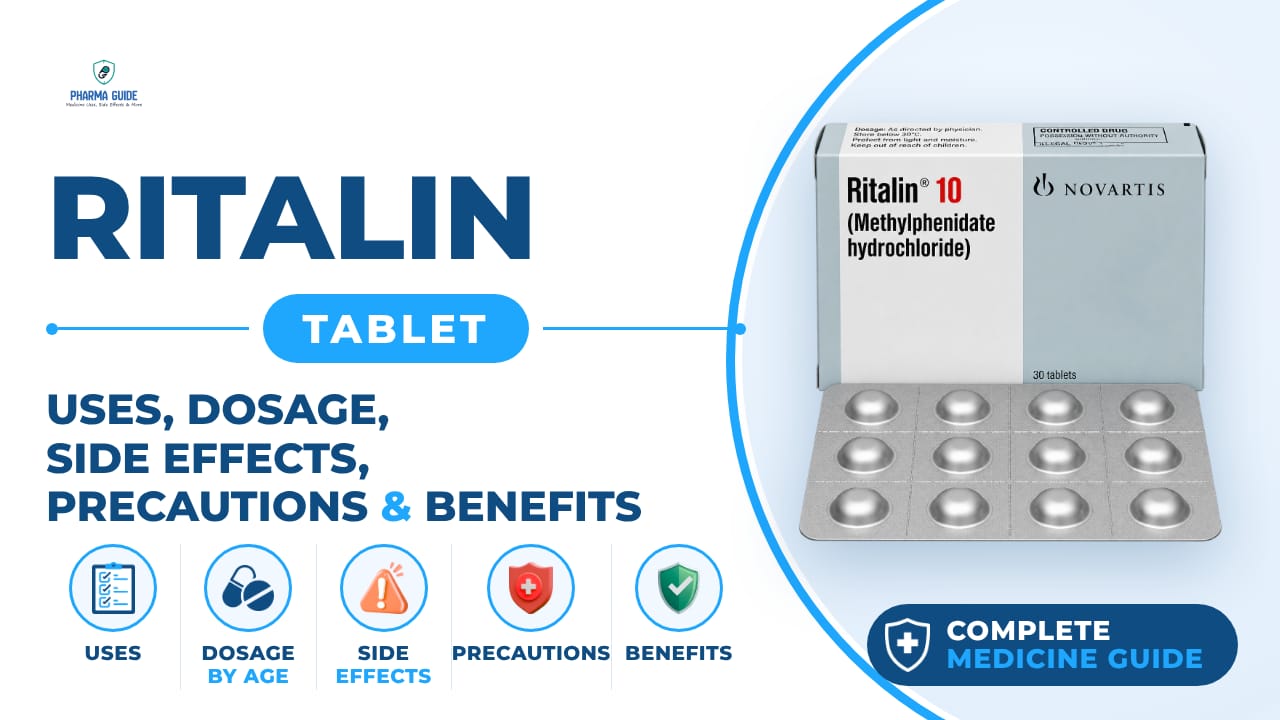
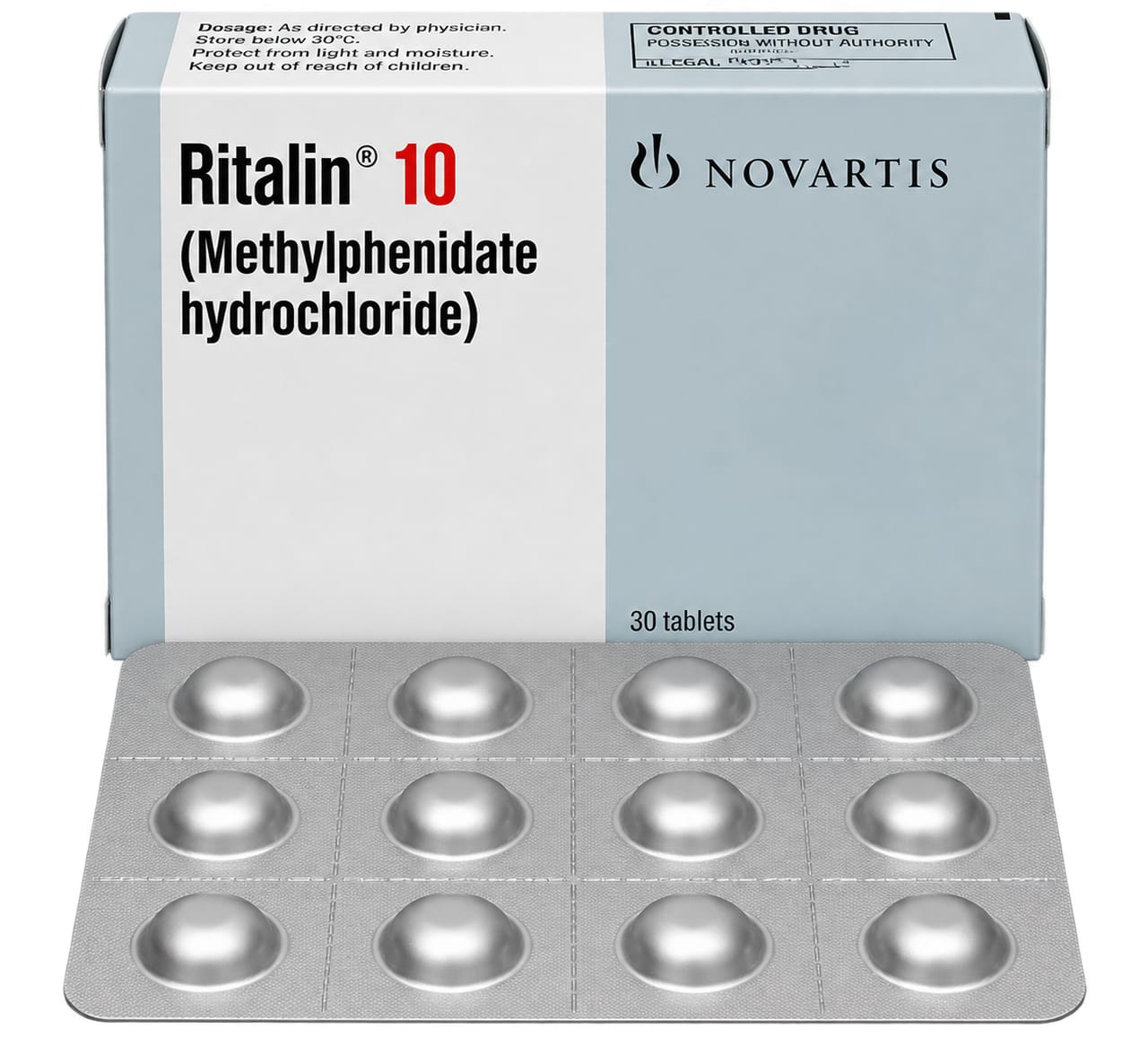
| Generic name | methylphenidate hydrochloride |
|---|---|
| Drug class | CNS stimulants |
| Forms | Tablet, Sustained-release tablet, Chewable tablet, Oral solution, Orally disintegrating tablet, Transdermal patch |
Quick overview
Ritalin Tablet (methylphenidate hydrochloride) is a central nervous system stimulant used to treat attention deficit disorder (ADD), attention deficit hyperactivity disorder (ADHD), and narcolepsy. It works by activating the arousal system in the brain stem and cortex, helping improve attention and reduce impulsiveness and hyperactivity. It should be taken exactly as prescribed, and doses are adjusted based on age and response. This medicine may be habit-forming and carries several important warnings.
What is Ritalin Tablet
Ritalin is a central nervous system stimulant medicine. It affects chemicals in the brain and nerves that are linked to hyperactivity and trouble controlling impulses.
Ritalin Tablet uses
- Attention deficit disorder (ADD)
- Attention deficit hyperactivity disorder (ADHD)
- Narcolepsy
Benefits of Ritalin Tablet
- May help increase attention and decrease impulsiveness and hyperactivity in patients with ADHD
- May help people be less impulsive and hyperactive
- Helps people who have ADHD pay attention to tasks
How Ritalin Tablet works
Ritalin is thought to work by activating the arousal system in the brain stem and the cortex, which produces its stimulant effect. The exact way it improves attention and behavior in children is not fully understood.
Ritalin Tablet dosage
Take this medicine exactly as prescribed by your doctor and follow all directions on your prescription label. Immediate-release tablets are usually taken 2 to 3 times a day, about 30 to 45 minutes before a meal. Extended-release capsules are taken once daily in the morning and may be taken with or without food, but take them the same way each time. Swallow extended-release capsules whole; if you cannot swallow a capsule whole, it can be opened and mixed with soft food like applesauce, pudding, or yogurt and swallowed right away without chewing. Sustained-release tablets must be swallowed whole and should never be crushed or chewed. If you take chewable tablets, chew them well and swallow with a full glass of water or other liquid to avoid choking.
Do not take a double dose to make up for a missed one; take the missed dose as soon as you remember, but skip it if it is almost time for the next dose. Your doctor may occasionally change your dose and may periodically stop treatment for a while to check your ADHD symptoms. Your dose needs may change if you switch to a different brand, strength, or form of this medicine.
| Age group | Dose |
|---|---|
| Under 6 Years | Not recommended unless prescribed by a specialist |
| 6–17 Years | Initial dose: 5 mg once or twice daily; adjusted gradually based on response |
| Adults (18–64 Years) | Initial dose: 10–20 mg/day; adjusted based on response |
| Older Adults (65+ years) | Use with caution; dose individualized by specialist |
Available forms and strengths
- Tablet
- Sustained-release tablet
- Chewable tablet
- Oral solution
- Orally disintegrating tablet
- Transdermal patch
Side effects of Ritalin Tablet
Common
- Sweating, increased blood pressure
- Mood changes, anxiety, feeling nervous or irritable, trouble sleeping
- Fast heart rate, pounding heartbeats or fluttering in the chest
- Loss of appetite, weight loss
- Dry mouth, nausea, vomiting, stomach pain, indigestion
- Headache, dizziness
Serious
- Signs of heart problems - chest pain, feeling light-headed or short of breath
- Signs of psychosis - paranoia, aggression, new behavior problems, seeing or hearing things that are not real
- Signs of circulation problems - numbness, pain, cold feeling, unexplained wounds, or skin color changes in fingers or toes
- Painful erection lasting 4 hours or longer (priapism)
- Persistent loss of skin color where a methylphenidate patch is applied
- Vision problems or changes in vision
- New or worsening motor or verbal tics, or worsening of Tourette's syndrome
- Symptoms of serotonin syndrome, such as agitation, hallucinations, fever, sweating, shivering, fast heart rate, muscle stiffness, twitching, loss of coordination, nausea, vomiting, or diarrhea
- Slowing of growth (height and weight) in children
- Seizures, mainly in patients with a history of seizures
- Signs of an allergic reaction - hives, difficulty breathing, swelling of face, lips, tongue, or throat
Warnings and precautions
- This medicine may be habit-forming. Misuse can lead to addiction, overdose, or death. Tell your doctor if you have a history of drug or alcohol addiction, and keep the medicine where others cannot get to it.
- Stimulant medicines like this one have caused stroke, heart attack, and sudden death in people with high blood pressure, heart disease, or a heart defect.
- Do not use this medicine if you have taken a medicine called an MAO inhibitor in the past 14 days, since a dangerous drug interaction could occur.
- This medicine may cause new or worsening psychosis, especially in people with a history of depression, mental illness, or bipolar disorder.
- This medicine can cause blood circulation problems that may lead to numbness, pain, or discoloration in the fingers or toes.
- This medicine is not approved for use in children younger than 6 years old.
- This medicine should not be used by anyone who is very anxious, tense, or agitated, has glaucoma, or has tics, Tourette's syndrome, or a family history of Tourette's syndrome.
- This medicine can slow growth in children. Height and weight should be checked often during treatment.
- Becoming dependent on this medicine during pregnancy can cause premature birth or low birth weight. Tell your doctor if you are pregnant or plan to become pregnant.
- Ask your doctor if it is safe to breastfeed while using this medicine. Watch for symptoms in the baby such as agitation, sleep problems, feeding problems, or reduced weight gain.
- Use only as prescribed by a healthcare professional. Do not increase the dose or change the schedule without medical advice.
- Avoid use if you have a history of substance misuse unless closely monitored by a doctor. Tell your doctor if you have anxiety, mood disorders, seizures, or other mental health conditions.
- Avoid drinking alcohol while taking this medicine.
- Avoid driving or hazardous activity until you know how this medicine will affect you, since your reactions could be impaired.
Storage
- Store tightly closed at room temperature, away from moisture, heat, and light
- Store at 59°F to 86°F (15°C to 30°C)
- Keep your medicine in a place where no one can use it improperly
- Do not keep leftover medicine; ask your pharmacist about a drug take-back program, or mix leftover medicine with cat litter or coffee grounds in a sealed plastic bag and throw it in the trash
- Keep out of the reach of children
When to see a doctor
- Call your doctor right away if you have signs of heart problems, such as chest pain, feeling light-headed, or shortness of breath.
- Call your doctor right away if you have new or worsening mental symptoms, especially seeing or hearing things that are not real, or believing things that are not true.
- Call your doctor right away if you notice unexplained wounds appearing on your fingers or toes while taking this medicine.
- Seek medical help right away if you or your child develops a painful and prolonged erection (priapism), because of the risk of lasting damage.
- Get emergency medical help if you have signs of an allergic reaction, such as hives, difficulty breathing, or swelling of your face, lips, tongue, or throat.
- If you or your child takes too much of this medicine or overdoses, call your doctor or a poison control center right away, or get emergency treatment.
Alternatives
- Concerta
- Vyvanse
- Clonidine
Watch the video
FAQs
What is Ritalin Tablet used for?
Ritalin is used to treat attention deficit disorder (ADD), attention deficit hyperactivity disorder (ADHD), and narcolepsy.
How does Ritalin Tablet work?
Ritalin is thought to work by activating the arousal system in the brain stem and cortex, producing a stimulant effect that improves attention and reduces impulsiveness and hyperactivity, though the exact mechanism in children is not fully understood.
How should Ritalin Tablet be taken?
It should be taken exactly as prescribed. Immediate-release tablets are usually taken 2 to 3 times a day, 30 to 45 minutes before a meal, while extended-release capsules are taken once daily in the morning with or without food, taken the same way each time.
What are the serious side effects of Ritalin Tablet?
Serious side effects include signs of heart problems, psychosis, circulation problems, priapism, vision changes, new or worsening tics, serotonin syndrome, slowed growth in children, seizures, and allergic reactions.
Is Ritalin Tablet habit-forming?
Yes, Ritalin may be habit-forming, and misuse can lead to addiction, overdose, or death, so it should be kept where others cannot access it.
General information, not medical advice
Your prescriber and the leaflet in your pack know your situation. This page does not.
- Follow your prescriber and the leaflet
- Don't start, stop, or change a dose on your own
- Doses and warnings differ by country and product
Sources
Video
Related medicines
Concerta Tablet: Uses, Dosage, Side Effects, Precautions and Alternates
CNS stimulants
Concerta Tablet is an extended-release stimulant for ADHD in children, teens, and adults. Learn uses, dosage, side effects, and precautions.
Amphetamine Sulfate Tablet: Uses, Dosage, Side Effects, Precautions and Alternates
CNS stimulants
Amphetamine Sulfate Tablet is a Schedule II CNS stimulant used for narcolepsy, ADHD, and short-term obesity treatment. Learn dosage, side effects, and