
Safety
General information, not medical advice
Your prescriber and the leaflet in your pack know your situation. This page does not.
- Follow your prescriber and the leaflet
- Don't start, stop, or change a dose on your own
- Doses and warnings differ by country and product
Salmeterol + Fluticasone Inhaler: Uses, Dosage, Side Effects, Precautions and Alternates
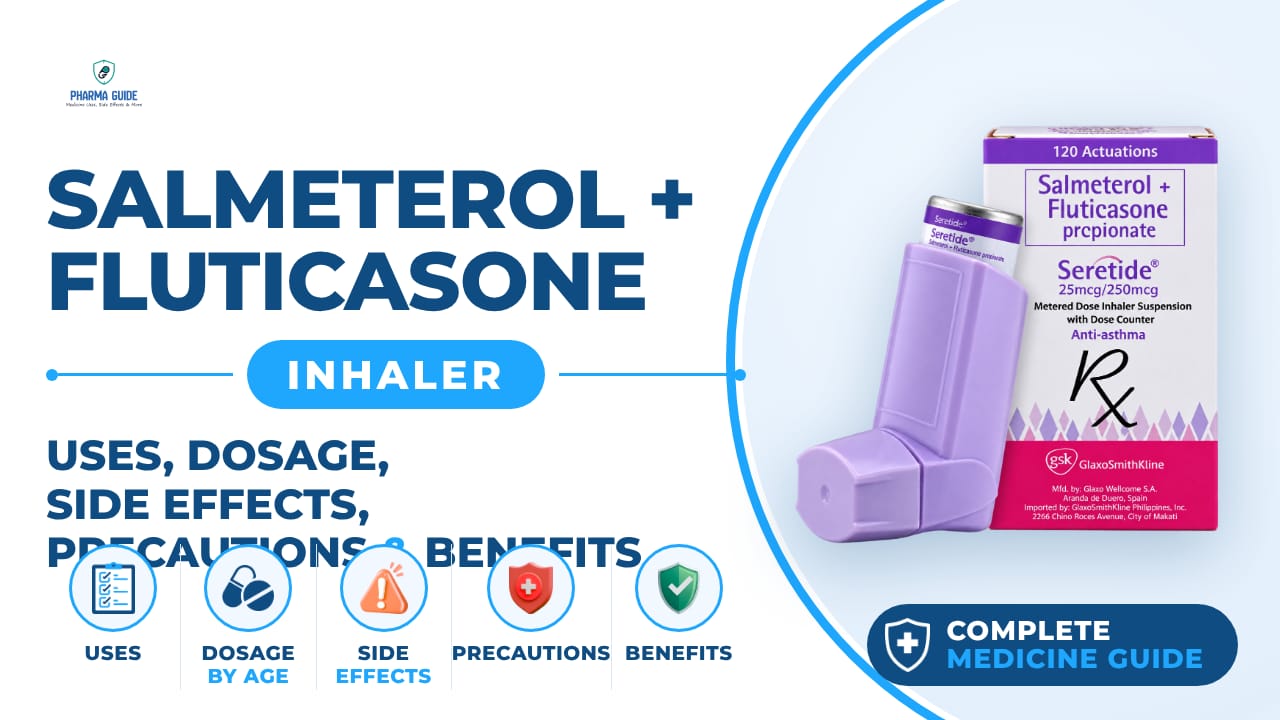
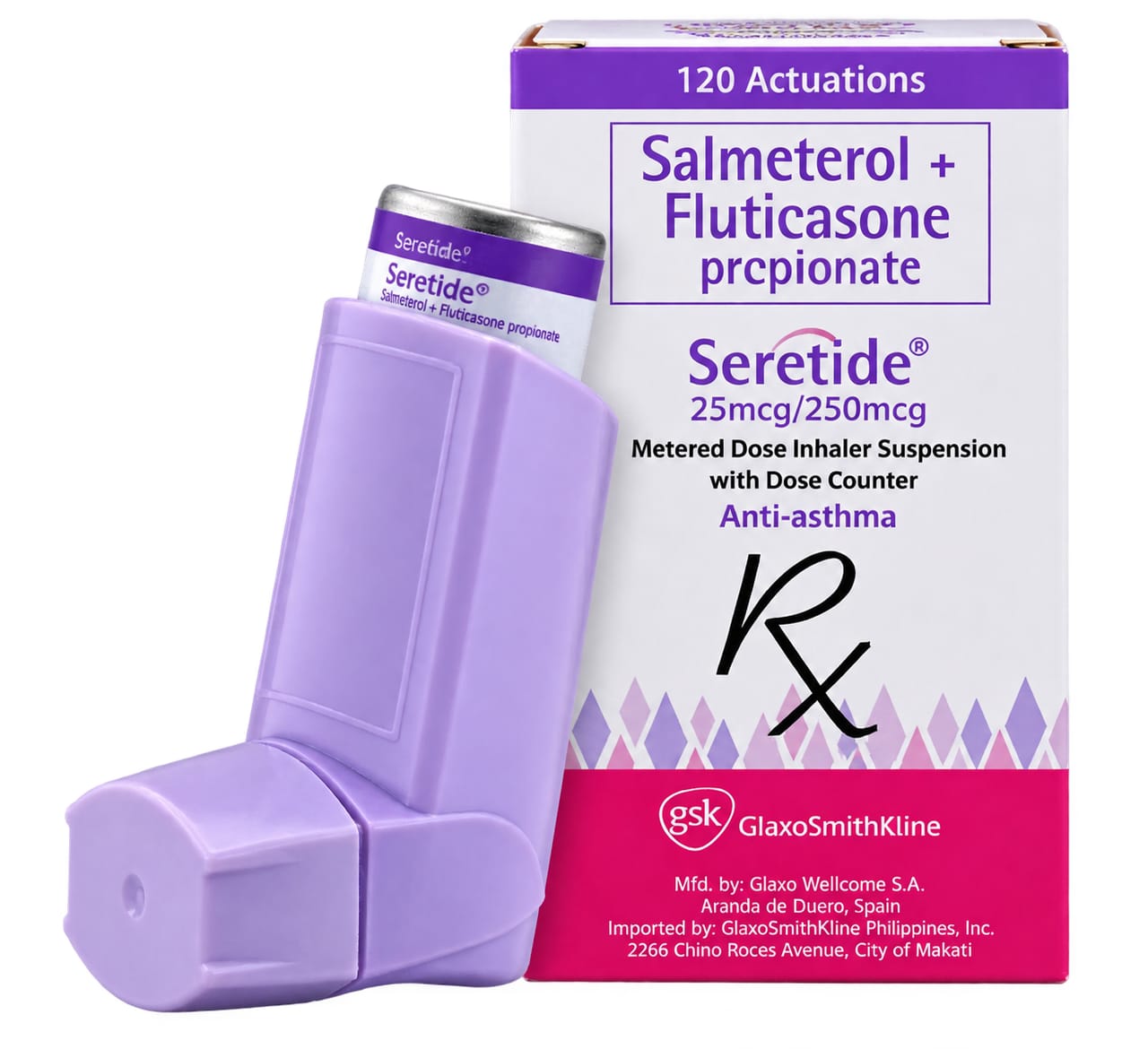
| Generic name | Fluticasone and salmeterol |
|---|---|
| Drug class | Bronchodilator combinations |
| Forms | Powder, Disk, Aerosol Liquid, Inhalation aerosol, Inhalation powder |
Quick overview
Salmeterol + Fluticasone Inhaler combines a corticosteroid (fluticasone) and a long-acting bronchodilator (salmeterol) in one inhaler. It is used to control asthma and chronic obstructive pulmonary disease (COPD), including chronic bronchitis and emphysema. It does not relieve a sudden asthma attack that has already started. It is typically used twice daily, about 12 hours apart.
What is Salmeterol + Fluticasone Inhaler
This medicine combines two drugs, a corticosteroid (fluticasone) and a long-acting bronchodilator (salmeterol), in one inhaler. It is used to control asthma and chronic obstructive pulmonary disease (COPD), including chronic bronchitis and emphysema. It does not relieve a sudden asthma attack that has already started.
Salmeterol + Fluticasone Inhaler uses
- Treat difficulty breathing, wheezing, shortness of breath, coughing, and chest tightness caused by asthma
- Prevent and treat wheezing, shortness of breath, coughing, and chest tightness caused by COPD, including chronic bronchitis and emphysema
- Used in people whose asthma is not controlled well enough on other asthma medicines or who need more than one daily medicine
Benefits of Salmeterol + Fluticasone Inhaler
- Helps prevent asthma attacks and reduces worsening of COPD
- Improves breathing and lung function
- Reduces the need for rescue/quick-relief inhalers
How Salmeterol + Fluticasone Inhaler works
One part of the medicine reduces swelling and irritation in the airways, and the other part relaxes the airway muscles to make breathing easier.
Salmeterol + Fluticasone Inhaler dosage
Use at the same time every day, usually in the morning and evening, about 12 hours apart. Do not use this medicine to treat a sudden asthma or breathing attack; use a fast-acting rescue inhaler instead. Use only the inhaler device that came with your medicine and do not use it with a spacer. Shake the aerosol inhaler well before each spray if using the HFA type. Prime the inhaler by releasing test sprays into the air before first use, or if it has not been used for some time, or if it was dropped.
Breathe out fully before inhaling, then close your lips around the mouthpiece and breathe in deeply and steadily. Hold your breath for about 10 seconds after inhaling, then breathe out slowly. Rinse your mouth with water after each use and spit it out without swallowing to help prevent throat irritation and mouth infections. Keep the inhaler dry; do not wash the mouthpiece, only wipe it with a dry cloth.
Do not stop using this medicine suddenly without talking to your doctor, even if you feel better. It may take a week or longer before you feel the full benefit. Watch children using the inhaler to make sure they use it correctly.
| Age group | Dose |
|---|---|
| Under 4 Years | Use only if prescribed by a doctor |
| 4–11 Years | 50/100 mcg twice daily (depending on product strength) |
| 12 Years and Above | 50/100, 50/250, or 50/500 mcg twice daily (based on severity) |
| Adults (18–64 Years) | 50/100, 50/250, or 50/500 mcg twice daily (as prescribed) |
| Older Adults (65+ years) | Individualized dose based on medical condition and response |
Available forms and strengths
- Powder
- Disk
- Aerosol Liquid
- Inhalation aerosol
- Inhalation powder
- Strengths: 50/100 mcg, 50/250 mcg, 50/500 mcg
Side effects of Salmeterol + Fluticasone Inhaler
Common
- Headache
- Muscle pain, bone pain, back pain
- Nausea, vomiting
- Thrush, throat irritation
- Ongoing cough, hoarseness or deepened voice
- Stuffy nose, sneezing, sore throat
- Dizziness, tiredness, sweating
- Shaking of a part of the body that cannot be controlled
- Sleep problems
Serious
- Wheezing, choking, or other breathing problems soon after using this medicine
- Fever, chills, cough with mucus, feeling short of breath
- Chest pain, fast or irregular heartbeats, severe headache, pounding in the neck or ears
- Tremors, nervousness
- Blurred vision, tunnel vision, eye pain, or seeing halos around lights
- Signs of thrush: sores or white patches in the mouth or throat, trouble swallowing
- High blood sugar: increased thirst, increased urination, dry mouth, fruity breath odor
- Low potassium level: leg cramps, constipation, irregular heartbeats, fluttering in the chest, numbness or tingling, muscle weakness
- Signs of a hormonal disorder: worsening tiredness or weakness, feeling light-headed, nausea, vomiting
- Hives, swelling of the face, lips, tongue, or throat, difficulty breathing (allergic reaction)
Warnings and precautions
- Tell your doctor if you are pregnant. It is not known whether this medicine will harm an unborn baby, but poorly controlled asthma during pregnancy can cause its own complications, so treatment benefits may outweigh risks.
- It may not be safe to breastfeed while using this medicine. Ask your doctor about the risks.
- Tell your doctor if you have kidney disease, as this medicine should be used with caution in that case.
- Use with caution if you have liver disease, since the medicine may build up more in your body because it is removed more slowly.
- This medicine is not expected to affect your ability to drive a car or operate machinery, but be careful until you know how it affects you.
- This medicine is not a rescue treatment and will not work fast enough to stop an asthma or breathing attack that has already started.
- Do not use this medicine along with another long-acting bronchodilator inhaler, since combining them can increase the risk of serious side effects.
- This medicine may increase the chance of a severe asthma attack even though it reduces how often attacks happen.
- Long-term use can weaken the immune system, making infections more likely or worse, and can increase the risk of bone thinning (osteoporosis).
- This medicine can cause a serious tightening of the airways (paradoxical bronchospasm) right after use, which can be life-threatening.
- This medicine may slow a child's growth rate.
- Avoid being near people who are sick with chickenpox or measles, since this medicine can make these infections more serious.
Storage
- Store at room temperature, away from heat and direct light
- Do not freeze
- Do not keep this medicine inside a car where it could be exposed to extreme heat or cold
- Do not poke holes in the canister or throw it into a fire, even if the canister is empty
- Keep the medicine in the foil pouch until you are ready to use it
- Keep out of the reach of children
- Do not keep outdated medicine or medicine no longer needed
- Ask your healthcare professional how you should dispose of any medicine you do not use
When to see a doctor
- Get emergency help right away for signs of a severe allergic reaction such as hives, difficulty breathing, or swelling of the face, lips, tongue, or throat.
- Call your doctor right away if you have wheezing, choking, or other breathing problems after using this medicine.
- Call your doctor right away if you have chest pain, a fast or irregular heartbeat, severe headache, or pounding in your neck or ears.
- Call your doctor right away if you have blurred vision, tunnel vision, eye pain, or see halos around lights.
- Seek medical attention if your breathing problems get worse quickly or if you think your asthma medications are not working as well as they used to.
- Get help right away if you notice signs of low potassium, such as leg cramps, irregular heartbeat, numbness or tingling, or muscle weakness.
Alternatives
- Budesonide + Formoterol
- Fluticasone + Vilanterol
- Dulera
Watch the video
FAQs
What is Salmeterol + Fluticasone Inhaler used for?
It is used to control asthma and COPD, including chronic bronchitis and emphysema, by treating wheezing, shortness of breath, coughing, and chest tightness. It does not relieve a sudden asthma attack already in progress.
How often should Salmeterol + Fluticasone Inhaler be used?
It is typically used twice daily, about 12 hours apart, at the same times each day, such as morning and evening.
Can Salmeterol + Fluticasone Inhaler be used for a sudden asthma attack?
No, it is not a rescue treatment and will not work fast enough to stop a sudden asthma or breathing attack. A fast-acting rescue inhaler should be used instead.
What are the common side effects of Salmeterol + Fluticasone Inhaler?
Common side effects include headache, muscle or bone pain, nausea, vomiting, thrush, throat irritation, cough, hoarseness, stuffy nose, dizziness, tiredness, sweating, and sleep problems.
Why should I rinse my mouth after using Salmeterol + Fluticasone Inhaler?
Rinsing your mouth with water after each use and spitting it out helps prevent throat irritation and mouth infections like thrush.
General information, not medical advice
Your prescriber and the leaflet in your pack know your situation. This page does not.
- Follow your prescriber and the leaflet
- Don't start, stop, or change a dose on your own
- Doses and warnings differ by country and product
Sources
- Mayo Clinic - Fluticasone and salmeterol (inhalation route)
- StatPearls - Salmeterol
- Drugs.com - Fluticasone and Salmeterol
- Healthify - Seretide (fluticasone + salmeterol)
- MedlinePlus - Fluticasone and Salmeterol Oral Inhalation
- Australian Commission on Safety and Quality in Health Care - Fluticasone Salmeterol Ciphaler 250/50
Video
Related medicines
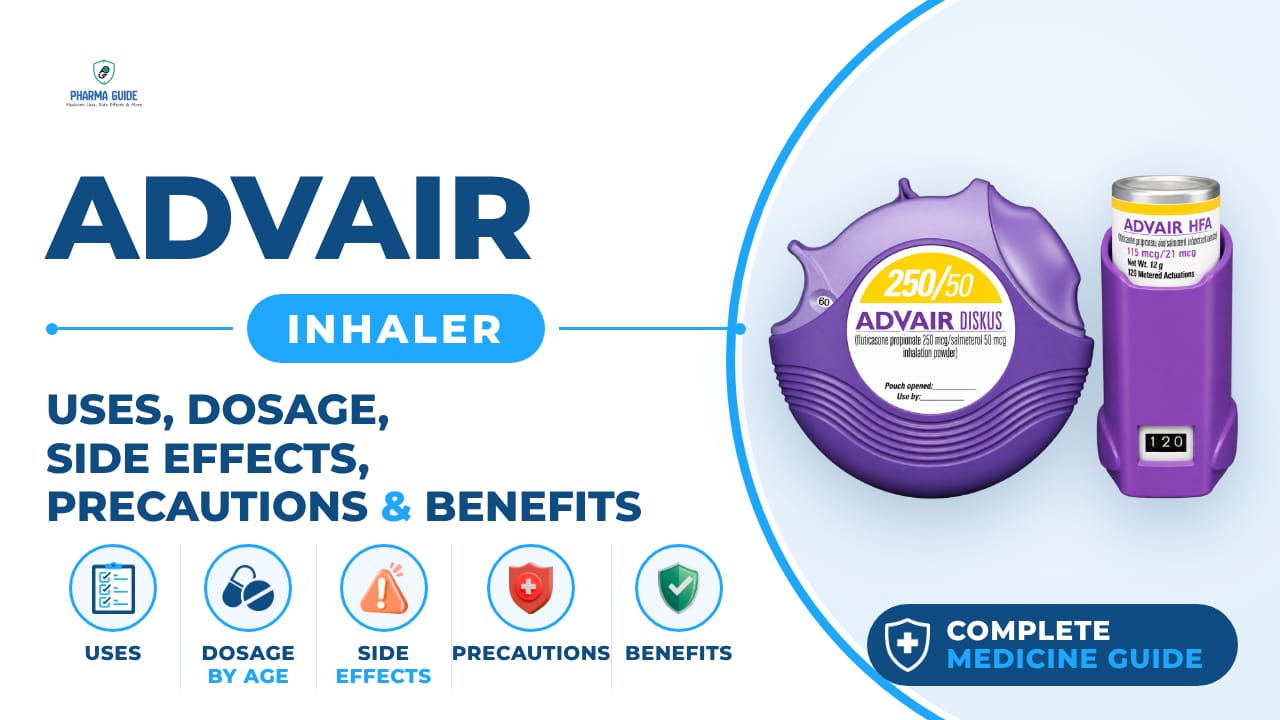
Advair Inhaler: Uses, Dosage, Side Effects, Precautions and Alternates
Bronchodilator combinations
Advair Inhaler combines fluticasone and salmeterol to prevent asthma attacks and COPD flare-ups. Learn about dosage, side effects, and warnings.

Injectafer Injection: Uses, Dosage, Side Effects, Precautions and Alternates
Iron products
Injectafer (ferric carboxymaltose) treats iron deficiency anemia and heart failure-related iron deficiency via IV. Learn uses, dosage, side effects, and