
Safety
General information, not medical advice
Your prescriber and the leaflet in your pack know your situation. This page does not.
- Follow your prescriber and the leaflet
- Don't start, stop, or change a dose on your own
- Doses and warnings differ by country and product
Serenace Tablet: Uses, Dosage, Side Effects, Precautions and Alternates
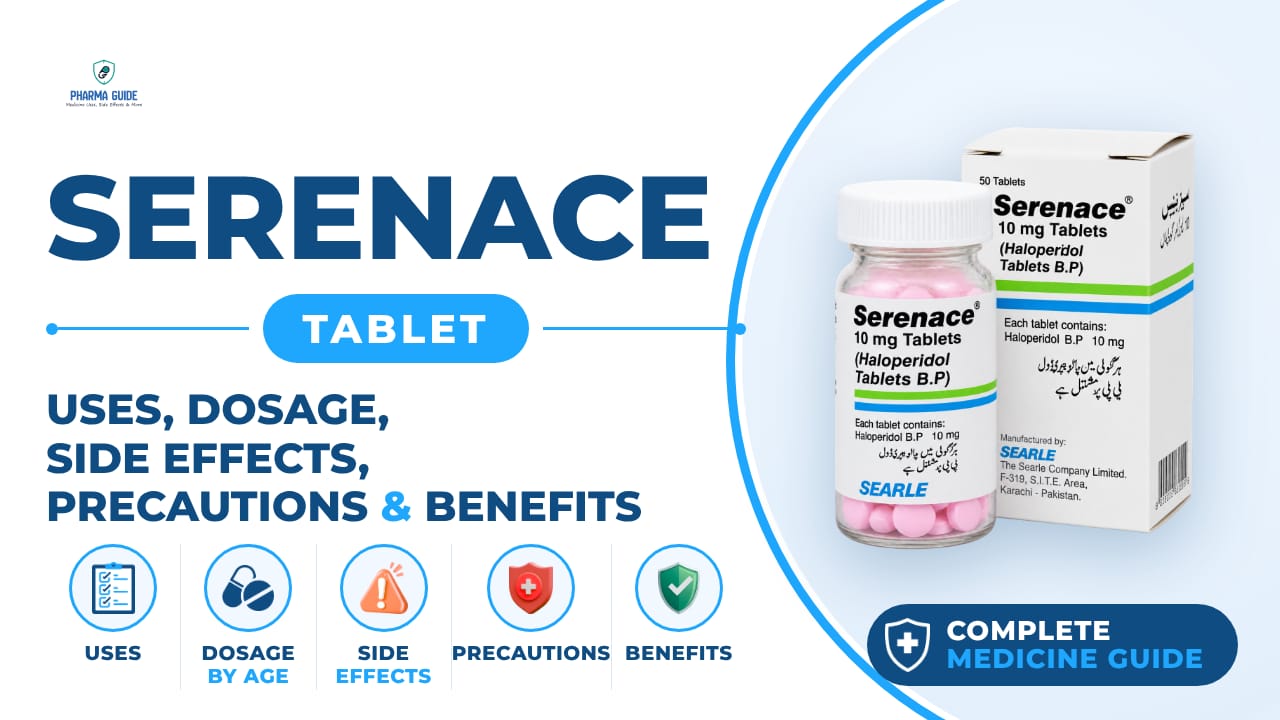
| Generic name | Haloperidol |
|---|---|
| Drug class | Antipsychotic |
| Forms | Tablet, Oral liquid |
Quick overview
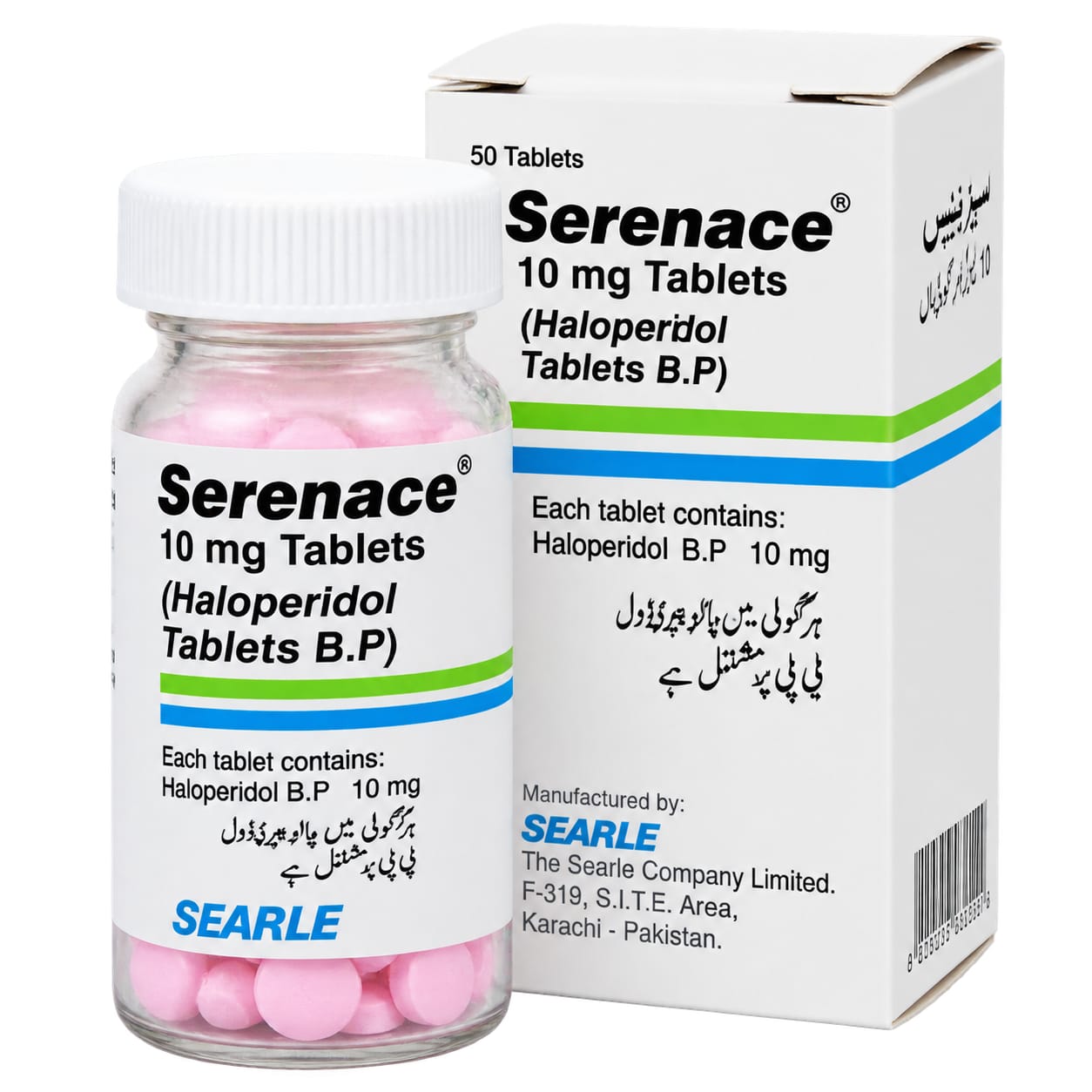
Serenace Tablet contains the active ingredient haloperidol and belongs to a group of medicines called antipsychotics. It is used to treat mental illnesses such as schizophrenia and mania, as well as nausea and vomiting in certain situations. It works by blocking dopamine receptors in the brain to help regulate mood, behaviour and thinking. Serenace is available as a tablet and an oral liquid.
What is Serenace Tablet
Serenace is a prescription medicine that contains the active ingredient haloperidol. It belongs to a group of medicines called antipsychotics and is used to treat mental illnesses as well as nausea and vomiting in certain situations.
Serenace Tablet uses
- Schizophrenia, an illness with disturbances in thinking, feelings and behaviour
- Mania, an illness with episodes of overactivity, elation or irritability
- Severe anxiety, tension, excitement, agitation, hyperactivity or aggression linked to mental or emotional illness
- Behavioural problems in children with mental retardation or mental illness
- Nausea and vomiting caused by cancer treatment
- Anxiety and pain during surgery (neurolept anaesthesia)
- Tourette's Syndrome, a condition with uncontrolled vocal outbursts and body movements (tics)
- Bipolar disorder
- Huntington's disease
- Acute psychosis and organic psychosis
- Control of severe behavioural problems in children
- Acute alcoholism (short term relief of delusions, hallucinations, confused states, tremulousness and aggressive behaviour)
Benefits of Serenace Tablet
- Helps correct chemical imbalances in the brain that may cause mental illness
- Helps control symptoms such as hallucinations, delusions and disorganised thinking
- Helps reduce nausea and vomiting
- Helps manage behavioural and movement symptoms of Tourette's Syndrome
How Serenace Tablet works
Haloperidol works by blocking dopamine receptors in the brain, which helps regulate dopamine activity linked to mood, behaviour and thinking. By calming overactive dopamine signals, it helps reduce hallucinations, delusions and disorganised thinking, and it also has some effect on other brain chemicals like serotonin and acetylcholine.
Serenace Tablet dosage
Take this medicine exactly as your doctor tells you, and keep taking it until your doctor says to stop. Swallow the tablet whole with a glass of water; do not crush or chew it. You can take it with or without food. If using the oral liquid, shake the bottle well and measure the dose accurately with a medicine measure. Try to take your dose at about the same time each day. Do not stop taking this medicine or lower the dose on your own, even if you feel better, without checking with your doctor first. If you forget a dose, skip it and take your next dose at the usual time; do not take a double dose. Empty your bladder before taking the medicine. Avoid alcohol or caffeine while taking this medicine.
| Age group | Dose |
|---|---|
| Under 12 Years | Use only under specialist medical supervision |
| 12–17 Years | Usually 0.5–5 mg/day, adjusted according to condition |
| Adults (18–64 Years) | Usually 1–5 mg/day, may be adjusted based on condition and response |
| Older Adults (65+ Years) | Lower starting dose, commonly 0.5–2 mg/day, adjusted by doctor |
Available forms and strengths
- Tablet
- Oral liquid
Side effects of Serenace Tablet
Common
- Drowsiness or tiredness
- Restlessness, agitation, anxiety or excitement
- Confusion
- Headaches
- Difficulty sleeping (insomnia)
- Muscle weakness
- Difficulty speaking and/or swallowing
- Increased or decreased sweating
- Dry mouth
- Indigestion, nausea and/or vomiting
- Increased or loss of appetite
- Weight changes
- Constipation or diarrhoea
- Increased salivation
- Blurred vision or difficulty focusing
- Changes in skin colour (pale skin)
- Hot, dry skin
- Swelling of hands, feet and/or ankles
- Painful, swollen breasts or breast enlargement in men
- Unusual secretion of breast milk
- Changes in menstrual periods
- Impaired sexual function in men
- Loss of blood sugar control, including in diabetes
- Dizziness
Serious
- Skin rash, hives, or itchy red/blistering spots
- Extremely high body temperature (fever)
- Symptoms of sunburn occurring more quickly than normal
- Dizziness or spinning sensation (vertigo)
- Unable to pass urine
- Fast breathing
- Fast, pounding or irregular heartbeats
- Signs of frequent infections such as fever, chills, sore throat or mouth ulcers
- Asthma and other breathing difficulties
- Bleeding or bruising more easily than normal
- Tiredness, headaches, being short of breath when exercising, dizziness and looking pale (anaemia)
- Yellowing of the skin and/or eyes
- Unusual movements including trembling, twisting, shuffling walk, and stiffness of arms and legs
- Sudden onset of uncontrollable muscle spasms affecting eyes, head, neck and body
- Persistent painful erection (priapism)
- Hallucinations
- Worm-like movements of the tongue or other uncontrolled movements of the mouth, cheeks or jaw (tardive dyskinesia)
- Regular episodes of irregular heartbeat, dizziness and loss of consciousness
- Sudden signs of allergy such as rash, itching, swelling of face/lips/tongue, wheezing or difficulty breathing
- Severe spasms in the muscles of shoulders, neck and upper body
- Convulsions, fits or seizures
- Neuroleptic malignant syndrome: sudden high body temperature, sweating, fast heartbeat, muscle stiffness and changing blood pressure, which may lead to coma
- Collapse
Warnings and precautions
- Do not use this medicine if you are allergic to haloperidol or any of its ingredients, or if you have certain conditions such as brain damage, Parkinson's disease, severe depression, alcohol or drug intoxication, spasticity, Parkinsonian-like symptoms with senility, or breast cancer.
- This medicine should not be given to anyone who is unconscious or in a coma.
- Do not stop taking this medicine or lower the dose on your own, even if you feel better, without checking with your doctor, as stopping suddenly may worsen your condition or increase side effect risk.
- This medicine can make you sweat less, which can cause your body to overheat in hot environments or during vigorous exercise.
- Smoking can change the amount of this medicine in your body, so tell your doctor if you smoke or change your smoking habits.
- Protect your skin from sunlight, as this medicine can make skin much more sensitive to sunlight, causing rash, itching, redness or severe sunburn.
- This medicine should not be given to children under 12 unless a doctor directs it, and it is not recommended for children under 3 due to lack of safety information.
- This medicine is contraindicated in patients who are comatose or have central nervous system depression, Parkinson's disease, dementia, recent heart attack, heart failure, irregular heartbeat, QT prolongation, slow heart rate, or low potassium levels, and is not recommended for elderly or weakened patients.
- Tell your doctor if you are pregnant or planning to become pregnant. This medicine is generally not recommended during pregnancy, but your doctor will weigh the risks and benefits if you need to take it.
- This medicine is not recommended while breastfeeding because it may pass into breast milk.
- If you have kidney problems, use this medicine with caution and discuss any dosage adjustments with your doctor.
- Use this medicine with caution if you have liver disease, and consult your doctor before starting treatment.
- Be careful when drinking alcohol while taking this medicine, as it may increase dizziness, light-headedness and drowsiness. Your doctor may advise you to avoid alcohol altogether.
- Be careful driving or operating machinery until you know how this medicine affects you, since it can cause dizziness, light-headedness, tiredness and drowsiness.
Storage
- Keep Serenace in the original packaging until it is time to use it
- Keep it in a cool, dry place, away from light, where the temperature stays below 30°C
- Do not store it in the bathroom, near a sink, in the car, or on window sills
- Keep it where young children cannot reach it
- If you no longer need the medicine or it is out of date, take it to any pharmacy for safe disposal
- Do not flush unused medicine down the toilet
When to see a doctor
- Call your doctor straight away if you notice worm-like or other uncontrolled movements of the tongue, mouth, cheeks or jaw, which may spread to the arms and legs — these can be signs of a condition called tardive dyskinesia.
- Call your doctor immediately or go to the nearest hospital Emergency Department if you notice signs of a severe allergic reaction, severe muscle spasms, convulsions or fits, signs of neuroleptic malignant syndrome (sudden high fever, sweating, fast heartbeat, muscle stiffness, changing blood pressure), or if you collapse.
- If you think you have taken too much of this medicine, get urgent medical attention even if you feel fine, by contacting your doctor, a poison control service, or going to the nearest hospital Emergency Department.
- Tell your doctor as soon as possible if you do not feel well while taking this medicine.
Alternatives
- Risperidone
- Olanzapine
- Aripiprazole
Watch the video
FAQs
What is Serenace Tablet used for?
Serenace Tablet is used to treat mental illnesses such as schizophrenia, mania and bipolar disorder, as well as nausea and vomiting caused by cancer treatment, Tourette's Syndrome, Huntington's disease, severe anxiety or agitation, and behavioural problems in children with mental illness.
How does Serenace Tablet work?
Serenace Tablet contains haloperidol, which works by blocking dopamine receptors in the brain to regulate dopamine activity linked to mood, behaviour and thinking, helping reduce hallucinations, delusions and disorganised thinking.
What is the dosage of Serenace Tablet for adults?
Adults aged 18 to 64 usually take 1 to 5 mg per day, which may be adjusted by a doctor based on condition and response. Older adults typically start with a lower dose of 0.5 to 2 mg per day.
What are the common side effects of Serenace Tablet?
Common side effects include drowsiness, restlessness, confusion, headaches, insomnia, dry mouth, nausea, constipation or diarrhoea, blurred vision, dizziness, and weight changes.
Can I drink alcohol while taking Serenace Tablet?
You should be careful drinking alcohol while taking Serenace Tablet, as it may increase dizziness, light-headedness and drowsiness. Your doctor may advise you to avoid alcohol altogether.
General information, not medical advice
Your prescriber and the leaflet in your pack know your situation. This page does not.
- Follow your prescriber and the leaflet
- Don't start, stop, or change a dose on your own
- Doses and warnings differ by country and product
Sources
- https://www.safetyandquality.gov.au/medicine-finder/serenace-tablets
- https://www.rad-ar.or.jp/siori/english/search/result?n=1427
- https://healthwire.pk/pharmacy/medicine/serenace-5mg-tab-20-s
- https://www.accessdata.fda.gov/drugsatfda_docs/label/2009/018701s059lbl.pdf
- https://dailymed.nlm.nih.gov/dailymed/lookup.cfm?setid=c559b0b0-4087-d12a-e718-c18ccb6811e6
Video
Related medicines
Adasuve Inhaler: Uses, Dosage, Side Effects, Precautions and Alternates
Antipsychotic
Adasuve Inhaler (loxapine) rapidly calms mild-to-moderate agitation in schizophrenia or bipolar disorder, given only in hospital settings due to serious

Injectafer Injection: Uses, Dosage, Side Effects, Precautions and Alternates
Iron products
Injectafer (ferric carboxymaltose) treats iron deficiency anemia and heart failure-related iron deficiency via IV. Learn uses, dosage, side effects, and