
Safety
General information, not medical advice
Your prescriber and the leaflet in your pack know your situation. This page does not.
- Follow your prescriber and the leaflet
- Don't start, stop, or change a dose on your own
- Doses and warnings differ by country and product
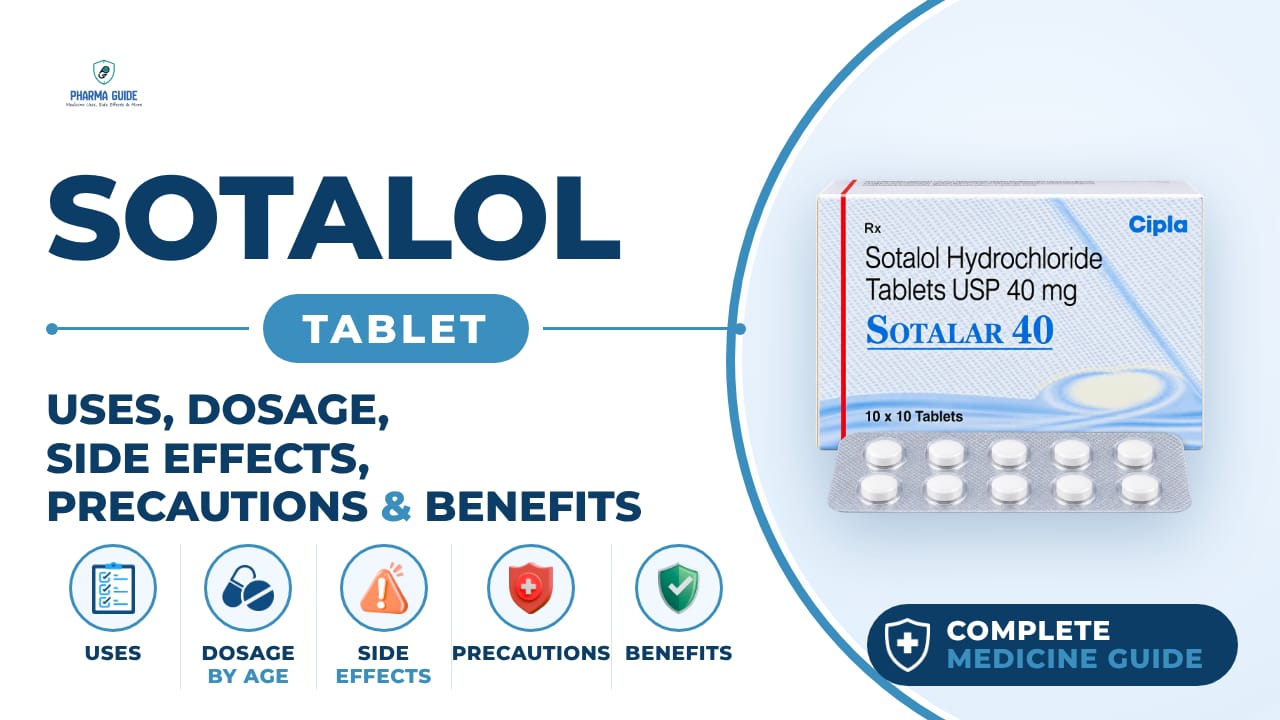
Sotalol Tablet: Uses, Dosage, Side Effects, Precautions and Alternates
| Generic name | sotalol |
|---|---|
| Drug class | Group III antiarrhythmics, Non-cardioselective beta blockers |
| Forms | intravenous solution, oral solution, oral tablet |
Quick overview
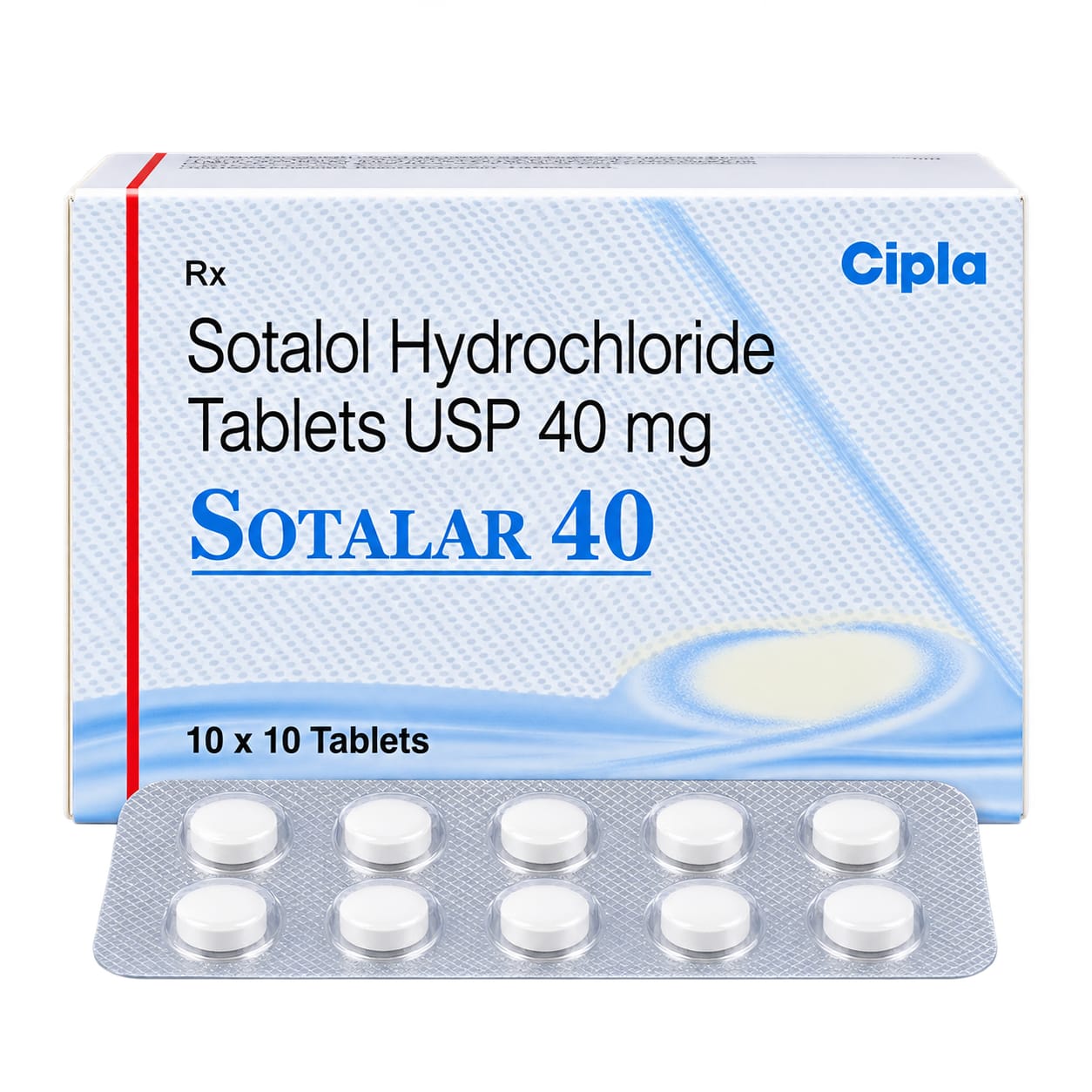
Sotalol is a Group III antiarrhythmic and non-cardioselective beta blocker used to help keep the heart beating normally in people with certain documented heart rhythm disorders, including atrial fibrillation, atrial flutter, ventricular tachycardia, and ventricular fibrillation. It works by slowing the heart and blocking certain electrical signals that can cause an irregular or fast heartbeat. It is available as a tablet, oral solution, and intravenous solution, and must be used exactly as prescribed, often starting under hospital monitoring.
What is Sotalol Tablet
Sotalol is a beta-blocker with antiarrhythmic properties. It affects the heart and circulation within the atrium and ventricles (the upper and lower chambers of the heart that allow blood to flow into and out of the heart).
Sotalol Tablet uses
- Help keep the heart beating normally in people with certain documented heart rhythm disorders, such as atrial fibrillation, atrial flutter, ventricular tachycardia, and ventricular fibrillation
- Treat certain types of serious (and sometimes life-threatening) arrhythmias, such as ventricular tachycardia
- Help keep a normal heart rhythm in people who have atrial fibrillation or atrial flutter
- Ventricular arrhythmia
- Refractory life threatening ventricular arrhythmias
- Supraventricular Tachycardia
Benefits of Sotalol Tablet
- Helps maintain normal sinus rhythm
- Treats certain ventricular arrhythmias
- Helps prevent recurrence of atrial fibrillation or atrial flutter
- Slows excessive heart rate
- Provides both beta-blocking and antiarrhythmic effects
How Sotalol Tablet works
Sotalol slows down your heart and blocks certain electrical signals in your heart that can cause it to beat too fast or in an irregular way, which helps keep your heart rhythm normal.
Sotalol Tablet dosage
Take by mouth, following all directions on your prescription label and any medication guides or instruction sheets. Your doctor may occasionally change your dose, so use the medicine exactly as directed. If using the oral solution, use a calibrated or specially marked measuring device such as an oral syringe, spoon, or dropper; a household spoon is not accurate.
The first few doses are usually given in a hospital setting so your heart can be monitored in case the medicine causes serious side effects. If you already take other heart rhythm medication, you may need to stop taking it when you start sotalol; follow your doctor's instructions carefully. Keep taking this medicine as directed, even if you feel well, since you may need to take it long-term. Do not skip doses or stop using sotalol without your doctor's advice, since stopping suddenly may make your condition worse.
Take antacids or products containing aluminum or magnesium at a different time of day, at least 2 hours before or after this medicine. Try not to miss doses; if you miss one, skip it and take your next dose at the regular time without doubling up. Children's doses are based on age and body size, and a calibrated measuring device should be used for oral solution.
| Age group | Dose |
|---|---|
| 18–64 years | Usually starts at 80 mg twice daily; may be adjusted by a cardiologist |
| 65–74 years | Usually starts at 80 mg twice daily when kidney function permits; dosing interval may require adjustment |
Available forms and strengths
- Intravenous solution
- Oral solution
- Oral tablet
Side effects of Sotalol Tablet
Common
- A slow heartbeat
- Nausea or vomiting
- Shortness of breath
- Dizziness
- Feeling weak or tired
- Headache
- Diarrhea
- Change in sex drive or performance
Serious
- Chest pain
- Fast or pounding heartbeats, fluttering in your chest
- Sudden dizziness (like you might pass out)
- Slow heartbeats (especially if you feel light-headed)
- Swelling, rapid weight gain
- Feeling short of breath
- Signs of an allergic reaction such as hives; difficulty breathing; or swelling of your face, lips, tongue, or throat
- Heart failure symptoms—shortness of breath, swelling of the ankles, feet, or hands, sudden weight gain, unusual weakness or fatigue
- Low blood pressure—dizziness, feeling faint or lightheaded, blurry vision
- Raynaud syndrome—cool, numb, or painful fingers or toes that may change color from pale, to blue, to red
- Worsening mood, feelings of depression
- Confusion
- Fever or chills
- Blurred vision
Warnings and precautions
- You should not use sotalol if you have asthma, low potassium, or a serious heart condition such as severe heart failure, long QT syndrome, slow heartbeats that have caused you to faint, sick sinus syndrome, or AV block (unless you have a pacemaker).
- Monitoring in a hospital or facility that can provide cardiac resuscitation and continuous heart monitoring is required for at least 3 days when starting or restarting sotalol, to reduce the risk of dangerous heart rhythm problems.
- Sotalol may cause a life-threatening fast heart rhythm problem linked to QT interval prolongation.
- Do not switch between different brands of sotalol without your doctor's advice, because there can be important differences in labeling, dosing, and safety information.
- Do not stop taking sotalol suddenly, as this can make your condition worse or lead to chest pain or heart attack in people with heart disease; any dose changes should be tapered under your doctor's guidance.
- Tell your doctor if you are pregnant. Sotalol can cross the placenta and may affect the unborn baby, causing problems such as growth restriction and heart rhythm changes. Talk with your doctor about the risks and benefits before and during pregnancy.
- You should not breastfeed while using sotalol, as it can pass into breast milk.
- Tell your doctor if you have kidney disease or are on dialysis. Sotalol should be used with caution in patients with kidney disease due to increased risk of severe side effects, and severe kidney disease may rule out use for certain heart rhythm problems.
- No major hepatic dose adjustment is generally required, but overall clinical monitoring remains important.
- Drinking alcohol while taking sotalol is not recommended because it increases the risk of very low blood pressure, which can cause dizziness, drowsiness, headache, fainting, or irregular heartbeat. Avoid driving or operating machinery if you drink alcohol while on this medicine.
- Sotalol can affect your alertness or coordination. Do not drive or do other activities that require alertness or coordination until you know how this medicine affects you.
Storage
- Store at room temperature away from moisture and heat.
- Keep out of reach of children.
- Store at room temperature between 20 and 25 degrees C (68 and 77 degrees F). Get rid of any unused medication after the expiration date.
- Take the medication to a take-back program. Check with your pharmacy or law enforcement to find a location.
- If you cannot return the medication, check the label or package insert to see if the medication should be thrown out in the garbage or flushed down the toilet. If you are not sure, ask your care team. If it is safe to put it in the trash, empty the medication out of the container. Mix it with cat litter, dirt, coffee grounds, or another unwanted substance. Seal the mixture in a bag or container. Put it in the trash.
When to see a doctor
- Get emergency medical help if you have signs of an allergic reaction such as hives, difficulty breathing, or swelling of your face, lips, tongue, or throat.
- Call your doctor right away if you have chest pain, fast or pounding heartbeats, fluttering in your chest, sudden dizziness, slow heartbeats with light-headedness, swelling, rapid weight gain, or shortness of breath.
- Seek emergency medical attention if you think you have taken too much sotalol, since an overdose can be fatal.
- Talk to your care team right away if you have diarrhea, vomiting, loss of appetite, increased thirst, or if you sweat a lot while taking this medication, as changes in electrolyte levels can make it dangerous to keep taking it.
Alternatives
- Amiodarone
- Dofetilide
- Flecainide
Watch the video
FAQs
What is Sotalol Tablet used for?
Sotalol helps keep the heart beating normally in people with documented heart rhythm disorders such as atrial fibrillation, atrial flutter, ventricular tachycardia, and ventricular fibrillation.
How does Sotalol Tablet work?
Sotalol slows down the heart and blocks certain electrical signals in the heart that can cause it to beat too fast or irregularly, helping keep the heart rhythm normal.
Why is hospital monitoring needed when starting Sotalol?
Monitoring in a hospital or facility that can provide cardiac resuscitation and continuous heart monitoring is required for at least 3 days when starting or restarting sotalol, to reduce the risk of dangerous heart rhythm problems.
Can I drink alcohol while taking Sotalol?
Drinking alcohol while taking sotalol is not recommended because it increases the risk of very low blood pressure, which can cause dizziness, drowsiness, headache, fainting, or irregular heartbeat.
What are the serious side effects of Sotalol Tablet?
Serious side effects include chest pain, fast or pounding heartbeats, sudden dizziness, slow heartbeats with light-headedness, swelling, rapid weight gain, shortness of breath, and signs of an allergic reaction.
General information, not medical advice
Your prescriber and the leaflet in your pack know your situation. This page does not.
- Follow your prescriber and the leaflet
- Don't start, stop, or change a dose on your own
- Doses and warnings differ by country and product
Sources
Video
Related medicines
Betapace Tablet: Uses, Dosage, Side Effects, Precautions and Alternates
Group III antiarrhythmics, Non-cardioselective beta blockers
Betapace Tablet (sotalol) treats serious ventricular arrhythmias and atrial fibrillation/flutter. Learn how it works, dosage, side effects, and key warnings

Injectafer Injection: Uses, Dosage, Side Effects, Precautions and Alternates
Iron products
Injectafer (ferric carboxymaltose) treats iron deficiency anemia and heart failure-related iron deficiency via IV. Learn uses, dosage, side effects, and