
Safety
General information, not medical advice
Your prescriber and the leaflet in your pack know your situation. This page does not.
- Follow your prescriber and the leaflet
- Don't start, stop, or change a dose on your own
- Doses and warnings differ by country and product
Sucralfate Suspension: Uses, Dosage, Side Effects, Precautions and Alternates
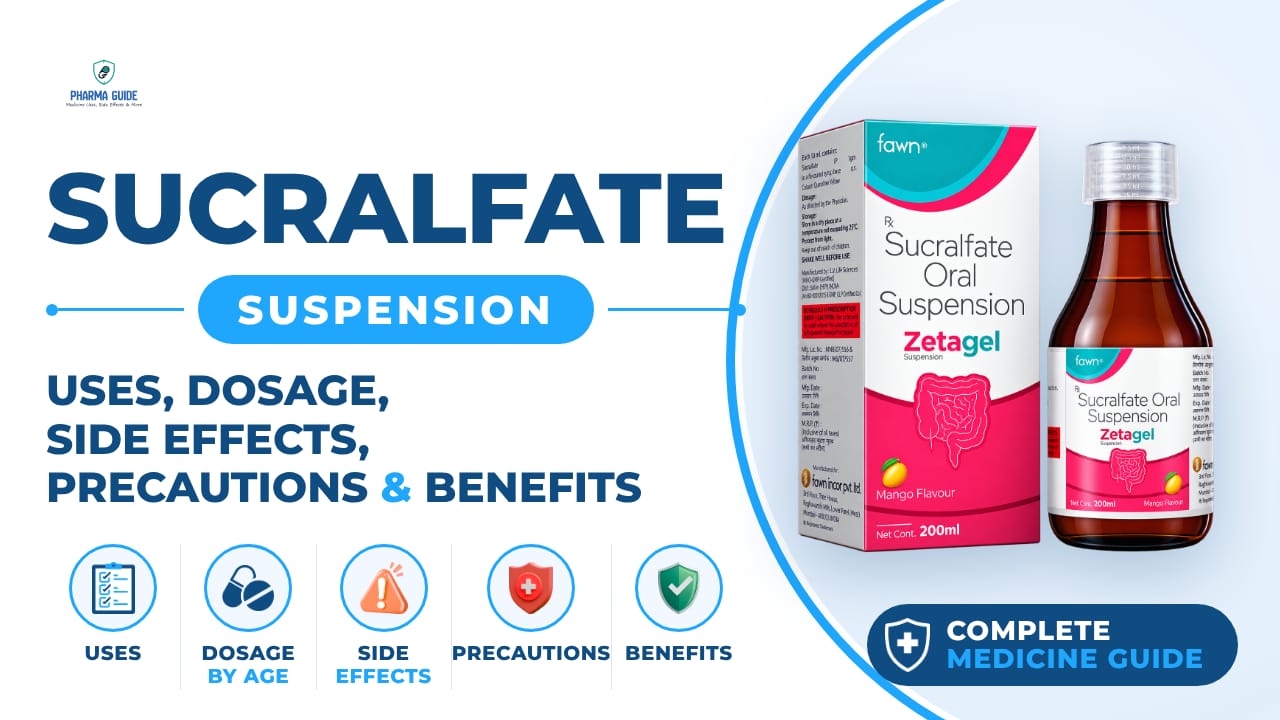
| Generic name | Sucralfate |
|---|---|
| Drug class | Miscellaneous GI agents |
| Forms | Tablet, Suspension, Syrup, Oral gel |
Quick overview
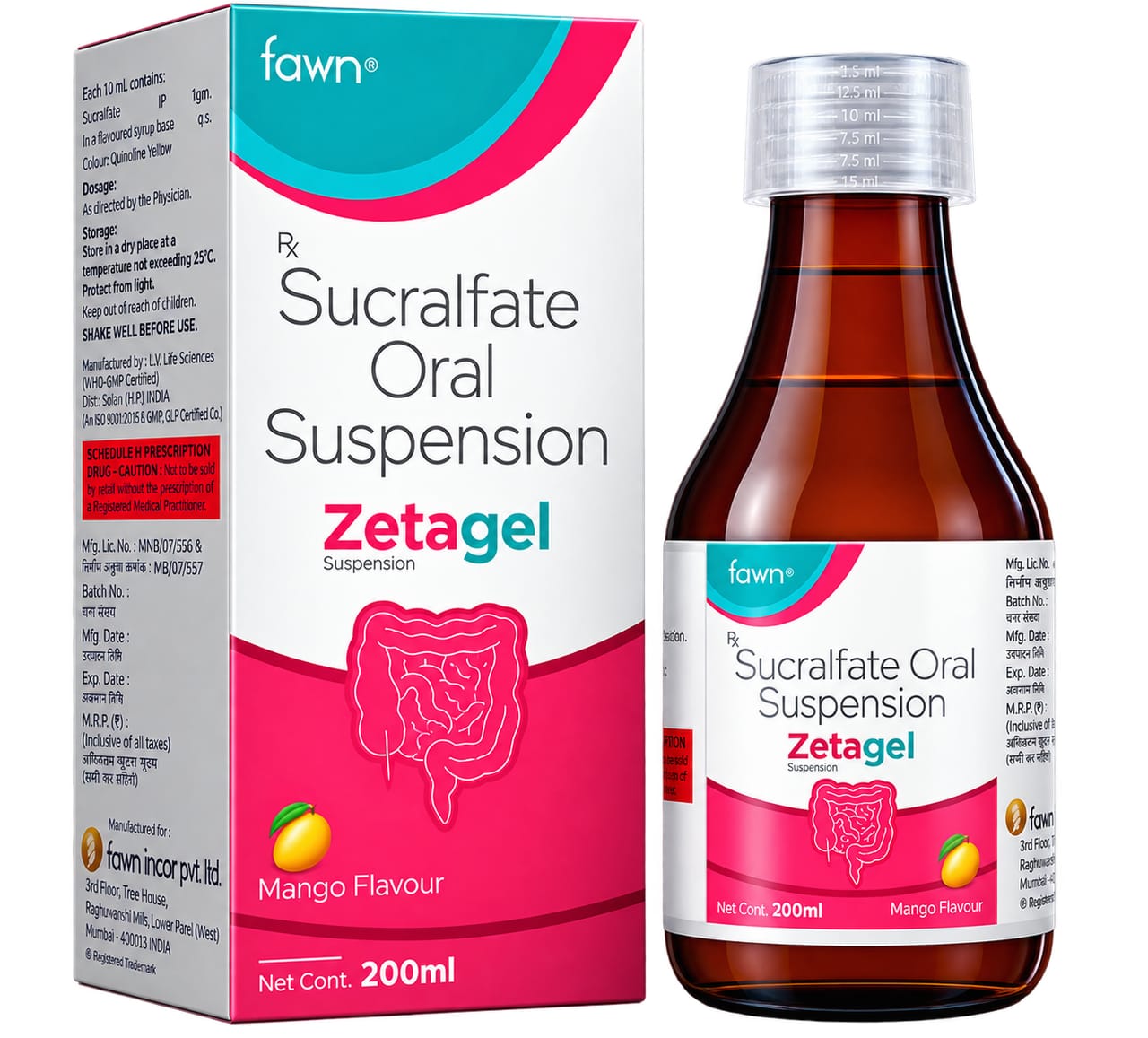
Sucralfate Suspension is a prescription medicine used to treat and prevent duodenal ulcers, and it may also be used for gastric ulcers. It contains an aluminum salt and works by forming a protective coating over ulcers so they can heal. It belongs to the miscellaneous GI agents drug class and is taken on an empty stomach as directed by a doctor.
What is Sucralfate Suspension
Sucralfate is a prescription medicine used to treat and prevent duodenal ulcers. It contains an aluminum salt and works by forming a protective coating over ulcers so they can heal.
Sucralfate Suspension uses
- Treating active duodenal ulcers (short-term, up to 8 weeks)
- Preventing duodenal ulcers from coming back (maintenance therapy)
- Gastric (stomach) ulcers
Benefits of Sucralfate Suspension
- Helps treat duodenal ulcers and supports ulcer healing.
- Forms a protective coating over damaged stomach or intestinal tissue.
- Protects ulcers from stomach acid, pepsin, and bile salts.
- Helps reduce pain, burning, and irritation associated with ulcers.
- May also be prescribed to protect irritated gastrointestinal lining in certain conditions.
How Sucralfate Suspension works
Sucralfate forms a protective coating over the ulcer that shields it from stomach acid, enzymes, and bile, allowing the ulcer to heal.
Sucralfate Suspension dosage
Take this medicine only as directed by your doctor, for the full length of treatment even if you start feeling better. Take it on an empty stomach. Shake the oral liquid well before each use and measure each dose with a marked measuring spoon, oral syringe, or medicine cup.
If you also use an antacid, take it more than half an hour before or after taking sucralfate oral liquid. If you take cimetidine, ciprofloxacin, digoxin, norfloxacin, ofloxacin, or ranitidine, take them a couple of hours before your sucralfate liquid dose. Avoid taking other medicines within a couple of hours before or after taking sucralfate, since it can make it harder for your body to absorb them.
The oral suspension must only be swallowed by mouth — never inject the liquid form, as this can be fatal. If you miss a dose, take it as soon as you remember, but skip it if it is almost time for your next dose; do not double doses. Sucralfate is not recommended for children under 12 years of age due to lack of safety and effectiveness data; use in children must be determined by a doctor.
| Age group | Dose |
|---|---|
| Under 14 years | Routine dosing not established; specialist guidance required |
| 14–17 years | Often adult dosing when prescribed |
| 18–64 years | 1 g (10 mL) 4 times daily on an empty stomach |
| 65+ years | Usually adult dosing; use cautiously with kidney impairment |
Available forms and strengths
- Tablet
- Suspension
- Syrup
- Oral gel
Side effects of Sucralfate Suspension
Common
- Constipation
- Diarrhea
- Nausea, vomiting
- Gas, indigestion
- Itching, rash
- Dizziness, drowsiness
- Sleep problems (insomnia)
- Headache
- Back pain
- Dry mouth
- Blurred vision
- Stomach pain
Serious
- Signs of allergic reaction: hives, difficult breathing, swelling of face, lips, tongue, or throat
- Chest pain, tightness in the chest
- Difficulty swallowing
- Difficult, fast, noisy breathing; slow or irregular breathing; troubled breathing
- Coughing that sometimes produces pink frothy sputum
- Blue lips and fingernails
- Pale skin, flushed dry skin
- Swelling of the legs and ankles
- Signs of high blood sugar: increased thirst, increased urination, increased hunger, fruit-like breath odor, unusual tiredness or weakness, unexplained weight loss
Warnings and precautions
- Never inject the oral liquid form of sucralfate into the body — this can cause death. It should only be swallowed by mouth.
- Sucralfate can bind with other foods and drugs and cause a blockage in the stomach or bowels in people with stomach and bowel disease.
- Sucralfate may raise blood sugar levels, so people with diabetes should use it cautiously and monitor their blood sugar.
- Do not take other prescription or over-the-counter medicines, or herbal or vitamin supplements, without discussing them with your doctor first, since sucralfate can interact with many drugs.
- Sucralfate is generally considered safe to use during pregnancy, though human safety data are limited. Talk to your doctor before using it if you are pregnant.
- There isn't enough research on using sucralfate while breastfeeding to be sure of the risk to the infant. Weigh the potential benefits and risks with your doctor.
- People with kidney disease, including those on dialysis, should use sucralfate with caution because the medicine may build up in the body and aluminum can accumulate to harmful levels.
- There is no specific information on use in liver problems, so caution is advised.
- It isn't known how sucralfate interacts with alcohol. Ask your doctor before drinking alcohol while taking this medicine, since it may add to drowsiness.
- Sucralfate can cause dizziness, drowsiness, and blurred vision, so avoid driving or operating machinery after taking it.
Storage
- Store the medicine in a closed container at room temperature, away from heat, moisture, and direct light
- Keep from freezing
- Keep out of the reach of children
- Do not keep outdated medicine or medicine no longer needed
- Ask your healthcare professional how you should dispose of any medicine you do not use
When to see a doctor
- Get emergency medical help right away if you have signs of an allergic reaction, such as hives, difficulty breathing, or swelling of the face, lips, tongue, or throat.
- Check with your doctor immediately if you notice chest pain, tightness in the chest, troubled or noisy breathing, coughing up pink frothy mucus, blue lips or fingernails, or swelling of the legs and ankles.
- If you suspect you have taken too much sucralfate, seek emergency medical attention right away.
Alternatives
- Bismuth Subsalicylate
- Alginate + Antacid
- Lansoprazole
- Pantoprazole
- Omeprazole
Watch the video
FAQs
What is Sucralfate Suspension used for?
It is used to treat active duodenal ulcers, prevent duodenal ulcers from recurring, and may also be used for gastric ulcers.
How does Sucralfate Suspension work?
It forms a protective coating over the ulcer that shields it from stomach acid, enzymes, and bile, allowing the ulcer to heal.
How should Sucralfate Suspension be taken?
It should be taken on an empty stomach as directed by your doctor, for the full length of treatment. Shake the oral liquid well before each use and measure each dose with a marked measuring spoon, oral syringe, or medicine cup.
Can Sucralfate Suspension be injected?
No, the oral suspension must only be swallowed by mouth. Never inject the liquid form, as this can be fatal.
What are the common side effects of Sucralfate Suspension?
Common side effects include constipation, diarrhea, nausea, vomiting, gas, indigestion, itching, rash, dizziness, drowsiness, insomnia, headache, back pain, dry mouth, blurred vision, and stomach pain.
General information, not medical advice
Your prescriber and the leaflet in your pack know your situation. This page does not.
- Follow your prescriber and the leaflet
- Don't start, stop, or change a dose on your own
- Doses and warnings differ by country and product
Sources
Video
Related medicines
Gas-X Tablet: Uses, Dosage, Side Effects, Precautions and Alternates
Miscellaneous GI agents
Gas-X Tablet (simethicone) relieves gas pressure, bloating, and fullness. Learn dosage, uses, side effects, warnings, and storage tips before use.

Injectafer Injection: Uses, Dosage, Side Effects, Precautions and Alternates
Iron products
Injectafer (ferric carboxymaltose) treats iron deficiency anemia and heart failure-related iron deficiency via IV. Learn uses, dosage, side effects, and