
Safety
General information, not medical advice
Your prescriber and the leaflet in your pack know your situation. This page does not.
- Follow your prescriber and the leaflet
- Don't start, stop, or change a dose on your own
- Doses and warnings differ by country and product
Synalar Cream: Uses, Dosage, Side Effects, Precautions and Alternates
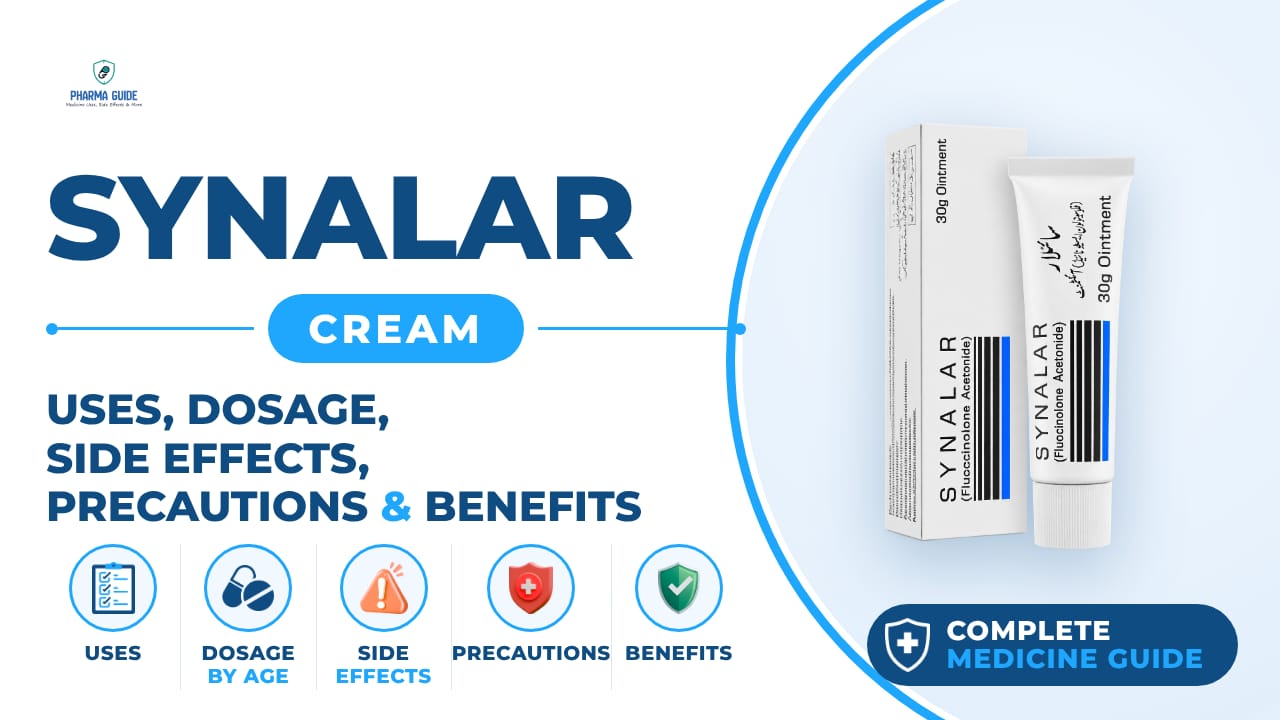
| Generic name | fluocinolone acetonide |
|---|---|
| Drug class | Topical steroids (corticosteroids) |
| Forms | Cream, Ointment, Topical solution (liquid) |
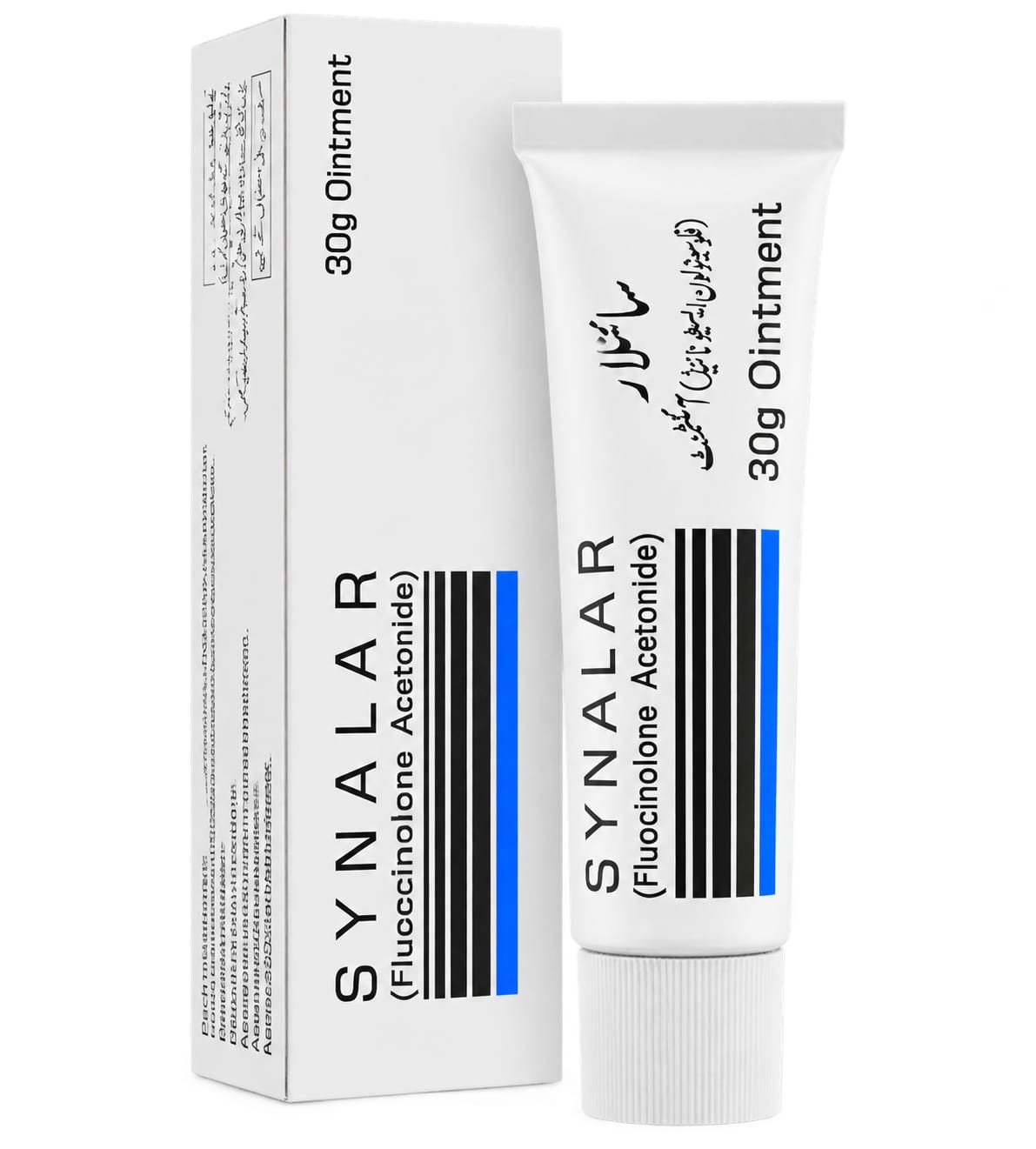
Quick overview
Synalar Cream contains fluocinolone acetonide, a topical corticosteroid. It is applied to the skin to reduce inflammation and itching caused by conditions such as allergic reactions, eczema, seborrhea, and psoriasis. It works by narrowing blood vessels in the skin and reducing immune activity and inflammatory chemicals. It should be used exactly as directed, with care to avoid prolonged use, large treatment areas, or occlusive coverings.
What is Synalar Cream
Synalar is a corticosteroid used on the skin. It reduces the actions of chemicals in the body that cause inflammation, and it is used to treat inflammation and itching from various skin conditions.
Synalar Cream uses
- Treats inflammation and itching caused by skin conditions such as allergic reactions, eczema, seborrhea, and psoriasis
- Relief of inflammatory and itchy skin conditions that respond to corticosteroids
Benefits of Synalar Cream
- Reduces redness, swelling, and itching of affected skin
- Calms inflammation caused by allergic reactions, eczema, seborrhea, and psoriasis
How Synalar Cream works
Synalar is a steroid that narrows blood vessels in the skin and reduces swelling, immune activity, and the release of substances that cause inflammation.
Synalar Cream dosage
Use exactly as directed on the label and follow your prescription instructions. Do not swallow this medicine; it is for use on the skin only. Wash your hands before and after use, unless you are treating the skin on your hands. Apply a thin layer to the affected skin and rub it in gently. Do not apply over a large area of skin unless your doctor has told you to. Do not cover the treated area with a bandage or other covering unless your doctor tells you to, since covering the area can increase how much medicine your body absorbs. If treating the diaper area of a baby, do not use plastic pants or tight-fitting diapers. In hairy areas, part the hair so the medicine can reach the skin directly. If you miss a dose, apply it as soon as you remember, but skip it if it is almost time for your next dose - do not apply two doses at once. Call your doctor if your symptoms do not improve after two weeks of use.
| Age group | Dose |
|---|---|
| Under 2 years | Not established; use only if specifically prescribed |
| 2–17 years | Apply a thin layer 2–4 times daily; use the least amount needed |
| 18–64 years | Apply a thin layer 2–4 times daily, depending on severity |
| 65 years and older | Apply a thin layer 2–4 times daily; use the lowest effective amount |
Available forms and strengths
- Cream
- Ointment
- Topical solution (liquid)
Side effects of Synalar Cream
Common
- Burning, itching, or irritation of treated skin
- Stinging, dryness, peeling, or redness where the medicine is applied
- Increased hair growth
- White or 'pruned' appearance of the skin
- Rash or pimples
- Changes in color of treated skin
- Thinning or softening of the skin
- Swollen hair follicles
- Blisters
- Crusting of treated skin
- Skin rash or irritation around the mouth
- Stretch marks
Serious
- Signs of an allergic reaction: hives, difficulty breathing, swelling of face, lips, tongue, or throat
- Worsening of your skin condition
- Redness, warmth, swelling, oozing, or severe irritation of treated skin
- High blood sugar symptoms: increased thirst, increased urination, dry mouth, fruity breath odor
- Signs the medicine is being absorbed through the skin: weight gain (especially in face or upper back and torso), slow wound healing, thinning or discolored skin, increased body hair, muscle weakness, nausea, diarrhea, tiredness, mood changes, menstrual changes, sexual changes
- Serious eye symptoms: sudden vision loss, blurred vision, tunnel vision, eye pain or swelling, seeing halos around lights
- Serious heart symptoms: fast, irregular, or pounding heartbeat, fluttering in the chest, shortness of breath, sudden dizziness or passing out
- Severe headache, confusion, slurred speech, arm or leg weakness, trouble walking, loss of coordination, feeling unsteady, very stiff muscles, high fever, profuse sweating, or tremors
Warnings and precautions
- It is not known whether this medicine will harm an unborn baby. Tell your doctor if you are pregnant or plan to become pregnant. Topical corticosteroids should be used during pregnancy only if the potential benefit justifies the potential risk to the fetus.
- It may not be safe to breastfeed while using this medicine. Ask your doctor about any risk. If you apply it to your chest, avoid areas that may touch the baby's mouth.
- For external use only — do not use in the eyes, mouth, or other mucous membranes. Avoid contact with the eyes. Avoid prolonged use, especially on the face, skin folds, and flexural areas, because skin thinning can occur even with shorter use.
- Tell your doctor if you have liver disease before using this medicine, so they can check it is safe for you.
- Do not cover the treated area with tight bandages or occlusive dressings unless specifically directed by a doctor. Avoid applying to large areas of skin or using excessive amounts, as absorption into the bloodstream can increase. Prolonged or excessive use may cause skin thinning, stretch marks, color changes, irritation, acne-like eruptions, or secondary infection.
- Topical absorption can rarely cause adrenal suppression, Cushing's syndrome, increased blood glucose, or glucose in the urine. Children are more susceptible to systemic corticosteroid effects because they can absorb proportionally larger amounts through the skin.
- Do not use this medicine in larger amounts or for longer than recommended, since it can be absorbed through the skin and cause steroid side effects throughout the body.
- Do not cover treated skin with a bandage or other covering unless your doctor has told you to.
- Children can absorb larger amounts of this medicine through the skin and may be more likely to have side effects. If treating a baby's diaper area, do not use plastic pants or tight-fitting diapers.
- Avoid applying this medicine to your face, underarms, or groin area, and do not use it to treat any skin condition your doctor has not checked.
- High doses or long-term use can lead to thinning skin, easy bruising, changes in body fat, increased acne or facial hair, menstrual problems, impotence, or loss of interest in sex.
- If a skin infection develops while using this medicine, an appropriate antifungal or antibacterial treatment should be started, and the steroid may need to be stopped until the infection is controlled.
- This medicine is for external use only. Avoid contact with the eyes, and do not use it for any condition other than the one it was prescribed for.
Storage
- Store at room temperature away from moisture and heat
- Do not freeze
- Store this medicine at room temperature, away from direct light and heat
When to see a doctor
- Get emergency medical help right away if you have signs of an allergic reaction such as hives, difficulty breathing, or swelling of your face, lips, tongue, or throat.
- Call your doctor right away if your skin condition worsens, or if treated skin becomes red, warm, swollen, oozing, or severely irritated.
- Seek emergency care if someone accidentally swallows this medicine.
- Seek medical care right away for serious eye symptoms, serious heart symptoms, or symptoms like severe headache, confusion, slurred speech, weakness, trouble walking, loss of coordination, very stiff muscles, high fever, profuse sweating, or tremors.
Alternatives
- Hydrocortisone Cream
- Triamcinolone Acetonide Cream
- Fluticasone Propionate Cream
Watch the video
FAQs
What is Synalar Cream used for?
Synalar Cream is used to treat inflammation and itching caused by skin conditions such as allergic reactions, eczema, seborrhea, and psoriasis.
How does Synalar Cream work?
Synalar is a corticosteroid that narrows blood vessels in the skin and reduces swelling, immune activity, and the release of substances that cause inflammation.
How should Synalar Cream be applied?
Apply a thin layer to the affected skin and rub it in gently, without covering the area with a bandage or occlusive dressing unless directed by a doctor. Avoid applying over large areas, and call your doctor if symptoms do not improve after two weeks.
What are the common side effects of Synalar Cream?
Common side effects include burning, itching, irritation, stinging, dryness, peeling, redness, increased hair growth, skin thinning, rash, and changes in skin color at the application site.
Can Synalar Cream be used on children?
Use in children under 2 years is not established and should only be done if specifically prescribed. Children ages 2 to 17 can apply a thin layer 2 to 4 times daily using the least amount needed, since children absorb more medicine through the skin and may be more prone to side effects.
General information, not medical advice
Your prescriber and the leaflet in your pack know your situation. This page does not.
- Follow your prescriber and the leaflet
- Don't start, stop, or change a dose on your own
- Doses and warnings differ by country and product
Sources
Video
Related medicines
Betamethasone Cream: Uses, Dosage, Side Effects, Precautions and Alternates
Topical steroids (corticosteroids)
Betamethasone Cream is a strong topical steroid for eczema, psoriasis, and related skin conditions. Learn uses, dosage, side effects, and precautions.

Injectafer Injection: Uses, Dosage, Side Effects, Precautions and Alternates
Iron products
Injectafer (ferric carboxymaltose) treats iron deficiency anemia and heart failure-related iron deficiency via IV. Learn uses, dosage, side effects, and