
Safety
General information, not medical advice
Your prescriber and the leaflet in your pack know your situation. This page does not.
- Follow your prescriber and the leaflet
- Don't start, stop, or change a dose on your own
- Doses and warnings differ by country and product
Tabrecta Tablet: Uses, Dosage, Side Effects, Precautions and Alternates
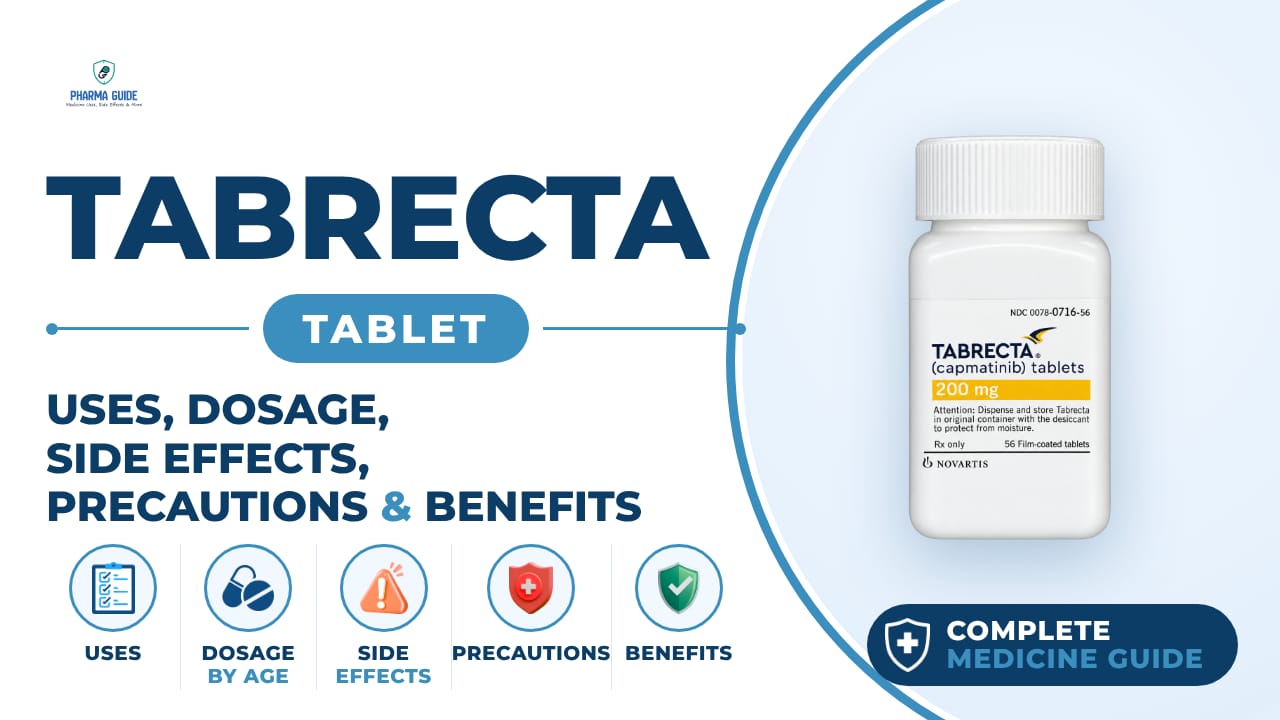
| Generic name | Capmatinib |
|---|---|
| Drug class | Kinase inhibitor (MET inhibitor) |
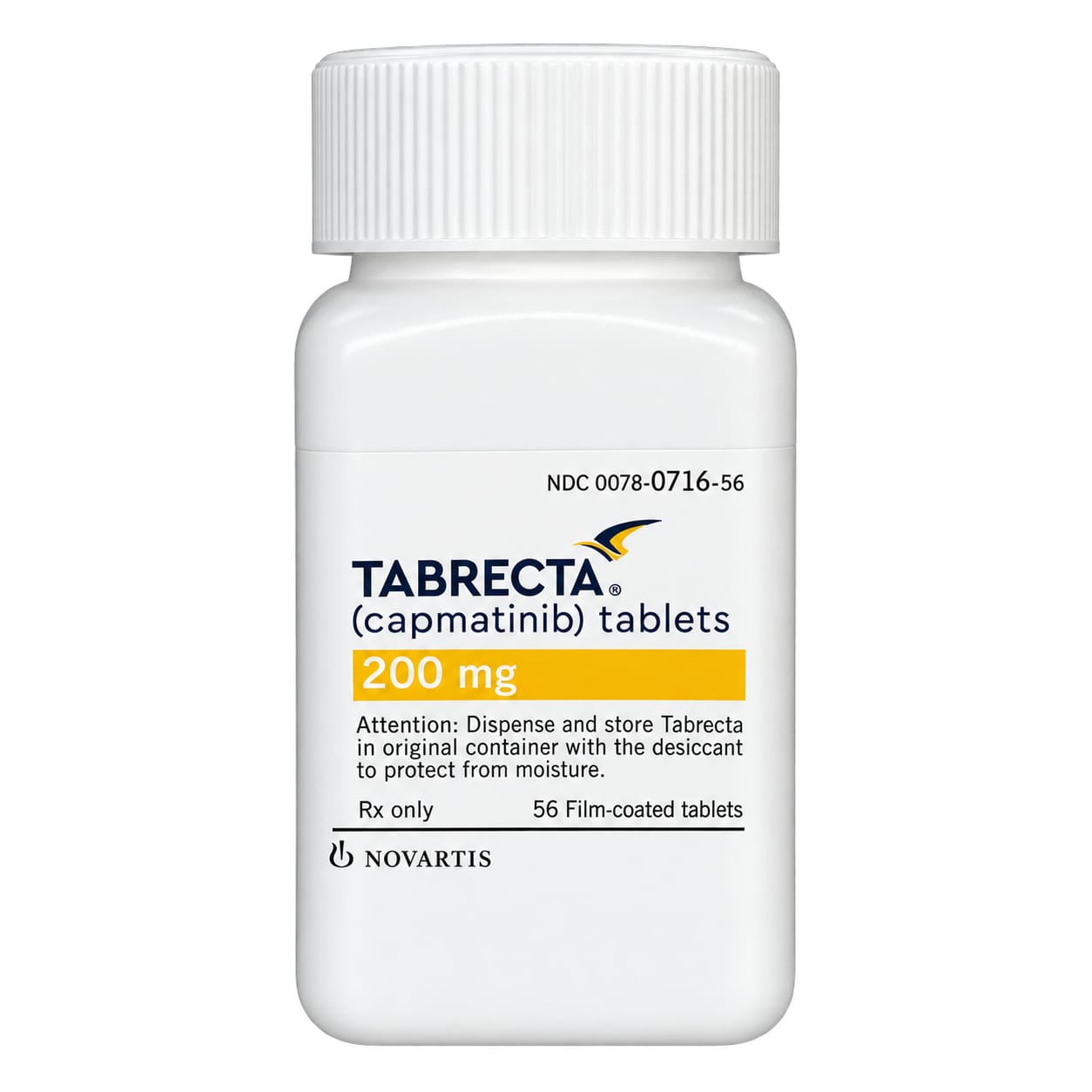
| Forms | Tablets, 150 mg, Tablets, 200 mg |
Quick overview
Tabrecta Tablet contains capmatinib, a kinase inhibitor known as a MET inhibitor. It is a prescription cancer medicine used to treat adults with a specific type of advanced non-small cell lung cancer whose tumors have certain MET gene changes. It works by blocking an altered MET gene that drives cancer growth, helping to slow, stop, or shrink the tumor.
What is Tabrecta Tablet
Tabrecta is a prescription cancer medicine that comes as a tablet. It is used to treat a specific type of advanced lung cancer in adults whose tumors have certain changes in the MET gene.
Tabrecta Tablet uses
- Treats adults with locally advanced or metastatic non-small cell lung cancer (NSCLC) whose tumors have a MET exon 14 skipping gene change
- Requires testing of the tumor (or blood) for the MET exon 14 skipping alteration before starting treatment
Benefits of Tabrecta Tablet
- May help shrink the tumor
- May slow down or stop the growth and spread of lung cancer
- Treats certain metastatic non-small-cell lung cancers (NSCLC)
- Specifically targets tumors with MET exon 14 skipping mutations
- Blocks abnormal MET signaling
- Can help shrink tumors
- Provides an oral targeted-therapy option
How Tabrecta Tablet works
An altered MET gene can make lung cancer grow. Tabrecta blocks this altered MET gene, which can help slow or stop the cancer from growing and spreading, and may also shrink the tumor.
Tabrecta Tablet dosage
Take exactly as your healthcare professional has told you; do not change your dose or stop taking it unless told to. It is taken twice a day, about the same time each day, to help you remember. It can be taken with or without food. Swallow tablets whole; do not break, chew, or crush them.
If you miss a dose or vomit after taking it, do not take an extra dose — just take your next dose at the regular scheduled time. This medicine is meant to be taken for as long as your healthcare professional tells you, often long term, until the disease gets worse or side effects become unacceptable.
| Age group | Dose |
|---|---|
| Under 18 years | Safety and effectiveness have not been established |
| 18–64 years | 400 mg twice daily |
| 65–74 years | 400 mg twice daily |
Available forms and strengths
- Tablets, 150 mg
- Tablets, 200 mg
Side effects of Tabrecta Tablet
Common
- Swollen hands, ankles, feet or face
- Nausea, vomiting
- Tiredness, weakness
- Shortness of breath
- Loss of appetite
- Diarrhea or constipation
- Cough
- Chest, stomach or back pain
- Fever
- Decreased weight
- Skin rash, hives
- Itchy skin with or without rash
- Muscle or bone pain
Serious
- Interstitial lung disease / pneumonitis (lung inflammation or scarring) that can lead to death
- Liver problems, including increased liver enzymes, which can sometimes be serious and lead to death
- Pancreas problems (pancreatitis), shown by increased amylase or lipase levels
- Hypersensitivity (allergic) reactions
- Kidney failure / acute kidney injury
- Cellulitis (skin infection)
- Severe swelling including generalized edema (whole-body swelling)
Warnings and precautions
- Tabrecta can cause lung inflammation (interstitial lung disease/pneumonitis) that can be fatal. Tell your healthcare professional right away if you have new or worsening cough, fever, or trouble breathing.
- Liver problems are very common with this medicine and can sometimes be serious or fatal. Your healthcare professional will check your liver with blood tests before and during treatment.
- This medicine may make your skin more sensitive to sunlight. Limit sun and UV exposure, use sunscreen, and wear protective clothing while taking it.
- This medicine can harm an unborn baby if taken during pregnancy.
- Many medicines, herbal products (like St. John's wort), and grapefruit products can interact with this medicine, either increasing side effects or making it less effective. Tell your healthcare professional about everything you take.
- Do not take Tabrecta if you are pregnant, as it can harm an unborn baby. Women who can become pregnant should have a pregnancy test before starting treatment and use effective birth control during treatment and for at least 7 days after the last dose. Tell your healthcare professional right away if you become pregnant.
- Do not breastfeed while taking Tabrecta and for at least 7 days after the last dose, since it is not known if the drug passes into breast milk.
- No dose adjustment is needed for mild or moderate kidney impairment. Tabrecta has not been studied in people with severe kidney impairment.
- No dose adjustment is needed for mild, moderate, or severe liver impairment, but your healthcare professional will monitor your liver with blood tests before and during treatment because liver problems are a known risk.
- There are no known interactions between this medicine and alcohol; ask your doctor about an amount of alcohol that may be safe for you while taking this medicine.
- Effects on driving or using machines have not been studied. Be careful when driving or operating machinery until you know how this medicine affects you.
Storage
- Do not store above 25°C
- Store in the original package to protect from moisture
- Do not take this medicine if you notice any damage to the packaging or signs of tampering
- Ask your healthcare professional how to dispose of medicines you no longer use
- Keep out of reach and sight of children
When to see a doctor
- Get medical help right away if you have new or worsening cough, fever, trouble breathing, shortness of breath, or wheezing.
- Get medical help right away if you notice signs of liver problems such as pain or swelling in the upper right stomach area, nausea or vomiting, dark urine, unusual tiredness or weakness, loss of appetite, or yellowing of the skin or eyes.
- Get medical help right away if you have signs of an allergic reaction such as fever, skin rash, low blood pressure, chills, itchy skin, nausea, or vomiting.
- Get medical help right away if you have signs of kidney problems such as passing less urine than usual, confusion, itchiness or rashes, puffiness in the face and hands, or swelling in the feet or ankles with weight gain.
- Get medical help right away if you have signs of pancreas problems such as upper abdominal pain, fever, rapid pulse, nausea, vomiting, or tenderness when touching the abdomen.
- If you think you or someone you are caring for has taken too much of this medicine, contact a healthcare professional, hospital emergency department, or your local poison control center right away, even if there are no symptoms.
Alternatives
- Tepotinib
- Immunotherapy
- Platinum-based chemotherapy
Watch the video
FAQs
What is Tabrecta Tablet used for?
Tabrecta is used to treat adults with locally advanced or metastatic non-small cell lung cancer (NSCLC) whose tumors have a MET exon 14 skipping gene change. Testing of the tumor or blood for this alteration is required before starting treatment.
How does Tabrecta Tablet work?
An altered MET gene can make lung cancer grow. Tabrecta blocks this altered MET gene, which can help slow or stop the cancer from growing and spreading, and may also shrink the tumor.
What is the dosage of Tabrecta Tablet?
Tabrecta is taken twice a day, about the same time each day, with or without food. The tablets should be swallowed whole without breaking, chewing, or crushing them. The typical adult dose is 400 mg twice daily.
What are the serious side effects of Tabrecta Tablet?
Serious side effects include interstitial lung disease/pneumonitis that can lead to death, liver problems, pancreas problems (pancreatitis), hypersensitivity reactions, kidney failure/acute kidney injury, cellulitis, and severe generalized swelling.
Can Tabrecta Tablet be taken during pregnancy?
No, Tabrecta can harm an unborn baby and should not be taken during pregnancy. Women who can become pregnant should have a pregnancy test before starting treatment and use effective birth control during treatment and for at least 7 days after the last dose.
General information, not medical advice
Your prescriber and the leaflet in your pack know your situation. This page does not.
- Follow your prescriber and the leaflet
- Don't start, stop, or change a dose on your own
- Doses and warnings differ by country and product
Sources
Video
Related medicines
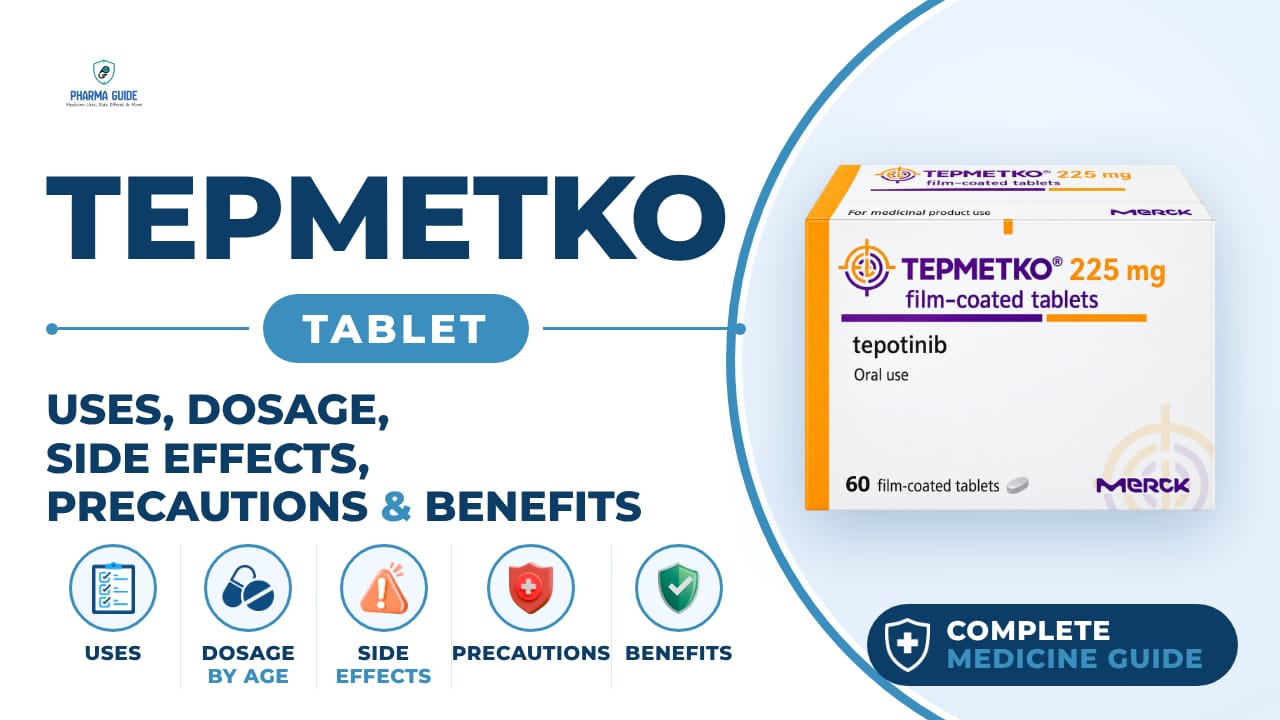
Tepmetko Tablet: Uses, Dosage, Side Effects, Precautions and Alternates
Kinase inhibitor (MET inhibitor)
Tepmetko Tablet (tepotinib) treats metastatic NSCLC with MET exon 14 skipping alterations. Learn about dosage, side effects, and warnings.

Injectafer Injection: Uses, Dosage, Side Effects, Precautions and Alternates
Iron products
Injectafer (ferric carboxymaltose) treats iron deficiency anemia and heart failure-related iron deficiency via IV. Learn uses, dosage, side effects, and