
Safety
General information, not medical advice
Your prescriber and the leaflet in your pack know your situation. This page does not.
- Follow your prescriber and the leaflet
- Don't start, stop, or change a dose on your own
- Doses and warnings differ by country and product
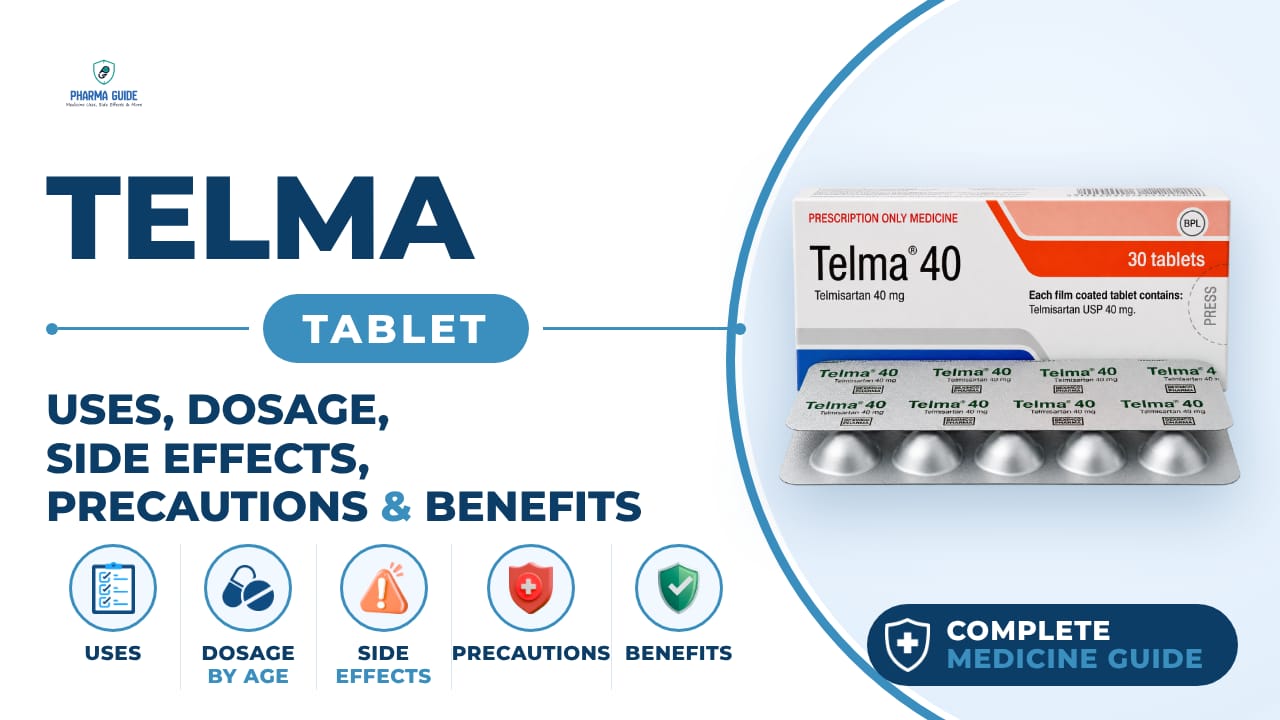
Telma Tablet: Uses, Dosage, Side Effects, Precautions and Alternates
| Generic name | Telmisartan |
|---|---|
| Drug class | Angiotensin II receptor blocker (ARB) |
| Forms | Tablet |
Quick overview
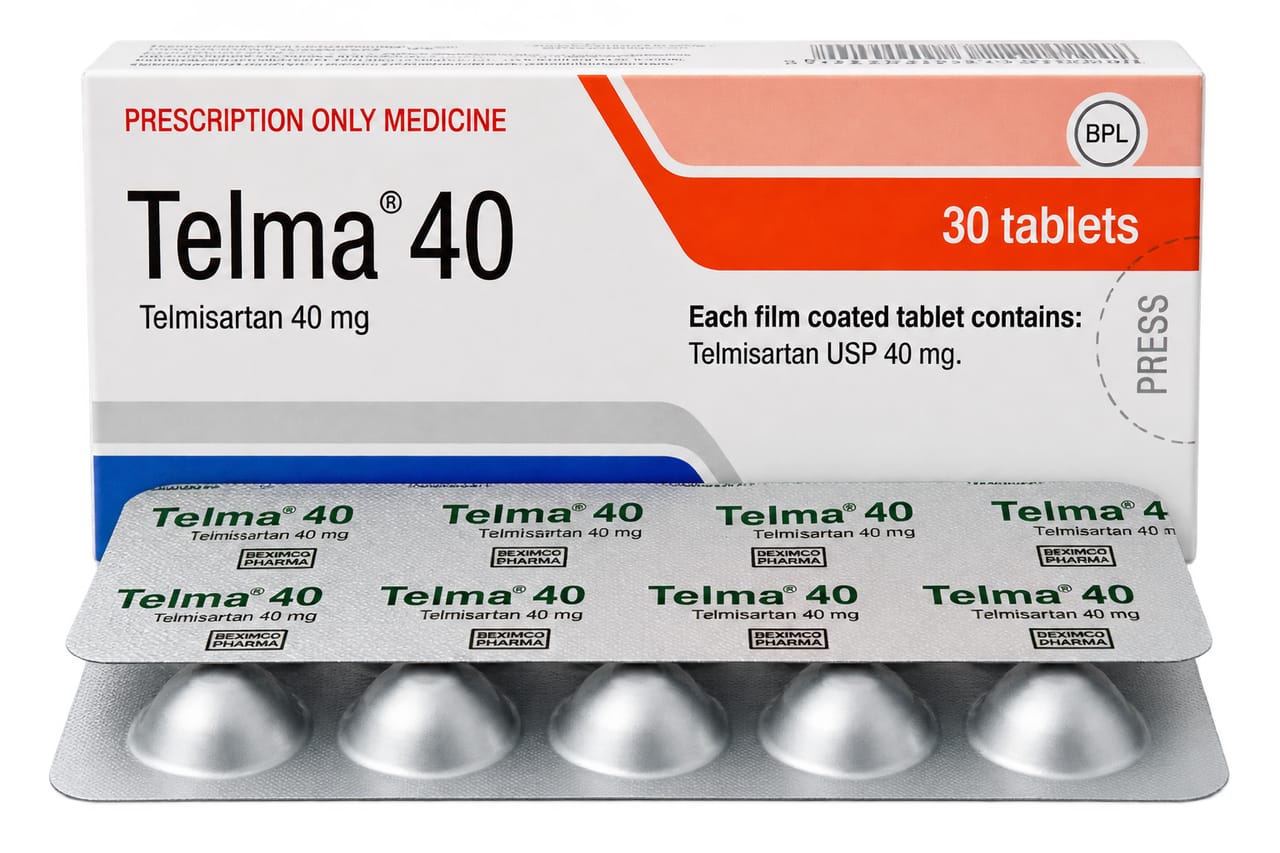
Telma Tablet contains telmisartan, an angiotensin II receptor blocker used to treat high blood pressure. It also helps reduce the risk of heart attack and stroke in adults at high cardiovascular risk and helps protect kidney function in people with diabetes. Telma is taken once daily and works by relaxing blood vessels to lower blood pressure.
What is Telma Tablet
Telma is a prescription tablet that contains telmisartan. It is used to treat high blood pressure and belongs to a group of medicines called angiotensin II receptor blockers, which work by relaxing blood vessels.
Telma Tablet uses
- Treats high blood pressure (hypertension)
- Reduces the risk of heart attack and stroke in adults at high cardiovascular risk
- Helps protect kidney function in people with diabetes
- Sometimes used for heart failure and kidney disease in people with both diabetes and high blood pressure
Benefits of Telma Tablet
- Taken once a day, which makes it easy to fit into a daily routine
- Can be taken with or without food
- Helps lower the long-term risk of stroke, heart attack, and kidney damage from uncontrolled blood pressure
- Can be combined with other blood pressure medicines if one medicine is not enough
How Telma Tablet works
Telma works by blocking a natural chemical called angiotensin II that normally makes blood vessels narrow. By blocking this action, the medicine allows blood vessels to relax and widen, which lowers blood pressure and helps the heart pump more efficiently.
Telma Tablet dosage
Telma can be taken with or without food, at the same time each day. Swallow the tablet whole with a glass of water; do not crush, chew, or break it. Take it regularly, even after you start feeling well, because high blood pressure often has no symptoms. Do not stop taking this medicine without talking to your doctor, as your blood pressure may rise again.
If you miss a dose, take it as soon as you remember; if it is almost time for your next dose, skip the missed one and continue as normal; do not double the dose. Get up slowly from sitting or lying down, since this medicine can cause dizziness.
| Age group | Dose |
|---|---|
| Under 18 Years | Use only if prescribed by a healthcare professional |
| Adults (18–64 Years) | 20–40 mg once daily, may be increased up to 80 mg/day as prescribed |
| Older Adults (65+ Years) | 20–40 mg once daily, adjusted according to blood pressure response and health condition |
Available forms and strengths
- Tablet
Side effects of Telma Tablet
Common
- Back pain
- Stomach pain
- Weakness
- Diarrhoea
- Sinus pain and congestion
- Dizziness
- Headache
- Nasal congestion, cold-like symptoms
Serious
- Sepsis (blood poisoning)
- Angioedema (swelling of the face, tongue, or throat)
- Difficulty breathing
- Skin rash or blistering
- Severe allergic reaction
- Kidney problems, including acute kidney failure
Warnings and precautions
- This medicine is not recommended during pregnancy, especially in the second and third trimesters, as it can harm the developing baby. Tell your doctor right away if you are or think you might be pregnant.
- It is not known whether this medicine passes into breast milk, so it is not recommended while breastfeeding. Talk to your doctor before taking it.
- Use this medicine with caution if you have kidney problems, narrowed kidney arteries, or a kidney transplant, since it can affect potassium levels and kidney function. Your doctor may check your kidney function with blood tests.
- This medicine is broken down in the liver, so people with liver problems should use it cautiously, as it may build up in the blood and increase the risk of side effects.
- Avoid alcohol while taking this medicine, as it can add to the blood-pressure-lowering effect and cause dizziness, lightheadedness, headache, or changes in heart rate.
- This medicine may cause dizziness or drowsiness, so avoid driving or operating machinery until you know how it affects you.
- This medicine may cause low blood pressure (hypotension), especially at higher doses. Your doctor may adjust your dose based on your condition.
- This medicine can raise potassium levels in the blood. Use it carefully if you take potassium supplements or have kidney problems, and your doctor may want to monitor your potassium levels.
- Do not use this medicine if you have severe liver disease, as it may cause the medicine to build up in your blood and worsen liver damage.
- Use this medicine with caution if you have severe congestive heart failure, as it can increase the risk of kidney damage and reduced blood flow to the heart.
- This medicine must not be used together with aliskiren in people with diabetes, because the combination increases the risk of low blood pressure, high potassium, and kidney problems.
- This medicine is not recommended for use in pregnancy, particularly beyond the first three months, as it may harm the unborn baby. It must not be used in the second and third trimesters.
Storage
- Store below 30°C
- Keep in a cool, dry place away from light and moisture
- Do not freeze the medicine
- Keep out of sight and reach of children and pets
- Do not use after the expiry date
- Return any unused or expired medicine to your pharmacist for safe disposal
When to see a doctor
- Get emergency medical help right away if you notice signs of a severe allergic reaction, such as skin rash, itching, swelling of the face, tongue, or throat, severe dizziness, or difficulty breathing.
- If you think you have taken too much of this medicine, seek medical attention immediately.
- Seek emergency care if you have a very high blood pressure reading along with a severe headache, chest pain, difficulty breathing, nausea, vomiting, blurred vision, confusion, ringing in the ears, a nosebleed, or an irregular heartbeat.
- Contact your doctor if you notice swelling of the face, lips, tongue, throat, hands, or feet, hoarseness, or trouble breathing or swallowing, as this may be a serious reaction needing urgent treatment.
Alternatives
- Losartan
- Olmesartan
- Amlodipine
Watch the video
FAQs
What is Telma Tablet used for?
Telma Tablet is used to treat high blood pressure, reduce the risk of heart attack and stroke in adults at high cardiovascular risk, and help protect kidney function in people with diabetes. It is sometimes used for heart failure and kidney disease in people with both diabetes and high blood pressure.
How should I take Telma Tablet?
Telma can be taken with or without food, at the same time each day. Swallow the tablet whole with a glass of water without crushing, chewing, or breaking it, and take it regularly even after you feel well.
What is the dosage of Telma Tablet for adults?
Adults aged 18–64 years are usually given 20–40 mg once daily, which may be increased up to 80 mg/day as prescribed by a doctor.
What are the common side effects of Telma Tablet?
Common side effects include back pain, stomach pain, weakness, diarrhoea, sinus pain and congestion, dizziness, headache, and nasal congestion or cold-like symptoms.
Can Telma Tablet be taken during pregnancy?
Telma Tablet is not recommended during pregnancy, especially in the second and third trimesters, as it can harm the developing baby. You should tell your doctor right away if you are or think you might be pregnant.
General information, not medical advice
Your prescriber and the leaflet in your pack know your situation. This page does not.
- Follow your prescriber and the leaflet
- Don't start, stop, or change a dose on your own
- Doses and warnings differ by country and product
Sources
Video
Related medicines
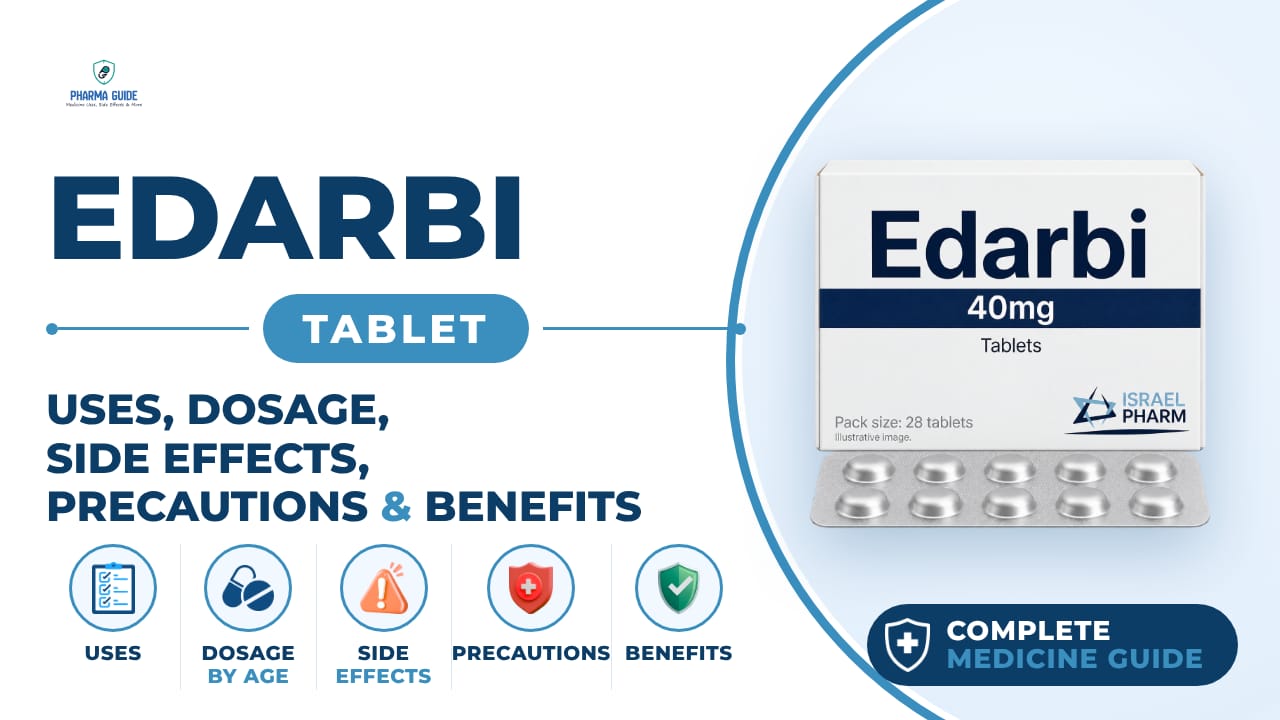
Edarbi Tablet: Uses, Dosage, Side Effects, Precautions and Alternates
Angiotensin II receptor blocker (ARB)
Edarbi Tablet (azilsartan) is an ARB used to treat high blood pressure in adults. Learn how it works, dosage, side effects, and precautions.
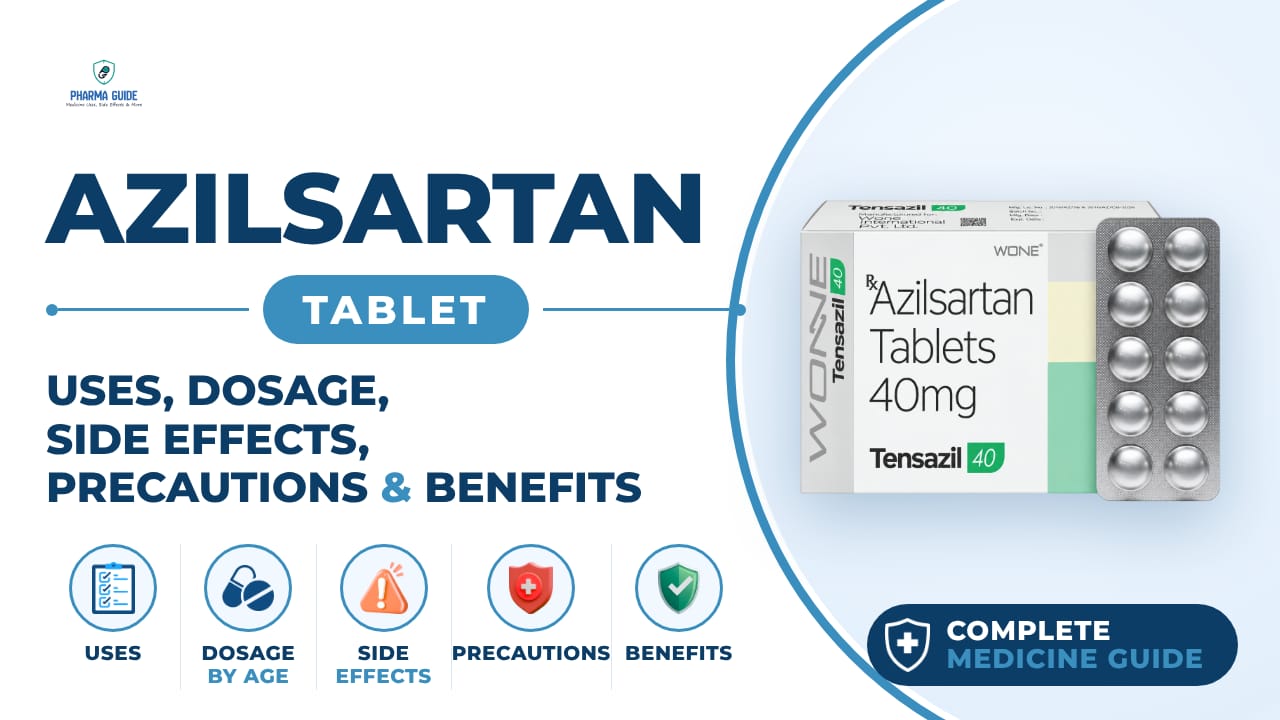
Azilsartan Tablet: Uses, Dosage, Side Effects, Precautions and Alternates
Angiotensin II receptor blocker (ARB)
Azilsartan Tablet is an ARB used to treat high blood pressure in adults. Learn about its uses, dosage, side effects, warnings, and alternatives.