
Safety
General information, not medical advice
Your prescriber and the leaflet in your pack know your situation. This page does not.
- Follow your prescriber and the leaflet
- Don't start, stop, or change a dose on your own
- Doses and warnings differ by country and product
Testosterone Injection: Uses, Dosage, Side Effects, Precautions and Alternates
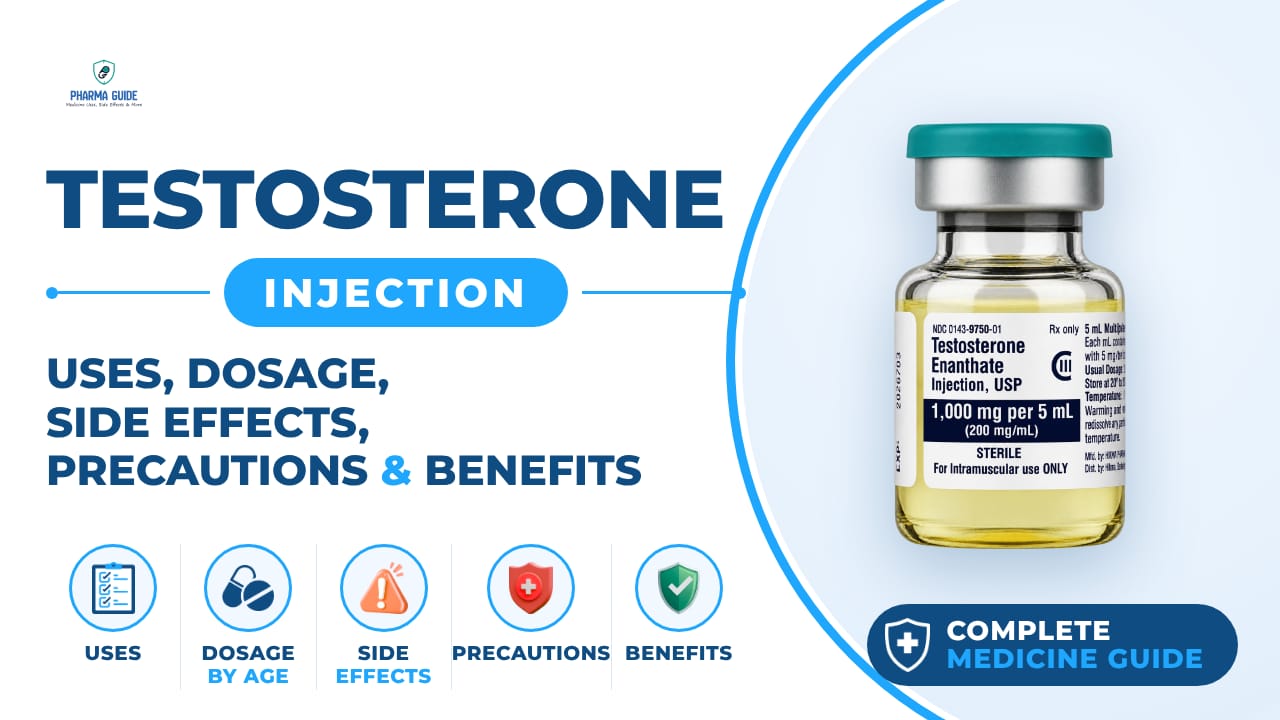
| Generic name | testosterone |
|---|---|
| Drug class | Androgens and anabolic steroids |
| Forms | Injection |
Quick overview
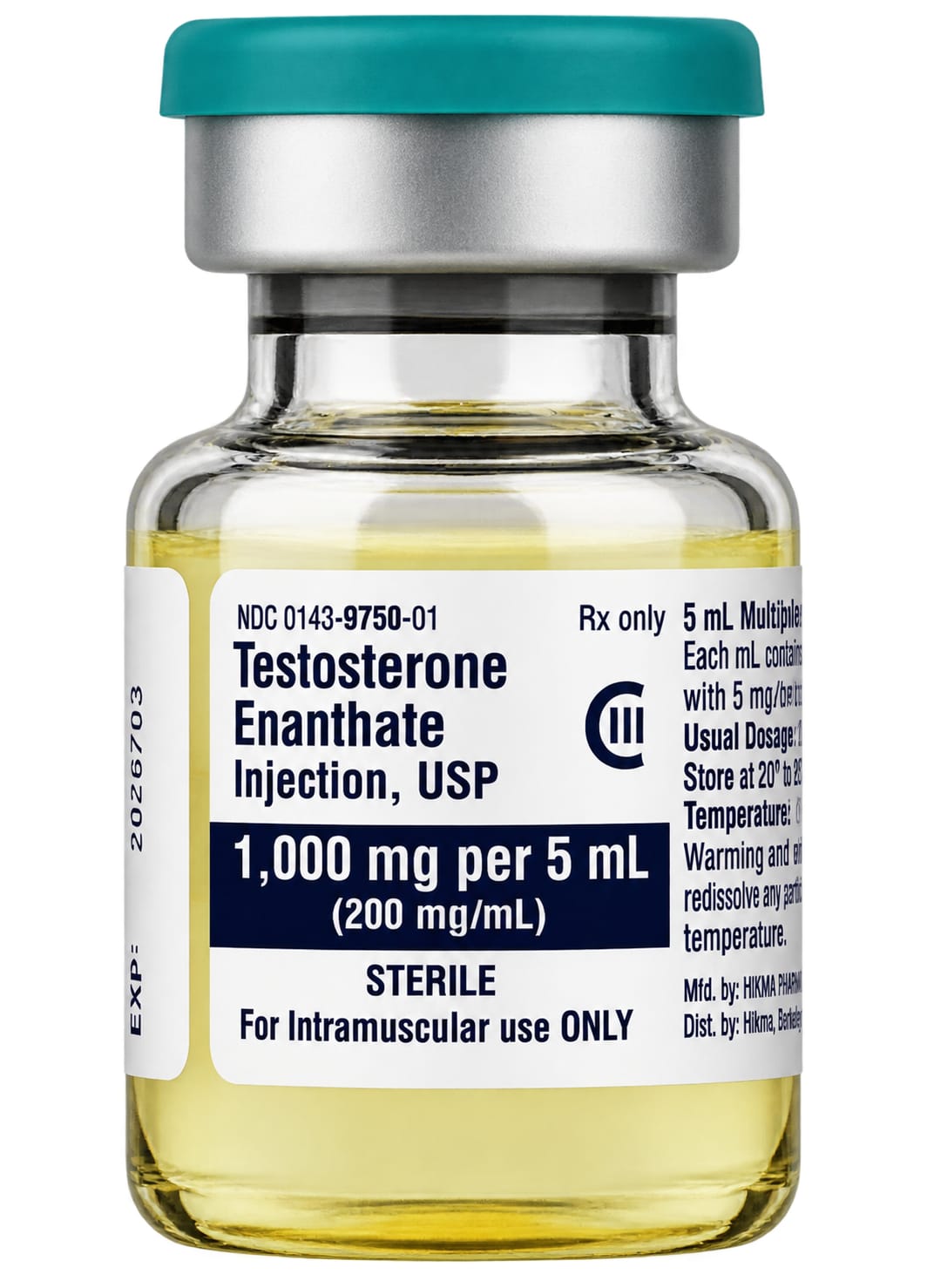
Testosterone Injection contains a man-made version of testosterone, a hormone the body naturally produces. It belongs to the androgens and anabolic steroids drug class and is given as a shot into a muscle to raise testosterone levels in the blood. It is used to treat low testosterone and certain other conditions in men, boys, and women, as directed by a doctor.
What is Testosterone Injection
Testosterone injection contains a man-made version of testosterone, a hormone your body naturally makes. It is given as a shot into a muscle to raise testosterone levels in the blood.
Testosterone Injection uses
- Treats low testosterone (hypogonadism) in men and boys caused by a specific medical condition, such as a genetic disorder or a problem with certain brain structures
- Treats delayed puberty in boys
- Treats certain types of breast cancer that have spread in women
- Used off-label for gender affirming hormone therapy in gender dysphoria
- Sometimes considered for low sex drive or sexual problems in postmenopausal women when other hormone treatments have not worked
Benefits of Testosterone Injection
- May improve sexual desire and function
- May improve mood and sense of well-being
- May increase energy levels
- May improve cognitive function
- Can help reduce gender dysphoria, depression, and suicidality when used as part of gender affirming care
How Testosterone Injection works
The injection raises the level of testosterone in the blood, restoring it toward the normal range so the body's tissues that depend on this hormone can function more normally.
Testosterone Injection dosage
This medicine is given as a shot into a muscle, usually by a healthcare professional in a hospital or clinic setting. Some people are taught to give the injection to themselves at home, usually in the thigh. Do not share this medicine with anyone else.
Follow your doctor's instructions about any restrictions on food, beverages, or activity while receiving this medicine. Keep all appointments for blood tests and check-ups so your care team can monitor your testosterone levels and watch for side effects. If you miss an appointment for your injection, call your doctor's office for instructions.
| Age group | Dose |
|---|---|
| Under 18 Years | Use only under specialist supervision |
| Adults (18–64 Years) | 50–100 mg injection weekly or 100–200 mg every 2–4 weeks (depending on formulation and medical need) |
| Older Adults (65+ Years) | Lower starting dose may be used; adjusted according to testosterone levels and health condition |
Available forms and strengths
- Injection
Side effects of Testosterone Injection
Common
- Acne
- Change in sex drive or performance
- Pain, redness, or irritation at the injection site
- Unexpected breast tissue growth
- Headache, anxiety
- Increased facial or body hair growth, male-pattern baldness
- Numbness or tingly feeling
- Increased red blood cell count
- Bruising, pain, bleeding, or swelling at the injection site
- Weight gain
- Increased appetite
- Hot flushes
- Tiredness or weakness
- Excessive sweating
Serious
- Allergic reactions—skin rash, itching, hives, swelling of the face, lips, tongue, or throat
- Blood clot—pain, swelling, or warmth in the leg, shortness of breath, chest pain
- Heart attack—pain or tightness in the chest, shoulders, arms or jaw, nausea, shortness of breath, cold or clammy skin, feeling faint or lightheaded
- Increase in blood pressure
- Liver injury—right upper belly pain, loss of appetite, nausea, light-colored stool, dark yellow or brown urine, yellowing of the skin or eyes, unusual weakness or fatigue
- Mood swings, irritability, or hostility
- Prolonged or painful erection
- Sleep apnea—loud snoring, gasping during sleep, daytime sleepiness
- Stroke—sudden numbness or weakness of the face, arm or leg, trouble speaking, confusion, trouble walking, loss of balance or coordination, dizziness, severe headache, change in vision
- Swelling of the ankles, hands, or feet
- Thoughts of suicide or self-harm, worsening mood, feelings of depression
- Blood clot in the lung (pulmonary oil microembolism)—chest pain, dizziness, trouble breathing, urge to cough, throat tightening, and fainting
- Signs of excess testosterone in women—acne, changes in menstrual periods, male-pattern hair growth, hoarse or deepened voice, enlarged clitoris
- Enlarged breasts, small testicles, infertility
Warnings and precautions
Testosterone should not be used by people with prostate cancer, male breast cancer, a serious heart condition, or severe liver or kidney disease. Misusing testosterone can cause dangerous or permanent effects and should only be given by a healthcare professional.
Testosterone injections have been linked to a serious blood clot in the lung called pulmonary oil microembolism, which can be fatal. Heart attacks and strokes have been reported with use of this medication.
This medicine is banned from use in athletes by most athletic organizations and should not be used to enhance athletic performance. Stopping testosterone suddenly may cause unpleasant withdrawal symptoms. This medicine can be abused, so it should be kept safe and never shared, sold, or given away.
This medicine should not be used during pregnancy because it can cause serious birth defects. Effective birth control should be used during treatment. It isn't known if testosterone passes into breast milk or could harm a nursing baby, so breastfeeding is not recommended while using this medicine.
People with severe kidney disease should not receive testosterone, and your care team needs to know about any kidney disease before you start. People with severe liver disease should not receive testosterone, and liver problems including liver injury and tumors have been reported with use.
Storage
- Store at room temperature between 20 and 25 degrees C (68 and 77 degrees F)
- Do not freeze
- Protect from light
- Follow the directions for the specific product you were prescribed
- Throw away any unused medication after the expiration date
- Keep out of the reach of children
- Keep your medication in a safe place to protect it from theft; do not share it with anyone, since selling or giving it away is dangerous and against the law
When to see a doctor
Get emergency help right away if you have symptoms of a heart attack or stroke, such as chest pain, trouble speaking, or sudden weakness or numbness. Seek emergency medical attention for shortness of breath, difficulty breathing, chest pain or pressure, weakness or numbness in an arm or leg, trouble speaking, pain in the arms, neck, back, or jaw, leg pain, swelling or warmth, fainting, or suicidal thoughts.
Get medical help right away for signs of a blood clot in the lung, such as chest pain, dizziness, trouble breathing, a strong urge to cough, throat tightening, or fainting. Call your doctor at once for chest pain, swelling in the ankles or feet, rapid weight gain, sudden cough, wheezing, coughing up blood, leg pain or swelling, nausea or vomiting, or yellowing of the skin or eyes. People with severe side effects should contact their doctor as soon as possible.
Alternatives
- Testosterone Patch
- Testosterone Pellets
- Human Chorionic Gonadotropin (hCG)
Watch the video
FAQs
What is Testosterone Injection used for?
It treats low testosterone (hypogonadism) in men and boys, delayed puberty in boys, certain types of breast cancer that have spread in women, and is sometimes used off-label for gender affirming hormone therapy or low sex drive in postmenopausal women.
How is Testosterone Injection given?
It is given as a shot into a muscle, usually by a healthcare professional, though some people are taught to self-inject at home, typically in the thigh.
What is the typical dosage for Testosterone Injection?
Adults typically receive 50–100 mg weekly or 100–200 mg every 2–4 weeks depending on formulation and medical need, while older adults may start at a lower dose adjusted based on testosterone levels.
What are the serious side effects of Testosterone Injection?
Serious side effects include blood clots, heart attack, stroke, liver injury, increased blood pressure, mood swings, prolonged painful erection, sleep apnea, and a rare blood clot in the lung called pulmonary oil microembolism.
Who should not use Testosterone Injection?
It should not be used by people with prostate cancer, male breast cancer, a serious heart condition, severe liver or kidney disease, or during pregnancy due to risk of serious birth defects.
General information, not medical advice
Your prescriber and the leaflet in your pack know your situation. This page does not.
- Follow your prescriber and the leaflet
- Don't start, stop, or change a dose on your own
- Doses and warnings differ by country and product
Sources
Video
Related medicines

Jatenzo Capsule: Uses, Dosage, Side Effects, Precautions and Alternates
Androgens and anabolic steroids
Jatenzo Capsule is oral testosterone replacement therapy for adult men with hypogonadism. Learn about dosage, side effects, warnings, and precautions.
Kyzatrex Capsule: Uses, Dosage, Side Effects, Precautions and Alternates
Androgens and anabolic steroids
Kyzatrex Capsule is an oral testosterone undecanoate for men with low testosterone from medical conditions. Learn uses, dosage, side effects, and warnings.