
Safety
General information, not medical advice
Your prescriber and the leaflet in your pack know your situation. This page does not.
- Follow your prescriber and the leaflet
- Don't start, stop, or change a dose on your own
- Doses and warnings differ by country and product
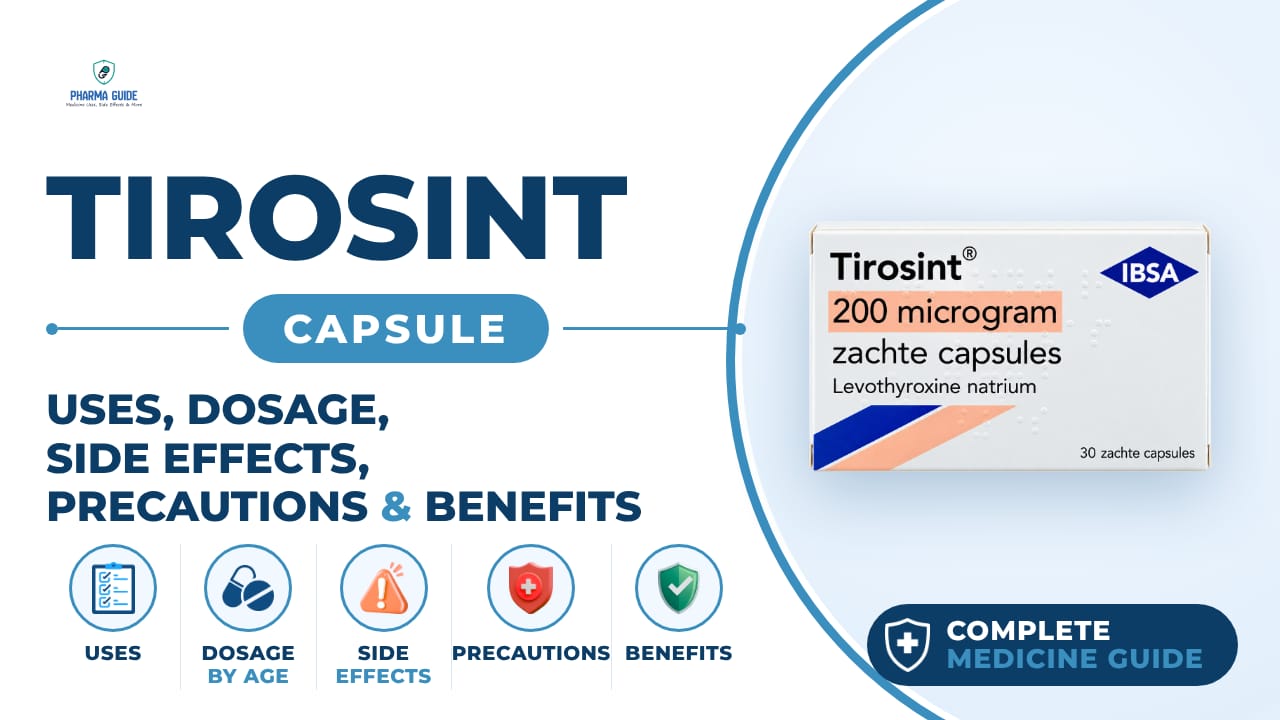
Tirosint Capsule: Uses, Dosage, Side Effects, Precautions and Alternates
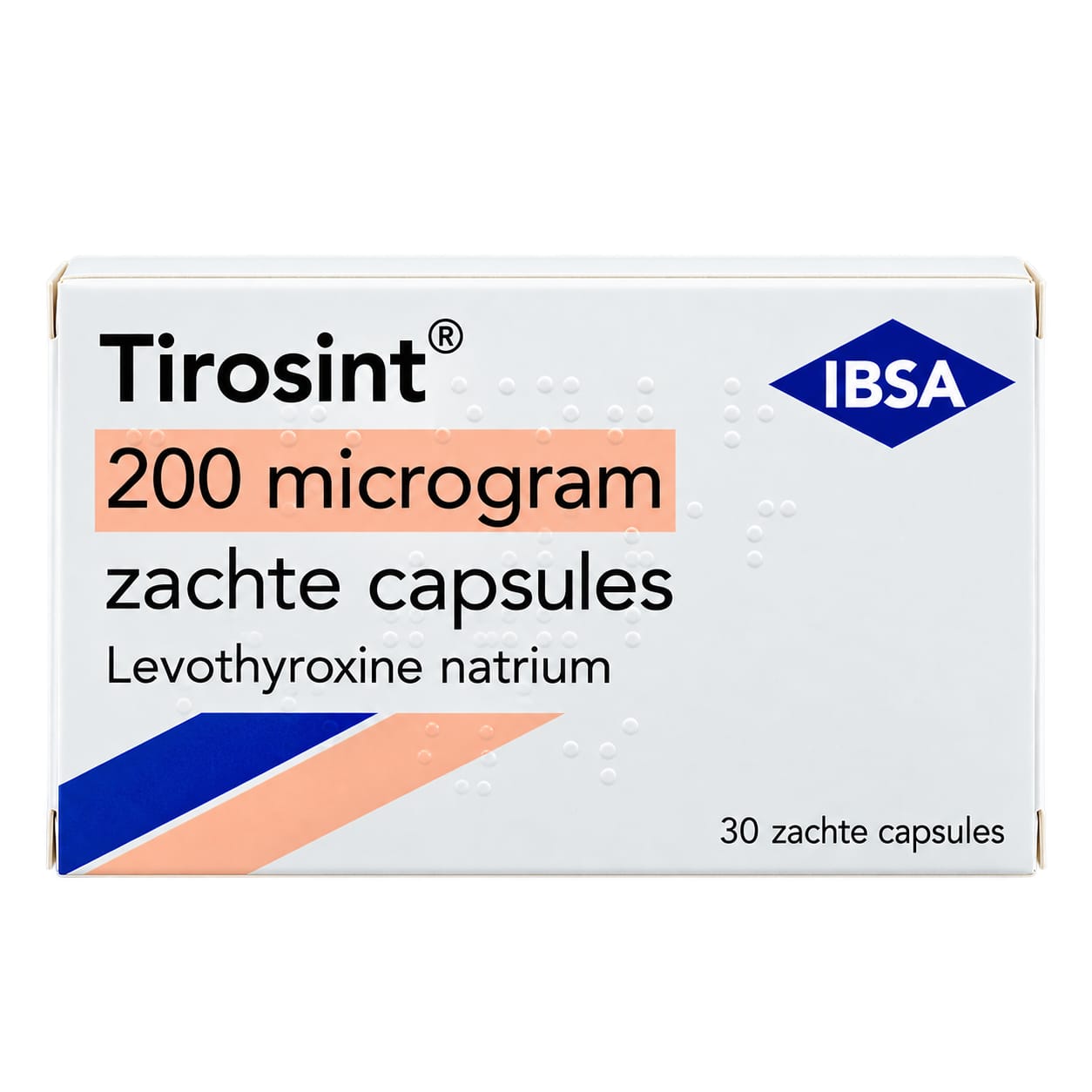
| Generic name | Levothyroxine sodium |
|---|---|
| Drug class | Thyroid Hormone |
| Forms | Capsules: 13 mcg, 25 mcg, 50 mcg, 75 mcg, 88 mcg, 100 mcg, 112 mcg, 125 mcg, 137 mcg, 150 mcg, 175 mcg and 200 mcg |
Quick overview
Tirosint Capsule contains levothyroxine sodium, a man-made version of the thyroid hormone thyroxine (T4). It is used to treat hypothyroidism in adults and children 6 years and older, and alongside surgery and radioactive iodine therapy to manage certain thyroid cancers. Tirosint replaces or adds to the thyroxine the body is not producing in sufficient amounts.
What is Tirosint Capsule
Tirosint is a capsule form of levothyroxine, a man-made version of the thyroid hormone thyroxine (T4). It is used to replace or add to the thyroxine your body makes when your thyroid gland does not produce enough.
Tirosint Capsule uses
- Treats hypothyroidism (an underactive thyroid gland) in adults and children 6 years and older
- Used along with surgery and radioactive iodine therapy to manage certain thyroid cancers that depend on thyroid-stimulating hormone (TSH)
Benefits of Tirosint Capsule
- Thyroid Hormone Replacement: Replaces insufficient thyroid hormone.
- Hypothyroidism Management: Helps restore thyroid hormone levels.
- Metabolism Support: Supports normal metabolic processes.
- Energy Support: Helps relieve symptoms caused by inadequate thyroid hormone.
- Growth Support: Supports normal growth and development in children with hypothyroidism.
How Tirosint Capsule works
Tirosint contains levothyroxine, a man-made version of thyroxine, the hormone normally made by the thyroid gland. In hypothyroidism, the thyroid does not make enough thyroxine, so hormone levels in the blood drop. Tirosint replaces or adds to the thyroxine in the body.
Tirosint Capsule dosage
Take exactly as your healthcare professional tells you. Take once per day on an empty stomach, 30 minutes to 1 hour before breakfast. Swallow capsules whole; do not cut, crush, or chew them. If you or your child cannot swallow the capsule whole, tell your healthcare professional, as a different medication may be needed. If you take other medicines, take Tirosint 4 hours before or after them, since some drugs and foods can interfere with absorption.
Do not remove capsules from the original blister package until you are ready to take them. A child's dose will change as they grow and get older. Do not change your dose or how often you take it unless your healthcare professional tells you to. Do not stop taking Tirosint without talking to your healthcare professional first. Thyroid hormone replacement is usually taken for life.
If you forget a dose, take it as soon as you remember unless it is almost time for your next dose; do not double up on doses; if you miss more than two doses, check with your healthcare professional.
| Age group | Dose |
|---|---|
| Children (6–12 Years) | 4–5 mcg/kg/day, adjusted according to thyroid tests |
| 12–17 Years | 2–3 mcg/kg/day if growth/puberty is incomplete; 1.6 mcg/kg/day after completion |
| Adults (18–64 Years) | About 1.6 mcg/kg/day for full replacement in otherwise healthy adults |
Available forms and strengths
Capsules: 13 mcg, 25 mcg, 50 mcg, 75 mcg, 88 mcg, 100 mcg, 112 mcg, 125 mcg, 137 mcg, 150 mcg, 175 mcg and 200 mcg
Side effects of Tirosint Capsule
Common
- Inability to tolerate heat
- Excessive sweating
- Flushing
- Rash
- Nervousness
- Anxiety or irritability
- Rapid changes in emotions
- Trouble sleeping
- Restlessness
- Temporary hair loss
- Headache
- Diarrhea
- Nausea
- Vomiting
- Abdominal cramps
- Fever
- Fatigue
- Muscle weakness or spasms
- Tremors
- Shortness of breath
- Changes in menstrual cycle
- Trouble having a child (impaired fertility)
- Reduced adult height due to early closure of growth plates in bones
Serious
- Heart problems: chest pain, rapid or irregular heartbeat, palpitations, shortness of breath
- Heart attack: crushing chest pain radiating to the left arm and/or jaw, sweating, nausea, vomiting, shortness of breath
- Heart failure: shortness of breath on exertion or lying down, fatigue, weakness, swelling in legs/ankles/feet, rapid or irregular heartbeat, persistent cough
- Serious allergic reactions: rash, hives, itching, swelling of the face, lips, tongue or throat, difficulty swallowing or breathing
- Osteoporosis (decreased bone mineral density): back pain, loss of height over time, stooped posture, broken bones
- Seizures: muscle twitching, changes in emotions, confusion, loss of consciousness with uncontrollable shaking
- Appetite disorder: weight increase or weight loss
- Pseudotumor cerebri (increased pressure in the brain in children): headaches, vision problems or complete vision loss, seeing double, ringing in the ears, pain in the arms
- Slipped capital femoral epiphysis (weakened hip joint in children): stiffness or pain in the knee or groin, walking with a limp, inability to bear weight on the affected side
- High blood pressure: shortness of breath, fatigue, dizziness, fainting, chest pain or pressure, swelling in ankles and legs, racing pulse, heart palpitations
Warnings and precautions
- If you are pregnant or planning to become pregnant, tell your doctor, since your dose of Tirosint will likely need to be increased. Hypothyroidism should not go untreated during pregnancy, and blood tests will be done regularly to adjust your dose.
- Small amounts of thyroid hormone pass into breast milk, but you can continue taking Tirosint while breastfeeding. In fact, you should not stop treatment, since normal thyroid hormone levels help maintain milk production.
- Tell your doctor about kidney disease or reduced kidney function. Inform your doctor about significant liver disease.
- Thyroid hormones like Tirosint should never be used to treat obesity or for weight loss, whether alone or combined with other medicines. These medications can cause serious and life-threatening side effects, especially at higher doses or combined with certain weight-loss drugs.
- Do not take more Tirosint than prescribed. Taking too much can cause life-threatening side effects or death.
- Tell your doctor about any heart problems you have had, since Tirosint therapy needs to be started cautiously and at lower doses in people with heart disease or in older adults, due to increased risk of heart rhythm problems.
- If you have diabetes, your blood sugar control may be affected after starting, changing, or stopping Tirosint, and your diabetes medicine doses may need to change.
- Long-term use of Tirosint, especially in women, may lead to bone thinning (decreased bone mineral density).
- Do not use Tirosint if you have untreated adrenal gland problems, untreated overactive thyroid, or have recently had a heart attack.
Storage
- Store TIROSINT at room temperature between 68°F to 77°F (20°C to 25°C)
- Store TIROSINT away from heat, light, and moisture
- Keep TIROSINT in the original blister pack until you are ready to use it
- Keep TIROSINT and all medicines out of the reach of children
When to see a doctor
- Stop taking the drug and get immediate medical help for signs of a serious allergic reaction, such as rash, hives, itching, or swelling of the face, lips, tongue, or throat, or difficulty swallowing or breathing.
- Get medical help right away for signs of a heart attack, including crushing chest pain that spreads to the arm or jaw, sweating, nausea, vomiting, or shortness of breath.
- Seek medical attention if you notice signs of heart failure, such as shortness of breath with activity or when lying down, fatigue, weakness, or swelling in the legs, ankles, or feet.
- Seek medical care for seizures, including muscle twitching, confusion, or loss of consciousness with uncontrollable shaking.
- If you think you have taken too much Tirosint, contact your healthcare professional, a hospital emergency department, or a poison control center immediately, even if you have no symptoms, since overdose symptoms may not appear for several days.
- Seek care for symptoms suggesting a weakened hip joint in children, such as stiffness or pain in the knee or groin, limping, or inability to bear weight on one side.
Alternatives
- Levoxyl
- Synthroid
- Eltroxin
- Thyrox
Watch the video
FAQs
What is Tirosint Capsule used for?
Tirosint treats hypothyroidism in adults and children 6 years and older, and is used along with surgery and radioactive iodine therapy to manage certain thyroid cancers that depend on thyroid-stimulating hormone (TSH).
How should I take Tirosint Capsule?
Take Tirosint once per day on an empty stomach, 30 minutes to 1 hour before breakfast. Swallow capsules whole without cutting, crushing, or chewing them. If taking other medicines, take Tirosint 4 hours before or after them since some drugs and foods can interfere with absorption.
What should I do if I miss a dose of Tirosint?
If you forget a dose, take it as soon as you remember unless it is almost time for your next dose. Do not double up on doses, and if you miss more than two doses, check with your healthcare professional.
Can I take Tirosint while pregnant or breastfeeding?
If pregnant or planning to become pregnant, tell your doctor since your dose will likely need to be increased, and hypothyroidism should not go untreated during pregnancy. Small amounts of thyroid hormone pass into breast milk, but you can and should continue taking Tirosint while breastfeeding since normal thyroid hormone levels help maintain milk production.
What are the serious side effects of Tirosint?
Serious side effects include heart problems, heart attack, heart failure, serious allergic reactions, osteoporosis, seizures, appetite disorders, pseudotumor cerebri in children, slipped capital femoral epiphysis in children, and high blood pressure.
General information, not medical advice
Your prescriber and the leaflet in your pack know your situation. This page does not.
- Follow your prescriber and the leaflet
- Don't start, stop, or change a dose on your own
- Doses and warnings differ by country and product
Sources
Video
Related medicines
Eltroxin Tablet: Uses, Dosage, Side Effects, Precautions and Alternates
thyroid hormone
Eltroxin Tablet contains levothyroxine for hypothyroidism and goiter. Learn its uses, dosage, side effects, warnings, and precautions before use.

Injectafer Injection: Uses, Dosage, Side Effects, Precautions and Alternates
Iron products
Injectafer (ferric carboxymaltose) treats iron deficiency anemia and heart failure-related iron deficiency via IV. Learn uses, dosage, side effects, and