
Safety
General information, not medical advice
Your prescriber and the leaflet in your pack know your situation. This page does not.
- Follow your prescriber and the leaflet
- Don't start, stop, or change a dose on your own
- Doses and warnings differ by country and product
Tobramycin Eye Drops: Uses, Dosage, Side Effects, Precautions and Alternates
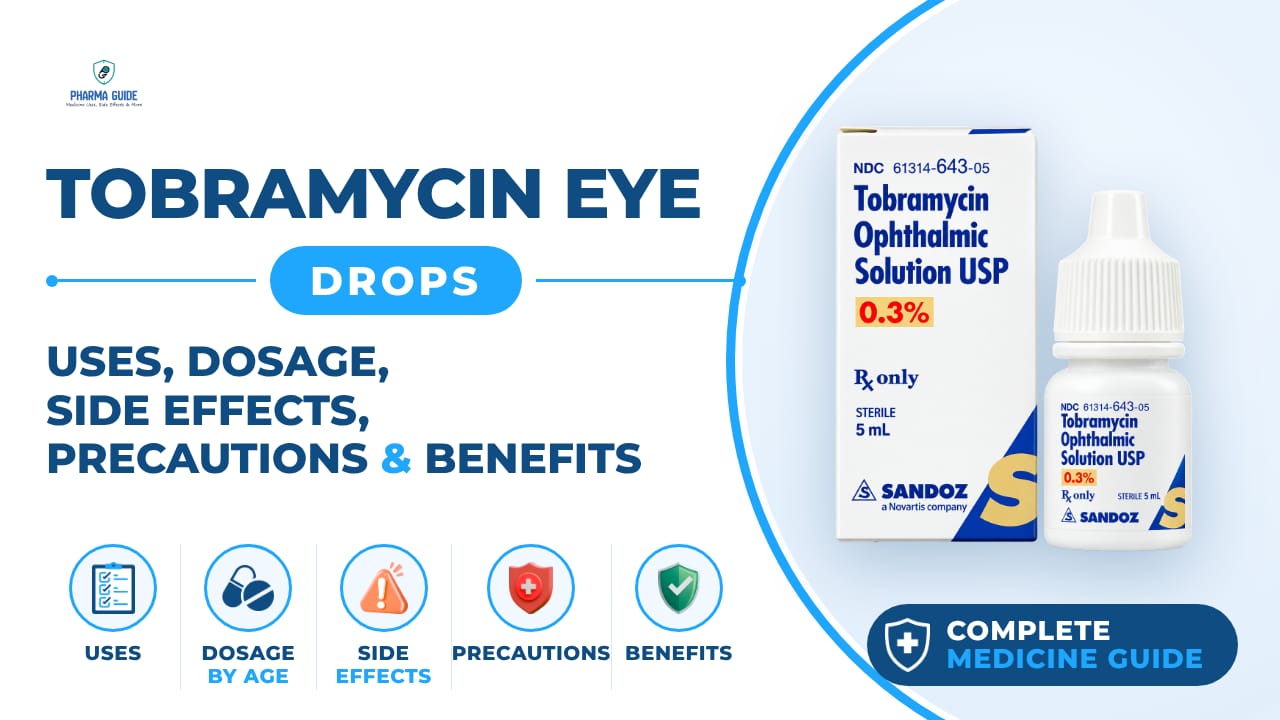
| Generic name | tobramycin ophthalmic |
|---|---|
| Drug class | aminoglycoside antibiotic |
| Forms | Ophthalmic solution (eye drops), Ophthalmic ointment |
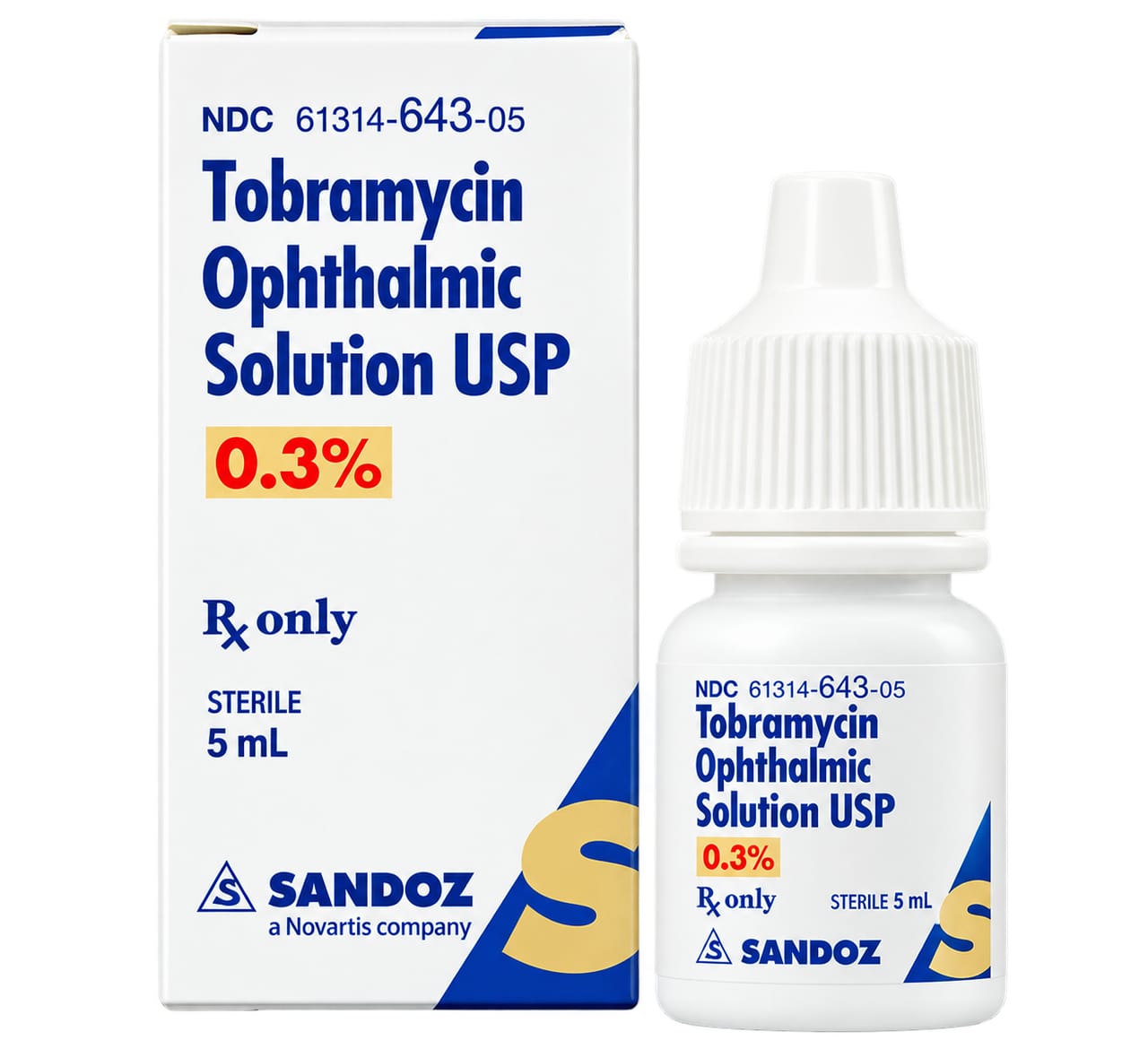
Quick overview
Tobramycin Eye Drops (tobramycin ophthalmic) is a prescription aminoglycoside antibiotic used in the eye to treat bacterial infections. It comes as an eye drop solution or an eye ointment and is used for conditions such as bacterial conjunctivitis, blepharitis, styes, and bacterial corneal infections. It works by stopping bacteria from producing the proteins they need to grow and survive. Common side effects include stinging, watering, and temporary blurred vision.
What is Tobramycin Eye Drops
Tobramycin eye drops are a prescription antibiotic medicine used in the eye to treat bacterial infections. They belong to a group of antibiotics called aminoglycosides and come as an eye drop solution or an eye ointment.
Tobramycin Eye Drops uses
- Treating bacterial infections of the eye and surrounding area
- Bacterial conjunctivitis (infection of the membrane covering the white of the eye)
- Bacterial eyelid margin infections, including blepharitis where infection is present
- Stye and similar localised eyelid infections
- Bacterial corneal infection (bacterial keratitis)
- Preventing infection around eye surgery, as part of a surgeon's protocol
Benefits of Tobramycin Eye Drops
- Helps treat bacterial eye infections caused by susceptible bacteria.
- Commonly used for bacterial conjunctivitis and other superficial eye infections.
- Helps reduce redness, discharge, irritation, and discomfort related to bacterial infection.
- Provides direct antibiotic action in the eye to help clear the infection.
How Tobramycin Eye Drops works
Tobramycin works by stopping bacteria from making the proteins they need to grow, which causes the bacteria to die.
Tobramycin Eye Drops dosage
Wash your hands before using the drops or ointment. Tilt your head back and gently pull down the lower eyelid to make a small space, then apply the drop or a thin strip of ointment into that space. Let go of the eyelid, close your eyes gently, and keep them closed for one to two minutes so the medicine can reach the infection. Do not blink hard or squeeze your eyes shut.
Do not let the applicator tip touch your eye, fingers, or any other surface, to keep the medicine germ-free. Keep the container tightly closed after use. If you use two different eye medicines, wait at least five minutes between them so the second one does not wash out the first, and apply ointments last. Eye ointment usually causes blurred vision for a few minutes after use.
Do not wear contact lenses while being treated for an active eye infection. Keep using the medicine for the full course of treatment, even if your symptoms go away, and do not skip doses.
If you miss a dose, use it as soon as you remember, but if it is almost time for the next dose, skip the missed one and go back to your normal schedule. Do not use double doses.
| Age group | Dose |
|---|---|
| Under 2 months | Safety and effectiveness not established |
| 2 months–11 years | 1–2 drops into affected eye(s) every 4 hours |
| 12–17 years | 1–2 drops into affected eye(s) every 4 hours |
| 18–64 years | 1–2 drops into affected eye(s) every 4 hours |
| 65+ years | 1–2 drops into affected eye(s) every 4 hours |
Available forms and strengths
- Ophthalmic solution (eye drops)
- Ophthalmic ointment
Side effects of Tobramycin Eye Drops
Common
- Stinging or burning of the eyes after using the drops
- Watering of the eyes
- Itching, redness, or swelling of the eyes or eyelids
- Temporary blurred vision, especially with the ointment
Serious
- Signs of eye or eyelid irritation not present before use of the medicine
- Painful irritation of the clear front part of the eye
- Signs of a new infection, such as pink or itchy eye, blurry vision, eye discharge or crusting, swollen eyelids, or fever
- Signs of a severe allergic reaction, such as breathing problems or wheezing, racing heart, fever, swollen lymph nodes, swelling of the face, lips, mouth, tongue, or throat, trouble swallowing, hives, nausea or vomiting, dizziness or fainting, stomach cramps, or joint pain
Warnings and precautions
- Do not wear contact lenses while you have an eye infection or during treatment.
- If your eye infection does not improve within a few days, or gets worse, contact your doctor.
- People who are allergic to tobramycin, other aminoglycoside antibiotics (such as amikacin or gentamicin), or any ingredient in the product should not use it.
- Do not share this medicine with other people, even if they have a similar eye problem, as it may harm them.
- Using this medicine can sometimes lead to a new infection with other germs, such as fungi.
- It is not known if tobramycin eye drops can affect pregnancy or harm an unborn baby, so tell your doctor if you are or plan to become pregnant.
- It is not known if tobramycin eye drops pass into breast milk. Your doctor will weigh the benefits and risks and may advise whether to continue breastfeeding or the medicine.
- It is not known if drinking alcohol affects this medicine, but heavy drinking can slow your immune response and make it harder for your body to fight infection.
- Eye ointment usually blurs vision for several minutes after use. Do not drive or operate machinery until your sight has fully cleared.
Storage
- Store at 2–25°C (36–77°F) or according to the specific product label.
- Keep the bottle tightly closed when not in use.
- Protect from excessive heat and direct sunlight.
- Do not freeze, and avoid touching the dropper tip to prevent contamination.
- Keep out of reach and sight of children and pets.
When to see a doctor
- Stop using the medicine and get help right away if you notice signs of a serious allergic reaction, such as breathing problems, swelling of the face, lips, mouth, tongue or throat, trouble swallowing, or hives.
- Call your doctor if your eye infection does not improve, or if symptoms such as pink or itchy eye, blurry vision, discharge, swollen eyelids, or fever come back or get worse.
- Contact your doctor promptly if you develop eye pain, blurred vision or vision changes that do not clear, worsening redness, swelling or discharge, or marked sensitivity to light.
Alternatives
- Gentamicin Eye Drops
- Ciprofloxacin (Ciloxan) Eye Drops
- Gatifloxacin (Zymaxid) Eye Drops
- Moxifloxacin (Vigamox) Eye Drops
Watch the video
FAQs
What is Tobramycin Eye Drops used for?
It is used to treat bacterial infections of the eye and surrounding area, including bacterial conjunctivitis, blepharitis, styes, bacterial corneal infections, and to prevent infection around eye surgery.
How do Tobramycin Eye Drops work?
Tobramycin works by stopping bacteria from making the proteins they need to grow, which causes the bacteria to die.
What is the usual dosage for Tobramycin Eye Drops?
For ages 2 months and older, including adults and seniors, the usual dose is 1–2 drops into the affected eye(s) every 4 hours. Safety and effectiveness have not been established for infants under 2 months.
What are the common side effects of Tobramycin Eye Drops?
Common side effects include stinging or burning of the eyes, watering, itching, redness or swelling of the eyes or eyelids, and temporary blurred vision, especially with the ointment.
Can I wear contact lenses while using Tobramycin Eye Drops?
No, you should not wear contact lenses while you have an eye infection or during treatment.
General information, not medical advice
Your prescriber and the leaflet in your pack know your situation. This page does not.
- Follow your prescriber and the leaflet
- Don't start, stop, or change a dose on your own
- Doses and warnings differ by country and product
Sources
Video
Related medicines
Neomycin Ointment: Uses, Dosage, Side Effects, Precautions and Alternates
Aminoglycoside antibiotic
Neomycin Ointment is a topical antibiotic that helps prevent and treat minor bacterial skin infections. Learn uses, dosage, side effects, and precautions.
Streptomycin Injection: Uses, Dosage, Side Effects, Precautions and Alternates
Aminoglycoside antibiotic
Streptomycin Injection treats TB, pneumonia, and other bacterial infections. Learn about dosage, side effects, warnings, and precautions before treatment.